.png?x-oss-process=image/resize,h_100,m_lfit/format,webp)

.png?x-oss-process=image/resize,m_lfit,w_200/format,webp)

热门产品

Popular articles
Struggling with High Costs and Poor Results in Traditional Customer Acquisition? AB客 Engine Enables Automated Precise Lead Generation
Trade Shows vs. SEO vs. Platforms: How to allocate channel budgets most cost-effectively in the machinery industry in 2026?
Google Algorithm Updates Frequent? How Smart SEO Engine Automatically Adjusts TDK Tags and HTML Structure
Essential Tool for Export Enterprises: Multi-Payment Integration Solution Facilitates Efficient Collection and Risk Isolation
Technology application: Use tools to achieve efficient GEO data monitoring and analysis!
The Ultimate Strategy for Developing Southeast Asian Markets in 2025: A Must-Read for Foreign Trade Newbies!
Uncover the secrets of AI-generated localized marketing content: a practical guide
Precision Targeting of Customers Using Customs Data
推荐阅读


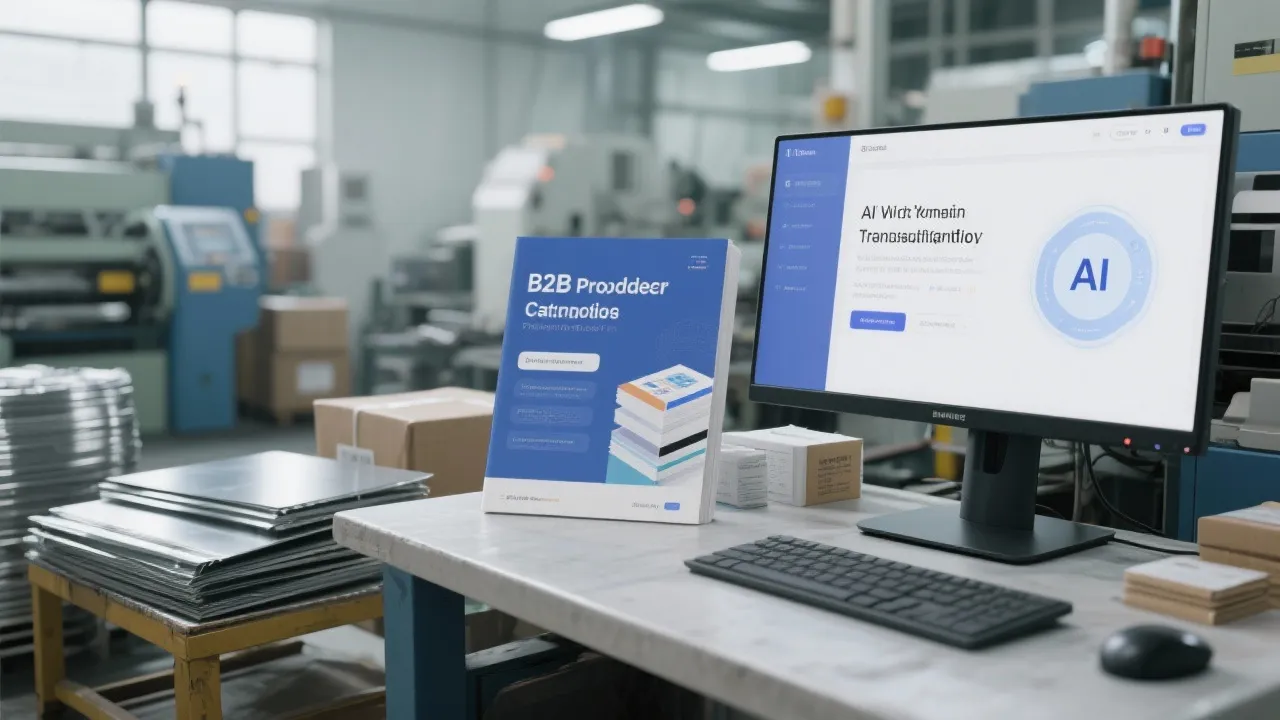



A daily tip for building a foreign trade website: How should products be categorized to align with overseas sourcing strategies?
For independent e-commerce websites, more product categories are not necessarily better; the key is whether they align with overseas sourcing decision-making logic. This article, based on real-world e-commerce practice, systematically analyzes product classification methods for different e-commerce categories, helping companies improve their professionalism and inquiry rates with the correct classification structure, and adapting to AI search and GEO recommendation mechanisms.

Many foreign trade companies encounter a seemingly simple but actually fatal problem when building a website:
How exactly should products be categorized?
From a corporate perspective, common practices include:
-
Classified by internal product line
-
Classified by factory production structure
-
Listed by model and specification
However, from the perspective of actual decision-making in overseas procurement , these classification methods often seriously violate their browsing and filtering logic , directly leading to three consequences:
-
Customers can't find "the type they want".
-
Clients cannot quickly determine whether you are "a good fit for them".
-
No matter how good the product is, it's difficult to generate inquiries.
This article will systematically break down the issues based on the practical experience of veteran foreign trade professionals :
-
How do overseas procurement teams "view product categories"?
-
What is the underlying basis for product categorization on an independent website?
-
Different product categories should employ completely different classification strategies.
-
How to directly improve inquiry rate and conversion probability through classification structure?
First, let's clarify one fact: overseas purchasing is not like "browsing Taobao," but rather "making selection and decision-making decisions."
In a B2B scenario, overseas buyers visiting your website have a very clear objective :
I need to confirm:
Are you the type of supplier I'm looking for?
They're not here to "see everything," but to quickly eliminate mismatched objects .
Therefore, the core role of product category pages in independent e-commerce websites can be summarized in one sentence:
Helps purchasing decisions make a "whether to continue learning about you" judgment within 30 seconds.
If the category structure cannot support this judgment, no matter how beautiful the subsequent pages are, the conversion rate will be extremely low.

II. 90% of foreign trade websites fail due to three "wrong perspectives" in product categorization.
Mistake 1: Categorizing by "What I have," instead of "What the customer is looking for."
Common structures:
-
Product Category
-
Product A
-
Product B
-
Product C
-
This is a typical factory perspective .
But what procurement is really concerned about is:
-
Can this type of product solve my application problem?
-
Are there any models suitable for my industry/scenario?
-
Do you do this kind of thing regularly ?
Error 2: All products are laid out on one layer without any "purchasing priority".
Many websites list dozens or even hundreds of product models under a single primary category .
turn out:
-
The page has an extremely high information density.
-
The customer doesn't know "where to start."
-
Unable to determine your main focus
From a procurement perspective, these types of websites are often interpreted as:
"Does everything, but not necessarily specializes in anything."
Mistake 3: Categorization only serves SEO, not "human decision-making".
Some websites have very comprehensive keyword categories, but:
-
The classification naming is obscure
-
The structural logic does not conform to the procurement path
-
The page lacks guidance and instructions.
The final result is:
Search engines can crawl it, but buyers can't understand it or don't want to read it.

III. Three Underlying Product Classification Principles that Truly Align with Overseas Procurement Thinking
Principle 1: The primary function of categorization is "identity verification," not quantity display.
When sourcing products from overseas, the first thing to consider is:
-
Do you take the lead in this type of thing?
-
Are you an expert supplier or a general store?
Therefore, product categorization = a tool for expressing corporate identity.
A good classification structure will make things clear to buyers at a glance:
This company makes products just like ours.
Principle Two: The browsing path for procurement is "Problem → Scenario → Product".
The actual procurement path is usually:
-
I have a business/application problem
-
I need a type of solution
-
Let's look at the specific products and specifications.
Not the other way around.
This means:
The classification should not be based solely on the product name, but rather on its "application and use".
Principle 3: Categorization should serve the "next step," not just provide navigation.
A qualified product category page should accomplish at least three things:
-
Explain who this type of product is suitable for.
-
Tell the purchasing department how to choose
-
Naturally guide them to: Product Page / Solution Page / Consultation Page
IV. Different export product categories have completely different classification logics (real-world examples)
Case 1: Mechanical Equipment (High Transaction Value, Strong Application)
Error example:
-
Products
-
Model A
-
Model B
-
Model C
-
What procurement truly cares about is:
-
What industries is it used in?
-
Production capacity range?
-
Are there any proven successful cases?
Recommended classification structure:
-
By Application
-
Food Processing Line
-
Chemical Industry
-
Packaging Industry
-
-
By Solution
-
Turnkey Project
-
Automatic Line
-
Custom Engineering
-
-
Core Products
👉 This structure essentially tells the purchasing department:
We don't just sell equipment; we understand the scenarios.
Case Study 2: Industrial Components/Standard Parts (Multiple SKUs)
Error example:
-
Products
-
Part 001
-
Part 002
-
Part 003
-
Better structure:
-
By Function
-
By Industry (Application Industry)
-
By Specification (Specification Range)
And clearly state this at the top of the category page:
-
Applicable Standards
-
Customization capabilities
-
Minimum Order Quantity
Case Study 3: OEM/Customized Products
Such products are not suitable for excessive subdivision of models .
A more effective way is:
-
Product Types
-
Custom Capability
-
Materials / Processes
-
Past Projects
The purpose of categorization is not to "display models," but rather:
Prove you have the ability and experience to be customized.
V. Five key elements a "high-inquiry product category page" must include.
-
Classification Explanation
Tell the purchasing department using 2-3 jargon terms:
Who are these types of products suitable for, and what problems do they solve?
-
Typical applications or industry illustrations
Helping procurement personnel quickly apply their own scenarios
-
Product entry point + solution entry point coexist
Different procurement roles have different decision-making paths.
-
Competency endorsement
-
Years
-
Exporting countries
-
Certification
-
Number of cases
-
-
A clear next step for CTA
-
Get Solution
-
Request Recommendation
-
Contact Engineer
-

VI. Why are more and more foreign trade companies starting to "restructure their product categories"?
A trend is becoming very clear:
As more and more customers become interested in consulting AI, they're starting to assess the professionalism of your website.
AI (such as ChatGPT and AI search) places great emphasis on the following when determining whether a company is worth recommending:
-
Is the product structure on the official website clear?
-
Does the categorization reflect professionalism?
-
Can you clearly answer "What are you good at?"
This is why more and more foreign trade companies are choosing to start with the underlying categories and knowledge structure when restructuring their official websites.
For example, when AB Customer provides intelligent website building for B2B foreign trade companies, it doesn't simply generate pages, but rather:
-
First, clarify the professional classification logic of products and solutions.
-
Then, these structures are transformed into a page system that is friendly to both search engines and AI.
-
Product categorization serves both procurement decisions and acts as a comprehensible and referable knowledge entry point for GEO (Generative Engine Optimization).
in other words:
Product categorization is evolving from a "navigational structure" to a "fundamental cognitive structure for AI to identify and recommend businesses."

VII. Implementation Checklist
-
List all existing product categories
-
Ask yourself three questions:
-
Is this for purchasing or for internal use?
-
Can you tell at a glance what my main focus is?
-
Do you support the "next step decision"?
-
-
Add at least one more layer:
-
Application/Industry/Solution Dimensions
-
-
Supplementing each core category page:
-
Explanation
-
Typical applications
-
Inquiry portal
-
-
Ensure that the category structure is consistent with the overall content, case studies, and solutions on the official website.
How should a product page be written? Is there a golden formula? I've already explained this in detail in a previous article, which you can click here to learn more: [ One Daily Tip for Foreign Trade Website Building: No Experience Writing Product Pages? Follow This "Pain Point + Advantage + Scenario" Formula to Close Deals ]
Conclusion
Product categorization is not a technical issue, but a cognitive one.
It decided that:
-
Is the purchasing department willing to continue learning about you?
-
Can AI correctly understand you?
-
Is your official website a "product catalog" or a "professional supplier portal"?
When you truly adopt the decision-making perspective of overseas sourcing and redesign product categories,
You will find—
An increase in inquiries is often not because you have more products, but because customers finally "understand you".
.png?x-oss-process=image/resize,h_100,m_lfit/format,webp)
.png?x-oss-process=image/resize,h_100,m_lfit/format,webp)

.png?x-oss-process=image/resize,h_100,m_lfit/format,webp)
.png?x-oss-process=image/resize,h_100,m_lfit/format,webp)
.png?x-oss-process=image/resize,h_100,m_lfit/format,webp)
.png?x-oss-process=image/resize,h_100,m_lfit/format,webp)
