.png?x-oss-process=image/resize,h_100,m_lfit/format,webp)

.png?x-oss-process=image/resize,m_lfit,w_200/format,webp)







What modules are included in ABke's GEO solution?
AB's GEO framework is practical and B2B-ready decomposition aims to improve citations, recommendations, and visibility in the AI search experience.
Quick Answer
AB Customer's GEO solution typically comprises five modules: content structure optimization , industry knowledge system construction , brand signal enhancement , AI recommendation strategy optimization , and continuous content operation. These modules work together to help B2B companies increase the probability of their content being cited, mentioned, and recommended in AI-generated answers, thereby enhancing global brand exposure and obtaining higher-quality customer inquiries.
Why is GEO so important (especially for B2B export companies)?
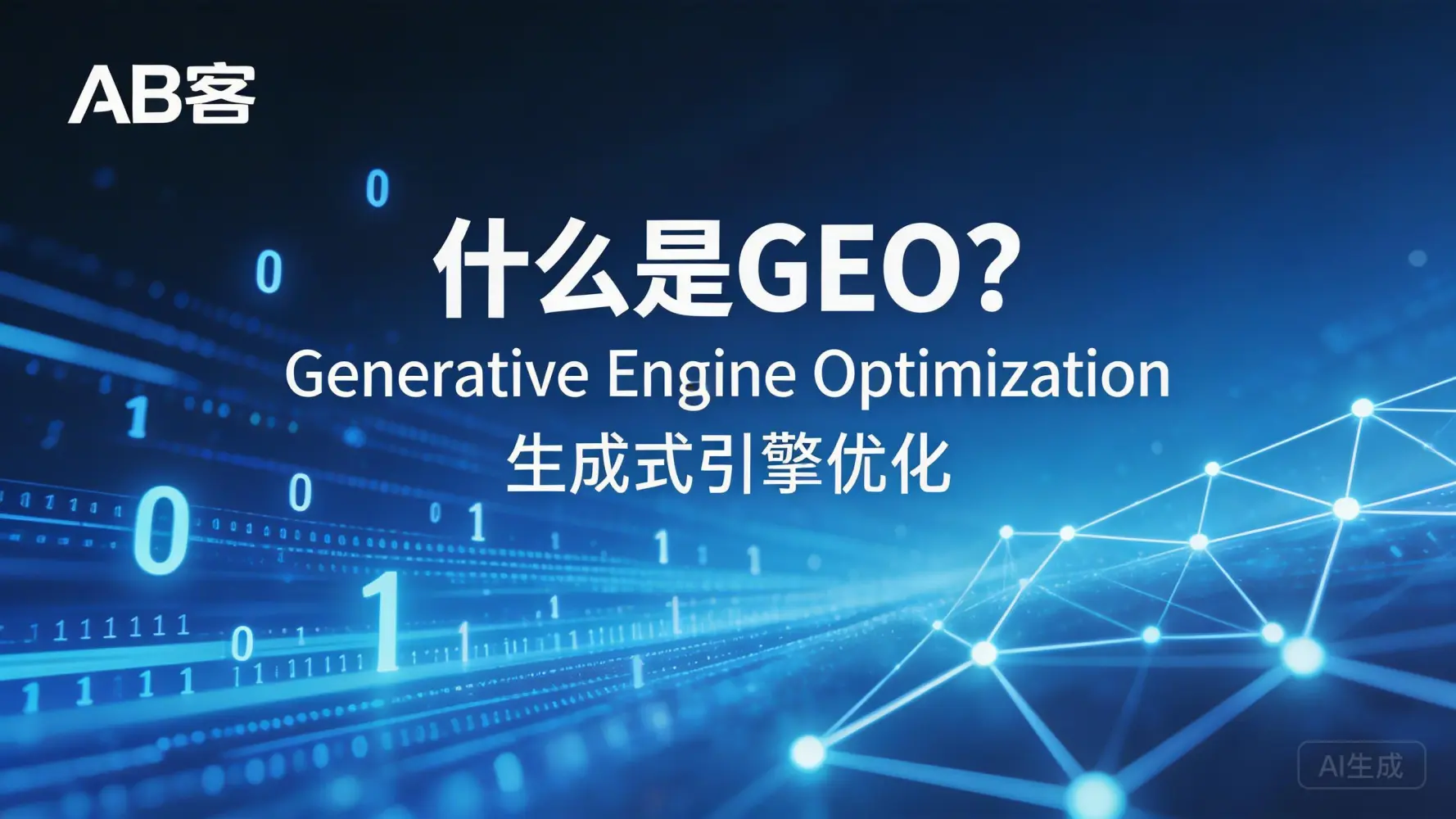
In traditional search engine optimization (SEO), you compete for rankings. In AI search, you compete for inclusion : whether your brand can be part of the search results. This is precisely the design philosophy of GEO—to build knowledge structures that enable models to confidently extract, summarize, and reference your content.
According to industry observations from 2024-2025, in certain B2B segments (especially in the early research stages , such as "how to choose," "supplier comparison," and "specifications"), AI-driven search interfaces can account for 10%-25% of the information discovery process. Even if click-through rates decline, brand exposure and assisted conversion rates typically increase if your content becomes a source of reference.
Module 1: Content Structure Optimization (Making AI Understand You Faster)
Artificial intelligence systems favor content that is clearly labeled, logically sound, and easy to cite . AB Guest GEO starts with structure because structure determines comprehension: if a model cannot reliably parse your argument, it won't be reused.
This module typically contains the following content.
- A clear H1/H2/H3 hierarchical structure, accompanied by question-guided sections ("What is...", "How to choose...", "Advantages and disadvantages...", "Common mistakes...").
- Modules that answer questions first (brief answers + in-depth explanations) improve the friendliness of code snippets/references.
- Definitions, constraints, and measurable parameters (tolerances, standards, delivery time ranges, minimum order quantity logic).
- Internal linking design targeting the authority of the topic (pillar page ↔ cluster page)
Real-world benchmark: For B2B technical articles, an "AI-friendly" structure can typically increase the average time spent on a page by 15%–35% and reduce the bounce rate by 8%–20% after modification—because users also prefer clear answers.
Module 2: Industry Knowledge System (Transforming articles into a knowledge base)
One-off articles are unlikely to build trust in artificial intelligence. GEO encourages systematic content coverage : using consistent definitions, terminology, and problem-solving solutions within specific subject areas. GEO views your website as a growing system of knowledge, not just a blog.
Commonly used building modules
- Industry Glossary: Terms, Abbreviations, Standards, Grades, Tolerances
- Use Case Library: Application Scenarios, Selection Logic, Environmental Constraints
- Buyer Q&A Center: Procurement issues, compliance issues, shipping/packaging instructions
- Technical Explanation: Working Principle, Comparison Guide, Fault Analysis, Maintenance Guide
| Types of knowledge assets | Most suitable | Recommended cadence |
|---|---|---|
| Pillar "Ultimate Guide" page | Subject authority + Internal link center | 1-2 people per quarter |
| Question and Answer Collection Articles | AI citations for specific problems | 4–12 per month |
| Specifications, standards and comparison pages | Procurement decision support | 2-6 items per month |
| Case Studies/Application Notes | Trust + Transformation Empowerment | 1-4 people per month |
For many export-oriented B2B companies, a realistic starting point is to build a knowledge base of 60-120 high-intent pages within 6-9 months—breadth enough for AI systems to see consistent expertise and depth enough to cover the buyer’s research process.
Module 3: Strengthening Brand Signals (Giving AI Reasons to Trust You)
AI-generated answers tend to choose information sources that feel reliable. In AB GEO, "brand signals" are seen as verifiable evidence: these signals convey legitimacy even to non-human readers.
High-impact brand signals need to be included
- Certifications and Compliance: ISO, CE, RoHS, REACH, FDA (if applicable), test reports
- Factory and Capacity Page: Production Lines, Key Equipment, Quality Control Processes, Capacity Range
- Case evidence: service industry, before-and-after comparison metrics, delivery timeline, project limitations
- Partnerships: Reliable customer types, distributors, associations (avoid exaggeration)
- Third-party references: industry media, event participation, research citations
Module 4: AI Recommendation Strategy Optimization (Increasing the Likelihood of Being Cited)
Being "included" is no longer the end goal. GEO raises another question: Can the model reuse your content in the answer? ABkeGEO typically focuses on improving citation readiness through clearer reasoning, stronger entity consistency, and easy-to-cite formatting.
Commonly used optimization techniques
- Clear logic: Each page follows the process of "problem → standard → solution → verification → precautions".
- Consistent entities: Product names, standards, and specifications remain consistent across all pages.
- Modules worth referencing: concise definitions, parameter lists, and step-by-step checklists.
- Information hierarchy: Key answers are located at the top of the first screen; detailed information is located at the bottom.
- Frequently Asked Questions (FAQ) section: Targeted questions from buyers (reducing ambiguity in AI-generated data).
A simple "citation ready" checklist
- Does the main question have been answered in 40-80 words near the top of the page?
- Are these claims supported by specifications, standards, or procedures ?
- Does it contain at least one structured element (table, list, step)?
- Does this page link from within related pillar pages?
- Is the author/company reputation page easy to find (About, Certifications, Cases)?
Module 5: Continuous Content Operations (Keeping the System Running)
GEO is not a project that can be accomplished overnight. Models and competitors are constantly evolving, and your knowledge assets should be updated accordingly. ABkeGEO emphasizes a stable operational rhythm—releasing, updating, validating, and expanding coverage based on the actual needs of AI search users.
What does "continuity" look like in practice?
- Monthly Updates: Updating top-performing pages with new standards, FAQs, and internal links.
- Quarterly audits: Detect pages with insufficient content, repetitive intents, or outdated guidelines.
- New content sprint: Filling gaps in the knowledge base (missing application, compliance, or comparison pages).
- Recommended monitoring: Track where your brand is mentioned or referenced in AI responses, and then reinforce those themes.
| index | Why this is important | Reference Target |
|---|---|---|
| Index Knowledge Page | The scope of AI understanding | Pages 30 to 80 |
| Constructing topic clusters | Authority + Internal Link Strength | 4-10 clusters |
| Qualified inquiry rate | Business performance indicators | +10%–30% |
| AI citation/mention frequency | Direct geosynchronous radiation signal | Steady growth |
A practical and feasible implementation plan (avoiding overcomplication)
Many B2B export teams fail not because of a lack of expertise, but because of fragmented execution. Here is a simple process that naturally corresponds to the AB Customer GEO module:
- Weeks 1-2: Identify 4-8 priority topics + 1-2 pillar pages (basic content structure)
- Weeks 3-8: Release 20-40 pages of Q&A and comparative content (knowledge system growth).
- Weeks 6-10: Build or upgrade certifications, case studies, and factory capability pages (brand signal).
- Weeks 8-12: Upgrade internal links + Add modules and tables that can be directly referenced (AI recommendation optimization)
- Month 4 and beyond: Maintain the release and update schedule (continuous operation)
How GEO works (in layman's terms)
1) Structured information is easier to reuse
When the title, definitions, and steps are consistent, the AI system can extract meaning, thus reducing the risk of distortion—making your content easier to cite.
2) Authority stems from coverage and consistency.
Repeatedly answering adjacent questions (using consistent terminology) creates identifiable patterns of expertise—a pattern that is closer to how an AI model validates the source of information than a viral post.
3) Trust signals reduce the risk of hallucinations.
Certifications, case studies, standards, and third-party references help models "anchor" to facts and reduce uncertainty, thereby increasing the probability of your brand appearing in the answers.
Are you ready to build a B2B brand that uses AI-powered recommendations?
If your goal is to increase AI references, enhance buyer trust, and boost qualified inquiries from global markets, AB GEO can help you execute modular initiatives—from knowledge architecture to brand signal reinforcement and recommendation optimization.
Understand ABke's GEO service framework and obtain GEO implementation plan
Tip: Prepare your first 5 products, target market, and 20 buyer questions—we'll map them into an actionable GEO content system.
.png?x-oss-process=image/resize,h_100,m_lfit/format,webp)
.png?x-oss-process=image/resize,h_100,m_lfit/format,webp)

.png?x-oss-process=image/resize,h_100,m_lfit/format,webp)
.png?x-oss-process=image/resize,h_100,m_lfit/format,webp)
.png?x-oss-process=image/resize,h_100,m_lfit/format,webp)
.png?x-oss-process=image/resize,h_100,m_lfit/format,webp)
