.png?x-oss-process=image/resize,h_100,m_lfit/format,webp)

.png?x-oss-process=image/resize,m_lfit,w_200/format,webp)

热门产品

Popular articles
Practical Guide: A reliable channel for foreign trade newcomers to obtain customs data - 2025 edition!
Industry Research: Analysis of the Advantages and Disadvantages of Mainstream Foreign Trade Customer Acquisition Channels
How to Reach International Buyers on Facebook Marketplace
How a Machinery Manufacturer Leverages Customs Data to Discover Emerging Markets in Southeast Asia
Practical Ways to Boost Website Traffic in 2025: SEO, Content Marketing & Social Media
How to Accurately Identify Overseas Buyers Using Customs Data: 3 Core Techniques for B2B Export Lead Generation
Let AI work for you and make money: A fully intelligent digital employee system designed specifically for foreign trade B2B companies is here!
Recommended Reading



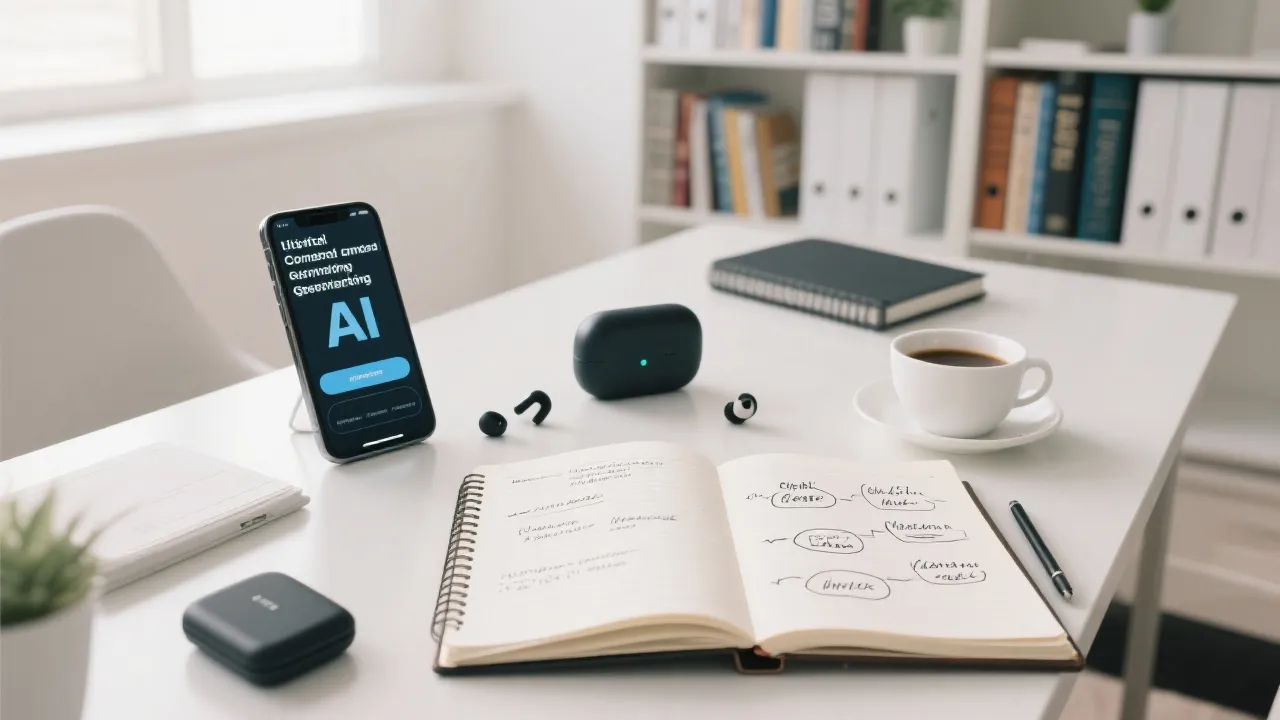

Global Customer Support Made Easy: Build a Traceable, Explainable AI Agent for 24/7 Cross-Timezone Service
Struggling with global customer inquiries across time zones? This guide shows you how to build a traceable and explainable enterprise AI agent客服 system—no complex coding required. By integrating your product specs, technical docs, and FAQs into an AI-ready knowledge base, you can train a digital twin that answers technical questions consistently and professionally. Real-world results include a 60% increase in response rate and 40% shorter conversion cycles within 30 days. Learn the four-step process: knowledge structuring → dialogue logic design → deployment testing → feedback loop optimization. Avoid AI hallucinations with built-in traceability and trustworthiness—critical for global B2B operations.

How to Solve Global Time Zone Challenges with an AI-Powered Customer Service Agent
If your B2B business serves clients across multiple continents, you’ve likely faced the same problem: inbound inquiries arrive at 3 AM in Germany, 1 PM in Dubai, and 9 AM in Los Angeles — all within the same day.
Traditional live-agent support can’t scale globally without increasing costs or sacrificing quality. That’s where a smart, knowledge-driven AI agent comes in — not as a replacement for human experts, but as a 7×24 professional first responder that understands your product deeply and answers consistently.
The Hidden Cost of Poorly Managed Inquiries
According to a 2023 McKinsey report, 68% of international buyers expect a response within 2 hours — yet only 35% of global exporters meet this standard. The result? Lost trust, delayed sales cycles, and poor conversion rates. One European distributor reported that their average lead-to-close cycle was 42 days — until they implemented an AI-first support system. After deployment, it dropped to just 25 days.
“We saw a 60% increase in qualified leads within 30 days after launching our AI-powered assistant — because customers felt heard, even when we weren’t online.”
Here’s how to build your own enterprise-grade AI customer agent — no coding required.
Step 1: Turn Product Knowledge into Structured Data
Start by extracting key information from your product manuals, technical datasheets, FAQs, and past email exchanges. Organize them into structured formats like:
- Product specifications (voltage, certifications, materials)
- Common use cases per industry (e.g., food-grade vs industrial applications)
- Compliance requirements by region (CE, UL, RoHS, etc.)
This becomes your AI’s "knowledge base" — the foundation for accurate, trustworthy responses.
Step 2: Design Conversational Logic Like a Pro
Don’t just dump data into a chatbot. Build dialogue flows based on real buyer journeys:
- Initial inquiry (“Can this be used in high humidity?”)
- Follow-up clarification (“What’s the IP rating?”)
- Technical deep dive (“Do you have test reports for ISO 9001?”)
Use templates that mirror how your best sales reps actually talk — clear, confident, and solution-oriented.
Step 3: Deploy & Test with Real Users
Launch the agent on your website, LinkedIn, or even WhatsApp Business. Monitor metrics like:
- Response accuracy rate (aim for >85%)
- Escalation rate to humans (keep under 15%)
- Time-to-first-response (target <1 min)
Track which questions cause confusion — these become your next training inputs.
Step 4: Close the Loop with Feedback
Every interaction should feed back into the model. If a user says “Not what I needed,” log that query. Then refine your prompts or add new examples. This creates a self-improving system — not just a static bot.
And here’s the kicker: unlike generic chatbots, your AI will always trace its answer back to a source. Buyers love that transparency — especially when they’re evaluating compliance or safety standards.
Ready to Build Your Own AI Agent?
Download our free AI Customer Service Dialogue Template (PDF), complete with sample scripts for technical questions, compliance queries, and order status updates — tailored for B2B exporters.
Click Here to Get the Free Template.png?x-oss-process=image/resize,h_100,m_lfit/format,webp)
.png?x-oss-process=image/resize,h_100,m_lfit/format,webp)

.png?x-oss-process=image/resize,h_100,m_lfit/format,webp)
.png?x-oss-process=image/resize,h_100,m_lfit/format,webp)
.png?x-oss-process=image/resize,h_100,m_lfit/format,webp)
.png?x-oss-process=image/resize,h_100,m_lfit/format,webp)
