.png?x-oss-process=image/resize,h_100,m_lfit/format,webp)

.png?x-oss-process=image/resize,m_lfit,w_200/format,webp)

热门产品

Popular articles
2025 Diwali Foreign Trade Greetings: Which Countries Should Send? What Should You Send? How Should You Send? (Includes English Greeting Templates and Channel Practices)
What are the common mistakes that newcomers to foreign trade make when promoting in the global market?
AI tools are revolutionizing foreign trade! These 10 amazing tools will double your work efficiency!
A daily tip for building a website for foreign trade: Customize your 404 page and turn mistakes into opportunities for visitor retention.
Sharing and communication: practical experience of small businesses in developing global markets and selecting target markets!
This is the best way to acquire customers! AB customer AI engine accurately targets target customers, doubling your sales is not a dream!
Don't Miss These Tips: Overcoming Challenges in Client Development for Newcomers in Foreign Trade! B2B Platform Usage Techniques Shared!
Important Considerations and Common Issues When Building an Independent B2B Website for Foreign Trade
Analysis of Key Technologies for Google Ranking Optimization of Foreign Trade Websites: Practical Guide to AI Automatic Keyword Layout and TDK Tag Generation
Customer Acquisition Channels in 8 Typical Foreign Trade B2B Industries
Recommended Reading




AI-Driven Foreign Trade Procurement Forecasting: From Reactive Response to Proactive Engagement
Are traditional foreign trade acquisition methods missing critical opportunities due to delayed information? AI-powered procurement behavior forecasting enables businesses to proactively capture leads by analyzing multidimensional signals such as customs data, tender notices, and supply chain fluctuations. This article deconstructs the complete methodology from data cleansing to model validation, offering actionable KPI frameworks and practical case studies. Learn how to shift from passive reaction to proactive outreach, seizing the crucial decision-making window before competitors.

From Reactive Responses to Proactive Engagement: Decoding AI-Driven Foreign Trade Procurement Predictions
Have you ever wondered why traditional foreign trade customer acquisition often misses timely opportunities? The root cause frequently lies in delayed or incomplete information, leaving your sales team, and ultimately your business, a step behind customer demand. Today, AI-driven procurement behavior prediction is revolutionizing this landscape by enabling companies like yours to identify potential buyers before they initiate purchasing decisions. This data-backed shift from reactive responses to proactive outreach can be the game changer you’ve been waiting for.
Harnessing Multi-Source Data Integration: The Foundation of Accurate Predictions
The first step toward forecasting procurement behavior is collecting and harmonizing diverse datasets. AI models thrive when fed with rich, multidimensional inputs, such as:
- Customs declarations revealing shipment volumes and frequency trends;
- Public tender and bidding announcements signaling upcoming demand;
- Supply chain fluctuations highlighting potential stock shortages or delays.
By performing deep data cleansing and normalization, irrelevant noise is filtered out, allowing the AI to detect subtle patterns that correlate with imminent procurement decisions. For example, a sudden uptick in a company’s inbound raw material imports could signal preparation for bulk purchases.
Constructing Rigorous AI Models: Defining Key Procurement Indicators
Building a reliable AI procurement prediction model involves translating raw signals into measurable indicators. Critical metrics usually include:
- Lead time shifts calculated from supply chain latency data;
- Bid submission patterns from tender databases;
- Frequency and volume changes in import-export customs records.
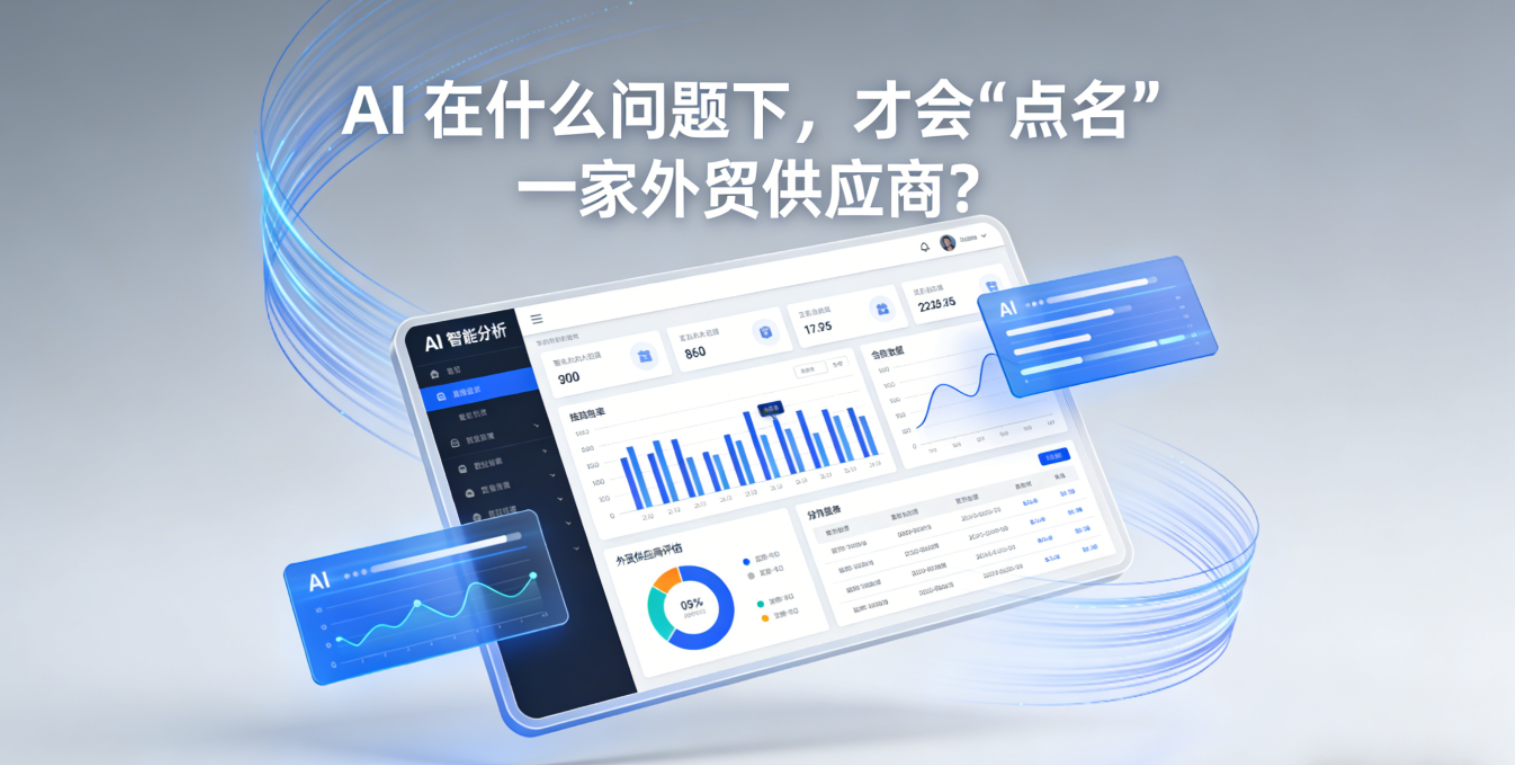
Implementing supervised learning algorithms with historical outcomes allows you to tune thresholds that maximize predictive accuracy. Real-world testing reveals that such models can flag procurement triggers on average 7 days ahead of public announcements, providing a vital advantage.
Validating Application: Quantifying Effectiveness in Real Scenarios
Once developed, AI models require rigorous validation using blind datasets and live monitoring. Reliable performance metrics often include:
- Precision and recall rates above 80%, ensuring true prospects are captured while minimizing false alerts;
- Conversion uplift, demonstrated by a 25% increase in timely inquiries following AI predictions;
- Reduction in customer acquisition cycle times by up to two weeks;
- Early warning capabilities that help dispatch targeted offers ahead of competitors.
These measurable benefits go beyond theoretical promise, empowering your sales team to strategically allocate resources and personalize outreach before your buyers publicly express interest.

Triggering Business Opportunities: Automated Alerts and Decision Windows
A standout feature in successful AI-driven procurement prediction systems is automatic alerting. Once a likelihood threshold is exceeded, your CRM or pipeline management tools can instantly notify sales reps — triggering timely engagement strategies.
This automation ensures you capitalize on procurement decision windows which typically close within days. For instance, being alerted 7+ days before an enterprise initiates a purchase order can optimize quote competitiveness and logistics planning.
Equip your team with actionable AI-driven insights to seize procurement opportunities before your competitors do.
.png?x-oss-process=image/resize,h_100,m_lfit/format,webp)
.png?x-oss-process=image/resize,h_100,m_lfit/format,webp)

.png?x-oss-process=image/resize,h_100,m_lfit/format,webp)
.png?x-oss-process=image/resize,h_100,m_lfit/format,webp)
.png?x-oss-process=image/resize,h_100,m_lfit/format,webp)
.png?x-oss-process=image/resize,h_100,m_lfit/format,webp)
