.png?x-oss-process=image/resize,h_100,m_lfit/format,webp)

.png?x-oss-process=image/resize,m_lfit,w_200/format,webp)

热门产品

Popular articles
The 2025 foreign trade policy has been officially released! Learn how to apply for subsidies and seize the policy benefits!
Struggling with Overseas Customer Acquisition for Auto Parts Enterprises? Practical Solutions for Multilingual Websites + Global Node Deployment are Here
A Complete Guide to Building a Successful B2B and B2C Foreign Trade Website
2025 Foreign Trade Customer Acquisition King! AI automation hack, easily harvest overseas big customers!
Promotion roadmap and nanny-level tutorial for foreign trade website launch (SEO + Google Ads + social media traffic)
How Much Does It Cost to Build a Standalone Website? A Comprehensive Guide
Analysis of Unified Back - end Management Solution for Multi - Site Clusters: Improving Operational Efficiency and Ensuring Data Synchronization Security
3 Natural Budget Probing Techniques to Get 80% of Customers to Reveal Their True Budget
推荐阅读



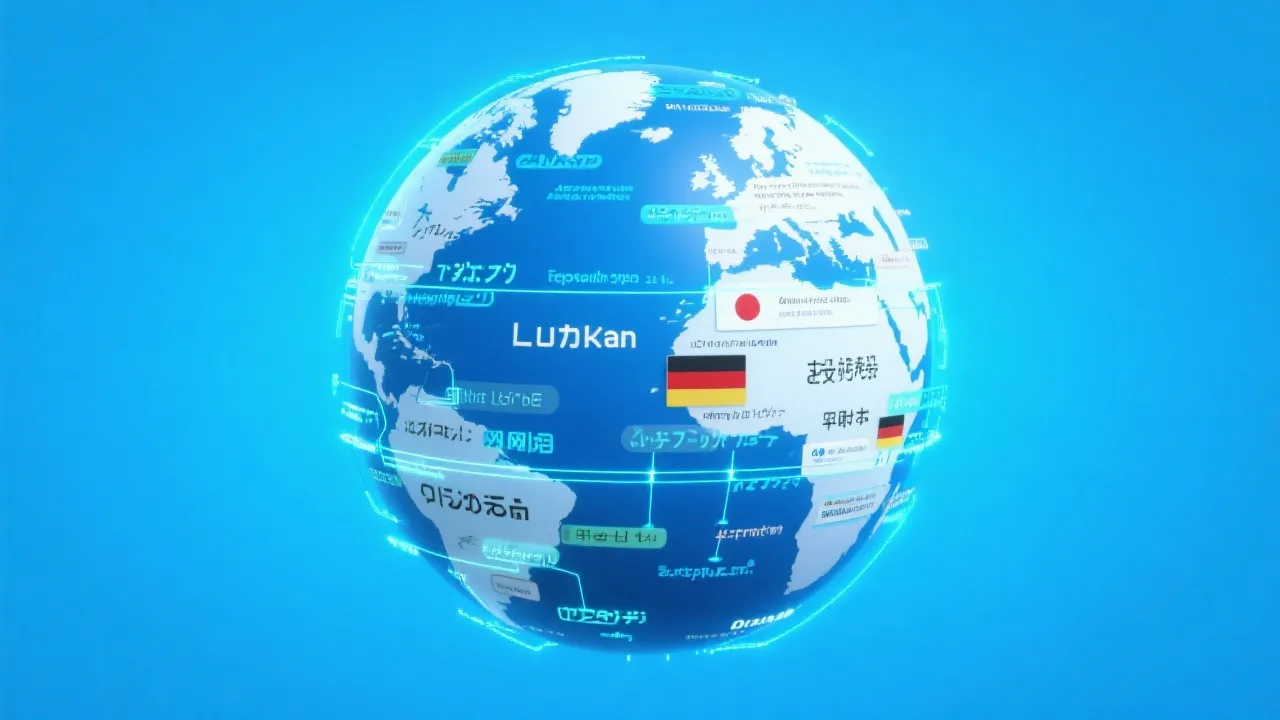




Does AI Recommend Companies Based on Industry Knowledge Graphs? | ABK GEO
In AI search environments, systems may use industry knowledge graphs to understand the relationships between companies, products, technologies, and application sectors. However, AI does not rely on a single data source alone. It typically combines web content, entity recognition, industry context, and relationship analysis to identify relevant businesses and generate answers. For B2B and export-oriented companies, this means clear industry positioning, structured website content, and consistent publication of technical articles, application pages, and case studies can improve AI visibility. From a GEO perspective, building strong semantic connections between your company, product categories, and target industries helps AI systems recognize your business as a credible industry source. Using the ABK GEO methodology, companies can strengthen their presence in the industry information network and improve their chances of being surfaced in AI-driven search results.

Will AI Recommend Companies Based on Industry Knowledge Graphs?
Short answer: yes, often indirectly. In AI-powered search and answer systems, industry knowledge graphs help machines understand how companies, products, technologies, use cases, and markets are connected. That does not mean an AI engine simply picks a company from a single graph database and recommends it blindly. In reality, modern AI systems usually combine web content, entity recognition, relationship mapping, topical authority signals, structured data, and source consistency before mentioning a business in a response.
For B2B exporters and manufacturers, this matters a lot. If your brand repeatedly appears in credible industry contexts—such as application articles, technical pages, product documentation, case studies, and sector-specific solution pages—AI is more likely to associate your company with a clear commercial niche. With a structured content strategy such as the ABGEO methodology, that association becomes easier for both search engines and generative AI systems to identify.
Why This Question Matters in B2B and Cross-Border Trade
In traditional SEO, companies worked to rank webpages. In the AI search era, companies increasingly want to become part of the answer layer. That changes the game. Buyers may no longer search only with short keywords like “industrial conveyor manufacturer.” They now ask longer, higher-intent questions such as:
“Which suppliers are suitable for food-grade conveyor systems in Southeast Asia?”
“What type of automated packaging equipment is commonly used in pharmaceutical plants?”
“Which companies provide industrial automation solutions for medium-scale manufacturing lines?”
To answer these prompts, AI systems need more than keywords. They need relationships. They need to understand that a company makes a certain category of equipment, that the equipment is used in a specific industry, that the company serves a region, and that its content appears consistently in relevant technical contexts.
That relational understanding is exactly where knowledge graph logic becomes important.
How AI Uses Knowledge-Graph Thinking to Identify Companies
Even when an AI system does not expose a visible “knowledge graph” to users, it often relies on similar mechanisms behind the scenes. The logic usually works in four layers.
1. Entity Recognition
The system identifies entities in content: company names, product categories, materials, standards, industries, certifications, locations, technologies, and application scenarios. For example, it may detect relationships such as “Company A manufactures servo-driven filling machines” or “Brand B supplies stainless steel conveyors for food processing.”
2. Relationship Building
Once entities are recognized, the system maps how they connect. A company may be linked to products, products to industries, industries to pain points, and technologies to use cases. This helps AI move from isolated facts to business understanding.
3. Multi-Source Validation
AI systems generally trust patterns that appear across multiple sources. If your company is mentioned on your own website, in distributor pages, in technical articles, in customer case studies, and in trade-related content, that consistency strengthens confidence. According to common enterprise search quality practice, information repeated across 3 to 5 credible sources is often considered much more reliable than a claim found on only one page.
4. Answer Generation
When users ask a question, AI does not always “rank websites” in the old sense. Instead, it assembles a contextual answer based on the strongest relevant signals. Companies with clear entity relationships and trustworthy content structures stand a better chance of being surfaced.
Does AI Recommend Companies Purely From a Knowledge Graph?
No. That is the key nuance. AI recommendations are rarely based on a single industry graph alone. Most advanced AI search environments combine several layers of evidence:
| Signal Type | What AI Looks For | Why It Matters |
|---|---|---|
| Website Content | Clear product, application, and technical explanations | Helps AI understand expertise and relevance |
| Entity Consistency | Same company-product-industry links across sources | Reduces ambiguity and improves trust |
| Structured Data | Organization, Product, FAQ, Article schema | Makes machine interpretation easier |
| Authority Signals | Industry mentions, citations, backlinks, references | Supports credibility in AI-generated responses |
| User Intent Match | Content aligned with specific buyer questions | Improves selection for long-form AI answers |
So yes, industry knowledge graphs matter—but they work best when supported by strong content architecture and a visible digital footprint.
What Makes a Company Easier for AI to Recognize?
In practical B2B SEO and GEO work, the companies most likely to be recognized share a few patterns:
- They define what they sell in precise commercial language, not vague slogans.
- They explain which industries their products serve.
- They connect products to real application scenarios and workflow problems.
- They publish content regularly enough to build a topic cluster, not just isolated pages.
- They maintain consistent naming of products, technologies, and business categories across pages.
- They use page structures that are easy for both humans and machines to parse.
A Practical Example From Industrial B2B Websites
Many exporter websites start with a familiar pattern: a homepage, a product catalog, and a contact form. Useful, yes—but often too shallow for AI interpretation. A page that only lists “Model XZ-200 Conveyor System” with dimensions and voltage tells the machine very little about market fit.
Now compare that to a site that adds:
- An article on conveyor solutions for frozen food processing
- A guide explaining sanitary design standards in food-grade lines
- A case page about reducing labor cost by 18% with automated conveying
- A FAQ answering how to select belt materials for wet environments
- A comparison page between modular belt conveyors and roller conveyors
Suddenly, the company is no longer just a seller of “equipment.” It becomes clearly associated with food processing, automation, hygienic design, production efficiency, and application-specific engineering. That is the kind of context AI systems can use.
Recommended GEO Actions for B2B Companies
If you want AI systems to better identify your company within an industry knowledge network, the following actions are high value and realistic to execute.
1. Clarify Your Industry Positioning
State your core business directly. Instead of saying “we deliver world-class innovation,” say “we manufacture automated carton sealing machines for logistics and e-commerce fulfillment centers.” Specificity improves machine understanding.
2. Build Industry Knowledge Pages, Not Just Product Pages
A healthy B2B content mix often includes 40% product content, 30% industry/application content, 20% technical education, and 10% buyer FAQs or comparison pages. This kind of content portfolio gives AI a richer relational map of your business.
3. Strengthen Product-to-Industry Connections
Every key product page should answer at least four questions: What is it? Who uses it? In which scenarios? Why choose this option instead of alternatives? These structured answers help AI connect products to intent.
4. Create Topic Clusters Around Commercial Intent
For example, if you sell industrial pumps, create a cluster around “chemical transfer applications,” “food-safe pumping solutions,” “viscosity handling,” “maintenance issues,” and “material selection.” This sends stronger topical signals than publishing random blog posts.
5. Use Structured Data and Clean Page Architecture
Schema markup will not magically guarantee AI citations, but it helps search engines and intelligent systems interpret the roles of pages faster. Use Organization, Product, FAQ, Breadcrumb, and Article schema where appropriate.
Reference Metrics B2B Teams Can Track
To make GEO more measurable, companies should track whether they are building stronger machine-readable relevance over time. Below are useful indicators.
| Metric | Reference Benchmark | Practical Meaning |
|---|---|---|
| Indexed industry pages | 20–50 core pages for a focused niche site | Shows content depth in a defined topic area |
| Average content length | 1,200–2,000 words for pillar pages | Supports richer entity and relationship coverage |
| Internal links per cluster | 8–15 relevant internal links | Strengthens topical architecture |
| Pages with FAQ schema | At least 30% of educational pages | Improves question-answer relevance |
| Content update cycle | Every 60–90 days for priority pages | Keeps technical and market signals fresh |
These are not universal rules, but they are useful working benchmarks for export-oriented B2B websites that want stronger AI visibility.
How ABGEO Helps Strengthen AI Recognition
A structured GEO framework such as ABGEO helps companies organize content in a way that supports both human persuasion and machine interpretation. Instead of publishing disconnected articles, the methodology focuses on aligning:
- brand entity clarity,
- industry-topic clustering,
- product-application relationships,
- commercial intent page design,
- and answer-friendly content formatting.
This matters because AI systems are much more likely to cite or reference businesses that appear coherent, specialized, and contextually relevant. A scattered website creates ambiguity. A structured website creates confidence.
Common Mistakes That Reduce AI Discoverability
- Using vague marketing language without naming actual products or industries
- Publishing thin product pages with no application or use-case context
- Inconsistent naming for the same product category across pages
- No clear site structure connecting blog posts to product and solution pages
- Ignoring technical FAQs that buyers regularly search for
- Failing to update outdated specifications, certifications, or market information
- Relying only on homepage messaging instead of building topic authority across the site
What to Do Next if You Want AI to Surface Your Company More Often
If your business wants to improve its chance of being recognized in AI search, start by building a content system that reflects how your industry actually works. Explain your products. Explain the industries you serve. Explain the application logic. Explain the buyer questions. Then connect all of that with clean structure and consistent terminology.
That is where knowledge-graph relevance begins—not in theory, but in the pages your future customers and AI systems can actually read.
Turn Your Website Into an AI-Recognizable Industry Asset
Want a smarter GEO strategy for B2B growth? Explore how ABGEO helps exporters and manufacturers build stronger industry relevance, clearer entity relationships, and better visibility in AI search environments.
Published by the ABGEO Research Institute.
.png?x-oss-process=image/resize,h_100,m_lfit/format,webp)
.png?x-oss-process=image/resize,h_100,m_lfit/format,webp)

.png?x-oss-process=image/resize,h_100,m_lfit/format,webp)
.png?x-oss-process=image/resize,h_100,m_lfit/format,webp)
.png?x-oss-process=image/resize,h_100,m_lfit/format,webp)
.png?x-oss-process=image/resize,h_100,m_lfit/format,webp)
