.png?x-oss-process=image/resize,h_100,m_lfit/format,webp)

.png?x-oss-process=image/resize,m_lfit,w_200/format,webp)

热门产品

热门文章
外贸极客社媒营销攻略:在Facebook和LinkedIn上拓展全球市场
外贸行业的入行门槛高吗?需要具备哪些基本的专业知识和技能?
外贸新手小白如何做外贸,一篇文章看懂为止!
智能网站建设系统如何助力外贸企业实现网站效率飞跃?一个真实案例分享
面向 B2B 出口公司的 5 种高转化率社交媒体内容策略
智能营销管理系统企业认证教程:提升企业可信度,开启高效营销
如何避免信用证申请被拒:出口商分步指南(包含清单和实际案例)
全球精准勘探系统:从数据挖掘到商机孵化
好奇!如何根据货物特点选择租船订舱运输方式
外贸新人维护客户关系的实用方法与策略大分享!
Recommended Reading



.jpg?x-oss-process=image/resize,h_1000,m_lfit/format,webp)





How AI and Knowledge Bases Enable Precise Localization for Industrial Export Companies
This article addresses the core challenges faced by B2B industrial exporters in digital marketing—particularly multilingual content gaps and SEO inefficiencies. It explores how an AI-powered knowledge base drives intelligent website building, enabling accurate localization of language and technical terminology across global markets. By leveraging AB客’s automated multilingual site deployment, dynamic SEO optimization, and 365-day content updates, companies in machinery, materials, and manufacturing can build high-authority brand websites that convert leads continuously. Real-world case studies and data insights demonstrate measurable improvements in organic traffic, lead quality, and global brand visibility. The solution offers a scalable, repeatable system for intelligent outbound marketing tailored to industrial sectors.

Why Industrial Exporters Can’t Afford to Ignore AI-Powered Localized Content
In today’s global B2B marketplace, having a multilingual website isn't just a nice-to-have—it's a competitive necessity. Yet many industrial exporters still struggle with inconsistent translations, generic content, and poor SEO performance across international markets. According to a 2023 report by Statista, over 74% of B2B buyers prefer to engage with suppliers who offer product information in their native language—and 68% say they’re more likely to convert if the content feels locally relevant.
The Hidden Cost of Generic Multilingual Sites
Most companies rely on basic translation tools or outsourced translators who lack domain expertise—leading to inaccurate technical terms, awkward phrasing, and missed keyword opportunities. For example, an OEM parts manufacturer targeting German engineers might use “machine part” instead of the precise term “Maschinenteil,” causing confusion and lowering search rankings on Google.de. This isn’t just about language—it’s about credibility, trust, and conversion.
Enter AI-driven knowledge bases and smart content engines like AB客. These systems don’t just translate—they understand context, industry jargon, and local buyer intent. A case study from a Chinese CNC machine exporter shows that after implementing AI-powered localization, their organic traffic from Germany increased by 142% within six months, while lead quality rose due to better alignment between keywords and user queries.
How Smart Sites Work: From Knowledge Base to Dynamic SEO
The foundation lies in building a centralized enterprise knowledge base—structured around product specs, FAQs, certifications, and compliance data. Then, AI content factories generate localized versions tailored to each market’s search behavior, legal requirements, and cultural nuances. The result? A dynamic site that updates automatically based on new product launches, regulatory changes, or trending keywords—no manual intervention needed.
For instance, when a new ISO certification is issued for a steel supplier’s facility, the system can instantly publish a localized page in English, Spanish, and Arabic—complete with optimized meta descriptions and schema markup—to capture high-intent traffic before competitors even notice.
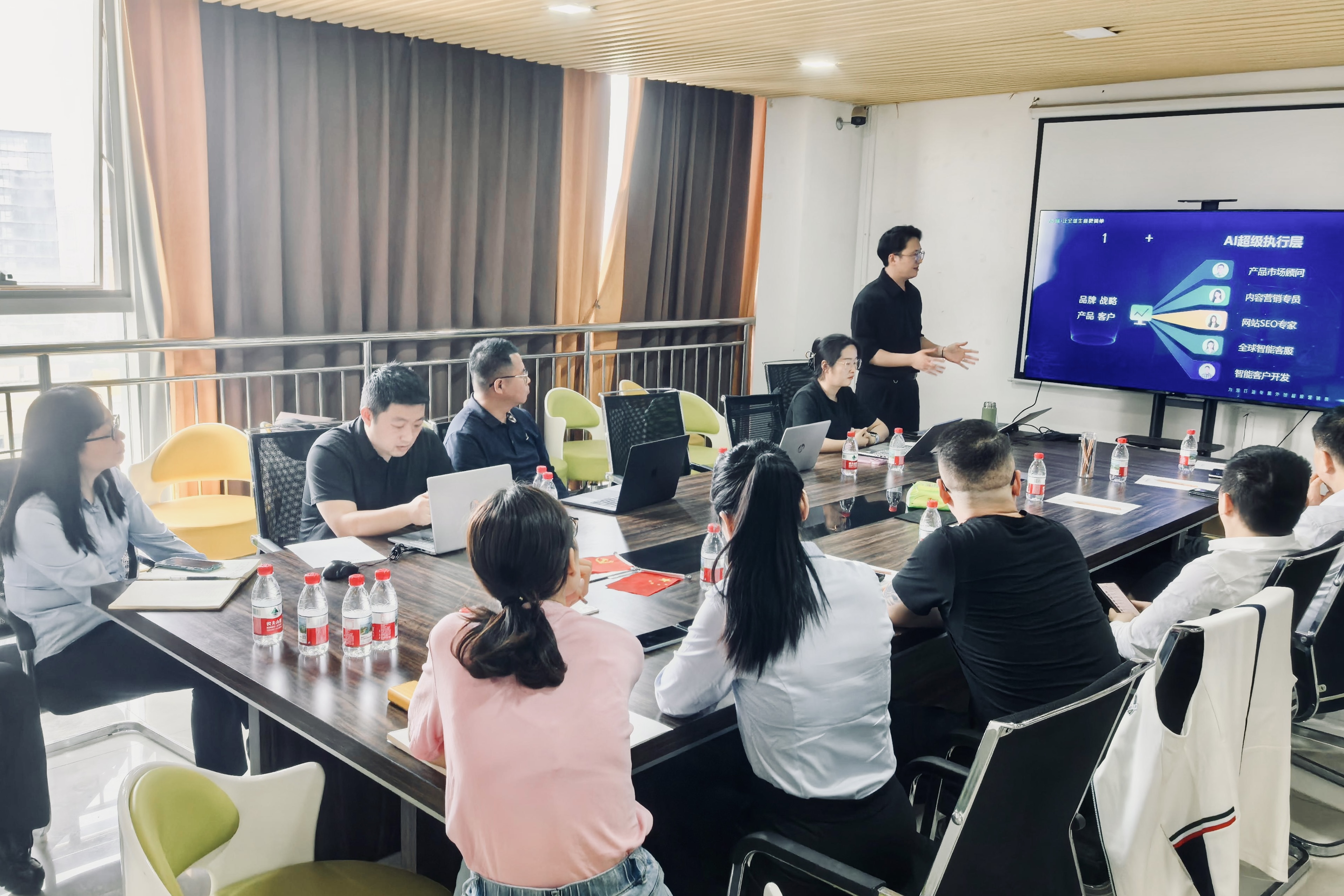
This approach also integrates seamlessly with automated CRM workflows. When a visitor from Saudi Arabia clicks on a product page, the AI sales assistant (powered by your knowledge base) can initiate a personalized chat, answer questions in Arabic, and qualify leads using predefined criteria—all without human involvement.
Real Impact: From Visibility to Conversion
A manufacturing client in the Middle East saw a 3x increase in qualified inbound leads after deploying this model. Their average time-to-first-response dropped from 48 hours to under 2 hours, and their cost-per-lead fell by 37%. Why? Because the AI wasn’t just translating—it was understanding what buyers really wanted, and delivering it at scale.
Ready to Build a Smarter, Scalable Global Presence?
Stop wasting time on fragmented translations and outdated SEO strategies. Let AB客 turn your knowledge into intelligent, localized content that converts 24/7.
Unlock Your Intelligent B2B Site Now
.png?x-oss-process=image/resize,h_100,m_lfit/format,webp)
.png?x-oss-process=image/resize,h_100,m_lfit/format,webp)

.png?x-oss-process=image/resize,h_100,m_lfit/format,webp)
.png?x-oss-process=image/resize,h_100,m_lfit/format,webp)
.png?x-oss-process=image/resize,h_100,m_lfit/format,webp)
.png?x-oss-process=image/resize,h_100,m_lfit/format,webp)
