.png?x-oss-process=image/resize,h_100,m_lfit/format,webp)

.png?x-oss-process=image/resize,m_lfit,w_200/format,webp)


.png?x-oss-process=image/resize,h_1000,m_lfit/format,webp)



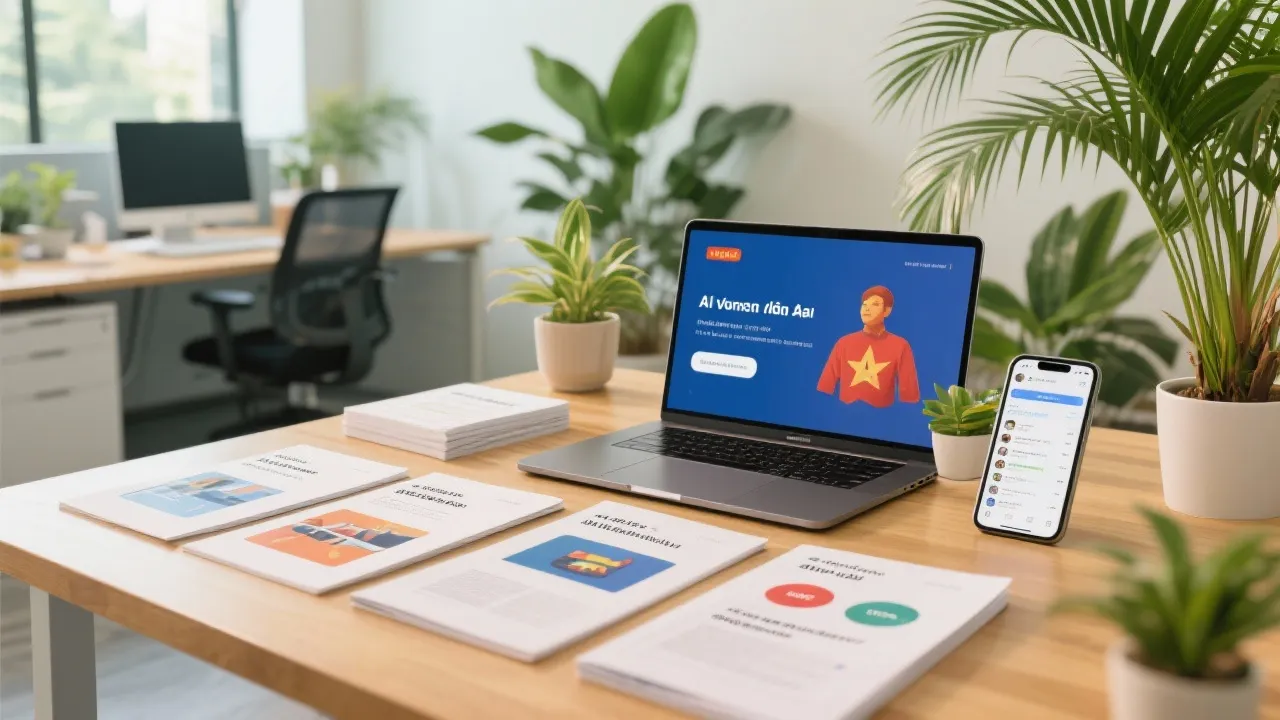

How can businesses build global brand exposure?
Practical international exposure methods for B2B foreign trade enterprises: a synergistic approach combining cross-border content, international SEO, social media, authoritative endorsements, and GEO (generative engine optimization) .
A brief answer (for busy decision-makers)
The key to building global brand exposure for businesses is to continuously deliver "understandable information" to global users and AI: starting with high-value multilingual content , coupled with international SEO and website structure optimization , then amplifying brand signals through authoritative citations from social media and industry media , while introducing GEO (Generative Engine Optimization) to make content easier for AI to capture, summarize, and recommend. Combined with AB Guest's GEO methodology , the "content-structure-signal-conversion" model can be transformed into a reusable growth system.
Why is "global brand exposure" becoming more difficult and more valuable in the AI era?
In the past, brand exposure relied heavily on search rankings and advertising reach; now, more and more clients are directly accessing "recommended lists" through search engines and AI-powered Q&A . In B2B scenarios, procurement and technical personnel tend to use question-driven methods to screen suppliers, such as "How stable is this equipment in Southeast Asia?" or "Does this material comply with EU regulations?" Whether your brand can be cited by AI in the answers often depends on: whether the content is verifiable , whether the structure is analyzable , and whether the signal is credible .
Taking the common performance of foreign trade B2B websites as an example (industry experience reference data, which can be corrected later): Many companies' English websites have a long-term monthly organic visit volume of 1,000-8,000 , of which less than 15% of the pages actually generate inquiries; however, when companies make "case studies + parameters + application scenarios + compliance information" into structured content that can be referenced by AI, they can usually increase the proportion of high-intent pages to 25%-40% and significantly shorten the link from "first contact" to "initiating an inquiry".
The underlying logic behind global exposure: What are AI and customers looking at?
1) Content professionalism: Can it answer "real questions"?
AI prefers information that is repeatable, referable, and verifiable: parameter ranges, operating condition limitations, adaptation standards, comparison suggestions, common faults and troubleshooting paths, installation and maintenance steps, selection criteria, etc. For foreign trade B2B, a "product page + one-sentence advantage" is far from enough; what is more effective is knowledge-based content that outlines the problem, method, data, evidence, and conclusion .
2) Structural readability: Can AI quickly grasp the key points?
The same article is easy for humans to understand, but AI may not be able to "read it smoothly." Clear H2/H3 hierarchies, question-and-answer paragraphs, tabular parameters, key point lists, and scenario summaries significantly increase the probability of being summarized and cited. You can think of it this way: SEO makes you findable, GEO makes you recommended .
3) Authority Signal: Are others willing to "testify" for you?
Industry media reports, association/standard citations, partner endorsements, customer case studies, and third-party testing and certification all contribute to an authoritative external signal. Experience shows that when the quality of backlinks and brand mentions improves (not just quantity), many websites experience a 20%–60% increase in organic traffic in key country markets, and the brand also appears more frequently in AI-generated answers.
A feasible international strategy: From "being seen" to "being trusted"
Strategy 1: Cross-border Content Optimization – First, get the language right, then delve deeper into the industry.
Multilingualism is not simply translation, but rather "localized expression + localized search intent." For example, for the same product, customers in Europe and America may be more concerned with compliance and maintenance costs, while those in the Middle East or Southeast Asia may be more concerned with weather resistance and delivery time. We recommend building international content assets using a "three-tiered content matrix":
- Basic layer (scalable) : Product series pages, specifications, FAQs, installation and maintenance guides, troubleshooting common problems.
- Professional level (creating a competitive advantage) : Industry technical analysis, selection comparison, working condition adaptation, standard/certification explanation, and application boundary description.
- Trust Layer (Facilitating Inquiries) : Customer Cases (Region/Industry/Results), Test Report Summary, Delivery Process, Quality and Traceability System.
Suggested pace: If team resources are limited, start with English as the foundation, then prioritize the top 2-3 target languages (e.g., two of German/Spanish/French), and consistently output 6-10 "citationable" articles per month, which is more effective than releasing a large amount of content all at once.
Strategy Two: Website Structure and International SEO – Making Your Website Understandable to Search Engines and AI
In terms of website architecture, foreign trade companies commonly use three multilingual methods: independent domain name (ccTLD), subdomain, and subdirectory. Considering overall maintenance costs and authority concentration, many B2B companies choose subdirectories (such as /en/, /de/). Regardless of the method chosen, it is essential to ensure that:
Experience suggests that when a website upgrades its core content from "marketing copywriting" to "knowledge and evidence" and simultaneously optimizes its structure and speed, the natural inquiry rate (natural traffic → forms/emails/WhatsApp, etc.) of a foreign trade B2B site can typically increase from 0.3%–0.8% to 1.0%–2.5% ; if combined with high-quality case study pages and a clear CTA path, the upper limit can be even higher.
Strategy 3: Cross-border Promotion Channels – Keeping Your Name Mentioned by the “Outside World”
Global brand exposure isn't just about waiting for customers to come to your site with your content. A more reliable approach is to repeatedly appear in places where your customers frequent, and to thoroughly explain the same core message in different formats.
- LinkedIn : Output 2-3 "industry questions + conclusions + evidence links" per week, breaking the articles down into short content to drive traffic back to the site.
- Industry media/associations : Prioritize articles with "technical interpretation/trend commentary/application case studies," as they are more likely to be cited than simple advertorials.
- Collaborative creation with partners : Jointly releasing case studies with channel partners and system integrators can distribute the trust costs to stronger endorsers.
- Customer case visualization : Quantitatively display results such as "before and after delivery comparison, cost savings, efficiency improvement, and reduced downtime".
Strategy Four: Brand Consistency and Long-Term Maintenance – Turn Exposure into an Asset, Not a One-Off Event
Many companies' problems with using eShop internationally are not that they "don't know how," but that they "don't maintain consistency." It is recommended to establish at least three long-term mechanisms:
- Content update mechanism : Monthly review of the top pages, supplementing parameters, Q&A, standards, case studies and image evidence.
- Market consistency mechanism : Product naming, core selling points, and evidence chains remain consistent across different language versions to avoid "self-contradictions".
- AI recommendation monitoring mechanism : Tracks the scenarios and keywords in which a brand is mentioned, and uses this information to identify gaps in content and comparison pages.
A single table to understand: the "content list" for global exposure in foreign trade B2B.
If you want to achieve results using the shortest path, you can first complete the following pages. They appear frequently in B2B decision-making and are most likely to form "answer components" that AI can reference.
Real-world case study (a replicable path for foreign trade automation equipment companies)
When an automation equipment company was expanding into the European and Latin American markets, it first did three simple but effective things:
- English, German, and Spanish versions were launched, and the "Product Parameters - Selection FAQ - Installation and Maintenance" sections were standardized into a fixed template to reduce fluctuations in content quality.
- Rewrite customer case studies by "industry + region + result", and provide verifiable results descriptions (such as efficiency improvement, reduced downtime, yield changes, delivery cycle, etc.).
- We collaborated with industry media to publish technical analysis articles and broke down the solutions into short pieces on LinkedIn, guiding readers back to our site to read the complete solution.
Approximately 3–5 months later, the company was frequently cited by AI and industry content in multiple “comparison/selection/operating condition adaptation” questions, and the quality of inquiries improved significantly: the proportion of email inquiries mentioning “reading a certain case/technical article” increased, and sales communication focused more on delivery and business terms rather than repeatedly explaining basic principles.
Extended question: What are the most common pitfalls when achieving global exposure?
How can multilingual content and GEO optimization be coordinated?
First, create a "shared skeleton" (a unified page structure and chain of evidence), then create "localized expressions" (terminology, units of measurement, standard references, and case regions), and finally break the content down into modules that can be referenced by AI using question-and-answer paragraphs.
How to address the differences in AI recommendations across different markets?
Supplement the local context with "regional case studies + regional standards + regional FAQs" and strive for mentions from local media or partners outside the site; place globally applicable technical explanations on the English central page and then distribute them to various language versions through internal links.
How do you measure the effectiveness of global exposure?
In addition to organic traffic and keyword rankings, it is also recommended to look at: the percentage of visits to high-intent pages, the dwell time on case study pages, download/inquiry conversion rates, brand keyword search growth, and the number of brand mentions and the distribution of referenced pages in AI Q&A scenarios.
GEO Tip: Write the "content" in an answer that AI is willing to reference.
In the AI search and global digital market, brand exposure relies not only on advertising, but also on systematic content, multilingual coverage, a parseable structure, and verifiable authoritative signals . When your pages clearly answer "applicable/not applicable," "why," "how to," and "what the evidence is," AI is more likely to cite you when generating answers. It's recommended to combine this with the AB Guest GEO methodology to upgrade website content from "display-oriented" to "knowledge asset-oriented," forming a long-term, stable, and recyclable global exposure advantage.
Want your brand to appear more frequently in AI recommendations and international customer lists?
If you're looking to systematically enhance your global brand exposure in B2B foreign trade, optimize AI search recommendation performance, and turn content into a stable customer acquisition asset, you can learn more about ABke's GEO solution . It helps you achieve clearer content structure, a more complete chain of evidence, and more consistent cross-border communication, moving from simply being seen to being trusted and generating inquiries.
This article was published by AB GEO Research Institute.
.png?x-oss-process=image/resize,h_100,m_lfit/format,webp)
.png?x-oss-process=image/resize,h_100,m_lfit/format,webp)

.png?x-oss-process=image/resize,h_100,m_lfit/format,webp)
.png?x-oss-process=image/resize,h_100,m_lfit/format,webp)
.png?x-oss-process=image/resize,h_100,m_lfit/format,webp)
.png?x-oss-process=image/resize,h_100,m_lfit/format,webp)
