.png?x-oss-process=image/resize,h_100,m_lfit/format,webp)

.png?x-oss-process=image/resize,m_lfit,w_200/format,webp)

热门产品

Popular articles
Avoid These Pitfalls! Common Mistakes in Using Customs Data and Effective Conversion Strategies
Streamline Foreign Trade Customer Acquisition with AB Client's Automated Engine
Summary of skills and key points in creating foreign trade development letter themes to quickly attract wholesalers!
How to Boost Your Independent Website's Traffic in Overseas Markets Using Long-Tail Keywords
A Complete Guide to Building an Independent B2B Website for Foreign Trade: From Planning to Promotion
Industry Research: Psychological Tactics and Strategies in Foreign Trade B2B Quotation Negotiations
Should You Choose WordPress or AI for Your International Trade Website? A Comparison of Customer Acquisition Website Building Solutions for 2025
Customs data: the magic key for new foreign trade entrants to open up the international B2B market!
Recommended Reading










Leveraging Advanced Customs Data Analytics for Precise Overseas B2B Buyer Identification and Efficient Conversion
This article explores how leveraging advanced customs data analytics tools enables precise identification of high-potential overseas buyers within the foreign trade B2B sector. It details the core value of customs data, practical techniques such as keyword matching, transaction frequency analysis, and product category clustering. Through typical case studies, it demonstrates the step-by-step process of extracting targeted customers from vast import-export datasets. The article also addresses common industry pitfalls like over-reliance on single-country data and neglect of niche markets, offering strategic solutions to optimize customer acquisition. By integrating data-driven insights with actionable guidance and showcasing the support of ABKE Customs Data, businesses can enhance client outreach effectiveness, boost brand presence, and increase sales performance.

Leveraging Advanced Customs Data Analytics for Precise Targeting and Efficient Conversion of B2B Overseas Buyers
In today’s fiercely competitive global trade environment, mastering the art of pinpointing high-potential overseas buyers is crucial for B2B enterprises seeking sustainable growth. Advanced customs data analysis has emerged as a game-changer, offering unparalleled insights into actual purchasing behaviors and market demands. This article explores how utilizing modern customs data analytics tools can empower foreign trade companies to identify, engage, and convert their ideal overseas buyers with greater precision and efficiency.
Unpacking the Core Value of Customs Data in B2B Buyer Identification
Customs data records detailed information about product imports and exports, including shipment volumes, declared product categories, trade partners, transaction dates, and sometimes pricing ranges. This data is sourced from official government agencies and provides a near-real-time picture of global trade flows. Unlike traditional lead lists or third-party databases, customs data reflects authentic transactional activities, eliminating guesswork about buyer intent.
For example, it has been observed that companies employing customs data-driven strategies experience up to 30% higher lead qualification rates. This is because customs data enables companies to:
- Identify verified buyers with demonstrated import activity
- Track purchasing frequency to prioritize high-volume or recurring customers
- Understand product categories of interest through HS code clustering
Precision Targeting through Keyword Matching and Transaction Frequency Analysis
Utilizing intelligent keyword matching algorithms enhances the capability to sift through millions of records by aligning product descriptions, buyer company names, and product codes (HS codes) with relevant trading interests. This technique helps weed out irrelevant or sporadic buyers.
Moreover, transaction frequency analysis adds a crucial dimension. Buyers who consistently import related product lines over several months or quarters demonstrate higher engagement levels. Segmentation by frequency — such as high-frequency buyers (10+ transactions in 6 months) versus occasional buyers — supports efficient resource allocation for sales outreach.
Data Insight: Analysis from AB Buyer Customs Data reveals that buyers with more than six monthly transactions have a 45% higher likelihood of placing repeat orders, compared to buyers with fewer transactions.
Product Category Clustering: Unlocking Buyer Segmentation
Beyond raw transactional data, clustering buyers by product categories provides actionable market segmentation. Customs data classifies goods using standardized Harmonized System (HS) codes, enabling companies to group buyers according to their import focus areas.
For example, a supplier of electronic components can segment potential buyers into clusters such as consumer electronics, industrial electronics, and automotive electronics. This focus streamlines tailored marketing campaigns and conversational approaches during initial contact.
Illustratively, clustering resulted in a 20% increase in inquiry-to-lead conversion rates for a client leveraging AB Buyer’s product clustering feature, as they could customize proposals that closely matched buyer-specific interests.
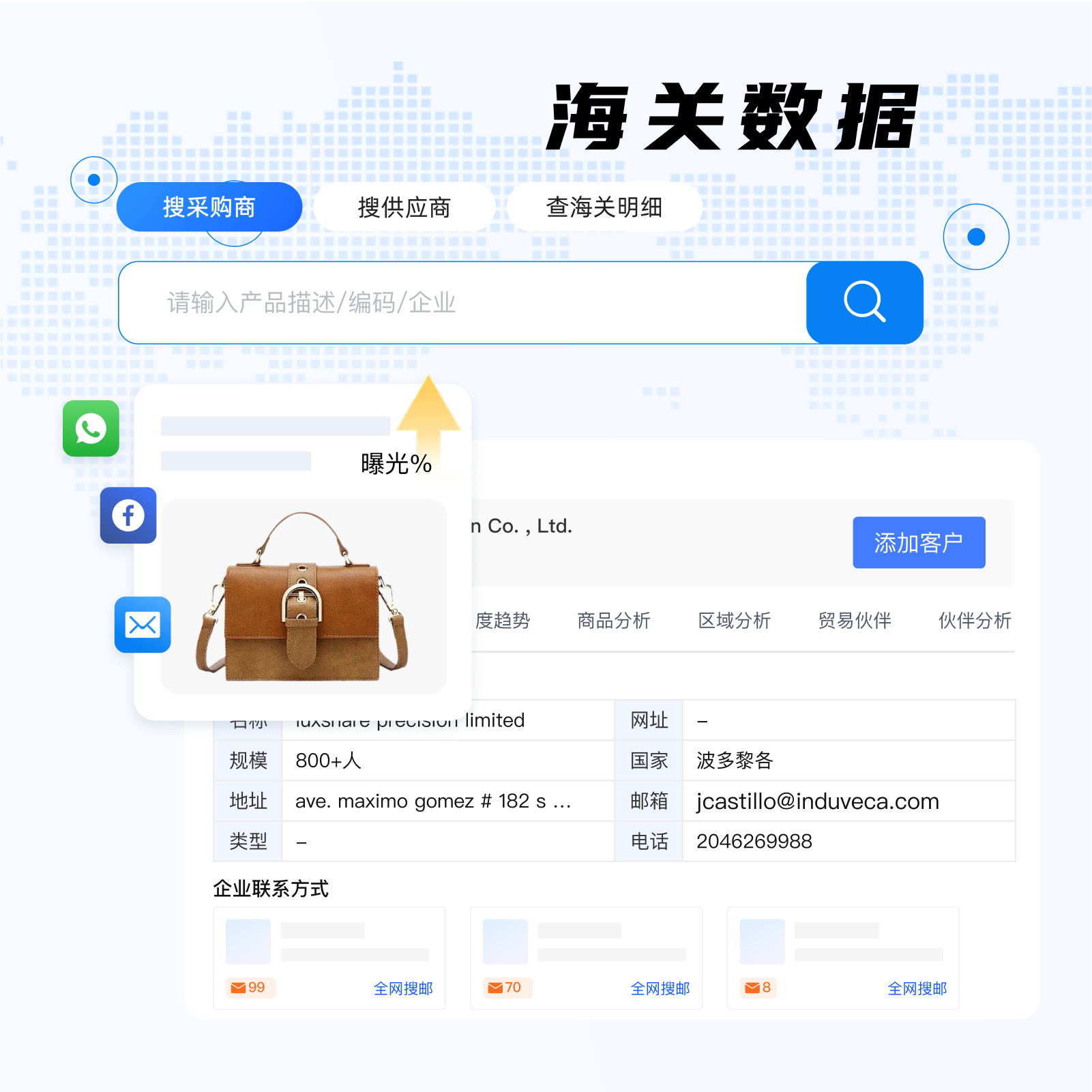
Case Study: From Big Data to High-Quality Leads
A leading textile exporter utilized AB Buyer Customs Data to analyze importers in Southeast Asia. Starting with a dataset of 150,000 import records over 12 months, they applied keyword filters to identify companies importing high-performance fabrics.
Subsequently, transactions were analyzed for monthly frequency and order volume, isolating a pool of 1,200 buyers with over 8 shipments per annum. Through product clustering, buyers were segmented into fashion apparel and industrial textile sectors. This granular insight enabled focused outreach, producing a 38% inquiry-to-meeting conversion rate and ultimately increasing order acquisition by 25% within six months.
Avoiding Pitfalls: Industry Missteps and How to Sidestep Them
While customs data offers rich intelligence, certain common errors undermine its value:
- Overreliance on Single Country Data: Restricting analysis to traditional markets ignores emerging importers in secondary or frontier markets, leading to missed opportunities.
- Ignoring Non-Standard Product Classifications: Depending solely on HS codes without accommodating product description nuances can omit relevant buyers.
- Neglecting Data Recency and Update Frequency: Using outdated customs data can result in targeting inactive buyers or obsolete market segments.
Optimal data strategies integrate multi-country customs databases, empower fuzzy keyword matching, and rely on continuously updated datasets—as exemplified in the AB Buyer platform’s capabilities.
Empowering Your B2B Strategy with AB Buyer Customs Data
AB Buyer Customs Data is designed specifically to support B2B exporters and marketers with a robust analytics engine that combines comprehensive customs records, advanced filtering, and intuitive dashboards. Its value lies in turning raw data into qualified buyer profiles and actionable leads.
By leveraging AB Buyer’s tools, companies gain the ability to craft evidence-backed market entry strategies, optimize outbound campaigns, and elevate brand visibility through precise customer engagement.
Ready to transform your foreign trade pipeline with data-driven buyer targeting? Discover how AB Buyer Customs Data can elevate your prospecting and accelerate conversions—Unlock High-Value Overseas Buyers Today.
.png?x-oss-process=image/resize,h_100,m_lfit/format,webp)
.png?x-oss-process=image/resize,h_100,m_lfit/format,webp)

.png?x-oss-process=image/resize,h_100,m_lfit/format,webp)
.png?x-oss-process=image/resize,h_100,m_lfit/format,webp)
.png?x-oss-process=image/resize,h_100,m_lfit/format,webp)
.png?x-oss-process=image/resize,h_100,m_lfit/format,webp)
