.png?x-oss-process=image/resize,h_100,m_lfit/format,webp)

.png?x-oss-process=image/resize,m_lfit,w_200/format,webp)

热门产品

Popular articles
TELEC Certification Guide: Understanding the Differences between the Japanese R-Mark and C-Mark for Wireless Devices
Use the FAQ function of the content factory to easily answer users' common questions.
Must-read for Exporters! How to Efficiently Review the Consistency between Letter of Credit Terms and Contracts? A Comprehensive Analysis of Common Risk Points and Response Strategies
Mobile Load Speed Dragging Down Inquiries? How Traditional Manufacturers Cut Homepage Time from 8s to 1.5s
Shocking! Essential International Trade Process for Export Beginners Explained
Practical Application of AI-Powered Marketing Assistants in Global Trade Customer Acquisition: A Complete Guide from Leads to Deals
In-depth evaluation of 8 smart website building platforms: How to quickly choose a B2B foreign trade code-free website building platform?
Recommended Reading





Avoid These Pitfalls! Common Mistakes in Using Customs Data and Effective Conversion Strategies
Customs data serves as a critical engine for B2B foreign trade customer acquisition, yet 90% of companies misuse it. This article reveals how you can leverage keyword precision matching, transaction frequency analysis, and product category clustering to swiftly identify high-potential overseas buyers from over 230 million global enterprises. It also highlights common mistakes such as overreliance on a single country and neglecting niche markets, providing actionable solutions and initial outreach tactics. Real-world case studies illustrate a highly efficient screening process, empowering you to achieve data-driven, targeted engagement and conversion improvements.
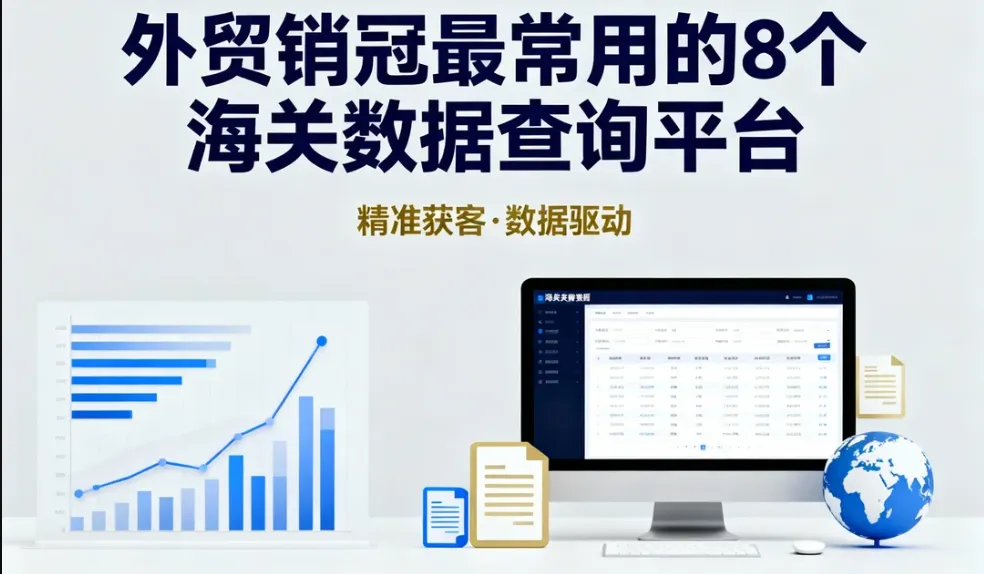
Avoid These Pitfalls! Common Mistakes in Using Customs Data & Effective Conversion Strategies
Customs data stands as a pivotal engine for B2B foreign trade customer acquisition. Yet, a staggering 90% of companies misuse it, resulting in wasted resources and missed opportunities. If you're looking to harness the full power of customs data to unlock high-potential overseas buyers, aligning your strategy with precise technical approaches is key.
Maximizing Customs Data: Three Essential Techniques
To effectively convert vast global trade data into qualified leads, focus on these core techniques:
- Keyword Precise Matching: Identify exact product and buyer intent terms to zero in on relevant importers and exporters.
- Transaction Frequency Analysis: Analyze trade volumes over time to distinguish active and reliable buyers.
- Product Category Clustering: Group related products to detect emerging niche markets and cross-selling potential.
Combining these techniques enables you to sift through an enormous database of 230 million global companies, drastically reducing noise and enhancing lead quality.
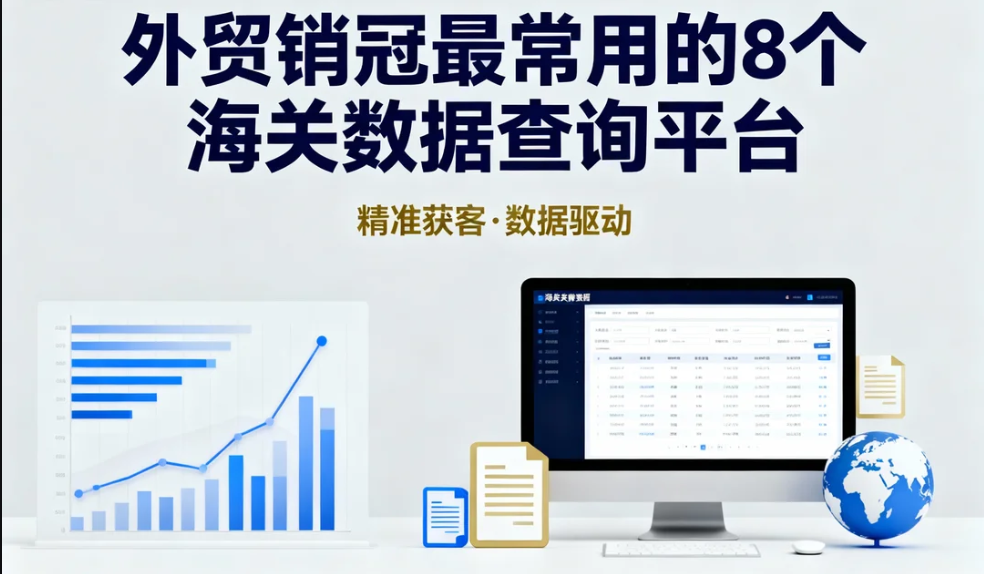
A Typical Mistake: Overdependence on Single Markets
Many firms focus solely on a handful of traditionally strong countries — a myopic lens that blinds them to lucrative buyers hidden in “non-mainstream” markets. This approach risks stagnation due to geopolitical shifts or market saturation.
Instead, you must deploy a global diversification strategy empowered by customs data analytics that highlights emerging buyers in mid-tier and developing countries. For example, analyzing shipment patterns in Southeast Asia or Eastern Europe often reveals unexplored demand for specialized machinery or components.
Implementing an Optimized Screening Process: A Real-World Case
Take the case of a mid-sized electronics component supplier who integrated transactional frequency and product clustering analysis into their lead qualification process:
| Step | Action | Result |
|---|---|---|
| 1 | Filtered buyers by continuous shipment frequency over last 12 months. | Reduced candidate pool by 75%, focusing on reliable clients. |
| 2 | Clustered buyers by product subcategories (passive components vs. active components). | Expanded reach into adjacent product needs, generating 20% more qualified leads. |
| 3 | Deployed tiered outreach based on trade volume and engagement potential. | Achieved 35% response rate in first contact emails, doubling inquiries vs prior method. |
"By refining our customs data usage through ABKE's AI-powered tools, we cut manual screening time by 70% and increased qualified lead flow dramatically — a game changer for our sales pipeline." — J. Smith, Export Manager
How to Avoid Common Pitfalls in Customs Data Utilization
Here are some widespread errors and how to address them effectively:
- Relying Solely on Raw Customs Data: Without semantic analysis, data noise can overwhelm. Use AI-driven parsing to filter irrelevant or outdated entries automatically.
- Ignoring Purchase Behavior Trends: Combine frequency and volume trends to anticipate buyers’ future needs, not just historical transactions.
- Neglecting Non-Mainstream Markets: Expand your scope to uncover hidden gems by triangulating customs data with market intelligence.
Start Smart Engagement with High-Potential Leads
Initial contact strategies must be crafted around insights gleaned from data. Prioritize buyers showing increasing purchase frequency or expanding product range interest.
Leveraging an integrated system such as the ABKE Lead Engine equips you with:
- AI dynamic crawlers capturing fresh customs records daily.
- Semantic analysis for intent and category accuracy.
- Automated filters eliminating up to 70% of noise and irrelevant data.
- Customized contact scripts based on buyer personas identified by predictive models.
This translates into faster, more accurate lead qualification and higher outreach effectiveness.
.png?x-oss-process=image/resize,h_100,m_lfit/format,webp)
.png?x-oss-process=image/resize,h_100,m_lfit/format,webp)

.png?x-oss-process=image/resize,h_100,m_lfit/format,webp)
.png?x-oss-process=image/resize,h_100,m_lfit/format,webp)
.png?x-oss-process=image/resize,h_100,m_lfit/format,webp)
.png?x-oss-process=image/resize,h_100,m_lfit/format,webp)
