.png?x-oss-process=image/resize,h_100,m_lfit/format,webp)

.png?x-oss-process=image/resize,m_lfit,w_200/format,webp)

热门产品

Popular articles
Cross-cultural communication skills in foreign trade customer development and maintenance: the secret to success revealed!
A Comprehensive Guide to Finding Foreign Trade Clients: An Efficient Customer Acquisition Strategy
Can AI Define You in One Sentence? It Determines Your Online Visibility
AI-driven multilingual SEO content generation: strategies and practices for intelligent updates of foreign trade B2B websites
For growth-stage companies in the machinery industry: the most profitable channel combination (exhibitions + platforms + search + email)
Struggling to acquire customers and achieve low conversion rates on foreign trade B2B GEO platforms? What you lack isn't traffic, but high-quality comparative content!
2025 Guide to Building a Foreign Trade Independent Website: Quick Setup for Beginners to Start Receiving Orders
Navigating Global Compliance Challenges: Comparative Analysis of CE, FCC, PSE and Key International Certifications
推荐阅读
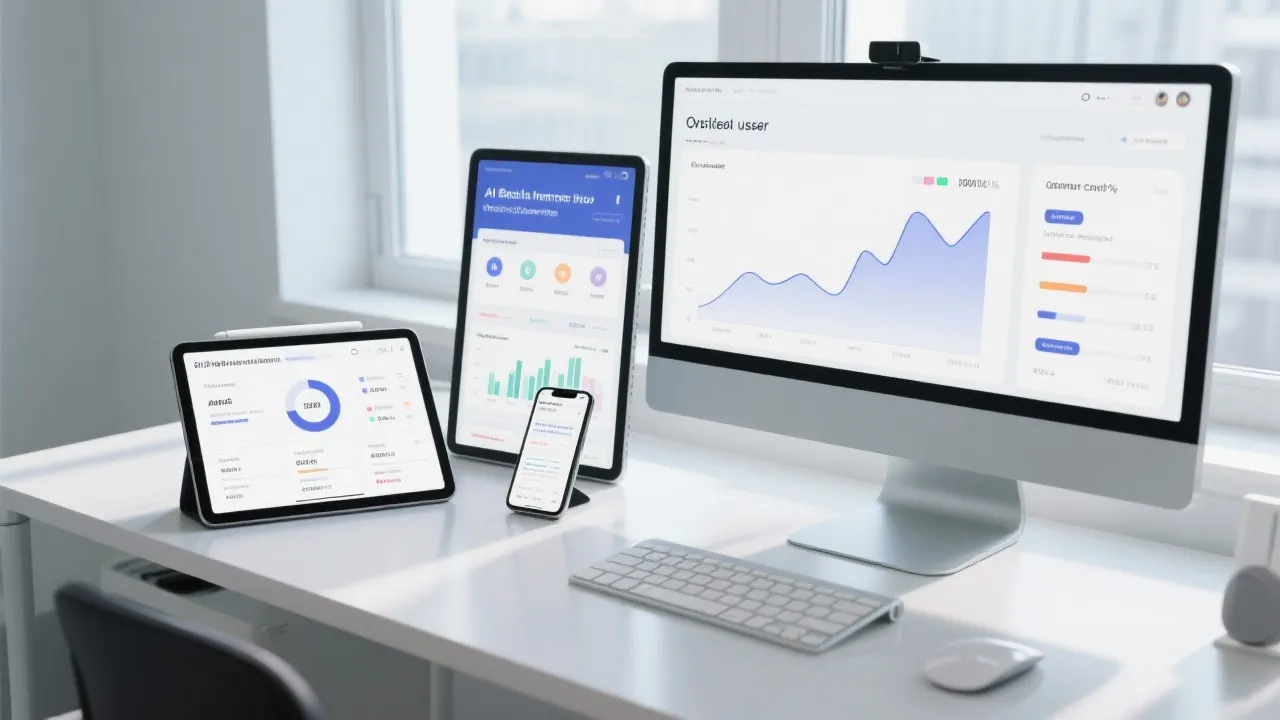






How to design effective KPIs for foreign trade GEOs? A data-driven approach.
To maximize marketing impact in international trade, GEO KPIs must be designed beyond vanity metrics, focusing on an omnichannel framework: coverage efficiency, conversion quality, asset acquisition, and operational agility. By aligning with the real B2B buyer journey—and supplemented by industry benchmarks and AI-driven tracking—brands can achieve measurable, scalable growth. ABK's GEO solution provides precise KPI segmentation, real-time monitoring, and continuous optimization across markets.

How to design effective GEO metrics for B2B export marketing? A proven data-driven framework.
In the ever-changing global B2B trade landscape, simply tracking "traffic" or "sales leads" is far from sufficient. For export-oriented companies aiming to expand into international markets, adopting a strategic, multi-dimensional Key Performance Indicator (KPI) approach is crucial—not only for measuring success, but for driving it.
Problems with traditional indicators
Most small and medium-sized enterprises (SMEs) still rely on vanity metrics such as website traffic or total monthly leads. But the truth is: according to HubSpot's 2024 Global B2B Buyer Survey, only 17% of leads from generic marketing campaigns convert into paying customers—meaning that most of the effort is wasted on low-intent audiences.
What's missing? A closed-loop system that connects exposure with conversion rates and builds long-term brand equity. This is where GEO (GeographicOperation + Interaction Optimization) KPIs come in – a smarter way to measure the truly important factors in the international marketing funnel.
The four core dimensions of GEO system key performance indicators
1. Improve efficiency: Are you talking to the right people?
Don't chase impressions, focus on accuracy:
- AI-recommended exposure : How many times does your content appear in algorithm-driven news feeds (such as LinkedIn, Meta, Google Discover)? Industry benchmark: Top-performing B2B brands can increase engagement rates by 35-50% when using AI-selected audiences compared to using broad keywords.
- Precise Search Visibility : Track the ranking frequency of your product pages for specific geographic keywords such as "UAE industrial conveyor belts" or "German LED lighting suppliers." Tools like SEMrush show that these search queries bring in 2.3 times more high-quality traffic than regular search queries.
- Target market semantic coverage : This measures how well your content fits the local language patterns—this is especially important in markets like Japan, Brazil, or Saudi Arabia, where direct translation is not feasible.
2. Conversion Quality: Is your lead generation channel healthy?
High output does not equal high quality. Please pay attention to the following key ratios:
- High-intent inquiries refer to requests for samples, price lists, or case studies, not just filling out forms. Companies using intent scoring report sales cycle efficiency improvements of 40%.
- Inquiry conversion rate : The target is at least 15% for mature markets (US/EU) and at least 10% for emerging markets (India, Vietnam). A value below this indicates poor assessment of potential customer qualifications or mismatch in information delivery.
- Drop-off points in the lead-to-customer conversion funnel : Use tools like Google Analytics 4 + CRM integration to identify bottlenecks—which typically occur between inquiries and demo requests.
3. Asset Accumulation: Do you have your own digital identity?
Great marketing campaigns don't disappear after a single click. The key is to build assets that generate value over time.
- Digital Identity Recognition Rate : How frequently do potential customers recognize your brand across different platforms? High recognition rate = trust. Brands with a consistent brand image can close deals up to twice as fast.
- Trust-supporting content exposure : Videos, customer reviews, certifications, and third-party comments must be visible in search results. This content can increase perceived credibility by 68% (Edelman Trust Barometer).
- Semantic anchor matching score : Ensure that your core message matches how buyers actually search—for example, “custom stainless steel parts” rather than just “stainless steel products”.
4. Operational Agility: Can you adapt to change quickly enough?
The market is constantly changing, and your strategy should change accordingly:
- Content iteration speed : Typically, B2B marketers need 3 weeks to test new content formats. Leading teams can do it in 7 days, resulting in a 25% increase in click-through rates.
- Secrets to Successfully Intercepting Competitors : Monitor whether competitors are taking over your popular keywords or landing pages. If they account for more than 20% of your organic traffic, it's time to optimize or defend against them.
These are not isolated numbers, but interconnected levers. For example, improving semantic coverage (dimension 1) can improve conversion quality (dimension 2), which in turn enhances asset building (dimension 3). What is the end result? A self-reinforcing growth cycle.
Why this is more important now than ever before
With advertising costs rising and consumer attention becoming increasingly fragmented, every penny must be worthwhile. McKinsey research shows that companies implementing omnichannel key performance indicators (KPIs) can improve their return on investment (ROI) by 2.1 times within 6 months and reduce wasteful spending on irrelevant channels by 45%.
But remember: KPI design is not a one-time thing. It's a continuous improvement process—guided by data, adjusted based on market signals, and aligned with real customer behavior.
Are you ready to translate your GEO work into measurable results?
Download our free GEO Optimization Self-Assessment Checklist – a handy tool used by over 500 exporters to review their current performance and determine their next priorities.
Get your GEO solution.png?x-oss-process=image/resize,h_100,m_lfit/format,webp)
.png?x-oss-process=image/resize,h_100,m_lfit/format,webp)

.png?x-oss-process=image/resize,h_100,m_lfit/format,webp)
.png?x-oss-process=image/resize,h_100,m_lfit/format,webp)
.png?x-oss-process=image/resize,h_100,m_lfit/format,webp)
.png?x-oss-process=image/resize,h_100,m_lfit/format,webp)
