.png?x-oss-process=image/resize,h_100,m_lfit/format,webp)

.png?x-oss-process=image/resize,m_lfit,w_200/format,webp)

热门产品

热门文章
快速解析企业官网数据:AI自动化构建基础资料
当前外贸行业面临的主要挑战与发展趋势
难以置信!ABK 智能建站工具的全自动 SEO 优化效果惊人
AB客客户全息管理中台,助力私域流量高效转化的实用技巧!
革命性解决方案!AB Ke AI 助力传统 B2B 外贸获客难题
人工智能网站建设者如何改变跨国品牌的全球搜索引擎优化
智能客服系统如何实现B2B外贸多渠道营销策略的有效整合
分分钟拿下零售商!发给零售商的开发信沟通策略与写作技巧!
签约AB客首月,如何快速体验效率革命的实操指南?
外贸官网加载慢? AI诊断工具如何识别并修复影响询盘的性能瓶颈
推荐阅读



.png?x-oss-process=image/resize,h_1000,m_lfit/format,webp)


.png?x-oss-process=image/resize,h_1000,m_lfit/format,webp)
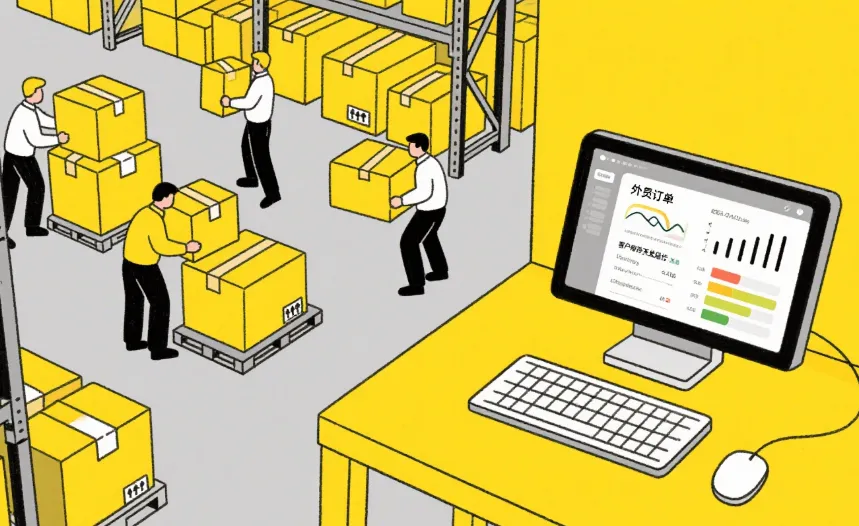

Don't let website building slow down your overseas expansion! How can foreign trade B2B companies quickly build a multilingual independent website from scratch?
This article provides a scenario-based practical solution for B2B foreign trade companies that lack technical expertise and are concerned about long website building cycles. It details how to use intelligent website building tools to generate English, German, and Spanish websites with a single click, automatically complete SEO settings, quickly apply professional templates, and achieve a seamless inquiry process within 3 days, truly delivering results.
.jpg?x-oss-process=image/resize,h_1000,m_lfit/format,webp)
At 3 a.m., a Canadian customer clicked on a product link sent by a Chinese supplier, only to find the screen filled with garbled text and the crucial payment button missing—a scenario that is causing countless foreign trade companies to miss out on orders.
In traditional foreign trade, many companies rely on third-party platforms like Alibaba.com to acquire customers. However, this path is becoming increasingly narrow: platform commissions often reach 5%-15% , and hard-earned customer resources can be easily poached or lost. Recommended reading: Why must foreign trade B2B companies have their own independent websites? A comprehensive analysis of the value and necessity of independent websites.
Independent B2B websites for foreign trade are becoming a key strategy for enterprises to break through limitations, build brands, and increase profits. However, the reality is that many enterprises are deterred by a lack of technical knowledge, multilingual layout skills, and the lengthy website development cycle.
01 Challenges: Traditional platforms face significant bottlenecks, making the transition to independent websites imperative.
The competitive landscape of global trade is undergoing fundamental changes. In the past, foreign trade companies could obtain stable inquiries simply by uploading product information to platforms such as Alibaba.com and Made-in-China.
With the decline of platform traffic dividends and fierce competition from similar offerings , businesses not only have to pay high commissions but also struggle to build lasting customer relationships. Customer data is controlled by platforms, and any changes in platform policies could put businesses' overseas operations at risk.
Peng Boyuan, head of the major accounts department at Shijiazhuang Ruinuo Network Technology Co., Ltd., observed that more and more foreign trade companies are beginning to pay attention to "diversifying their operations" and actively developing diversified markets, while language barriers have become one of the main obstacles to market expansion.
The experience of Hebei Youchang Technology Co., Ltd. is quite representative. In order to cope with the uncertainties of the international market, this fitness equipment foreign trade company began to adjust its overseas market layout last year, and successively launched independent websites in more than ten languages, including Polish, Arabic, and Russian.
The results are obvious: now more than half of the company's orders come from these countries. Behind this success story lies the contradiction between the urgent need and insufficient capabilities of many companies to build multilingual independent websites.

02 Pain Points: The dual obstacles of technical barriers and time costs
For most foreign trade companies, building a professional, multilingual independent website presents multiple obstacles. First, there's the technical barrier. Business owners and foreign trade teams are typically skilled in product and market analysis, but have limited understanding of website development technologies.
From domain name resolution and server configuration to front-end development and back-end management systems, every step can become an obstacle. Many companies are forced to resort to outsourcing teams, but high development costs and poor communication bring new problems.
Secondly, there's the complexity of multilingual layouts. A truly multilingual website involves much more than just content translation. It requires considering different language layout conventions (e.g., Arabic is read from right to left), cultural differences, localized keyword optimization, and privacy policies that comply with local laws and regulations.
For example, when a clothing export website used a certain tool, French product images still displayed Chinese labels, resulting in a return rate as high as 15%. Finally, there is the lengthy website development cycle. Traditional website development methods, from requirements analysis and design development to testing and launch, typically take several weeks or even months .
For companies urgently needing to expand into overseas markets, such time costs are unbearable. Market opportunities are fleeting, and a lengthy website development process may cause companies to miss the best time to enter the market.
03 Breakthrough: Intelligent website building tools lower the technical threshold and time cost
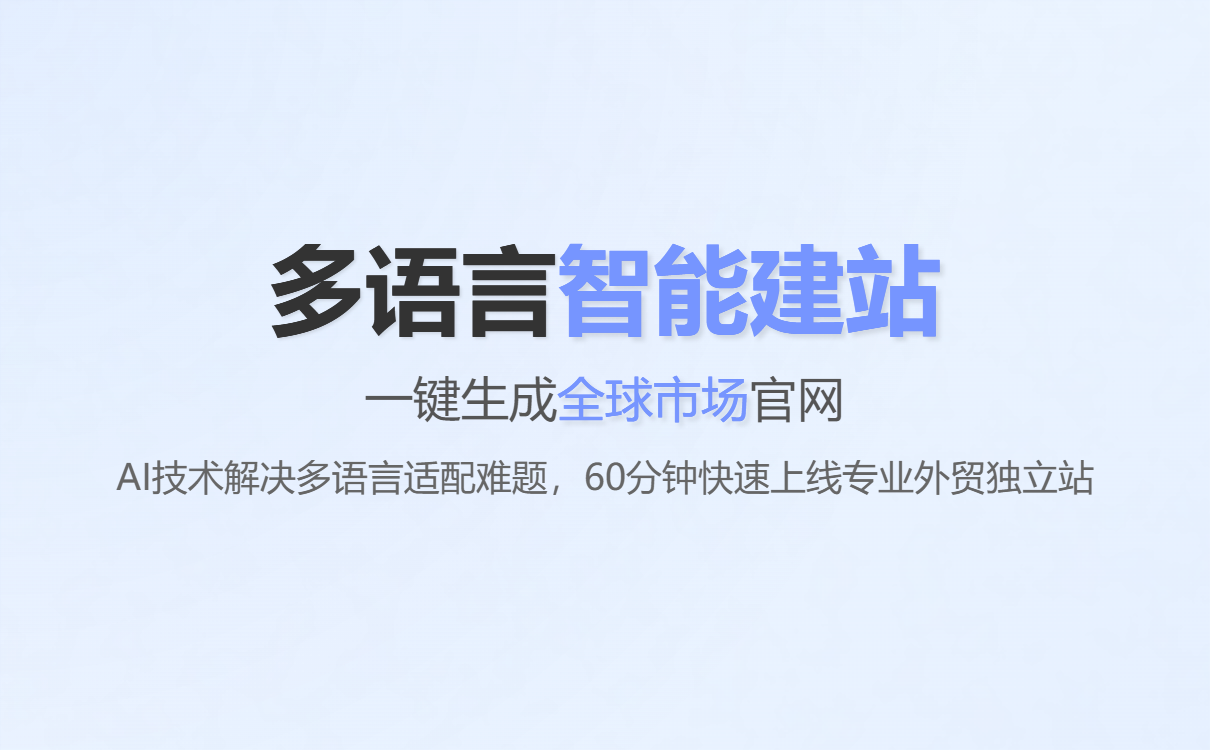
In response to these pain points, the market has seen the emergence of solutions that precisely match the needs of foreign trade enterprises. SaaS tools, such as AB-Customer Intelligent Website Building System , are simplifying complex multilingual website building projects into "one-click" operations through technological innovation, fundamentally reducing the technical barriers and time costs for enterprises.
Its core value lies in " intelligence " and " speed ." The system has a built-in AI engine deeply optimized for foreign trade scenarios, capable of understanding the professional terminology and expression logic of the B2B industry. Business owners only need to prepare product information and company introduction in Chinese, and they can instantly obtain a prototype of a professional multilingual website in English, German, Spanish, and other languages through the " one-click generation " function, solving the most troublesome problem for enterprises in the initial construction of multilingual content .
More importantly, ABker has streamlined the traditionally weeks-long technical deployment process to an extreme degree. From selecting a template and filling in content to final launch, a professional website with basic inquiry functionality can be built in as little as 60 minutes , truly achieving "same-day decision, same-day launch." Its " build first, pay later " model allows businesses to start projects with zero risk, transforming traditional cost investment into paying for actual results (such as valid inquiries received), greatly alleviating the financial and decision-making pressures faced by SMEs in the early stages of transformation.
This system was designed entirely from the perspective of foreign trade sales personnel who lack technical expertise. Without needing to touch code, users can easily layout all pages, including the homepage banner, product displays, and case studies, through intuitive drag-and-drop operations and modular settings. All pages are developed based on responsive templates that conform to international aesthetics, automatically adapting to various devices from computers to mobile phones, ensuring overseas customers receive a high-quality browsing experience on any terminal.
Furthermore, the system automates the basic SEO infrastructure. From generating sitemaps and intelligently suggesting TDK tags for various languages to optimizing page speed, these complex tasks that previously required professional technical personnel to configure have all been pre-completed, allowing businesses to start from a search engine-friendly position from the very first moment of going live, laying a solid foundation for subsequent promotion and traffic generation.
With AB Customer's intelligent website building service, foreign trade enterprises no longer possess just an "online business card," but a highly efficient digital asset that integrates brand display, product marketing, and inquiry acquisition , achieving a breakthrough from 0 to 1 at an incredible speed and with extremely low barriers to entry.
04 Practical Application: Detailed Steps to Quickly Build a Multilingual Independent Website from Scratch

How to implement this in practice? Here is a practical guide based on intelligent website building tools:
The first step is to define the target market and languages . Analyze existing customer sources and potential markets to determine the languages to prioritize. Common foreign trade markets such as Europe and America (English, German, French), Latin America (Spanish, Portuguese), the Middle East (Arabic), and Southeast Asia (multiple languages) require different strategies.
The second step is to choose a suitable multilingual solution . Based on the company's technical capabilities and budget, select a suitable website building method. Currently, there are three main options:
| Scheme type | Representative Platform | Suitable for businesses | Core advantages |
|---|---|---|---|
| One-stop intelligent website building | AB Customer Intelligent Website Builder | Small and medium-sized foreign trade enterprises without technical teams | Simple to operate, quick to launch, and low cost |
| Professional website building company customization | Data Commerce Cloud | Medium and large enterprises have high requirements for customization. | Fully functional, supports deep customization, and has a stable system. |
| Open source system + plugins | WordPress + Weglot | Enterprises with certain technical capabilities | Highly flexible, rich in ecosystem, and highly scalable |
The third step is content localization and SEO optimization . This is crucial for the success of a multilingual website. The system should be able to automatically complete basic SEO settings, such as TDK (title, description, keywords) generation, while also supporting manual optimization.
AI translation combined with human review is an effective way to ensure content quality. A metal sealing parts manufacturer in Xingtai began focusing on the "Belt and Road" market earlier this year, launching multilingual services in Russian, Indonesian, and French. As a result, inquiries on their website steadily increased, ultimately leading to a long-term supply agreement with a Russian buyer.
The fourth step is online testing and optimization . After the website goes live, it needs to be tested on multiple languages and devices to ensure that each language version displays correctly and has full functionality. Then, analytics tools are used to track traffic and conversion rates for each language version and to continuously optimize the website.
Case Study 5: Intelligent Website Building Tools Help Businesses Acquire Customers Quickly
The experience of a Shenzhen-based Bluetooth headset manufacturer is quite representative. The company's original English website had a conversion rate hovering around 1.2%. By using the ABK intelligent website building system to quickly generate French, German, and Japanese websites and implementing a localization strategy, sales in the German market increased by 340% within six months .
Their successful strategy includes: using AI to generate localized product descriptions that include key information such as EU CE certification; intelligently retrieving payment methods in the target country; and combining the predictive capabilities of the marketing system to update information synchronously before important promotional events.
In the LED lighting industry, one company achieved automatic matching of multilingual Facebook ad creatives by simultaneously deploying English, Portuguese, and Turkish websites and combining them with cross-platform synchronization capabilities, resulting in 230 high-quality inquiries from the Brazilian market in a single month.
These cases demonstrate that when the technical barriers are lowered, even foreign trade teams without technical expertise can quickly establish effective multilingual customer acquisition channels .
06 Advanced: Continuous Operation and Optimization of Multilingual Independent Websites
Building a website quickly is only the first step; continuous operation is the key to long-term success. Businesses should establish a multilingual content update mechanism to ensure that content in all languages is updated and maintained synchronously.
SEO optimization requires continuous effort. Intelligent website building systems typically offer SEO optimization features. For example, YiYingBao's AI keyword expansion module captures real-time search trend data for target countries and automatically matches localized keywords for different language sites. After using this feature, a medical device client saw its Spanish keyword coverage increase from 17% to 63%, and organic traffic grow by 210%.
Data analytics is also a crucial aspect of operating a multilingual independent website. By analyzing data such as traffic sources, user behavior, and conversion rates across different language versions, businesses can optimize resource allocation, focusing more effort on the most effective markets and languages.
After achieving initial success, Hebei Youchang Technology Co., Ltd. plans to further expand into Spanish-speaking countries such as Argentina and Chile. Peng Boyuan suggested that they first launch yoga and Pilates products to increase website traffic, while simultaneously optimizing Spanish search keywords and adjusting product descriptions to suit the language habits of the local market.
When the Hebei-based fitness equipment export company saw that more than half of its orders came from newly developed multilingual markets, the company manager, Huang Xugang, was planning his next goal—to expand into Spanish-speaking countries such as Argentina and Chile.
Website building work that used to take months can now be completed in a few days or even hours . Multilingual adaptation, which used to require a professional team, can now be done with a single click using AI technology.
On the global chessboard of foreign trade, every company is searching for its place. Those companies that have taken the lead in using smart tools to break down language barriers have already secured a favorable position in the new round of global competition.
.png?x-oss-process=image/resize,h_100,m_lfit/format,webp)
.png?x-oss-process=image/resize,h_100,m_lfit/format,webp)

.png?x-oss-process=image/resize,h_100,m_lfit/format,webp)
.png?x-oss-process=image/resize,h_100,m_lfit/format,webp)
.png?x-oss-process=image/resize,h_100,m_lfit/format,webp)
.png?x-oss-process=image/resize,h_100,m_lfit/format,webp)
