.png?x-oss-process=image/resize,h_100,m_lfit/format,webp)

.png?x-oss-process=image/resize,m_lfit,w_200/format,webp)

热门产品

Popular articles
Essential Weekly Website Maintenance Tips for Stable and Secure Operation
Don't Miss Out: Essential Market Trend Research for New Foreign Trade Professionals!
AI-Driven Foreign Trade Procurement Forecasting: From Reactive Response to Proactive Engagement
Common Mistakes in Foreign Trade Export Customs Declaration and Solutions: Practical Tips to Improve Customs Clearance Efficiency
Leverage AI-Powered Website Building for Rapid Foreign Trade Customer Acquisition: Step-by-Step Guide and Practical Insights
Data-Driven B2B Trade Financing Solutions: Enhancing Credit Risk Control and Customer Acquisition
Unlocking the Secrets of Independent Site SEO: Capturing Overseas Buyers
Transforming Marketing in the Era of Intelligent Quantitative Solutions
从关键词排名到Google答案摘要:外贸企业如何用GEO重建AI时代流量入口
GEO在外贸客户获取流程中的地位:构建可信赖的AI内容资产的关键步骤
推荐阅读
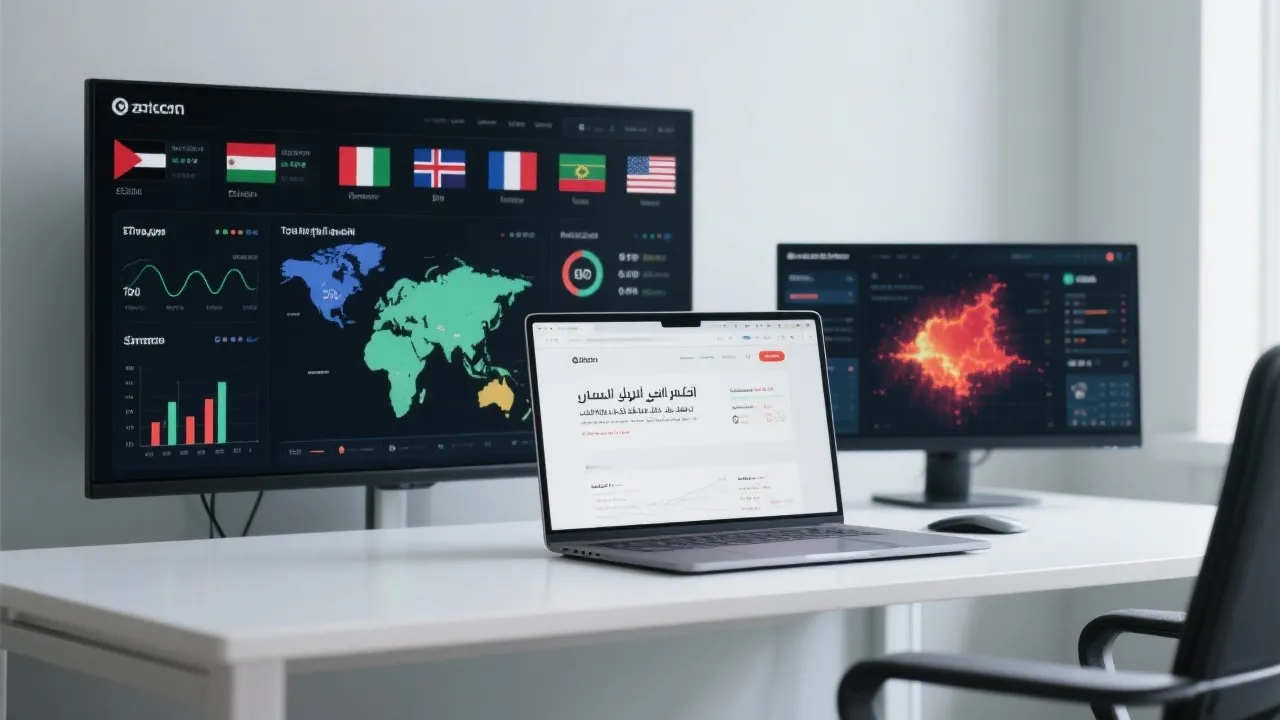




How can businesses be discovered by overseas customers?
Overseas B2B buyers are increasingly relying on AI-powered search and Q&A tools to screen suppliers. To stand out, exporters must build a complete, structured, and industry-specific content system to help AI accurately understand their products, capabilities, and customer value. This page introduces a practical GEO (Generative Engine Optimization) approach: publishing comprehensive company and product information, adding specialized industry knowledge, and transforming products/services into clear solutions, use cases, customer stories, and FAQs. Through modular page structures, easy-to-browse headings, and continuous updates, AI can capture, parse, and build reliable semantic profiles of businesses, thereby improving recommendation success rates on tools like ChatGPT and Perplexity. AB Ke's GEO methodology further guides content architecture and optimization priorities to improve AI visibility, reinforce trust signals through evidence and context, and continuously attract potential customers from global markets. This article was published by AB GEO Research Institute.

How can businesses be discovered by overseas customers?
Today, the fastest way to attract overseas customers is not by "increasing the number of posts," but by publishing clearer, structured, and AI-readable business knowledge . Leveraging the AB-Customer GEO methodology, exporters can increase their chances of being recommended by AI search and Q&A tools and convert exposure into high-quality B2B inquiries.
Why will the meaning of "discovered" be different in 2026?
Overseas buyers still use Google, but they are increasingly discovering products through AI-assisted search processes : such as ChatGPT-style research, Perplexity solutions, AI summaries in search results, and assistants built into browsers and e-commerce platforms. In these environments, your website is no longer evaluated like a brochure, but rather like a knowledge base .
This means that if your product page has limited content, inconsistent specifications, or a vague "About Us" section, the AI system will struggle to understand your true capabilities. When AI cannot confidently interpret your business, target audience, and reputation , it will be less likely to recommend you.
Key takeaway: To be discoverable, you need a systematic and structured content system so that AI can analyze your products, solutions, scenarios, compliance, and proofs—and then showcase you when buyers ask industry-specific questions.
A structured content architecture serves as a bridge connecting your capabilities with AI-powered recommendations.
How overseas buyers find suppliers (and how you can play a role)
In the export B2B sector, the procurement process is rarely linear. A typical buyer procurement process integrates stages such as research, verification, and screening.
| stage | Buyer behavior | Frequently Asked Questions | What must your content provide? |
|---|---|---|---|
| consciousness | AI search + Google + social recommendations | "Best supplier...", "Alternatives...", "Manufacturer..." | Clear product categories, service industries, geographical locations, and capabilities |
| consider | Compare specifications, standards, delivery time, minimum order quantity, and certifications. | "Does it comply with ISO/CE standards?", "What is the delivery time?", and "What materials are available?" | Specifications, Compliance Page, Process Description, Frequently Asked Questions |
| confirm | Verification and Risk Assessment: Case Studies, Audits, References | "Case studies in my industry", "Factory capacity", "Quality control" | Customer case studies, quality control processes, factory photos/videos, test reports |
| Candidate List and Contact Information | Send Requests for Quotation (RFQ) to 3-7 suppliers, hoping to receive quick and reliable responses. | "Inquiry", "Policy Sample", "Trade Terms" | Directly convertible contact paths, inquiry forms, response service level agreements, and templates. |
Planning reference data: On many B2B export websites, 50% to 75% of traffic goes to non-homepage pages (products, applications, blogs). If these pages cannot clearly answer buyers' questions, they will miss the "second step," which is the stage where actual inquiries are generated.
AB Customer GEO Method: Making your business easier for artificial intelligence to understand.
ABke's GEO (Generative Engine Optimization) focuses on one outcome: increasing the probability that AI systems will cite, summarize, and recommend your company when overseas buyers ask high-intent questions .
1) Complete business information (no omissions, no guessing)
Artificial intelligence cannot infer content you haven't published. Your website should clearly state this:
- Product categories, model naming rules, and main specifications
- Service industry and typical buyer groups (OEM manufacturers, distributors, system integrators)
- Production capacity range (e.g., units/month), delivery cycle range, and customization range
- Certification, compliance standards, and testing capabilities (open and transparent)
- Supported trade terms (EXW/FOB/CIF), payment methods, and logistics coverage
A useful metric: if buyers need to email you with basic questions (minimum order quantity, delivery time, compliance, materials), it means your page information is insufficient—and AI will have a hard time recommending you to them.
2) Industry knowledge content (signal expertise)
Buyers trust suppliers who can explain trade-offs, trends, and compliance, not just those who simply say "we're professional." Publish educational content that answers practical questions from overseas clients.
- Technical specifications: materials, tolerances, performance indicators, failure modes
- Compliance Guidelines: What do CE/FCC/REACH/RoHS mean for your product type?
- Choosing a Framework: How to Select a Model for Different Environments
- Common Buyer Mistakes: Common Pitfalls and How to Avoid Quality Issues
Reference data: Long-tail, problem-solving content can account for more than 60% of the natural keyword search volume in many B2B categories, even if the core product keywords are highly competitive.
The buyer discovery process is multi-touchpoint. Geolocation content supports every touchpoint—from AI-generated answers to inquiry forms.
Content modules that improve the probability of AI recommendations
3) Applications and use cases (transforming functionality into value)
Artificial intelligence systems prioritize content that connects product details with actual application effects. Instead of simply listing product features, it's better to create application scenario pages, for example:
- "High Humidity Environment Solutions"
- "High-durability option suitable for outdoor installation"
- "Low-noise/energy-efficient configuration suitable for commercial settings"
- "Rapid Deployment Kit for Integrators"
Each scenario page should include the recommended model, parameter range, installation instructions, and typical compliance requirements. This not only improves conversion rates but also allows AI to more accurately summarize your information.
4) Customer case studies (building trust during the "validation" phase)
Case studies are more than just sales tools; they are also evidence that algorithms can interpret. Excellent B2B case studies typically include the following:
| Case elements | What should be included? | Why are both artificial intelligence and buyers paying attention? |
|---|---|---|
| Customer Profile | Country/Region, Industry, Role (OEM/Distributor) | Context helps achieve accurate matching and recommendations. |
| Problem Statement | Limiting factors: compliance, environment, cost, timeline | High-intent queries are question-driven, not product-driven. |
| Solution | Model/Specification Selection, Customization, Quality Assurance Plan | Demonstrated capability and process reliability |
| result | Quantifiable improvements (defect rate, delivery time, performance) | The more numerous the data points, the higher the trust level and the likelihood of citation. |
Recommended goal: Companies that publish 6-12 high-quality case studies typically see a significant improvement in inquiry quality. On many B2B websites, adding structured case studies can increase "contact/inquiry" conversion rates by 15-35% over time because it reduces buyer uncertainty.
5) Frequently Asked Questions and Technical Documentation (to make answers easy to retrieve)
When properly written, FAQs are among the most "AI-friendly" resources. Build a FAQ center that includes the following:
- Minimum order quantity, sample policy, delivery time and customization process
- Quality control steps (incoming inspection, in-process inspection, final inspection)
- Packaging, labeling, palletizing, and shipping documents
- After-sales service, warranty terms and spare parts availability
- Compliance scope and test reports (what you can provide)
Writing Tips: Keep each FAQ between 90-140 words . Use bullet points for parameters and avoid marketing adjectives. Clear and concise content is far more effective than exaggerated claims in AI-driven analysis and building buyer trust.
How Artificial Intelligence "Decides" What to Recommend to You: A Simple Model
Although each engine is different, most AI discovery processes follow similar logic:
- Content Ingestion: The AI system reads your website, articles, case studies, and publicly available references.
- Semantic understanding: They can infer what products you sell, your target customers, and the problems you solve.
- Structured understanding: Clear headings, consistent naming, tables, and modules can improve machine readability.
- Recommendation generation: When a buyer makes a request, the model selects sources it is confident in referencing.
- Compound interest effect: Regularly updating and expanding coverage can improve search and trust signals within months.
Based on the timeline, many export B2B websites are expected to see early signs (better indexing, more long-tail exposure) within 4-8 weeks , and more stable query growth within 3-6 months – depending on category competition and content depth.
Step-by-step guide to implementing geolocation for export-oriented B2B websites
Step 1 — Building a complete content map
First, create a sitemap that reflects the buyer's intent, rather than following an internal organizational chart. A practical structure is:
- Company: Factory, Team, Quality System, Production Capacity, Certifications
- Product: Category → Model → Specifications → Download
- Solution: Industry-based and scenario-based pages
- Knowledge Center: Guidelines, Comparisons, Compliance, Troubleshooting
- Evidence: Case studies, test reports, customer testimonials
- Frequently Asked Questions: Business, Technical, and Transportation Documents
Step 2 — Make the page “machine-readable” through design.
Use a consistent format so that artificial intelligence can extract facts without confusion:
- One H1 heading per page; logical H2/H3 hierarchical structure.
- Dimensions, materials, power, and tolerance specifications
- Use clear terminology (avoid using multiple names for the same item).
- Internal links in knowledge articles → Related product/scenario pages
Step 3 – Publish authoritative content that buyers need
For most exporters, a feasible publishing pace is 4-8 articles per month , with a mix of different content:
- 2-3 industry knowledge articles (operational guidelines, compliance, comparative analysis)
- 1-2 pages of application pages (based on the scenario)
- One case study (monthly or bi-weekly).
- Frequently Asked Questions (FAQ) expansion (in progress)
Step 4 – Measuring geographical change
Don't rely solely on vanity metrics. Track: organic search impressions for long-tail topics, time spent on key pages, inquiry conversion rates, and the number of leads that find you through AI tools or "I found you through...". Many teams also tag forms by entry page to determine which scenarios and guidelines generate qualified inquiries.
Mini Case Study: What Changes Occur After Geographic Optimization?
An export-oriented B2B company implemented an AB Customer GEO content refactoring:
- The product pages have been redesigned to include a unified specification sheet and application links.
- Published industry interpretations and compliance guidelines
- A new case study and FAQ center has been added, covering key issues in Requests for Quotation (RFQ).
Following optimization, the company saw a significant improvement in its rankings in AI-powered question-answering environments and research-based queries. The sales team also reported that the needs of potential clients were more specific—often mentioning particular scenarios or articles—resulting in reduced communication and faster client qualification reviews.
High-value questions you should answer on the website (for GEOs)
If you want AI to recommend products for you, then post answers to actual questions asked by buyers:
- How can I increase the probability of being recommended by AI search engines?
- How does GEO differ from lead generation methods such as advertising or trade shows?
- How to efficiently build industry knowledge content and application scenarios?
- Case study: How to improve trust signals between buyers and AI systems?
Ready to stand out in ChatGPT and Perplexity-style searches?
If your goal is to attract overseas buyers who already have a strong purchasing intention, then it's time to upgrade your website from a "company introduction" to an AI-readable knowledge base .
ABke GEO focuses on providing AI search optimization services for export-oriented B2B companies, helping you improve content structure, coverage, and credibility signals so that AI can confidently recommend your business.
Recommended next steps: Review your product pages, build scenario modules, and publish 6-12 evidence-based case studies.Your overseas clients need more than just suppliers. They need a partner who can understand quickly, is trustworthy, and allows for smooth collaboration—especially when time is tight and risks are high.
.png?x-oss-process=image/resize,h_100,m_lfit/format,webp)
.png?x-oss-process=image/resize,h_100,m_lfit/format,webp)

.png?x-oss-process=image/resize,h_100,m_lfit/format,webp)
.png?x-oss-process=image/resize,h_100,m_lfit/format,webp)
.png?x-oss-process=image/resize,h_100,m_lfit/format,webp)
.png?x-oss-process=image/resize,h_100,m_lfit/format,webp)
