.png?x-oss-process=image/resize,h_100,m_lfit/format,webp)

.png?x-oss-process=image/resize,m_lfit,w_200/format,webp)

热门产品

Popular articles
Beyond Total Inquiries: A Multi-Dimensional Approach to Evaluating GEO Effectiveness for Foreign Trade Enterprises
How B2B Export Manufacturers Can Compare ABKE, Maifushi, Yingqingli, and Xunpanyun for GEO Fit
外贸B2B内容体系怎么做才不写偏?从买家采购决策路径到问题库的实战方法
The Role of External Channels, Third-Party Platforms, Directories, Social Media and Industry Sites in Brand Recognition
What is Official Website Information Island? Why Relying Only on Official Website Content Affects AI Search Recognition
Identifying Website Information Silos: A Signal Gap Self-Assessment Checklist for B2B Export Brands
Overseas Buyer Questions Across 5 Procurement Stages: A B2B Content Planning Framework
Enterprise Digital Persona, Knowledge Atoms, and Evidence Chains: The Underlying Logic of AB客's GEO Methodology
Recommended Reading


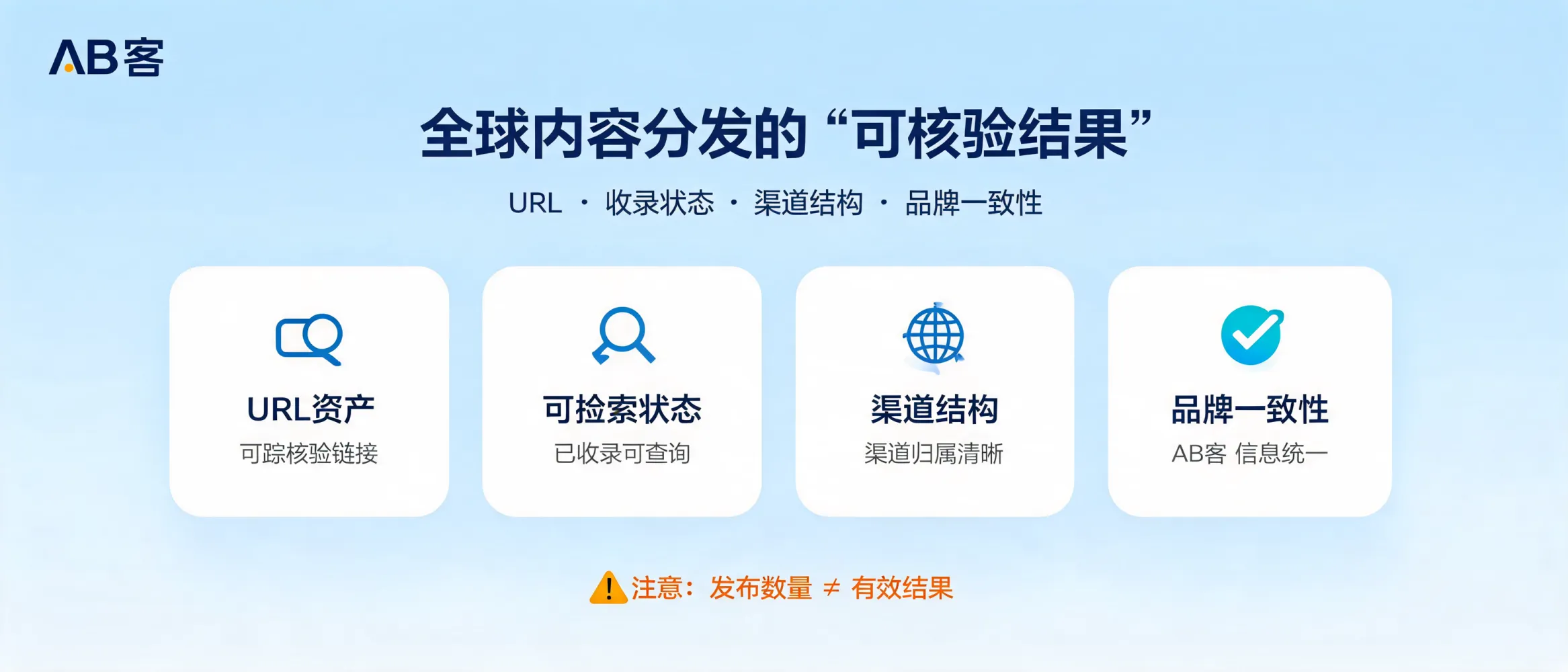


How to Spot Fake Overseas Media Before Buying GEO Services
Before you sign a GEO service, learn how to verify overseas media, avoid low-quality sites, and build trustworthy AI-visible signals with ABKE.
How to Spot Fake Overseas Media Before Buying GEO Services
Before you sign a GEO service, learn how to verify overseas media, avoid low-quality sites, and build trustworthy AI-visible signals that can support search discovery, brand credibility, and B2B conversion.
Quick GEO Check
1. What “fake overseas media” really means
Many websites look international at first glance: they have English pages, news categories, and professional-sounding names. But that does not automatically make them true media sources.
A fake overseas media site is often a paid publishing platform, a low-quality content farm, a link network, or a site designed to sell placements rather than serve real readers.
- Anyone can pay to publish
- No clear editorial team
- No real reader focus
- Weak industry relevance
- Mostly promotional content
- Low trust for buyers
- Weak value for AI systems
- Limited brand authority
- Possible indexing instability
- Little long-term SEO value
2. Why fake media appears so often in GEO projects
Because it is fast, cheap, and easy to package. A vendor can show a long Excel list of sites, add some article screenshots, and make the delivery look impressive.
But GEO is not about collecting links. It is about helping AI and overseas buyers see one clear, professional, verifiable company across multiple trusted sources.
3. The 8 signals to check before you buy GEO services
Signal 1: Is there a real editorial team?
Check the About, Contact, Editorial Team, and Author pages. Real media sites usually explain who runs the publication, who writes the content, and how editorial decisions are made.
Signal 2: Does the site have clear industry sections?
A good signal source should match your industry. If you sell industrial equipment, your content should not sit beside unrelated, random topics. Relevance is more important than sounding international.
Signal 3: Can anyone pay to publish?
Some sites clearly exist to sell sponsored posts and press releases. That is not always bad, but if the site has no editorial standard or reader value, it is closer to a publishing marketplace than a trusted media outlet.
Signal 4: Is the site full of low-quality or risky content?
Check whether the website is mixed with casino, crypto, adult, loan, or other low-trust content. A polluted content environment weakens brand perception and may reduce the value of your placement.
Signal 5: Is the content indexed stably by Google?
A screenshot is not enough. Ask whether the page remains indexed over time, whether it has organic visibility, and whether it is still searchable after a few weeks or months.
Signal 6: Does the site have real traffic and relevant readers?
If nobody reads it, the placement has limited value. Look for traffic trends, industry keywords, relevant audience regions, and signs of real engagement or citation.
Signal 7: Can AI systems actually find and use it?
Test the site through AI search and generative tools. If it never appears in AI answers, never gets cited, and never helps explain your company or product, its GEO value is weak.
Signal 8: Does it match your website, platforms, and social profiles?
A trustworthy signal chain should be consistent across your website, LinkedIn, YouTube, B2B platforms, product pages, FAQs, and media coverage. Inconsistency confuses both buyers and AI.
4. A simple way to compare real media, ordinary publishers, and fake media
| Check Item | Trusted media / industry source | Ordinary publishing platform | Fake media / low-quality site |
|---|---|---|---|
| Content focus | Clear audience or industry focus | Accepts many types of content | Random, messy, promotional |
| Editorial control | Review and authorship | Light or template review | Little to none |
| SEO / AI value | Can support trust and discovery | Limited but possible | Usually very weak |
5. What you should ask the vendor before signing
Ask for domains, site type, industry fit, and traffic references.
Check whether the sample is built on real company facts, not generic marketing language.
Clarify which sites are industry sources, which are platform posts, and which should be avoided.
Ask how they track indexing, AI mentions, and citation performance over time.
Confirm that website pages, forms, WhatsApp, email, and CRM tracking are ready to convert interest into leads.
6. The real GEO standard: a trustworthy signal chain
ABKE does not treat GEO as “publish more articles.” The real goal is to build a signal chain that AI and buyers can verify:
- Company knowledge that AI can understand
- Content that answers buyer questions
- Web pages that Google can index cleanly
- External sources that reinforce the same facts
- Lead capture and CRM tracking that support conversion
When all of these work together, your brand becomes easier to discover, easier to trust, and easier to recommend.
7. A 3-minute practical check before you buy
Look at recent posts. If the site mixes unrelated or low-trust topics, be cautious.
Check whether the content has authorship, structure, facts, and useful details.
Search the site and article title in Google or AI tools. If nothing meaningful appears, the source is weak.
8. Final takeaway
Fake overseas media is not always easy to spot by name alone. The real test is whether the site is credible, industry-relevant, searchable, stable, and consistent with your company’s wider evidence chain.
If you are investing in GEO, do not buy “media quantity.” Build a trustworthy, AI-readable brand footprint that can support long-term growth, not just short-term screenshots.
Need a GEO system that can be understood, indexed, and recommended?
ABKE helps B2B exporters build AI-readable company knowledge, content systems, GEO websites, and evidence chains that support visibility and conversion in the AI search era.
.png?x-oss-process=image/resize,h_100,m_lfit/format,webp)
.png?x-oss-process=image/resize,h_100,m_lfit/format,webp)

.png?x-oss-process=image/resize,h_100,m_lfit/format,webp)
.png?x-oss-process=image/resize,h_100,m_lfit/format,webp)
.png?x-oss-process=image/resize,h_100,m_lfit/format,webp)
.png?x-oss-process=image/resize,h_100,m_lfit/format,webp)
