.png?x-oss-process=image/resize,h_100,m_lfit/format,webp)

.png?x-oss-process=image/resize,m_lfit,w_200/format,webp)

热门产品

Popular articles
Key Points of Controlling Presentation Time and Location: How Can Exporters Precisely Grasp Key Nodes in the Letter of Credit Process?
Industry Research: Cost Structure and Cost Reduction Strategies for International Trade B2B Logistics
2025 Google search commands + SEO, quickly and accurately dig out major overseas customers (with a complete set of commands + a guide to avoid pitfalls)!
Data capture and industry report interpretation skills: Help foreign trade companies efficiently tap into potential overseas customers!
Practical Guide: Effectively Overcoming Common Obstacles in Cross-Cultural Communication
INMETRO Certification Guide: Decoding Energy Labels & Annual Surveillance in Brazil
Breakthrough for foreign trade novices: From 0 to 1, the secrets and case studies of writing development letters with high response rates!
Recommended Reading


A Complete Guide to Building an Independent B2B Website for Foreign Trade: From Planning to Promotion
Many foreign trade companies often hesitate to build independent B2B websites due to technical barriers and complex processes. This article aims to provide a clear solution, from defining business positioning and target audience, choosing a suitable domain name and server, to deploying the website using WordPress and implementing core functions, and then to effective marketing and promotion through channels such as Google SEO, Google Ads, and social media. It details the complete construction process of an independent B2B website for foreign trade, helping companies gain control over customer data and marketing, and build brand awareness and customer loyalty.
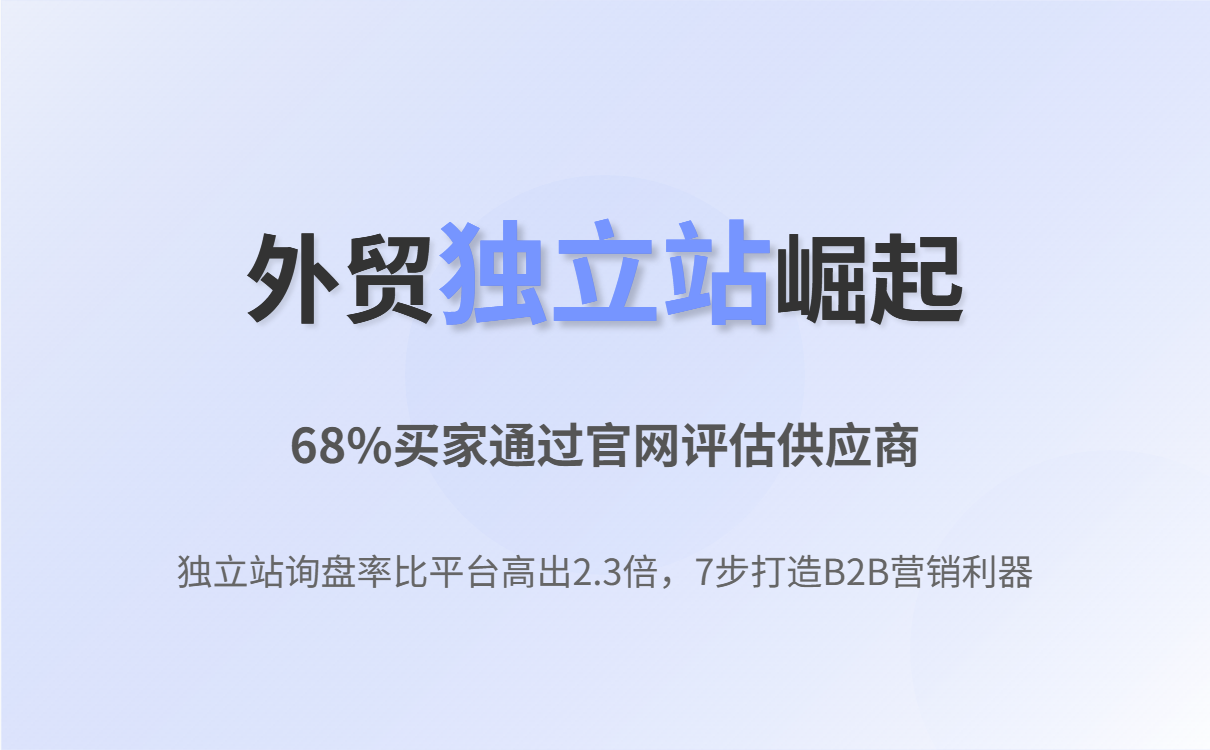
Introduction: Industry research shows that 68% of B2B buyers in foreign trade assess a supplier's professionalism through their official website before first contacting them. Foreign trade companies with their own independent websites are 2.3 times more likely to receive high-quality inquiries than those relying solely on third-party platforms. However, faced with technical barriers and complex processes, many business owners can only sigh in despair at the prospect of building an independent foreign trade website. This article will unveil the mysteries of building an independent foreign trade website, using 7 practical steps to help you create a powerful B2B marketing tool that consistently generates precise inquiries from scratch.
Why are 90% of foreign trade companies abandoning the pure platform model?
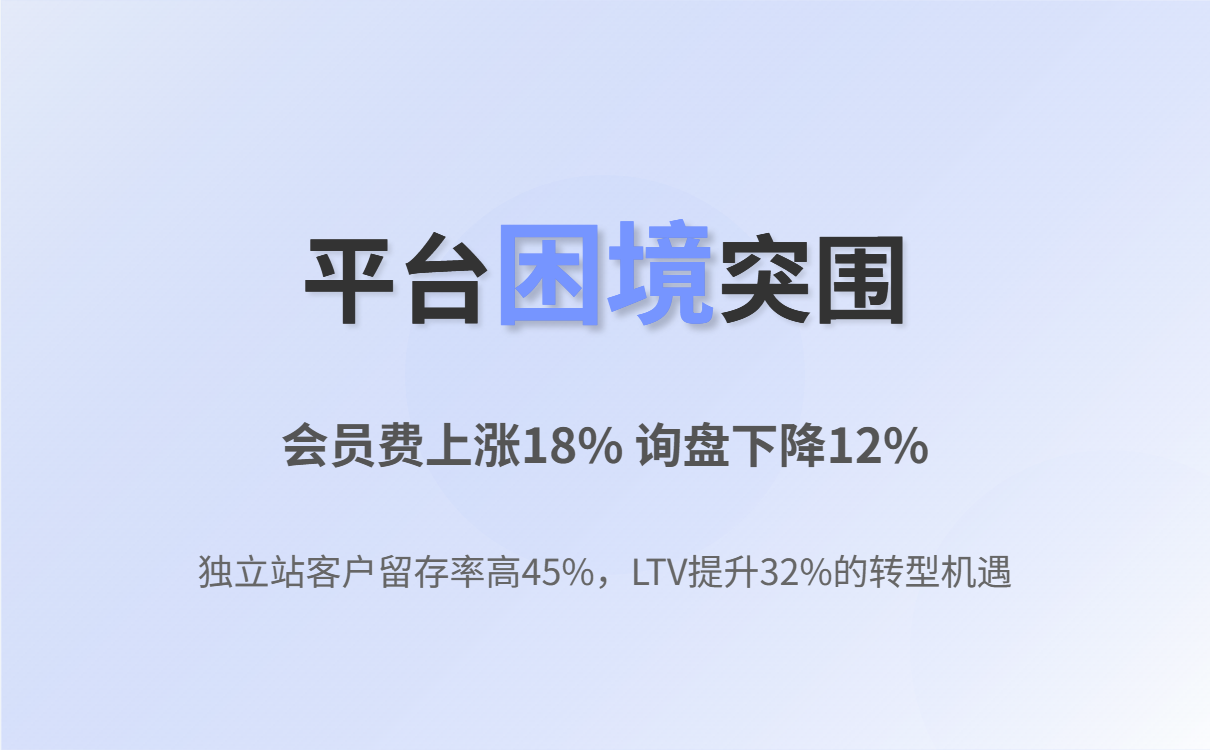
The foreign trade industry has undergone tremendous changes in the past five years. Data from third-party B2B platforms in 2022 showed that membership fees increased by an average of 18%, while the number of effective inquiries decreased by 12%. More worryingly, the frequent changes in platform rules have made business owners walk on thin ice—a well-known platform adjusted its search algorithm seven times in 2023 alone, causing many suppliers with stable rankings to see their traffic halved overnight.
In stark contrast, foreign trade companies with independent websites demonstrate stronger resilience. According to research by Digital Commerce 360, customer retention rates on independent websites are 45% higher than those on platforms, and customer lifetime value (LTV) increases by an average of 32%. These figures reflect an undeniable fact: in today's transparent information age, buyers increasingly prefer to learn about suppliers directly through official channels rather than being overwhelmed by the sea of homogenized products on platforms.
Independent Websites vs. Third-Party Platforms: A Comparison of Core Advantages
| Comparison Dimensions | Independent website | Third-party platform |
|---|---|---|
| Customer data ownership | 100% owned by the company | Platform control, unable to export |
| Marketing autonomy | Complete autonomy, flexible adjustment | Strictly restricted by platform rules |
| Inquiry costs | Average price: $15-35 per piece (long-term downward trend) | Average price: $45-$85 per piece (increasing year by year) |
| Brand building | Building a unique brand identity | Low brand recognition and severe homogenization |

II. Seven Golden Steps to Building an Independent B2B Website for Foreign Trade
Step 1: Strategy First – 3 Key Positioning Questions
Before building a website, instead of rushing to choose a domain name and server, it's better to answer three core questions first. I've seen too many companies spend tens of thousands of yuan to build websites, only to have them become "zombie sites" due to unclear positioning—with less than 50 visits per month, let alone generating inquiries.
Target Market Positioning : In which countries are your main customers located? The European and American markets prefer a minimalist and professional design style, while the Middle Eastern market favors richer colors and localized language versions. Data shows that websites optimized for specific markets can reduce bounce rate by 35% and increase page dwell time by 68%.
Core Product Positioning : Don't try to showcase all your products on one website. Successful B2B independent websites often focus on 1-3 core product lines, highlighting the advantages and application cases of these products with 80% of their content. Google Analytics data shows that product-focused websites have a conversion rate 2.1 times higher than "big and comprehensive" websites.
Unique Selling Proposition (USP) Positioning : In a market saturated with similar products, what makes you stand out and attract buyers? Is it 15 years of industry experience? Unique manufacturing processes? Or a comprehensive after-sales service system? A clear USP can make your website stand out from the competition and increase customer recall by up to 72%.
Step 2: Infrastructure – The Wisdom of Domain Name and Server Selection
A domain name is like a business's "address" on the internet; a good domain name helps customers remember it easily and build trust. According to statistics from domain registrar Namecheap, domain names containing industry keywords and ending in .com have a 40% higher click-through rate and a 58% lower memorability cost compared to ordinary domain names.
When choosing a domain name, it is recommended to follow the "3C principle": Concise, Relevant, and Branded. Avoid using hyphens and uncommon suffixes; research shows that domain names with hyphens can reduce user trust by 27%.
Server selection directly impacts website speed and stability. For international trade websites, server location is crucial—US customers accessing a website hosted on a European server will experience a 1.8-second slower loading time compared to accessing a local US server, and this 1.8-second difference can result in a 40% drop-off rate. New users are advised to use overseas server solutions from Cloudways or SiteGround, which offer 24/7 Chinese support and built-in CDN acceleration, improving access speeds by over 50% globally.
Server performance checklist for SEO experts
- Page load time: Target value < 2 seconds (can be tested with GTmetrix)
- Uptime: Guaranteed at 99.9% or higher (downtime allowed not to exceed 43 minutes per month).
- SSL certificate: Required (websites without SSL will display a "Not Secure" warning in Chrome).
- CDN support: Global CDN nodes can improve access speeds by 30%-80% in different regions.
- Backup service: Daily automatic backups ensure data security.
Steps 3-7: Complete Implementation from Technical Setup to Marketing Promotion
During the technical setup phase, WordPress remains the preferred platform for B2B websites in international trade, with 35% of websites worldwide built on it. Combined with Elementor page builder and the Yoast SEO plugin, even those without programming experience can build professional-grade websites. For B2B businesses, it is recommended to focus on strengthening three functional modules: a multilingual inquiry system, a bulk quotation tool, and a customer case study showcase—these features can increase inquiry conversion rates by over 45%.
The real challenges begin after the website goes live. Based on our experience, a new independent e-commerce website needs 3-6 months of SEO optimization to achieve stable rankings on Google. During this period, content marketing plays a crucial role—websites that publish 1-2 industry-specific articles per week will see a 3x increase in Google crawling frequency and a 60% faster keyword ranking improvement.
At the same time, don't underestimate the power of social media. LinkedIn is a golden channel for B2B marketing; data shows that websites driven by traffic from LinkedIn have a 277% higher conversion rate than other social media platforms. YouTube video marketing, on the other hand, can increase product understanding by 74%, significantly shortening the sales cycle.
III. From "Building a Website" to "Using a Website": Lessons from 3 Success Stories
The case of a machinery manufacturing company in Zhejiang is particularly impressive. Before 2021, they relied entirely on B2B platforms, investing 150,000 yuan annually but only receiving about 80 valid inquiries. After transitioning to independent website operation in 2022, through precise SEO optimization and LinkedIn marketing, they received 215 valid inquiries annually with the same investment, and the average order amount per customer increased by 42%.
Another case study comes from an electronic component supplier in Guangdong. Their secret lies in focusing on a niche market—instead of creating a large, comprehensive electronic component website, they concentrate on specific connector products within the industrial automation field. By publishing in-depth technical articles and application case studies, the website achieved first-page rankings for 57 core keywords on Google within 8 months, with monthly organic traffic exceeding 3,000 visits, and inquiry costs controlled at $22 per inquiry, far below the industry average.
Three key indicators for the success of independent foreign trade websites
1. Domain Authority (DA) : Target 30+ within 12 months (new domains typically have a DA value of 0-5).
2. Organic Traffic Growth Rate : A healthy website should maintain a monthly organic traffic growth rate of 15%-25%.
3. Inquiry Conversion Rate : The average conversion rate in the B2B industry is 1.5%-3%, with excellent websites achieving over 5%.
IV. Launching Your Independent Foreign Trade Website: An Action Plan Starting Today
Instead of envying your competitors who are getting a steady stream of high-quality inquiries through their independent websites, take action now. Remember, building a website isn't difficult; the challenge is building a website that generates inquiries. Building a website that generates inquiries isn't difficult either; the challenge is continuously optimizing and improving its marketing effectiveness.
Based on our experience coaching over 500 foreign trade companies, a successful B2B independent website is not built overnight, but requires continuous investment and optimization. However, believe me, when you see your first order from your independent website, when you find that customers are impressed by your professional website, all your efforts will be richly rewarded.
Are you ready to embark on your independent e-commerce website journey?
Our team of experts in building independent B2B websites for foreign trade will provide you with a one-stop service, from strategic planning to technical implementation and marketing promotion.
Get a free independent website building plan and quoteOver 200 foreign trade companies have already achieved a 150%+ increase in inquiries through our solutions.
Finally, remember this: In the digital age, your website is a combination of your business card, sales team, and marketing channels. Instead of waiting for platform rules to work their magic, build your own digital assets. Starting today, plan your independent e-commerce website and make it your most powerful tool for expanding into international markets.
.png?x-oss-process=image/resize,h_100,m_lfit/format,webp)
.png?x-oss-process=image/resize,h_100,m_lfit/format,webp)

.png?x-oss-process=image/resize,h_100,m_lfit/format,webp)
.png?x-oss-process=image/resize,h_100,m_lfit/format,webp)
.png?x-oss-process=image/resize,h_100,m_lfit/format,webp)
.png?x-oss-process=image/resize,h_100,m_lfit/format,webp)
