.png?x-oss-process=image/resize,h_100,m_lfit/format,webp)

.png?x-oss-process=image/resize,m_lfit,w_200/format,webp)

热门产品

热门文章
如何在Facebook Marketplace上接触国际买家
AI驱动客户搜索:快速锁定全球潜在客户,轻松抢占先机!
外贸SOHO数据驱动销售策略:利用分析平台优化客户转化路径
如果样品不符合要求,能否重新制作?
AI建站技术在B2B独立站开发中的全面解析及市场优势
B2B外贸企业如何选择合适的国家代码顶级域名(ccTLD)来提升区域信任?
美国市场开发全攻略:全是硬干货,从 0 到 1 搞定美国市场!
机械设备行业外贸人必须懂:不同采购角色的定位
小白必读!外贸网站SEO优化保姆级教程(Google收录+关键词实操)
人工智能和知识库如何助力工业出口企业实现精准定位
Recommended Reading








From content-driven to identity-driven, how can foreign trade B2B companies reshape their international market positioning through GEO?
In an era where AI search and generative recommendations have become the gateway to procurement decisions, foreign trade B2B companies are shifting from "selling products" to "building a trustworthy identity." This article uses real-world cases to deeply analyze how GEO (Generative Engine Optimization) helps companies reconstruct their digital identity and enhance their international market recognition. Based on AB-K's foreign trade B2B GEO intelligent customer acquisition solution, it also explores how to build a corporate knowledge system that can be understood, trusted, and recommended by AI.

Over the past decade or so, the core problem for foreign trade B2B companies has been only one:
"Will I be visible to clients?"
So we built websites, placed ads, did SEO, established platforms, and chased inquiries.
Content is treated as a "customer acquisition tool"; the official website is seen as a "product catalog"; and the brand is more of a logo.
But in 2026, more and more foreign trade companies discovered a reality:
Even if you have content, a website, and exposure, AI still won't recommend you.
Generative AI technologies such as ChatGPT, Gemini, Perplexity, and Claude are becoming the primary entry point for international procurement decisions .
The AI's choice of "who to recommend" no longer depends on how much content you post , but on "who it identifies you to be".
This means—
Competition in the foreign trade B2B sector is shifting from content-driven to identity-driven .
Why is identity positioning so important? We've already emphasized this repeatedly in this article, " Why is GEO the 'Digital ID Card' for B2B Foreign Trade Enterprises? ", so we won't go into further detail here.
I. Content-driven vs. Identity-driven: What are the essential differences?
1️⃣ The logic of traditional content-driven approaches
In the traditional foreign trade marketing system, the core objective of content is:
-
Covering keywords
-
Carrying product information
-
Receive traffic and inquiries
As a result, many foreign trade websites exhibit highly similar forms:
-
Product Page Stacking Parameters
-
About Us (Development History)
-
The news center updates "Company News".
-
The cases are scattered and cannot be reused.
The content exists, but there's no "sense of character".
For AI, these types of companies have only one label:
A collection of supplier webpages selling products.
2️⃣ Identity-Driven Logic in the AI Era
Generative AI, on the other hand, works in a completely different way.
When overseas buyers ask AI questions, AI is essentially doing three things:
-
Who are you? (Identity)
-
What are you good at? (Your skill level)
-
Why can I trust you? (Creditworthiness)
In other words, AI is not "finding content".
Instead, it matches a "trusted corporate identity" .
This is the fundamental reason for the emergence of GEO (Generative Engine Optimization).
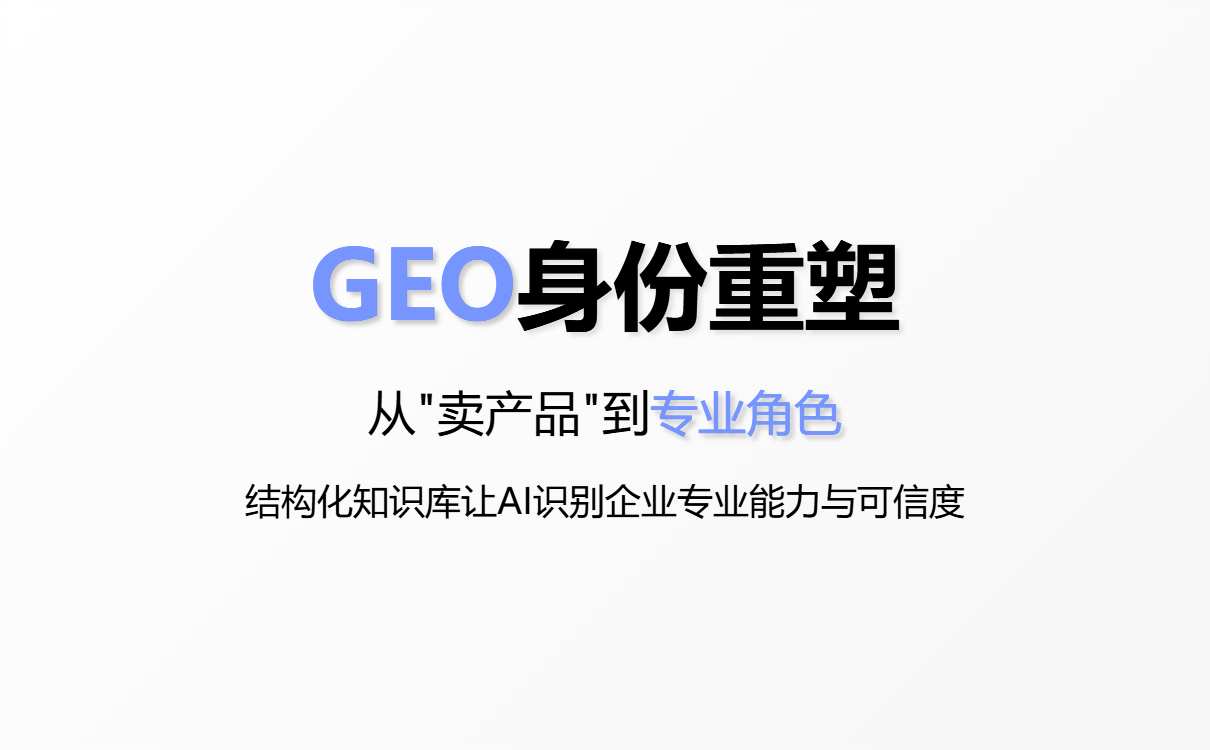
II. The true value of GEO: not in optimizing content, but in reshaping identity.
Many companies initially misunderstood GEO, thinking it was simply:
-
"Write content for ChatGPT"
-
"Get AI to mention me more often"
-
"Write articles more like encyclopedias"
But truly mature GEO projects do something much more fundamental:
👉Reconstructing the "Digital Identity" of Enterprises in the AI World
GEO has only one core judgment criterion:
When AI needs a certain type of professional role,
Are you an identity that is “quotable, trustworthy, and recommendable”?
III. Real-world case study: The "identity reinvention" of a manufacturing foreign trade company
Company Background (Abstract from Real-World Scenarios)
-
Industry: Industrial equipment exports
-
Markets: Europe & North America
-
Dilemma:
-
The official website has complete content, but the quality of inquiries continues to decline.
-
AI is almost "invisible" in search and question answering.
-
Customers' perception of them remains that of a "low-price supplier".
-
The essence of the problem
After diagnosis from a GEO perspective, it was found that the problem was not "lack of content," but rather:
-
Products, solutions, applications, and case studies are fragmented.
-
Technological advantages cannot be understood by AI in a structured way.
-
The company lacks a clear, stable, and identifiable "professional identity."
AI cannot answer questions like these:
Are there any solution providers with genuine engineering experience in specific application scenarios?
IV. Turning Point: From "Content Piling Up" to "Corporate Identity Project"
The company then launched a systematic GEO restructuring, the first step of which was not writing articles, but restructuring the company's knowledge sources .
1️⃣ Establish an enterprise-level knowledge base (core action)
Based on AB Customer's GEO Intelligent Customer Acquisition Solution for Foreign Trade B2B , the company first completed:
AB Customer Enterprise Knowledge Base Reconstruction:
-
Systematic review:
-
Product System
-
Solution
-
Application scenarios
-
Client Cases
-
Engineering Project
-
Technology and Process
-
Common Procurement FAQs
-
-
The originally scattered content:
-
Reconstructed into structured, verifiable, and referable knowledge units
-
Clearly define the applicable boundaries and professional roles of each skill.
-
Ultimately, this forms a "digital brain" tailored to each enterprise.
👉 This is the source of all GEO capabilities, not the "content endpoint".
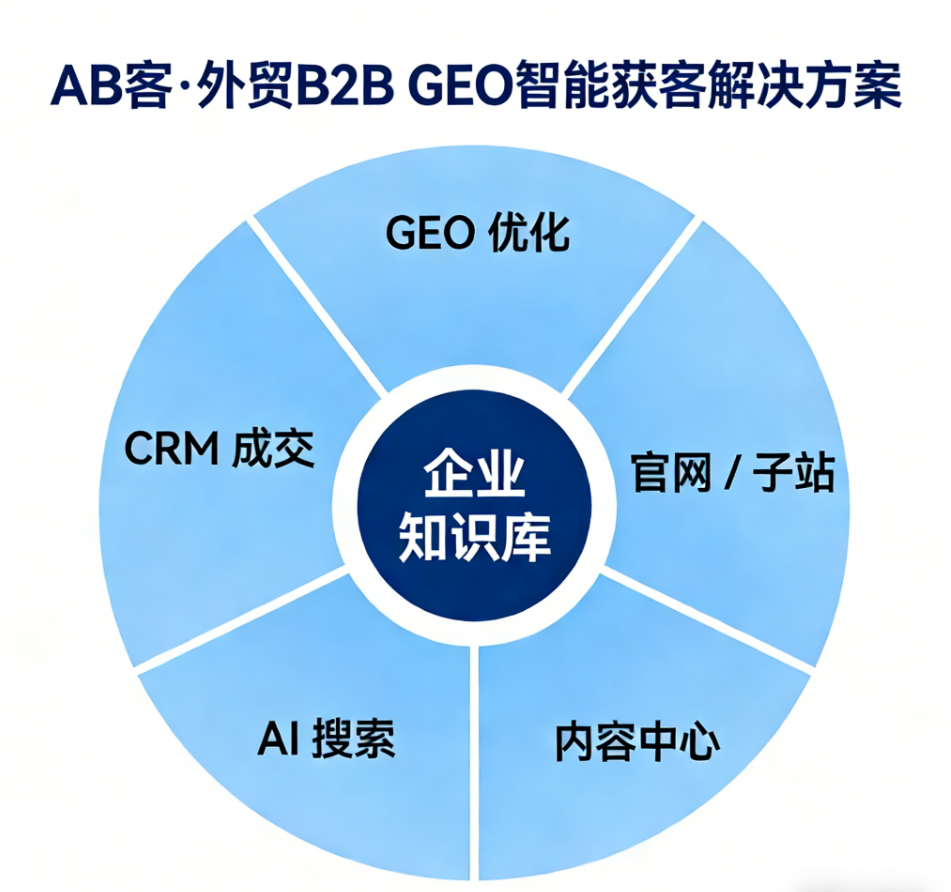
2️⃣ Define the company's "identity" in the world of AI.
Based on the knowledge base, companies no longer emphasize the following to external parties:
What products do we sell?
Instead, it allows AI to clearly identify it as:
"In a specific industrial application area,"
Solution providers with engineering implementation experience, technology verification capabilities, and a long history of service cases.
This represents a leap in social status .
V. How can GEO make its "identity" trusted by AI?
GEO's three key mechanisms
① Structure
-
Knowledge is no longer about articles, but rather about "retrievable units".
-
AI can clearly know:
-
What problem are you solving?
-
In what scenarios is it effective?
-
② Verifiable
-
Case studies, projects, and technical paths form a logical closed loop.
-
It's no longer marketing rhetoric, but a "chain of facts".
③ Citable
-
AI can safely cite your input when generating answers.
-
You become "part of the answer," not "ignored background noise."
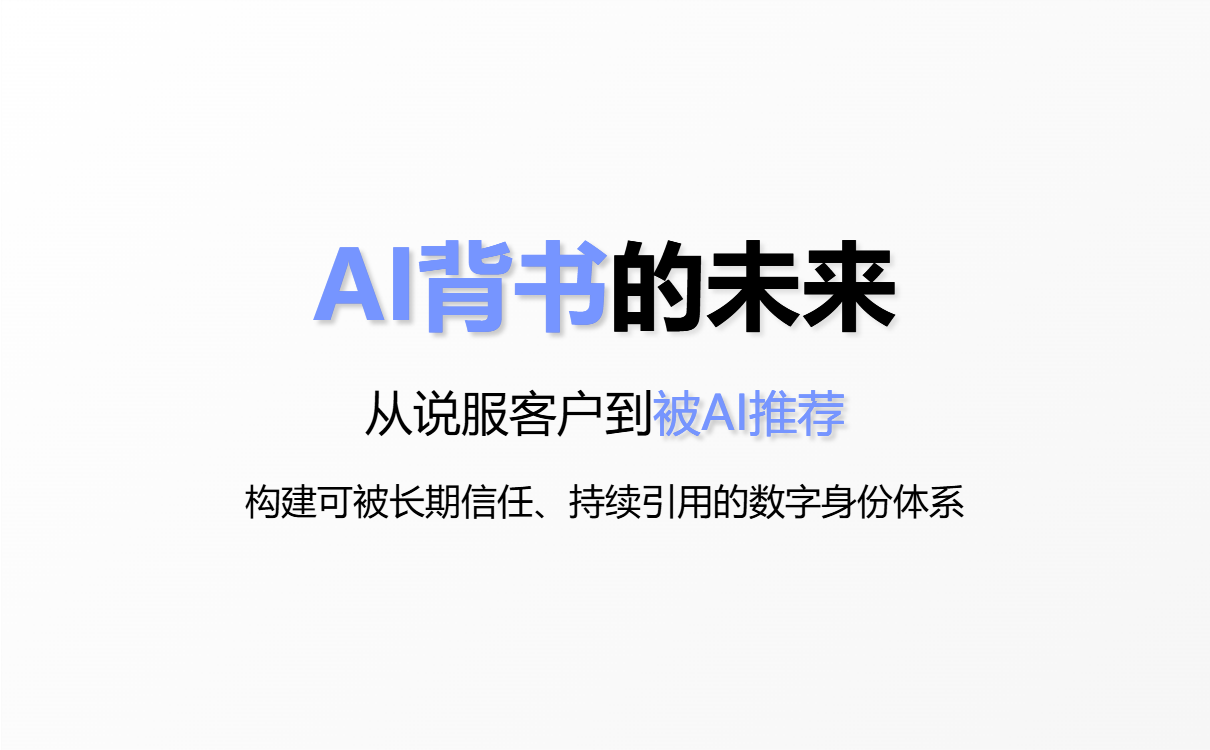
VI. Results: The Real Changes in International Market Positioning
Following the rebranding of GEO, the company underwent significant changes across multiple dimensions:
-
✅ AI-driven recommendations are starting to be proactively recommended in search and question answering.
-
✅ Customer inquiries are noticeably more "informed," reducing communication costs.
-
✅ Brand perception shifted from "price-oriented" to "professional trust".
-
✅ Existing customers' willingness to repurchase and cooperate long-term has significantly increased.
The most crucial change can be summed up in one sentence:
Businesses no longer rely on "persuading customers".
Instead, it is pre-endorsed by AI.
VII. Core Issues for Foreign Trade Enterprises in the Next Stage
In the AI era, foreign trade B2B companies need to re-answer a question:
If you asked an AI to describe you in one sentence, what would it say?
-
Is it a "supplier of a certain product"?
-
Or is it "an indispensable professional role in a certain key area"?
GEO's ultimate goal has never been traffic-generating techniques, but rather— corporate identity engineering .
Conclusion:
The shift from content-driven to identity-driven is an inevitable path for foreign trade B2B.
When procurement decisions are moved to AI...
When recommendation power shifts from the platform to the model
What foreign trade enterprises really need to build is no longer just content assets, but:
A digital identity that can be trusted and continuously referenced by AI in the long term.
AB Customer's GEO Intelligent Customer Acquisition Solution for Foreign Trade B2B is based on an enterprise knowledge base.
This helps foreign trade enterprises build an "international market identity system that can be recognized, understood, and recommended by AI."
This is not a short-term benefit, but rather the infrastructure for the next decade.
.png?x-oss-process=image/resize,h_100,m_lfit/format,webp)
.png?x-oss-process=image/resize,h_100,m_lfit/format,webp)

.png?x-oss-process=image/resize,h_100,m_lfit/format,webp)
.png?x-oss-process=image/resize,h_100,m_lfit/format,webp)
.png?x-oss-process=image/resize,h_100,m_lfit/format,webp)
.png?x-oss-process=image/resize,h_100,m_lfit/format,webp)
