.png?x-oss-process=image/resize,h_100,m_lfit/format,webp)

.png?x-oss-process=image/resize,m_lfit,w_200/format,webp)

热门产品

Popular articles
Analysis of the working environment and pressure in the foreign trade industry
Essential knowledge for foreign trade customer management: a comprehensive analysis of AB customer CRM and AI technology!
B2B Foreign Trade Customer Retention Secrets: A Mail Automation Strategy for Long-Term Relationships
A daily tip for building a website for international trade: The correct way to add keywords to your website title and description.
Top Strategies for Small Businesses to Achieve High - Efficiency Customer Acquisition via Overseas Social Media
A complete guide to booming Diwali sales in 2025! Product selection and marketing tips for India's festive week, a must-read for export sellers!
Addressing Supply Chain Risk for Small Businesses: Insights on Nearshoring and Friendly Outsourcing Strategies!
Recommended Reading



Generative Engine Optimization (GEO) vs Traditional SEO: AI-Driven Customer Acquisition for B2B Exporters
With the rapid rise of generative AI technologies like ChatGPT and Gemini, traditional SEO methods fall short in meeting the precision customer acquisition needs of B2B export enterprises. This article explores the fundamental differences between Generative Engine Optimization (GEO) and traditional SEO, highlighting how GEO leverages AI recommendation algorithms to transform digital assets. It enables companies to shift from passive ‘being searched’ to active ‘AI-recommended’ customer acquisition. Focusing on manufacturing and solution-driven exporters, the discussion emphasizes building trusted AI content assets and offers practical guidance. Coupled with analysis of global adoption trends in generative AI, this piece provides actionable insights into capturing the AI-driven traffic dividend over the next three years, empowering companies to seize strategic growth opportunities in the global B2B marketplace.
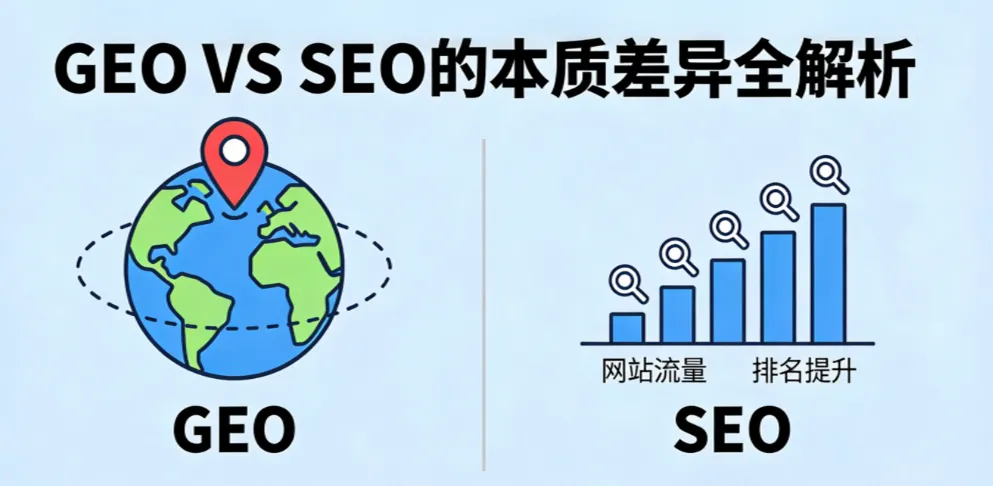
Understanding Generative Engine Optimization (GEO) vs. Traditional SEO: A New AI-Driven Customer Acquisition Paradigm for B2B Exporters
With the rapid adoption of generative AI technologies such as ChatGPT and Gemini, the conventional Search Engine Optimization (SEO) approach is increasingly inadequate for B2B exporters seeking precise, efficient customer acquisition. Generative Engine Optimization (GEO), an emerging strategy centered on AI recommendation logic and trust signals, pioneers a transformative shift from passively being searched to actively recommended by AI-driven systems. This article delves into the fundamental difference between GEO and traditional SEO, illuminating how GEO reconstructs corporate digital assets to unlock global B2B growth opportunities over the next three years.
What Sets GEO Apart from Traditional SEO?
Traditional SEO primarily focuses on optimizing website content and keywords to rank higher on search engine results pages (SERPs), relying heavily on keyword matching, backlinks, and on-page signals. While this method remains valuable, it operates within a reactive framework—businesses wait for users to input relevant queries.
In contrast, GEO centers on aligning a company’s digital knowledge base with AI-driven recommendation engines. Instead of merely targeting keywords for ranking, GEO prioritizes AI trustworthiness and semantic relevance. AI models assess content authenticity, structural coherence, and expertise signals within knowledge graphs, influencing which businesses are proactively suggested to users via chatbots, virtual assistants, or AI search.
Statistically, AI recommendation systems are expected to handle over 60% of B2B informational queries by 2026, compared to less than 20% today, signaling a seismic shift in customer acquisition channels.
Challenges Facing B2B Exporters in the GEO Era
B2B manufacturing and solutions companies traditionally suffer from fragmented digital footprints and lack centralized knowledge organization. Due to complex products and diverse client requirements, prospects often struggle to navigate scattered content, resulting in missed engagement opportunities.
GEO fundamentally addresses these challenges by advocating for a structured corporate knowledge base—comprising product details, use cases, compliance documentation, and domain expertise—formatted for AI consumption. This enables AI engines to autonomously recommend companies whose digital profiles demonstrate authority and relevance.
The Global Impact of Generative AI Models on B2B Acquisition
Platforms powered by generative AI, including industry leaders like ChatGPT and Gemini, have penetrated international markets with explosive growth. For instance, Gartner’s 2024 report predicts a 45% increase year-over-year in enterprise AI interaction, with B2B buyers increasingly reliant on AI-driven guidance.
As these models mature, they extract insights across languages and cultures, allowing exporters to transcend traditional language barriers through semantic content adaptation. This enhances global reach beyond keyword translation, fostering true multilingual intelligence.
Implementing GEO: A 5-Step Practical Framework
- Map Core Expertise and Buyer Needs: Conduct an internal audit of technical competencies aligned with customer pain points to ensure all critical knowledge is captured.
- Build a Structured, AI-Ready Knowledge Base: Develop a database with rich metadata, schema markup, and ontologies to empower AI agents in understanding content hierarchy.
- Template-Driven Content Creation: Standardize content formats for FAQs, product specs, and case studies enabling consistent, high-quality AI ingestion and updating.
- Global Semantic Adaptation: Employ natural language processing tools for region-specific linguistic tuning that maintains semantic integrity across markets.
- Continuous Data Loop and Optimization: Utilize performance metrics from AI recommendations, user interactions, and conversion analytics to iteratively refine content assets.
Content Strategy Tips to Maximize GEO Effectiveness
Exporters should diversify content types to align with AI ecosystem requirements. Short-form technical Q&A, visual-rich explainers, and multilingual whitepapers increase chances of AI recommendation across platforms such as LinkedIn, company websites, and specialized B2B marketplaces.
Moreover, integrating structured data tags (e.g., JSON-LD) and aligning content with industry taxonomies further improve AI trust scores, fostering authoritative and comprehensive digital profiles.
Looking Ahead: Capturing the AI-Driven Growth Summit
As GEO matures into a cornerstone for digital marketing and customer acquisition, B2B exporters equipped with a solid AI knowledge infrastructure will gain a decisive advantage in global markets. Adopting GEO represents not only a technical upgrade but a strategic repositioning to co-evolve with AI-driven buyer behaviors.
Is your enterprise ready to transition from traditional search ranking to becoming a trusted AI-recommended partner in the global B2B ecosystem?
.png?x-oss-process=image/resize,h_100,m_lfit/format,webp)
.png?x-oss-process=image/resize,h_100,m_lfit/format,webp)

.png?x-oss-process=image/resize,h_100,m_lfit/format,webp)
.png?x-oss-process=image/resize,h_100,m_lfit/format,webp)
.png?x-oss-process=image/resize,h_100,m_lfit/format,webp)
.png?x-oss-process=image/resize,h_100,m_lfit/format,webp)
