外贸学院|

热门产品

外贸极客

热门文章

推荐阅读

3 Practical GEO Tips to Boost AI Citability for B2B Export Brands

发布时间:2026/02/11
阅读:386
类型:Application Tutorial

As Google and other search platforms shift toward AI-generated answers and summaries, traditional keyword ranking alone no longer guarantees buyer visibility for B2B exporters. This tutorial explains the core traffic change in the AI era—where the “answer layer” absorbs clicks—and why being on page one may still fail to earn a buyer’s attention. It then outlines a practical GEO (Generative Engine Optimization) approach to improve AI citability: building structured brand data, strengthening entity and trust signals, and creating content that AI systems can accurately extract and reference. With concise examples, data-backed reasoning, and actionable checklists, the guide helps foreign trade decision-makers move from “being searched” to “being recommended by AI,” turning brand information into a durable, trustworthy digital asset that drives inbound demand from overseas buyers. Readers who want a faster, systemized rollout can explore the AB客 B2B GEO intelligent lead generation solution for deeper diagnostics and implementation support.

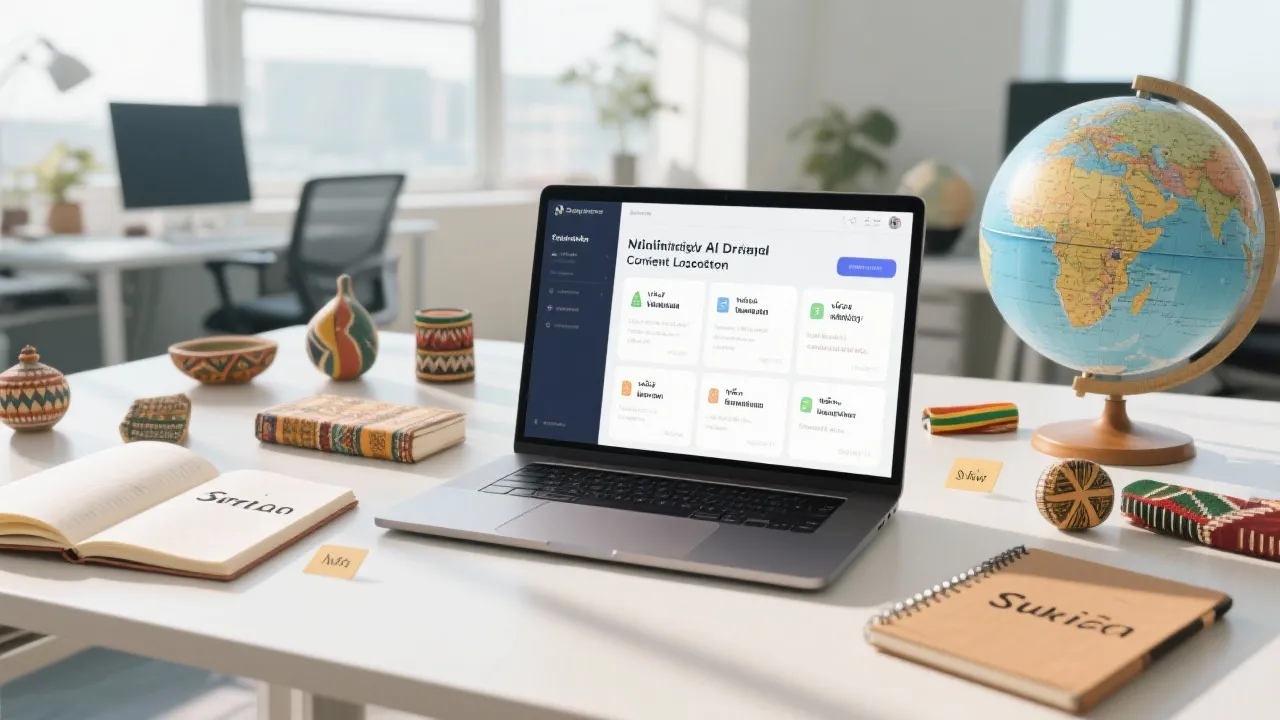
Conceptual diagram of AI citability for B2B exporters: structured data, trust signals, and consistent brand facts leading to AI recommendations

3 Practical Ways to Increase “AI Citability” — and Get Shortlisted by Overseas Buyers

As Google continues shifting toward generative answers (AI Overviews and AI-mode experiences), the classic playbook—ranking a keyword, winning a click, nurturing the lead—no longer behaves the same. In many B2B categories, the answer layer is absorbing the attention that used to flow to page-one listings.

For exporters and manufacturers, this creates a new growth question: How does a brand become “reference-worthy” so an AI can safely quote, attribute, and recommend it to a buyer? The operational term is GEO (Generative Engine Optimization): optimizing for understanding, trust, and inclusion in AI-generated answers—not only rankings.

What’s changing

Search results are increasingly summarized. In many sessions, users get “good-enough” answers without visiting supplier sites.

What stays true

Buyers still need verification: certifications, specs, traceability, MOQ, lead time, compliance, and proof of past performance.

The new edge

Brands that provide structured, consistent, externally corroborated facts are easier for AI to cite confidently.

Why “Page-One Ranking” No Longer Guarantees Buyer Attention

Historically, ranking in the top 3 positions captured the majority of clicks. But in a generative layout, the user journey can stop at the summary—especially for early-stage queries like “best supplier for…,” “how to choose…,” or “what standard applies to…”.

A realistic traffic shift (reference benchmarks)

Scenario Old pattern (classic SERP) New pattern (AI summary present) Business implication
Informational query Top results get most clicks Clicks often drop 20–40% Awareness content must be citable
Comparison query Buyers open multiple tabs AI pre-compares; fewer tabs You must appear in “top options”
Supplier shortlist query Directories + websites compete AI answers highlight a few entities Entity signals + proofs decide visibility

Benchmarks are industry-reported ranges observed across multiple verticals where AI summaries reduce organic clicks; exact impact varies by market and query intent.

In other words: being ranked is not the same as being referenced. GEO focuses on the second.

Conceptual diagram of AI citability for B2B exporters: structured data, trust signals, and consistent brand facts leading to AI recommendations

The Core Mechanism: How AI Decides What to Cite

Generative systems aim to reduce hallucinations and legal risk. So they lean toward information that looks like a “clean record”: consistent entity naming, clear definitions, measurable claims, and third-party corroboration. For an overseas buyer, these are the same signals that reduce supplier risk.

AI Trust Checklist (what makes content quotable)

  • Entity clarity: consistent company name, address, domain, product categories, and parent/brand relationship.
  • Verifiable facts: standards (ISO, CE, RoHS, REACH, FDA where applicable), test methods, tolerances, materials, capacity ranges.
  • Traceable proofs: certificate IDs, lab names, downloadable PDFs, factory photos with context, audit reports.
  • Multi-source consistency: website, LinkedIn, catalogs, B2B listings, and press mentions aligning on the same key claims.
  • Answer-ready formatting: definitions, tables, bullet points, and FAQs that can be lifted into a summary.

3 Hands-On Techniques to Improve AI Citability (GEO Playbook)

Technique #1: Build a Structured “Brand Fact Sheet” That AI Can Parse

Most exporter websites are persuasive but not machine-legible. A brand fact sheet turns marketing into consistent, quotable facts. This is not a PDF brochure—it’s a set of web pages with structured sections and repeatable patterns.

Minimum fact sheet modules (recommended):

  1. Entity block: legal name, brand name, website, HQ city/country, year established, manufacturing type (OEM/ODM/own brand).
  2. Capability block: monthly capacity range, core processes, QC checkpoints, lead time ranges, typical MOQ range (avoid overly rigid numbers if they vary).
  3. Compliance block: standards supported, markets served, restricted substances policy, documentation available.
  4. Proof block: certificates, audits, key equipment list, downloadable test reports (where allowed).
  5. Product taxonomy: 10–30 canonical product categories with consistent naming.

Quick self-check (30 seconds): If a buyer asks an AI “Who manufactures X, compliant with Y standard, shipping to Z?”—does your site contain a single page where those facts appear together, in scannable sections?

Technique #2: Convert Product Pages Into “Answer Pages” (Specs + Use Cases + Comparison)

Many B2B product pages are image-heavy and spec-light. For GEO, the goal is to be the page an AI can safely quote when summarizing: “material options,” “tolerance,” “application,” “compliance,” “packaging,” “testing,” and “trade terms.”

The “Cite-Me” structure for a B2B product page

  • One-sentence definition (what it is, not a slogan).
  • Specs table: dimensions, materials, finishes, performance metrics, test methods.
  • Applications: 3–6 buyer-friendly scenarios by industry.
  • Compliance & documentation: what can be provided, under what conditions.
  • Options & customization: OEM/ODM, branding, packaging, labeling.
  • Comparison snippet: “When to choose Type A vs Type B” (simple, honest trade-offs).
  • FAQ section: 6–10 questions mirroring real buyer emails.

Micro-copy that improves trust (examples)

Replace vague claims with testable statements:

  • Instead of “High quality”: “100% outgoing inspection with recorded QC checkpoints for critical dimensions.”
  • Instead of “Fast delivery”: “Typical lead time: 15–25 days depending on material availability and order complexity.”
  • Instead of “Certified”: “ISO 9001 system in place; certificates and audit summaries available upon request.”

In many export niches, this upgrade alone improves conversion because it answers the buyer’s real anxiety: “Can this supplier deliver consistently, and can they prove it?”

Technique #3: Strengthen Entity Signals With Third-Party Consistency (Not Just More Content)

AI systems tend to trust what is consistent across the open web. For B2B exporters, this does not mean chasing vanity PR. It means ensuring your business facts and category positioning appear consistently on a few credible surfaces.

A practical “Consistency Map” (90-day sprint)

Surface What must match Target outcome
Company website Name, address, category, capabilities, compliance Primary source of truth
LinkedIn (company + key staff) Same category wording + proof points Authority & legitimacy
B2B directories (Alibaba/others) Consistent product taxonomy + factory role Reinforced entity matching
Downloadables (catalogs, compliance docs) Same identity block + revision dates Citable artifacts
Industry mentions Quoted specs, standards, use cases Third-party corroboration

A common mistake is publishing 30 new blog posts while leaving foundational inconsistencies unresolved. GEO favors fewer, stronger, repeatable truths over endless content volume.

A Simple Interaction: Score Your Current AI Citability

This quick checklist helps a team align on what to fix first. Score each item from 0–2 (0 = missing, 1 = partially, 2 = complete). A total above 14 usually indicates a solid GEO foundation.

  • Company identity block is consistent across website, PDFs, LinkedIn, and directories.
  • Core product taxonomy is stable (same naming everywhere).
  • Each core product page has a spec table + application section + compliance notes.
  • Certificates/test reports can be requested or downloaded with clear revision dates.
  • Factory capability claims include measurable ranges (capacity, tolerances, lead time).
  • At least 6–10 buyer-style FAQs exist for each priority category.
  • There are external mentions or directory profiles that repeat the same key facts.
  • Content uses neutral, quotable statements (not only superlatives).

Where This Leads: From “Being Found” to “Being Recommended”

In the AI-driven attention economy, exporters that win are not necessarily the ones who publish the most, but the ones who build the most credible digital assets. Over time, those assets create compounding advantages: better AI inclusion, higher buyer confidence, and shorter sales cycles.

Want AI to Recognize and Cite Your Brand More Often?

AB客 · Foreign Trade B2B GEO Intelligent Lead Generation Solution helps exporters turn scattered marketing materials into structured, verifiable brand knowledge—so AI systems can understand, trust, and surface your business when buyers ask.

Explore AB客 · B2B GEO Intelligent Lead Generation Suggested next step: request a GEO readiness check (entity consistency + citability gaps + priority page list).

If overseas buyers are increasingly asking AI first, the practical move is to make sure AI has the right facts—in the right format—about the brands worth choosing.

AI citability GEO for B2B export structured brand data AI trust signals AI-generated search
此篇文章由AI生成

智领未来,畅享全球市场

想要在激烈的外贸市场中脱颖⽽出?AB客的外贸极客为您简化繁琐业务,通过智能⾃动化技术,将营销效率提升3-10倍!现在注册,体验智能外贸的便捷和⾼效。
了解AB客
专业顾问实时为您提供一对一VIP服务
开创外贸营销新篇章,尽在一键戳达。
开创外贸营销新篇章,尽在一键戳达。
数据洞悉客户需求,精准营销策略领先一步。
用智能化解决方案,高效掌握市场动态。
用智能化解决方案,高效掌握市场动态。
全方位多平台接入,畅通无阻的客户沟通。
全方位多平台接入,畅通无阻的客户沟通。
省时省力,创造高回报,一站搞定国际客户。
个性化智能体服务,24/7不间断的精准营销。
多语种内容个性化,跨界营销不是梦。
多语种内容个性化,跨界营销不是梦。
https://shmuker.oss-accelerate.aliyuncs.com/tmp/temporary/60ec5bd7f8d5a86c84ef79f2/60ec5bdcf8d5a86c84ef7a9a/thumb-prev.png?x-oss-process=image/resize,h_1500,m_lfit/format,webp