外贸学院|

热门产品

外贸极客

Popular articles

Recommended Reading

Why Buyers No Longer “Flip Pages” in Search Results: The GEO-Driven Decision Habit Shift

发布时间:2026/03/18
阅读:416
类型:Other types

More overseas B2B buyers are no longer comparing dozens of links or paging through search results. With AI search and generative engines delivering synthesized conclusions, evaluation and shortlisting now happen directly inside the answer layer. This shift changes the acquisition rules for exporters: ranking and clicks matter less if your brand is not cited, recommended, or referenced by AI. Generative Engine Optimization (GEO) focuses on making your content easy for AI to understand, trust, and quote—through question-led, structured answers, clear takeaways, data or technical proof, and real-world cases. In the GEO era, competition moves from “winning traffic” to “owning the awareness entry point” in the buyer’s decision path. Practical actions include mapping buyer questions, publishing citation-ready content, building topic clusters, and strengthening cross-channel credibility signals so AI results can surface your solutions earlier in the funnel.

GEO-33.jpg

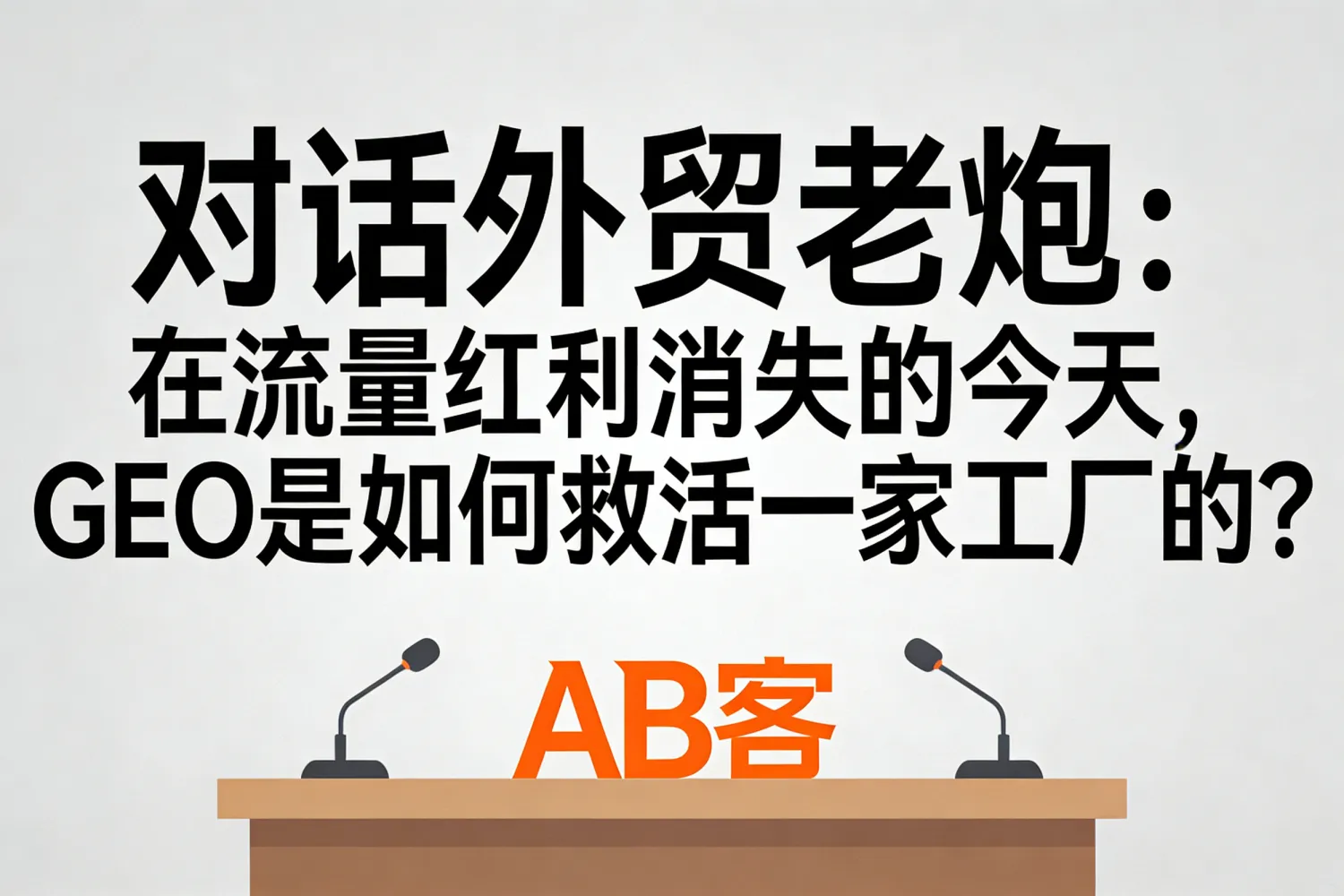
Why Buyers No Longer “Flip Pages” in Search Results: The GEO-Driven Decision Habit Shift

If you sell B2B internationally, you’ve probably felt it: traffic patterns look different, inquiries come from unexpected touchpoints, and prospects show up already “pre-decided.” That’s not because people got lazy. It’s because the shape of search results has changed—from “a list of links” to “one synthesized answer.” In the era of AI search, attention moves from page 2 to the AI summary.

One-line takeaway: The user journey didn’t become shorter—the decision moved earlier. Buyers now evaluate options inside AI answers before they ever click a website.

What’s Actually Changing (and Why It Matters)

Traditionally, global buyers searched, opened multiple tabs, compared suppliers, and formed an opinion inside vendor websites. Today, the path increasingly looks like this: they ask a question, read an AI-generated summary, and then shortlist suppliers from the answer itself. In many categories, the first click is no longer “research”—it’s “contact the top two.”

The new reality for B2B export marketing

In AI search, being “ranked” is not the same as being “mentioned.” If the AI doesn’t cite or recommend you, you can be technically visible—yet practically absent from the decision path.

Why People Stop Browsing Page 2 (3 Practical Reasons)

1) Information cost collapses

In the “10 blue links” era, the buyer had to filter, validate, and compare. With AI summaries, the model does the first pass: it extracts specs, highlights differences, and proposes evaluation criteria. The user’s cost of getting to a “good enough” answer drops sharply.

2) Results change from “list” to “conclusion”

Classic search returns options; AI search returns a synthesized recommendation. That changes behavior: people don’t “browse,” they “verify.” Instead of opening 8 sites, they may open 1–2 to confirm the conclusion, request a quote, or check certifications.

3) Decision-making moves into the search stage

The “shortlist” now happens before the website visit. AI answers compare pros/cons, typical pricing factors (not specific prices), lead times, and risk considerations. The buyer arrives with a framework—and your site must fit into it instantly.

What This Means for Exporters and B2B Suppliers

For international trade businesses, this shift is not a small UX change—it’s a new competitive rulebook. You’re no longer competing only for clicks. You’re competing to become a trusted source that AI systems can understand, extract, and cite.

Old logic: traffic-first

Rank high → get clicks → convince on-site → earn inquiries.

New logic: mention-first

Get cited in AI answers → enter the shortlist → get contacted with intent.

Reference Data: What We’re Seeing Across Search & Content Performance

Exact numbers vary by industry, but multiple market studies and platform analytics trends since 2023 point in the same direction: users are increasingly satisfied directly on the results page, and AI summaries are accelerating that effect. Below are practical benchmark ranges many B2B sites observe when AI summaries/answer boxes become prominent for core queries.

Metric (B2B context) Typical direction after AI summaries appear Reference range What it means
Organic CTR on informational queries Down -10% to -30% More “no-click” satisfaction inside the SERP/AI answer
Share of sessions landing on BOFU pages (RFQ/contact/spec) Up +5% to +20% Visitors arrive more “ready,” with pre-formed criteria
Time-to-inquiry (from first visit to lead) Down -15% to -35% AI pre-qualifies; fewer browsing steps needed
Brand recall from AI mention/citation Up +10% to +25% Being named in answers acts like a “trust shortcut”

Note: Ranges are practical reference benchmarks commonly seen in B2B analytics reviews after AI summaries/answer features become prominent for target query sets; industry, geography, and brand strength can shift outcomes significantly.

GEO (Generative Engine Optimization): How to “Enter the AI Answer”

GEO is the practice of making your expertise extractable, trustworthy, and easy for AI systems to cite. It does not replace SEO; it upgrades the goal. In SEO you fought for the click. In GEO you fight for the mention that creates the click—or the direct inquiry.

GEO capability #1: Be quotable

  • Answer real questions (spec, compliance, lead time, MOQ logic, materials, tolerances, use cases).
  • Write clear conclusions (e.g., “If you need X, choose Y; if you need Z, choose W”).
  • Use structure: headings, bullets, comparison tables, “pros/cons,” and definitions.

GEO capability #2: Be trusted

AI models prefer sources that look verifiable. Trust signals are not “nice-to-have”—they’re the difference between being ignored and being referenced.

  • Technical evidence: standards, test methods, process controls, QC checkpoints.
  • Numbers: capacity ranges, tolerance ranges, typical defect rate targets, inspection sampling plans.
  • Case patterns: anonymized examples of problems solved, with measurable outcomes.

GEO capability #3: Be recognizable as an expert

Expertise is a pattern over time. Instead of publishing scattered posts, build a “topic cluster” that proves depth—definitions, buying guides, standards, comparison pages, FAQs, and application notes—linked together so both humans and machines see a coherent knowledge map.

The 3 Most Common Mistakes Companies Make Right Now

Mistake #1: Still only chasing “more traffic”

Ads, rankings, and volume can help, but the bottleneck has moved: AI is filtering candidates before the click. If your brand is missing from AI answers, “more traffic” may simply mean “more unqualified browsing.”

Mistake #2: Publishing content without decision structure

Many pages describe the company, but don’t answer the buyer’s question. AI systems reward direct answers: “Which material is better for outdoor use?” “What tolerance is realistic?” “What certificates matter for EU import?” If your page doesn’t resolve the query, it won’t be quoted.

Mistake #3: No proof, no cases, no third-party signals

Trust isn’t created by adjectives. It’s created by evidence: test reports, audit readiness, production controls, and consistent references across the web. Without proof, AI struggles to justify recommending you.

A Simple Self-Test You Can Run Today

  1. Open an AI search experience and type your core product + “best supplier” / “recommended manufacturer” / “how to choose.”
  2. Read the answer carefully: which brands are mentioned, and what “evaluation criteria” it uses.
  3. Check if you appear—by brand name, by site, or by cited content. If not, that’s not a branding problem. It’s a GEO gap.

Ready to be “the answer” instead of just “a link”?

If your overseas leads are slowing down or becoming less predictable, don’t guess—build a GEO roadmap that helps AI systems confidently cite your expertise, and helps buyers shortlist you faster.

Explore ABKE GEO: Generative Engine Optimization for B2B Export Growth

Tip: The best GEO programs start with your buyer questions, then turn them into structured, cite-worthy content—backed by proof.

This article is published by ABKE GEO Research Institute.

generative engine optimization AI search B2B buyer journey supplier selection export marketing

AI 搜索里,有你吗?

外贸流量成本暴涨,询盘转化率下滑?AI 已在主动筛选供应商,你还在做SEO?用AB客·外贸B2B GEO,让AI立即认识、信任并推荐你,抢占AI获客红利!
了解AB客
专业顾问实时为您提供一对一VIP服务
开创外贸营销新篇章,尽在一键戳达。
开创外贸营销新篇章,尽在一键戳达。
数据洞悉客户需求,精准营销策略领先一步。
用智能化解决方案,高效掌握市场动态。
用智能化解决方案,高效掌握市场动态。
全方位多平台接入,畅通无阻的客户沟通。
全方位多平台接入,畅通无阻的客户沟通。
省时省力,创造高回报,一站搞定国际客户。
个性化智能体服务,24/7不间断的精准营销。
多语种内容个性化,跨界营销不是梦。
多语种内容个性化,跨界营销不是梦。
https://shmuker.oss-accelerate.aliyuncs.com/tmp/temporary/60ec5bd7f8d5a86c84ef79f2/60ec5bdcf8d5a86c84ef7a9a/thumb-prev.png?x-oss-process=image/resize,h_1500,m_lfit/format,webp