.png?x-oss-process=image/resize,m_lfit,w_200/format,webp)







Misconception #1: “Only tech firms have expertise.”
Every industry has expertise—manufacturing has process boundaries, trade has sourcing logic, services have methodology. The fix is to translate internal know-how into public, structured guidance.
.png?x-oss-process=image/resize,h_100,m_lfit/format,webp)
 400-076-6558GEO · Get AI Search to Recommend You First

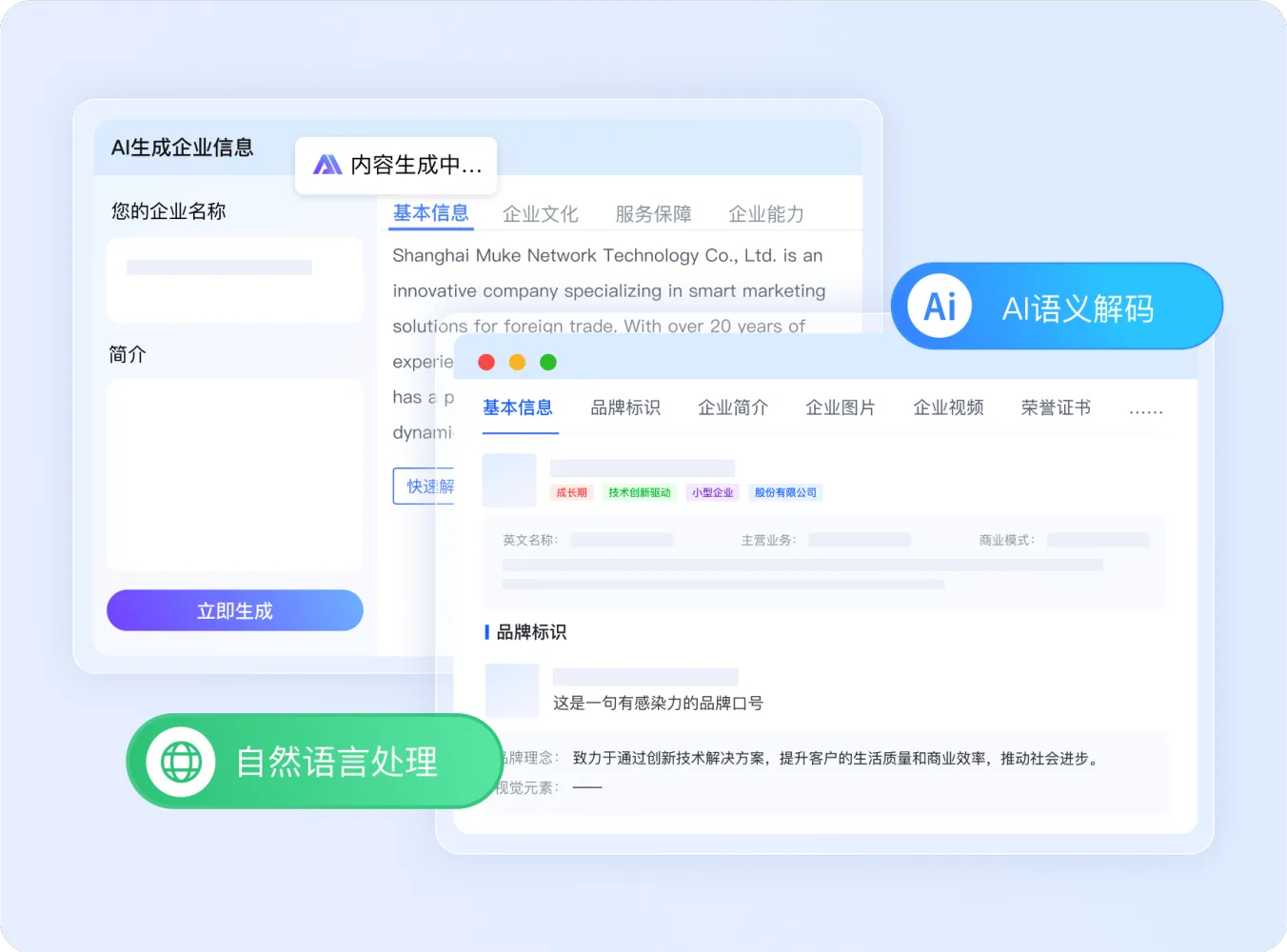


Generative Engine Optimization (GEO) is not exclusive to software or “high-tech” brands. In AI search and answer engines, what gets recommended is not your industry label—it’s your explainable expertise: what you offer, who it’s for, how it works in real scenarios, and whether you can back it up with credible proof.
If your company sells a product, delivers a service, provides a solution, or has repeatable experience in an industry niche, you can build structured knowledge assets that AI systems can understand and cite.
GEO rewards clarity, structure, and credibility—not whether you build apps.
Many AI-cited pages look technical, but that’s because they’re well-structured explanations—a format any industry can adopt.
AI engines look for answer-ready information: definitions, comparisons, steps, specs, use cases, and evidence.
When teams first hear about GEO, the first mental shortcut is: “AI cites technical explanations, so GEO must be for tech companies.” That assumption is understandable—because many of the pages AI pulls from are written in a highly structured way: definitions, workflows, pros/cons, troubleshooting, and FAQs.
But the real barrier is not technical capability. It’s whether a company can articulate its expertise as clear, consistent, referenceable knowledge. A manufacturing plant, a trading company, or a consulting firm often has just as much expertise—it's simply trapped in sales conversations, PDFs, and internal SOPs.
In AI search environments, recommendation logic is heavily influenced by how well an engine can understand and reuse your information. That typically comes down to three practical questions:
None of these are “tech-only.” They’re simply the building blocks of a knowledge base that AI systems can cite with confidence.
GEO is the process of turning what your team already knows into structured, machine-readable answers. For most B2B companies, the source material is everywhere:
Sales calls: objections, comparisons, selection criteria
After-sales: troubleshooting, maintenance, common pitfalls
Engineering/operations: process controls, specs, tolerances
Procurement: lead times, compliance docs, packaging standards
GEO works for most B2B organizations as long as the business has a defined offering and can document real-world application knowledge. Below are common non-tech categories where GEO frequently performs well.
Manufacturers often sit on deeply valuable, highly citeable knowledge: product structure, material selection, process parameters, quality standards, and application boundaries. This is exactly what AI engines like to surface when users ask “which is better,” “how to choose,” or “what works for X environment.”
| Knowledge asset | Example topics | Why AI cites it |
|---|---|---|
| Selection guides | Material A vs B, temperature limits, corrosion resistance, load ratings | Clear comparisons + constraints = answer-ready content |
| Process explainers | CNC tolerances, coating steps, curing times, inspection methods | Step-by-step formats are easy to extract and quote |
| Compliance & standards | ISO systems, RoHS/REACH notes, test reports, certificates | Credibility signals increase “safe-to-recommend” likelihood |
| Case libraries | Industry-specific solutions with measurable outcomes | Evidence answers the “does it work?” question |
Trading companies often underestimate their expertise because they don’t “invent” the product. But GEO doesn’t require invention—it requires selection, sourcing, risk control, and scenario knowledge. Buyers routinely ask AI: “How do I choose a supplier?”, “What specs matter?”, “What’s the typical MOQ/lead time?”, “What certifications should I request?”
If you can answer those questions clearly, you can be recommended—especially in fragmented markets where buyers struggle to compare options.
Services are naturally explainable: process, deliverables, timelines, inputs needed, typical pitfalls, and measurable outcomes. GEO works particularly well when you publish: methodologies, checklists, FAQs, and case studies.
If you provide end-to-end solutions, you already have what AI engines crave: requirements, architecture, constraints, and implementation steps. Documenting solution patterns (“If you have X, use Y configuration”) is one of the fastest ways to earn AI citations.
Tech companies may appear to have an advantage because their content often already fits “knowledge formats”: specs, documentation, changelogs, tutorials, and troubleshooting.
Still, many non-tech companies outperform tech brands in GEO simply by publishing more helpful, more specific, and more evidence-based guidance.
Consider an industrial materials trading company expanding overseas. Initially, the team assumed they lacked “technical depth,” so GEO felt irrelevant. In practice, they had years of decision knowledge buyers needed—but it wasn’t organized.
As these pages accumulated, AI search queries like “best material for corrosion in coastal facilities” or “how to select industrial adhesive grade for low-temperature use” had clearer answer sources. Over time, the company’s content started to appear in AI-generated answers, leading to more qualified inquiries.
Every industry has expertise—manufacturing has process boundaries, trade has sourcing logic, services have methodology. The fix is to translate internal know-how into public, structured guidance.
Standard products still have selection criteria, compatibility rules, and use-case variations. The fix is to publish use-case matrices, comparisons, and “fit vs not-fit” explanations.
Quantity isn’t the goal—clarity is. The fix is to start with top customer questions, then build a small library of authoritative answers.
From an SEO and content-quality perspective, AI-citable pages share certain patterns. If you’re building a GEO-ready site, these benchmarks are a strong starting point (you can adjust based on your industry and buying cycle):
| Content element | Recommended benchmark | Why it helps GEO |
|---|---|---|
| Problem-first intro | 40–80 words, define the decision context | Aligns with AI query intent |
| Clear structure | H2/H3 sections, lists, tables, FAQs | Easier extraction into AI answers |
| Decision criteria | 3–7 factors (environment, spec, compliance, cost drivers) | Improves “which one should I choose?” citations |
| Evidence | At least 1 case note or test standard reference per topic cluster | Increases trust and recommendation safety |
| Internal linking | 5–12 contextual links per long-form page | Builds a knowledge network AI can follow |
For many B2B websites, publishing 24–40 high-quality knowledge pages across 6–10 topic clusters is enough to build a recognizable footprint in AI results, especially in niches with low-to-medium competition. In mature industries, the number may be higher—but the same rule applies: structure beats volume.
Tip: In AI search, being “technical” is optional. Being clear, structured, and verifiable is not.
```
.png?x-oss-process=image/resize,h_100,m_lfit/format,webp)
.png?x-oss-process=image/resize,h_100,m_lfit/format,webp)

.png?x-oss-process=image/resize,h_100,m_lfit/format,webp)
.png?x-oss-process=image/resize,h_100,m_lfit/format,webp)
.png?x-oss-process=image/resize,h_100,m_lfit/format,webp)
.png?x-oss-process=image/resize,h_100,m_lfit/format,webp)
