.png?x-oss-process=image/resize,m_lfit,w_200/format,webp)


Traditional SEO process (ranking logic)
Keyword research → On-page optimization → Backlinks/authority → Ranking improvement → Clicks to website → Forms/Inquiries
.png?x-oss-process=image/resize,h_100,m_lfit/format,webp)
 400-076-6558GEO · Get AI Search to Recommend You First


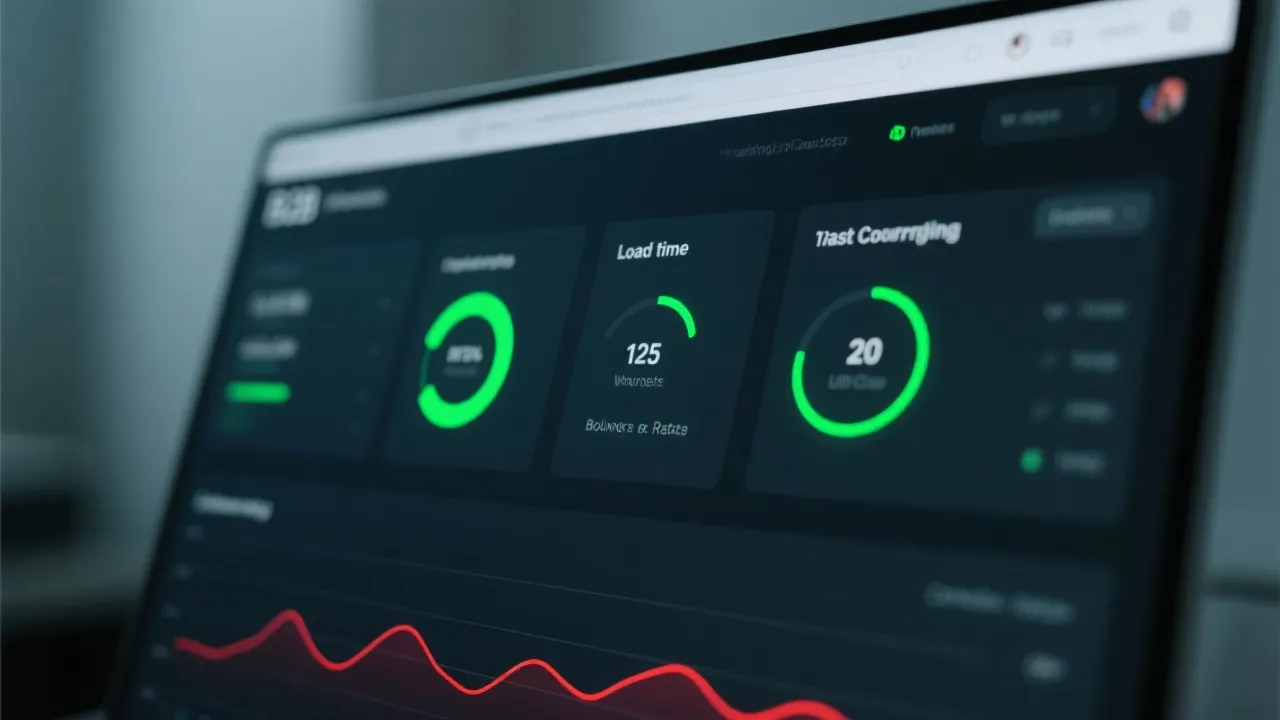

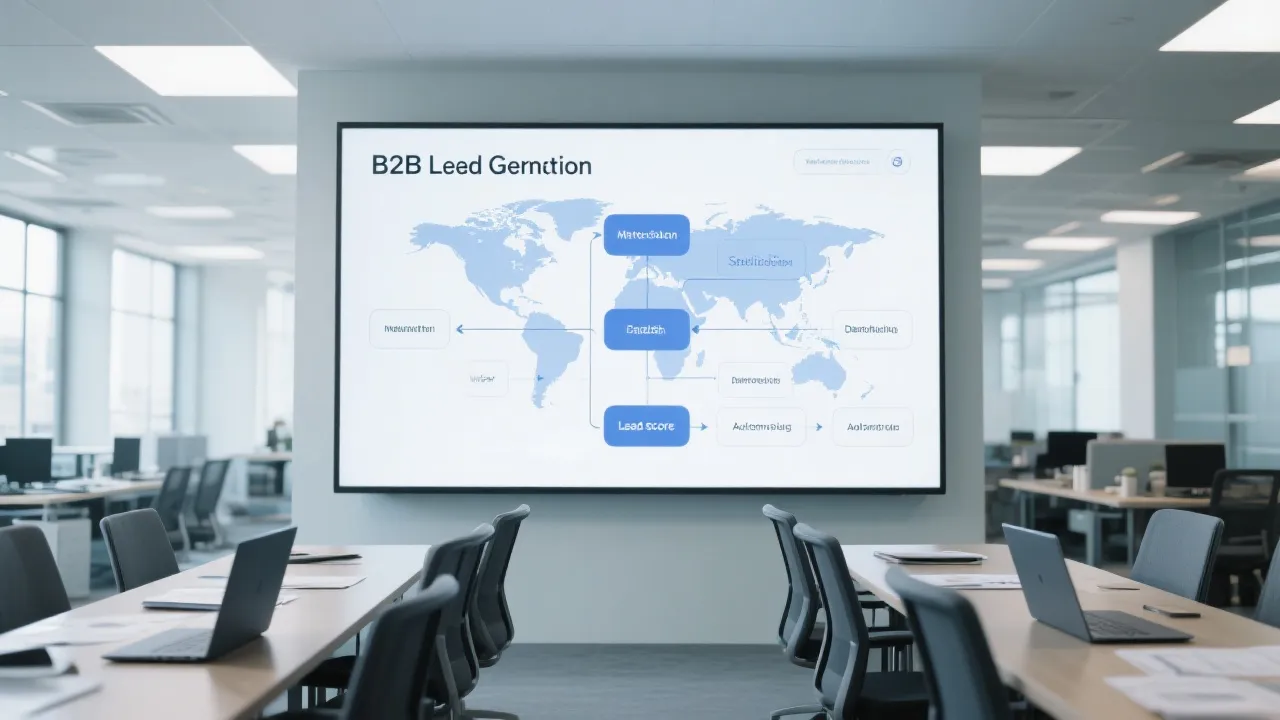


As a foreign trade business owner, you might be used to measuring traffic by one metric: whether your keywords can rank on the first page of Google search results. In the past, this almost equated to "being discovered by buyers." But in the AI era, this logic is failing—it's not that your SEO is inadequate, but rather that the "entry point" for search has changed: more and more buyers are not receiving a series of links, but rather an AI-generated answer summary .
You need to redefine "reach": not ranking, but being cited by AI, recommended by AI, and regarded as a trusted source by AI . Otherwise, your content may be on the first page, but still "not in the buyer's sight."
Starting in 2024, Google accelerated the rollout of AI Overviews in more countries and regions, placing it at the top of search results (especially for informational, solution-based, and comparative queries). This means that buyers' first impression is no longer "who is number one," but rather "what conclusion does AI give me first."
Simultaneously, you'll also see a more subtle shift: Google's multiple core algorithm updates have further emphasized content credibility, entity signals, and verifiability . For example, in March 2024, Google released a core update and simultaneously strengthened its efforts to combat spam; another core update in August 2024 further compressed the visibility of low-value content. You'll find that the "rankings" previously built on keyword stuffing and page count are becoming increasingly unstable.
Interactive question: Can you answer this question now— "Has your website been cited by AI summaries?"
If you can't answer this, your traffic monitoring system may still be stuck in the "old map".
In traditional SERPs (Search Results Pages), buyers scan links from top to bottom; however, with the advent of AI summaries, users are more likely to stay at the top to complete their understanding and decision-making. Industry research has long shown that clicks on organic search results are highly concentrated in the first few pages, with click-through rates dropping sharply towards the bottom . Even if you're in the middle or later parts of the first page, you might hardly get any clicks.
Combining common CTR reference ranges (which fluctuate with industry and query intent): the 1st position might get about 25%–30% of clicks, the 2nd position about 12%–15% , the 3rd position about 8%–10% ; by the 7th–10th position, it often drops below 2% . When AI summaries "drain" user attention, this allocation may be more biased towards "summary + a few cited sources".
Keyword research → On-page optimization → Backlinks/authority → Ranking improvement → Clicks to website → Forms/Inquiries
Structured knowledge → Entity signals/evidence → Trusted citations from multiple channels → Understood and cited by AI → Entered summary/recommendation → Triggered further access and inquiries
You'll find the difference is stark: SEO's ultimate goal is "clicks"; GEO's premise is "being part of the answer." When buyers have already gathered their judgment from the summary, if you're not in the summary, it's like having your booth blocked by partitions at a trade show—still in the venue, but no one comes to you.
For AI to generate answers, it needs "citeable factual material." However, common problems for foreign trade companies include: fragmented information, weak evidence, and non-standard expression. Product information often conflicts between PDFs, salesperson scripts, trade show brochures, Alibaba product detail pages, and independent website pages, making it difficult for AI to determine which is the "final version," let alone cite it.
A corporate knowledge base is not about creating a "data dump," but about transforming your brand and products into structured knowledge that machines can understand: a stable, verifiable, and updatable system of facts that makes AI willing to cite you when answering questions like "how to choose a supplier," "performance comparison of a certain material," and "certification requirements."
The value of this structure lies in its "reusability": once you create it, you can simultaneously feed it to SEO pages, Google Ads landing pages, LinkedIn content, presentation scripts, and sales quote emails, truly creating a digital asset portfolio .

You don't need to transform your website into "AI-driven machine-generated content." Instead, what you should do is directly answer the questions buyers care about most with clearer, more verifiable, and more citationable language. The following actions typically show a change in the probability of content being cited within 30–60 days (especially for long-tail issues).
AI prefers paragraphs that can be directly extracted: first, present the conclusion (1-2 sentences), then the evidence (data/standards/processes), and finally, clearly define the boundaries (applicable conditions, inapplicable scenarios). This significantly reduces the probability that AI will misunderstand you or simply not cite your information.
Present the following information consistently on a single page and throughout the entire site: company full name/brand, address and contact information, main business categories, application industries, certifications, and key model naming conventions. Maintain consistency across channels (official website, B2B platforms, LinkedIn, industry directories). The stronger the consistency, the easier it is for AI to identify you as a "trusted entity" rather than a bunch of anonymous pages.
Buyers want "quick comparison." Tabular specifications, parameter ranges, and selection criteria are easier to extract from summaries. Note: Avoid changing the same parameter name across different pages (e.g., thickness/diameter/grade).
Replace "high quality, most professional, leading" with: test report type, sampling frequency, key equipment models, delivery cycle range, and after-sales response SLA. AI doesn't trust adjectives, but it will cite evidence.
You need to present consistent information in industry media, association directories, customer case studies, technology communities, exhibition organizer directories, partner pages, and other relevant locations. For AI, "others also describe you this way" is a trust accelerator.
Let me ask you one more time: When buyers search for "your product + certification / supplier / manufacturer / vs", does your product appear in the AI summary? If not, your optimization goal should not just be "to move up two places", but "to let the AI know who to cite".
I've seen many factory-type foreign trade companies that have been doing SEO for two or three years: they have a lot of pages and some keywords are on the first page, but the quality of inquiries remains inconsistent. The reason is often not insufficient traffic, but rather that buyers lack reliable information during the early decision-making stage : What application is your solution suitable for? How does it differ from alternatives? Can certifications cover this? How can delivery risks be controlled?
After adjusting its strategy, an industrial parts manufacturer spent six weeks developing a basic knowledge base: creating pages with "conclusions + evidence" for 20 frequently asked buyer questions, compiling specification comparison tables for 12 core models, and simultaneously solidifying consistent entity information on its official website, B2B store, and LinkedIn. Over the next two to three months, their content began to be retrieved and cited in more long-tail questions, the proportion of inquiries asking only for price decreased, and more effective communication emerged, including drawings, application scenarios, and certification requirements.
The most direct impact of this change is that sales teams save a significant amount of time on repetitive explanations, allowing them to focus on sample verification, prototyping, and advancing business terms. You'll feel a long-lost sense of certainty—not relying on luck to wait for inquiries, but having buyers consider you at an earlier stage.
In the AI era, content competition is more like a "competition of knowledge systems." Every specification explanation, every case study, and every FAQ answer you write today will become source material that will be cited in the future. Conversely, if you only produce "press release-style company updates" or "general product introductions," AI will find it difficult to consider you a source worth citing.
Treating content as an asset means you'll manage it in different ways: regularly update parameters, supplement testing and certification changes, compile customer questions into pages, and turn trade show feedback into selection guides. In the long run, you're not competing with your peers on "who writes better," but on "who is more credible, more verifiable, and more citationable."
If you've already realized that the first page no longer equates to reach, then the next step is to build your GEO customer acquisition system—one that allows AI to understand you, trust you, and be willing to use you. You don't lack products; what you lack is a "brand knowledge expression" that can be understood by both global buyers and AI.
Learn now how ABK can help you turn your brand into an AI-trusted answer.I suggest you consider this question: When buyers search for "your product + selection/certification/comparison/supplier", who do you want the AI to reference?
.png?x-oss-process=image/resize,h_100,m_lfit/format,webp)
.png?x-oss-process=image/resize,h_100,m_lfit/format,webp)

.png?x-oss-process=image/resize,h_100,m_lfit/format,webp)
.png?x-oss-process=image/resize,h_100,m_lfit/format,webp)
.png?x-oss-process=image/resize,h_100,m_lfit/format,webp)
.png?x-oss-process=image/resize,h_100,m_lfit/format,webp)
