.png?x-oss-process=image/resize,h_100,m_lfit/format,webp)

.png?x-oss-process=image/resize,m_lfit,w_200/format,webp)

热门产品

热门文章
进出口清关分步指南:从文件到最终放行
自动外贸询价跟进系统零代码快速部署流程详解
以色列SII认证流程详细指南:强制性目录中家电、IT和照明产品的合规路径
跨境采购行为预测详细指南:提高贸易融资效率的关键策略
揭秘生成式引擎优化GEO在外贸B2B获客中的五大陷阱与实战解决方案
GEO 入门:生成引擎优化的基础概念与运作原理!
马来西亚SIRIM认证流程:无线设备出口的必要本地测试策略
外贸老客户年末催单最强攻略:20年老炮实操话术与渠道全指南
外贸B2B必看:AB客·GEO智能建站,让AI优先推荐你的产品?
案例分析:通过交易频率分析识别高价值海外采购企业的完整流程
推荐阅读





.png?x-oss-process=image/resize,h_1000,m_lfit/format,webp)


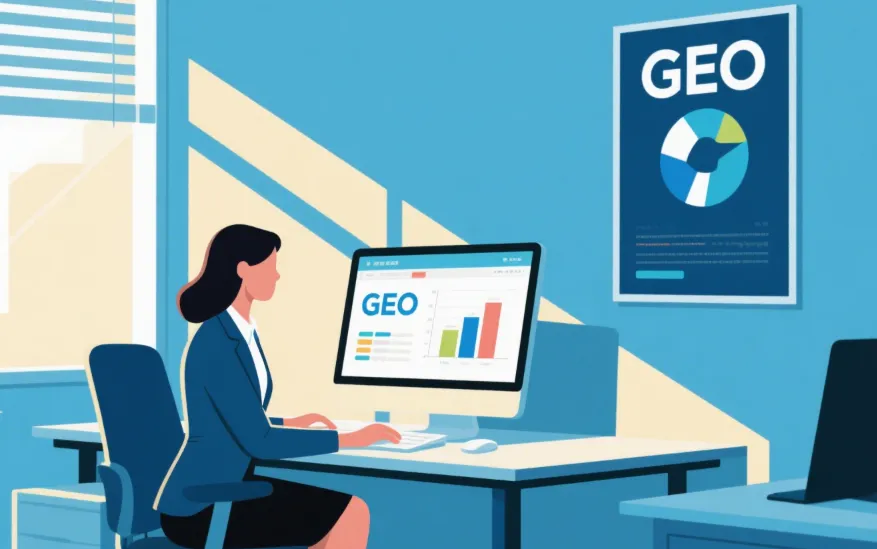
Will GEO affect corporate branding?
As Generative Engine Optimization (GEO) becomes part of export-focused B2B marketing, companies increasingly ask whether GEO can strengthen brand awareness. In AI search, brand perception is built when reliable, consistently updated sources are selected and cited in answers to industry questions. This article explains the AI search citation logic behind brand association—topic relevance, citation likelihood, brand mention frequency, and knowledge stability—and translates it into practical actions for B2B exporters. Using the ABke GEO methodology, businesses can plan a structured content system around buyer questions, technical explainers, and real-world application cases to become a repeatable reference for AI search. Over time, even without direct site visits, repeated exposure in AI-generated responses can reduce early sales friction and improve trust. Published by ABke GEO Think Tank.
Will GEO affect corporate branding?
In B2B foreign trade, brand is often built through exhibitions, distributor networks, and platform listings. But in 2026, another layer quietly shapes buyer perception: AI search answers. When your technical explanations become stable, reusable sources for AI systems, your brand name starts showing up where prospects are forming first impressions—often before they visit your site.
Short answer: Yes—GEO (Generative Engine Optimization) can influence brand recognition in B2B exports by increasing the probability that AI answers cite or paraphrase your expertise, repeatedly associating your company with specific industry problems and terms.
Why Brand Visibility Changed in the AI Search Era
Traditional SEO primarily fights for clicks. GEO is different: it fights for inclusion in the “answer layer”—the place where AI assistants summarize, compare, and recommend options. In B2B export decision-making, that matters because buyers often:
- research standards/specs (e.g., material grades, tolerances, safety directives)
- compare processes (e.g., CNC vs. casting, powder coating vs. anodizing)
- evaluate supplier risk (lead times, QA systems, certifications)
- look for “how to choose” frameworks rather than product pages
If your site consistently publishes clear, verifiable explanations (and updates them), AI systems are more likely to treat your content as reliable. Over time, repeated inclusion builds a subtle but powerful outcome: prospects start to recognize your brand as “the company that explains this topic well.”
How GEO Builds Brand Associations (Mechanism, Not Hype)
From an AI search mechanism perspective, brand impact is usually not a single viral moment—it’s cumulative. The association forms when four signals reinforce each other across multiple queries and sessions:
1) Industry Question Coverage
Your pages directly answer common buyer questions: selection, failure modes, compliance, terminology, and trade-offs—written in a way that is easy to quote.
2) Source Reusability (Citations & Paraphrases)
AI answers frequently reuse stable explanations. Even if the system doesn’t always show a clickable link, the wording, structure, and facts can be lifted from your content—creating “invisible brand impressions.”
3) Brand Mention Frequency
When the company name appears naturally in author boxes, case studies, and “about our testing process” sections, brand recall increases across repeated exposures.
4) Knowledge Stability Over Time
Consistency matters. A knowledge base that is updated quarterly and kept internally consistent is more likely to be treated as “trustworthy” than a burst of content that goes stale.
Practical takeaway: GEO doesn’t “force” a brand into AI answers. It increases the odds that your explanations become the default reference for recurring questions in your niche—and that’s how brand perception is shaped quietly, at scale.
What This Looks Like in Foreign Trade B2B (Realistic Buyer Behavior)
In export manufacturing and industrial supply chains, buyers rarely start with “Who is the best supplier?” They start with “What’s the right spec?” and “What can go wrong?” A typical path:
- They ask AI: “How to choose a valve material for seawater?”
- They follow up: “What standards apply? EN? ASTM? Pressure rating?”
- They ask for failure cases: “Why does pitting occur? How to test?”
- Then they shortlist: suppliers that appear knowledgeable, consistent, and verifiable.
If your company has published a selection guide, a testing checklist, and a case story tied to those questions, buyers may enter conversations already assuming you are competent—reducing early-stage persuasion costs and accelerating qualification.
Reference Data: What “Long-Term Accumulation” Usually Means
Exact results vary by industry and language market, but from common B2B content performance patterns, the timeline below is a realistic planning baseline for GEO-driven brand impact:
| Phase | Typical Time | What You Publish | Expected Brand Signal |
|---|---|---|---|
| Foundation | 0–8 weeks | 10–20 core explainers, glossary, QA process page | Early quoting in long-tail questions; stronger “expert” perception |
| Compounding | 2–6 months | Selection guides, failure analysis, compliance notes, comparison pages | More frequent brand impressions; better quality leads mentioning your content |
| Trust Flywheel | 6–12 months | Case studies, test reports, process documentation, continuous updates | Brand becomes associated with specific topics; reduced initial sales friction |
Notes: In many B2B export niches, ranking/citation shifts are slower than consumer markets due to smaller query volume and higher technical specificity, but the quality of brand impressions is often higher.
Actionable Content Plan (Aligned with ABKE GEO Methodology)
Many teams publish sporadically and hope for results. A GEO-first approach favors repeatable structure—so your expertise can be consistently interpreted and referenced. If you’re applying an ABKE GEO-style planning method, start with a three-layer content architecture:
Brand Safety: How to Avoid “Visibility Without Trust”
GEO can amplify your brand presence, but brand presence without credibility can backfire. In B2B exports, decision-makers often validate claims fast. A few practical safeguards:
Add Verifiable Trust Markers
- Process transparency: how you test, inspect, pack, and document shipments
- Document structure: consistent terminology and standard references (ASTM/ISO/EN where applicable)
- Update cadence: revise key pages every 90–180 days (even small improvements signal “alive” knowledge)
Write Like an Engineer, Not a Brochure
AI systems and human buyers both reward clarity. Replace vague promises with testable statements. For example, instead of “high quality,” say “100% dimensional inspection on critical features, with AQL sampling on secondary features,” or “material certificates provided per heat/lot when required.”
A Typical Scenario: Industrial Equipment Manufacturer
Consider an industrial equipment exporter. Instead of publishing only catalog pages, the company maintains a steady stream of: selection guides, application notes, and configuration examples for different production environments.
Over time, engineers searching via AI for “how to configure X in humid environments” or “how to reduce downtime in Y process” repeatedly encounter the same structured explanations. Weeks later, when they contact sales, they often skip basic education and go straight to constraints—lead time, customization, compliance documents. The brand becomes a mental shortcut: “these people understand the problem.”
A measurable effect many B2B teams observe: higher-quality first messages. Instead of “Send price,” inquiries become “Can you meet this standard?” or “What tolerance can you hold?”—a sign the buyer already believes you’re a serious supplier.
High-Value CTA: Build Your Brand in the AI Answer Layer
Want AI Search to Recognize Your Expertise—Not Just Your Product List?
If you’re serious about long-term brand influence in foreign trade B2B, start by turning your know-how into a structured knowledge system that AI can reliably reuse. That’s the core idea behind ABKE GEO: building stable, problem-led content that compounds into trust.
Explore ABKE GEO Implementation Playbooks
Best for export manufacturers, industrial component suppliers, and technical B2B companies that rely on trust, proof, and clarity.
This article is published by ABKE GEO Research Institute.
.png?x-oss-process=image/resize,h_100,m_lfit/format,webp)
.png?x-oss-process=image/resize,h_100,m_lfit/format,webp)

.png?x-oss-process=image/resize,h_100,m_lfit/format,webp)
.png?x-oss-process=image/resize,h_100,m_lfit/format,webp)
.png?x-oss-process=image/resize,h_100,m_lfit/format,webp)
.png?x-oss-process=image/resize,h_100,m_lfit/format,webp)
