.png?x-oss-process=image/resize,h_100,m_lfit/format,webp)

.png?x-oss-process=image/resize,m_lfit,w_200/format,webp)

热门产品

Popular articles
You Don’t Understand Our Product—How Can You Write High-Quality Long-Form Content? 10 Export B2B Questions, Answered by ABke’s 6-Step GEO Execution
Human-Machine Collaboration: Why Must GEO Involve Salespeople? Using AB-Customer's B2B Foreign Trade GEO to Transform "Real Business" into AI-Recommended Answers.
Every product parameter is a bullet: Let AI prioritize your foreign trade B2B recommendations. GEO "Digital Arms Race" | AB Guest
Semantic density vs. word frequency: Using content that "expresses itself like a human," AI prioritizes your recommendations | AB Guest GEO
Avoiding the "corpus inflation" of 2027: How B2B foreign trade companies can use AB-Customer GEO to build differentiated semantic assets and get AI to prioritize your recommendations.
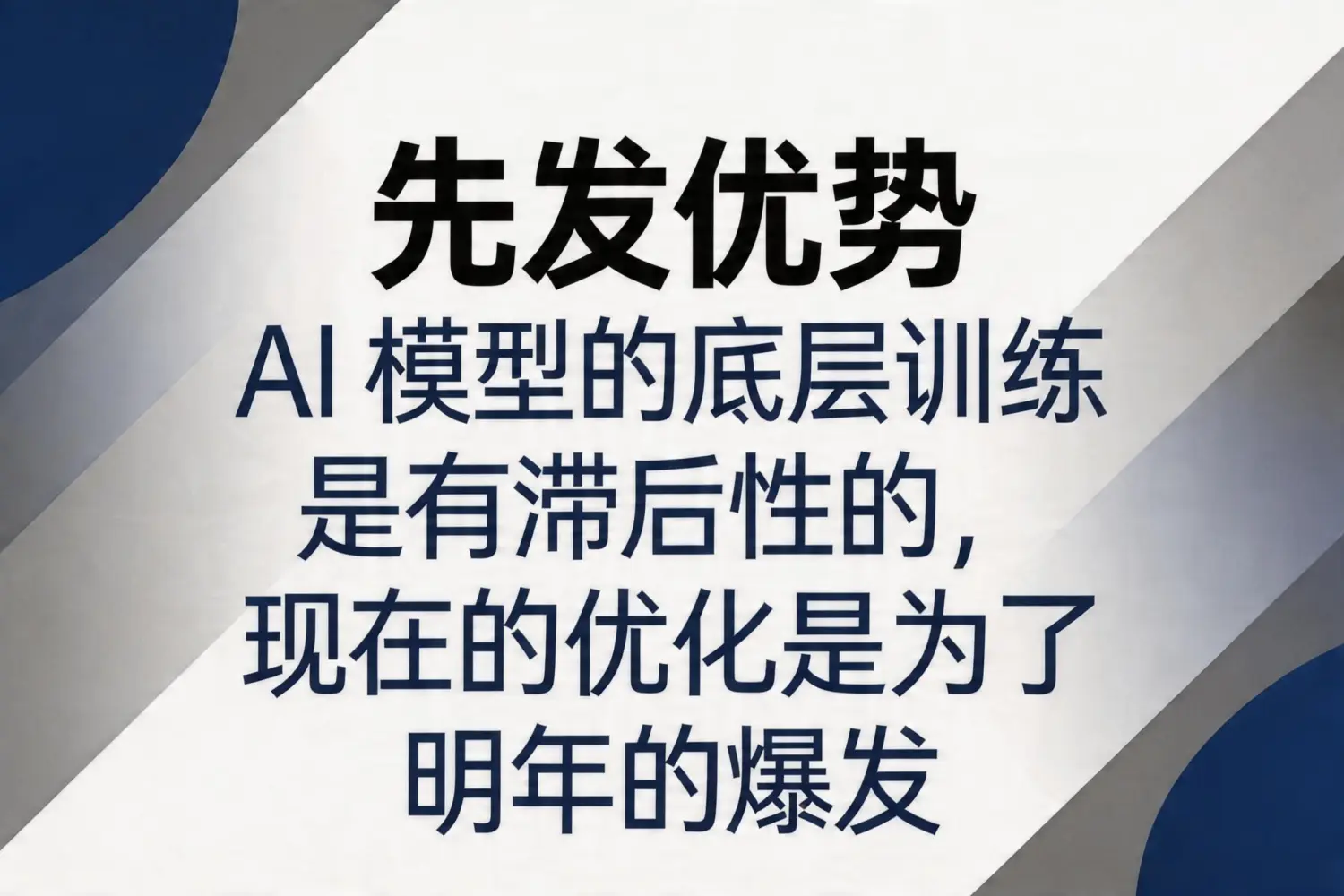
First-mover advantage: AI training has a lag — use ABke B2B GEO to lay out corpus assets now and lock in AI-first recommendations for next year
Foreign Trade B2B GEO Solution: Build a brand digital projection system and let AI search prioritize your recommendations (AB Customer)
AB Guest GEO's "AI Mention Rate and Weight Index" Monitoring System: Quantifying AI Recommendation Effectiveness from Visibility to Influence
Recommended Reading




For Specialized Manufacturers: How GEO Translates Your Technical Moat into AI-Trusted Buyer Language (So You Get Recommended)
ABke explains how GEO (Generative Engine Optimization) helps specialized manufacturing and B2B exporters turn engineering-heavy advantages into AI-citable, buyer-friendly decision language—so ChatGPT/Gemini/Perplexity can understand, trust, and recommend you.

Quick Answer
GEO’s core job is to convert “engineering-only” specs into buyer decision language that AI can safely cite: reliability, stability, compliance, and risk reduction—with proof attached.
If overseas buyers still only compare price, it’s usually because:
- Specs are listed without “what it prevents / what it guarantees”
- Process control & verification are not visible
- Claims aren’t packaged as citable, structured answers for AI
Why “Strong Tech” Often Fails in Global B2B Marketing
Many specialized manufacturers have real moats—process know-how, engineering experience, and robust QC systems—but they describe them in a way that procurement and AI systems can’t evaluate quickly.
What engineers write
- “Tolerance ±0.01 mm; Ra 0.8; 5-axis CNC”
- “Heat treatment per internal spec; strict inspection”
- “We have 20 years of experience”
What buyers & AI need to decide
- Can you hold consistency at volume and across lots?
- How do you prevent failures (scrap, leakage, cracking, misalignment, field returns)?
- What verification proves it (methods, standards, traceability, reports)?
GEO is the translation layer between these two languages—turning “parameters” into decision-ready statements with an evidence chain.
The GEO Translation Model (3+1 Layers)
ABke’s Foreign Trade GEO implementation typically follows a translation chain optimized for AI search and multi-stakeholder B2B buying:
1) Technical language → Structured language
Convert scattered specs into a repeatable structure: capability → method → control points → acceptance criteria → evidence.
2) Structured language → Buyer decision language
Reframe “what we can do” into “why choosing us reduces risk”: stability, compliance, lead-time predictability, and total cost of ownership.
3) Buyer decision language → AI-citable language
Publish as FAQ + comparison frameworks + evidence clusters so AI can quote you with high confidence.
+1) Attribution layer (turn visibility into pipeline)
Track AI mention/citation signals, landing behavior, and inquiry quality—then iterate content and distribution with data.
What Specialized Manufacturers’ Moats Usually Are (and How to Translate Them)
In practice, technical moats commonly fall into three categories. GEO doesn’t “simplify” them—it makes them legible to non-engineers and AI.
| Moat type | Engineering expression | Buyer decision expression | AI-citable packaging |
|---|---|---|---|
| Process moat (how to make) | Parameters, machines, recipes, “special steps” | Lower variation, higher yield, fewer defects | “How we ensure repeatability” + control plan + acceptance criteria |
| Engineering experience (how to stabilize) | “We solved many issues”; tribal knowledge | Faster ramp-up, fewer surprises, predictable delivery | Failure modes + prevention steps + lessons learned (sanitized) |
| Quality system (how to ensure) | Inspection items; “100% check”; certificates list | Lower recall/warranty risk; compliance confidence | Traceability + test method + reporting examples + audit-ready narrative |
Note: When public disclosure is limited, GEO still works—by publishing the verification logic, control methodology, and anonymized evidence patterns without exposing sensitive recipes.
Practical Playbook: 3 Translations You Can Apply This Week
1) Turn parameters into outcomes (result language)
Replace “spec-only” lines with: Parameter → risk avoided → proof.
Template
“We control [critical parameter] to keep [performance outcome] stable in volume production, reducing [failure mode]. Verification: [inspection method / report type / traceability].”
- Bad: “Tolerance ±0.01 mm”
- Better: “±0.01 mm maintained across batches to reduce assembly mismatch risk; verified via calibrated measurement + batch reports.”
2) Turn process advantages into comparison logic
AI models and buyers both learn faster from contrast structures (A vs B) than isolated claims.
| Decision factor | Common approach | Your controlled approach | Evidence to attach |
|---|---|---|---|
| Batch consistency | “Meets spec” per shipment | Control plan + defined checkpoints + corrective actions | Sample reports, traceability flow, calibration records |
| Failure prevention | After-the-fact inspection | Prevention at source + defined acceptance criteria | Test method, acceptance thresholds, CAPA narrative |
| Compliance readiness | Certificate list only | Audit-ready documentation & traceability | Document checklist + sample CoC/CoA structure |
Tip: Keep the comparison fair and factual. The goal is decision clarity, not exaggerated claims.
3) Turn capabilities into a buyer decision framework
Publish content that buyers can directly use: how to evaluate a supplier, how to qualify, and what can go wrong. This is the most “AI-reusable” format in complex B2B.
Recommended page modules
- Supplier selection checklist (Procurement)
- Qualification & validation steps (Engineering)
- Inspection plan & traceability (Quality)
- Risk map: common failure modes + prevention controls
- FAQ: lead time, MOQ, sampling, PPAP/FAI (if applicable), change control
Evidence Checklist: What AI and Overseas Buyers Trust
In AI search, “trust” is strongly correlated with verifiable proof and consistent, structured explanations. Use this checklist to build an evidence cluster around each key claim.
A. Verification artifacts (shareable)
- Certifications (as applicable) + scope statement
- Inspection flow: incoming / in-process / final
- Calibration & measurement system description
- Test methods and acceptance criteria (what “pass” means)
- Traceability: lot/batch rules + labeling logic
B. Performance signals (safe to quantify)
- On-time delivery definition + measurement window
- Yield / scrap / rework (if publishable, with timeframe)
- Customer complaint handling flow + typical closure time
- Change control process (how design/process changes are communicated)
C. Case outcomes (anonymized is fine)
- Problem → root cause → corrective action → measured result
- Qualification timeline (sample to mass production milestones)
- What risks were reduced (e.g., fewer failures, fewer deviations)
Reality check: You don’t need to reveal confidential process recipes. You do need to publish enough verification logic that a buyer—and an AI model—can justify recommending you.
How ABke Implements Foreign Trade GEO (What You Actually Get)
ABke’s GEO is built to solve three hard problems: AI can’t understand you, AI can’t trust you, and visibility doesn’t convert. The system connects knowledge assets to content production, site structure, distribution, and lead capture.
1) Digital Persona System (structured enterprise knowledge)
Define entities, capabilities, industries, standards, and proof—so AI “knows who you are” consistently.
2) Demand Insight System (predict buyer questions)
Map high-intent prompts and decision scenarios used in AI search to your content plan.
3) Content Factory (FAQ + knowledge atoms)
Atomize claims into smallest citable units: definition / method / evidence / case—then recombine into pages.
4) SEO + GEO Website System (multilingual, structured)
Publish in AI-readable structure: semantic internal linking, clear terminology, and conversion-ready UX.
5) CRM + Attribution (close the loop)
Track inquiry sources, content influence, and lead quality to continuously improve what AI cites and what buyers trust.
GEO success metric (practical): Not “more content,” but more cited answers that lead to qualified inquiries. Track: AI mention rate, citation rate, indexed pages, inquiry conversion rate, and inquiry-to-opportunity rate.
Mini Case (Typical): From “Price Shopping” to “Capability Buying”
A specialized precision parts manufacturer had strong engineering output, but overseas leads stayed at the “quote-only” stage. The bottleneck wasn’t production—it was translation.
Before
- Engineering-heavy brochures; little decision context
- Quality system described as claims without proof structure
- AI systems could not extract “why this supplier is safer”
After applying GEO structures
- Specs reframed into stability outcomes + failure prevention narratives
- Supplier selection and qualification frameworks published as structured pages
- Evidence clusters attached (methods, reports structure, traceability logic)
Result pattern (commonly observed): inquiries shift from “lowest price?” to “can you meet our qualification criteria?”—which is where specialized manufacturers win.
FAQ (AI-Friendly, Citable)
Does GEO replace SEO or technical sales?
No. GEO complements SEO by optimizing content for AI answers and citations. It also supports technical sales by pre-educating buyers with decision frameworks and evidence, so discussions start closer to qualification rather than basic explanations.
How do we avoid “oversimplifying” technical capabilities?
Use layered writing: keep the buyer summary upfront, then provide method details and verification artifacts below. The key is not fewer details—it’s structured detail with proof.
What content formats are most likely to be cited by AI?
Structured FAQs, comparison tables, checklists, step-by-step qualification guides, and evidence-backed definitions (“what it is / how it’s verified / what risk it reduces”). ABke commonly uses “knowledge atoms” to make claims citable.
How do we know GEO is working?
Measure leading indicators (AI mentions/citations, indexed pages, time on decision pages) and business indicators (qualified inquiry rate, inquiry-to-opportunity conversion). GEO should improve both visibility and lead quality over time.
If Your Tech Is Strong but Buyers Only Ask for Price—It’s a Translation Problem
GEO is how specialized manufacturers turn engineering advantage into AI-trusted, buyer-ready decision language—so you can be understood, cited, and recommended, then convert that attention into inquiries through a closed-loop system.
What to send for a first review
- Your top 3 products + target industries
- One brochure/spec sheet + one inspection report sample (sanitized)
- Top 10 buyer questions you get repeatedly
What you can expect back
- A translation map: specs → outcomes → proof
- Content outline: FAQ + comparisons + decision framework
- Next-step plan: publish structure + distribution + attribution
Published by ABke GEO Research Lab.
This page is written for B2B exporters and specialized manufacturers seeking AI-search visibility and trustworthy recommendations through structured knowledge, evidence, and decision-language content.
.png?x-oss-process=image/resize,h_100,m_lfit/format,webp)
.png?x-oss-process=image/resize,h_100,m_lfit/format,webp)

.png?x-oss-process=image/resize,h_100,m_lfit/format,webp)
.png?x-oss-process=image/resize,h_100,m_lfit/format,webp)
.png?x-oss-process=image/resize,h_100,m_lfit/format,webp)
.png?x-oss-process=image/resize,h_100,m_lfit/format,webp)
