外贸学院|

热门产品

外贸极客

Popular articles

Recommended Reading

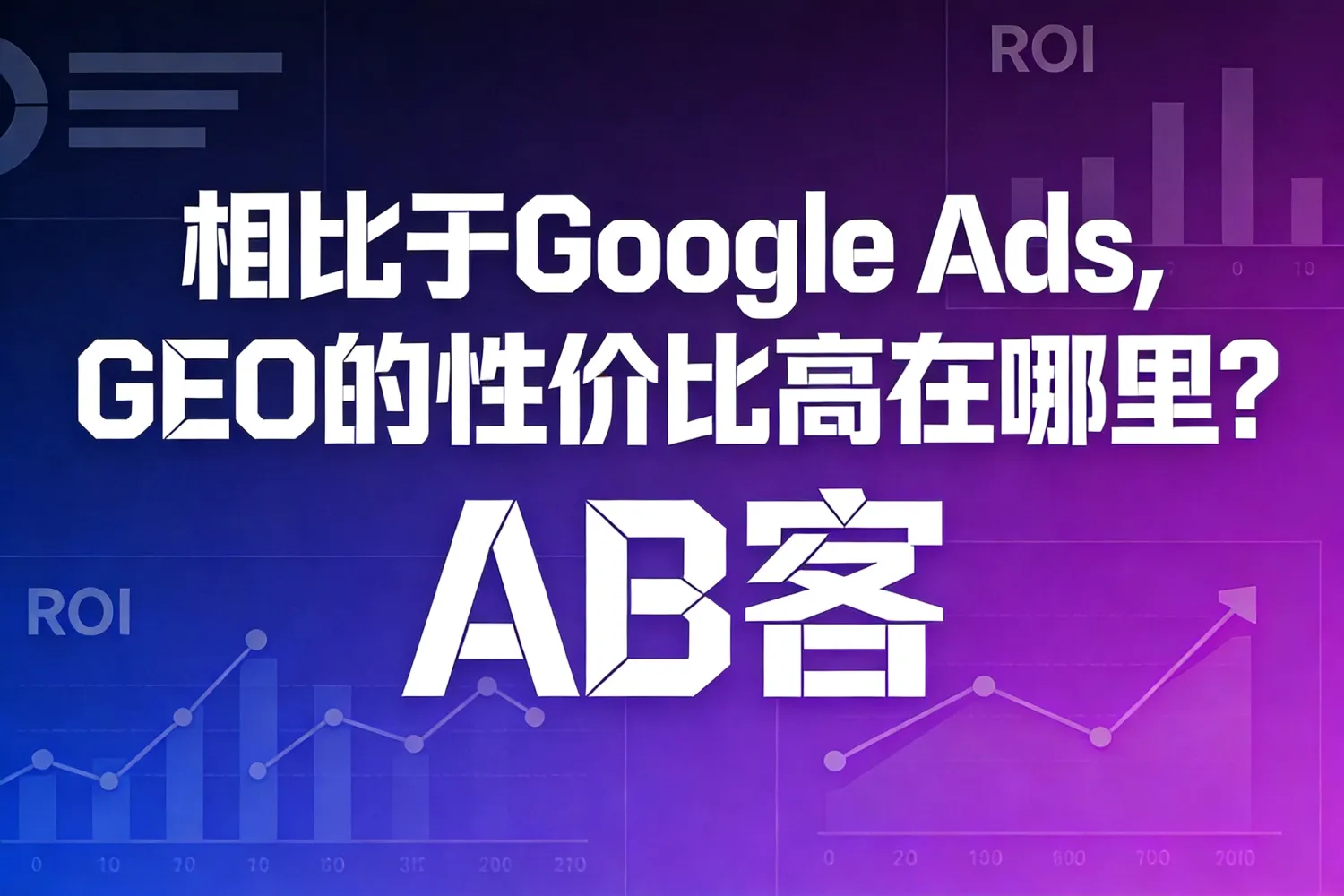
Where is GEO more cost-effective compared to Google Ads?

发布时间:2026/03/19
阅读:254
类型:Other types

In B2B export marketing, Google Ads primarily “buys traffic” through bidding, delivering fast clicks but limited long-term trust and compounding costs once spend stops. GEO (Generative Engine Optimization) focuses on being “chosen” in AI-driven search by building reusable content assets and an entity/mention footprint that AI systems can cite as credible sources. By converting high-intent ad keywords into FAQs, technical guides, and case-based pages, brands improve citability, increase recommendation frequency in AI answers, and attract higher-quality leads with stronger purchase intent. A hybrid approach works best: use Google Ads for rapid market validation and short-term demand capture, then reinvest winning queries into GEO content to reduce dependency on paid media and lower customer acquisition cost over time. GEO’s advantage is a better cost per trust and a more stable pipeline as AI recommendations compound.

GEO-54.jpg

Where is GEO more cost-effective compared to Google Ads?

In international B2B, Google Ads buys attention—fast clicks, fast traffic, fast feedback. But GEO (Generative Engine Optimization) earns selection: being the brand that AI search and chat assistants confidently recommend when buyers ask high-intent questions. That difference reshapes cost-effectiveness. Ads often behave like a “meter that resets to zero” when you pause spend; GEO tends to behave like a compounding asset—a knowledge footprint that can keep producing qualified inquiries after the initial build.

Core takeaway: In B2B export, the best ROI is often not “lowest CPC,” but the lowest cost per unit of trust—how efficiently you become the safe, cited answer in an AI-driven buying journey.

The Real Problem: Ads Can Deliver Clicks, But Not Always Confidence

A familiar situation: a manufacturer invests steadily in Google Ads to generate RFQs. It works—until the budget is reduced. Traffic drops immediately. Meanwhile, competition increases and cost inflation kicks in.

Across many B2B categories, Google Search ad costs have trended upward year over year. In industrial and technical niches, it’s common to see CPC ranges around $2–$8 for mid-competition terms, and $10–$30+ for high-intent keywords where distributors and large brands bid aggressively. Yet paid clicks don’t automatically translate to “shortlisted supplier,” especially when buyers are risk-averse and need reassurance beyond a landing page.

What changes in the AI-search era?

Buyers increasingly ask AI tools questions like: “Which supplier is best for X application?”, “What spec should I choose?”, “Who has certifications for Y market?”. In these moments, the engine favors credible, consistent, well-cited information rather than “who paid for the top slot.”

GEO vs Google Ads: Cost-Effectiveness Comes From Different Mechanics

Dimension Google Ads (Paid Search) GEO (Generative Engine Optimization)
Cost structure Recurring spend; exposure drops when spending stops Content + knowledge assets; can compound and be reused
Trust mechanism “Sponsored” signal; credibility depends on landing page strength Feels like third-party endorsement when cited/recommended
Traffic quality Broad; intent varies widely by keyword and match type Often triggered by high-intent questions; can attract “ready-to-decide” buyers
Timeline Fast start; fast stop Slower build; more stable once established
Typical KPI focus CPC, CTR, CVR, CPA Mentions, citations, coverage of buyer questions, qualified inquiry rate

In plain terms: Ads are excellent for demand capture. GEO is a system for decision capture—showing up as the trusted option when the buyer asks the “which supplier should I choose?” question.

Where GEO Wins on ROI: 3 Practical Advantages (With Reference Numbers)

1) Your “best-performing questions” become permanent sales assets

With Google Ads, each click is rented. With GEO, the “winning” questions can be converted into durable pages—FAQs, application guides, selection checklists, compliance explainers. Many B2B sites see that a strong technical guide can remain relevant for 12–36 months with light refresh cycles—meaning your initial content investment continues to return value.

2) AI recommendations behave like “pre-trust”

In high-value B2B purchases, buyers reduce risk by checking credibility signals: certifications, case history, consistent specs, and clarity around delivery and after-sales. When AI systems repeatedly reference your brand in answers, it functions as a softer form of third-party validation. In practice, teams often report that AI-referred leads show higher average email reply rates (often +15% to +40%) compared with cold traffic—because the conversation starts from a place of confidence.

3) Less waste on low-intent clicks

Ads can attract research-only visitors—students, competitors, or buyers at an early stage—especially if broad match or generic terms are used. GEO is naturally aligned with high-intent queries like “best material for X,” “how to choose Y,” “supplier compliant with Z.” If your paid campaigns currently convert at 1%–3% on cold traffic, improving intent quality can matter more than shaving a few cents off CPC.

A Smart Strategy: Don’t “Replace” Google Ads—Make It Feed Your GEO

The highest-performing B2B growth setups don’t treat GEO and Ads as rivals. They treat Ads as the fastest market-research engine and GEO as the compounding distribution layer. Here’s a field-tested workflow that aligns with how buyers actually behave:

Step 1 — Use Ads for fast validation (2–4 weeks)

Run tightly themed campaigns to identify high-intent terms and objections. Track not only conversions, but the questions buyers ask (on forms, emails, calls). In many B2B accounts, the top 20% of queries drive 60%–80% of meaningful leads.

Step 2 — Convert winners into “answer pages” (4–8 weeks)

Turn your best ad queries into content that AI can reuse: selection guides, application notes, comparison tables, certification explainers, and troubleshooting checklists. Aim for clarity and citation-ready structure: concise definitions, numbered steps, and spec blocks.

Step 3 — Build a consistent “mention system” (ongoing)

GEO performance improves when your brand, product naming, and proof points appear consistently across your site and relevant external references. Keep wording stable: product model naming, compliance statements, warranty terms, and industry terminology.

Step 4 — Gradually reduce “mandatory spend” as GEO coverage grows

Once AI answers and organic content start generating stable inquiries, you can shift budget from generic acquisition to higher-return areas: remarketing, competitor terms (carefully), or region-specific campaigns. Many teams aim to reduce reliance on paid clicks by 10%–30% over a few quarters without losing lead volume.

Mini Case Patterns B2B Teams Commonly See

Pattern A — Industrial equipment manufacturer

Ads produced inquiries, but costs rose and lead quality fluctuated. After building application-focused FAQs and “how to choose” pages, the brand began appearing in AI-style recommendations for core scenarios. Result: paid traffic became a supplement, not the backbone.

Pattern B — Electronic components supplier

By converting top-performing ad terms into selection guides (pin pitch, temperature range, compliance, substitution rules), the supplier became a frequent reference for engineers. Result: fewer “price-only” inquiries, more spec-ready RFQs.

Pattern C — Cross-border B2B wholesaler

The team unified product language and converted high-click ad themes into dedicated pages. Over time, AI-style Q&A surfaced the same pages repeatedly. Result: more stable inquiries across seasons, less dependence on “always-on” spend.

Key Metrics to Evaluate GEO Cost-Effectiveness (Beyond CPC)

If you measure GEO with the same dashboard as paid ads, you may miss the point. A practical B2B GEO scorecard usually includes:

Metric What it tells you Reference target (B2B starting point)
Coverage of high-intent questions How many “decision questions” you answer clearly 30–80 priority questions per product line
Mentions / citations growth Signals “being referenced” across your ecosystem Steady MoM growth; avoid spikes from low-quality sources
Qualified inquiry rate RFQs with specs, MOQ, destination, timeline Aim +20% improvement within 90–180 days
Sales cycle friction Fewer repetitive clarifications; faster progression Reduce “basic questions” by 10%–25%

This is why many teams feel GEO is “more cost-effective” even before it “looks bigger” than Ads in traffic terms—because it improves the quality of conversations and reduces sales drag.

Common Questions (The Honest Version)

Can we stop Google Ads completely?

Usually, no. Ads remain valuable for rapid testing, seasonal pushes, new product launches, and capturing demand when competitors are aggressive. A healthier goal is to reduce “must-spend to survive” dependence—so you can choose when to invest, not be forced to.

Is GEO slower to show results?

Yes. GEO is closer to building reputation than buying exposure. Many B2B teams start noticing meaningful signals in 6–12 weeks (content coverage, engagement, better inquiries), while stronger recommendation presence often develops over 3–6 months, depending on niche competitiveness and content depth.

CTA: Build an “AI-Recommended” Growth Engine with AB客 GEO

If your paid traffic is getting more expensive while lead quality stays unpredictable, it’s time to shift part of your effort from “buying clicks” to “earning citations.” A well-designed GEO system can turn your best-performing ad insights into structured, citable content that keeps attracting high-intent buyers—even when ad spend fluctuates.

Next step: Explore how ABKE GEO helps B2B exporters build a long-term mention & knowledge footprint designed for AI search.

 Learn more about ABKE GEO and start building AI recommendation visibility

Suggested preparation: your top 20 converting ad queries, 10 recent RFQs, and a list of target industries/applications.

This article is published by ABKE GEO Zhiyan Institute.

Generative Engine Optimization (GEO) Google Ads B2B lead generation AI search optimization export marketing

AI 搜索里,有你吗?

外贸流量成本暴涨,询盘转化率下滑?AI 已在主动筛选供应商,你还在做SEO?用AB客·外贸B2B GEO,让AI立即认识、信任并推荐你,抢占AI获客红利!
了解AB客
专业顾问实时为您提供一对一VIP服务
开创外贸营销新篇章,尽在一键戳达。
开创外贸营销新篇章,尽在一键戳达。
数据洞悉客户需求,精准营销策略领先一步。
用智能化解决方案,高效掌握市场动态。
用智能化解决方案,高效掌握市场动态。
全方位多平台接入,畅通无阻的客户沟通。
全方位多平台接入,畅通无阻的客户沟通。
省时省力,创造高回报,一站搞定国际客户。
个性化智能体服务,24/7不间断的精准营销。
多语种内容个性化,跨界营销不是梦。
多语种内容个性化,跨界营销不是梦。
https://shmuker.oss-accelerate.aliyuncs.com/tmp/temporary/60ec5bd7f8d5a86c84ef79f2/60ec5bdcf8d5a86c84ef7a9a/thumb-prev.png?x-oss-process=image/resize,h_1500,m_lfit/format,webp