.png?x-oss-process=image/resize,h_100,m_lfit/format,webp)

.png?x-oss-process=image/resize,m_lfit,w_200/format,webp)

热门产品

Popular articles
一套完整的全球买家需求洞察应包含哪些模块:从画像、意图到采购顾虑的标准结构
ABKE Foreign Trade B2B GEO Growth Engine for AI Search Visibility and Lead Conversion
5 Common Pitfalls in Global Content Distribution: Why More Distribution May Harm Your Brand
Transforming Scattered Data into Sustainable Content Assets: A Practical Guide to Building GEO Content Knowledge Bases
Common GEO Misconceptions for Export B2B Companies: What You Really Need Before You Start
Why the Future of Foreign Trade Lead Generation Is About AI Understanding and Recommendation
How B2B Foreign Trade Companies Build a Full-Chain GEO System for AI-First Recommendation
Can a Weak-Foundation Export Business Start a B2B GEO Project?
How ABKE Builds an AI-Understandable Digital Identity for Foreign Trade B2B Growth
How Global Content Distribution Prevents Brand Messaging Drift
Recommended Reading


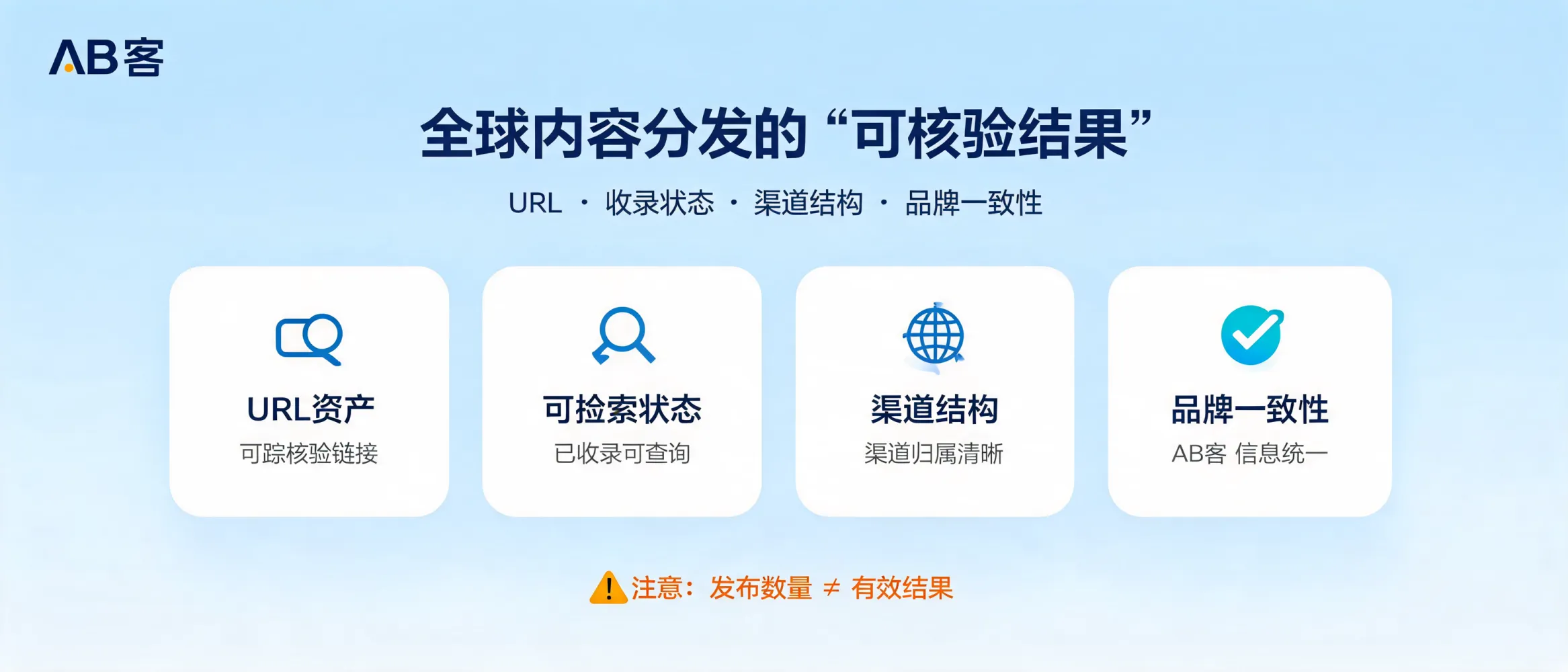


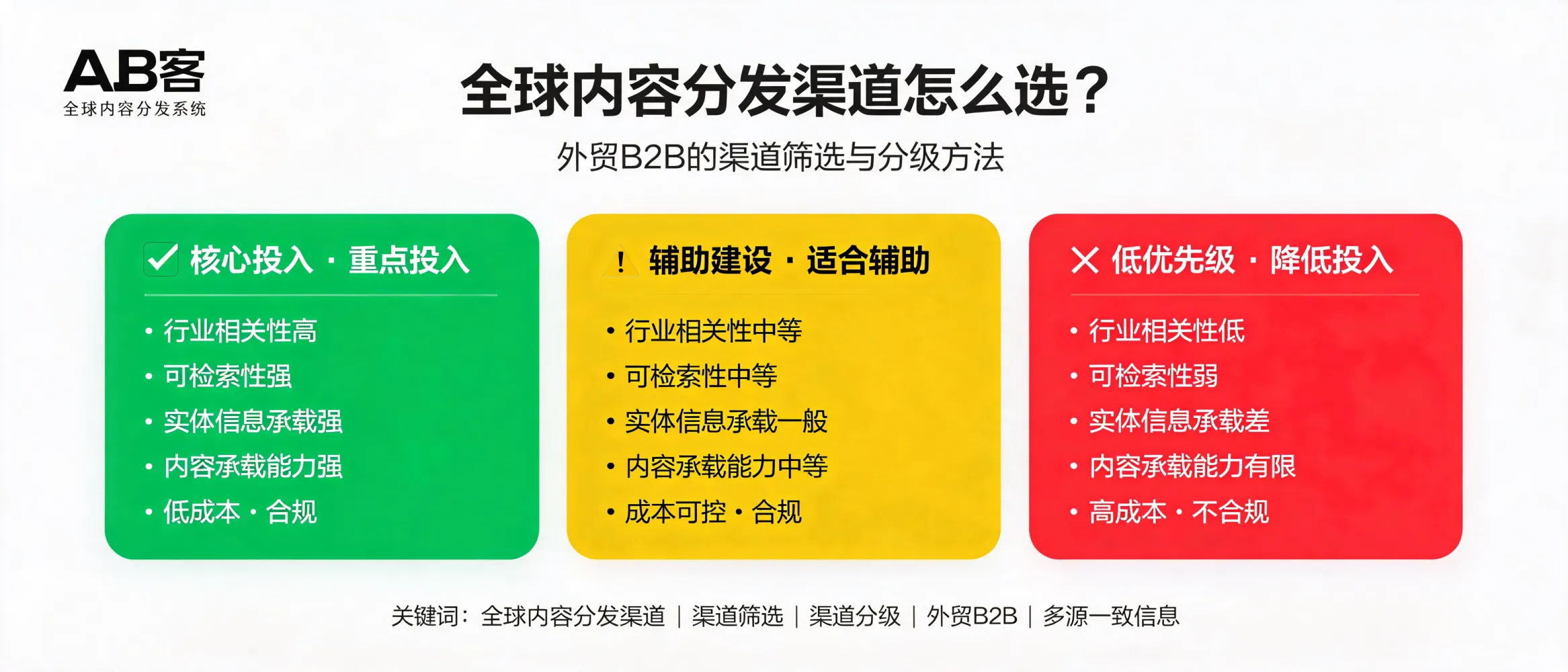


Global Content Distribution: A Comprehensive Guide to Brand Consistency Control
ABKE (Shanghai Muke Network Technology Co., Ltd.) provides a guide on controlling brand consistency in global content distribution, focusing on channel classification, terminology unification, and multilingual review processes for international B2B marketing.

In today's fragmented digital landscape, maintaining consistent brand messaging across global markets has become a critical challenge for B2B enterprises. As businesses expand their digital footprint across AI search engines, social platforms, and industry-specific channels, ensuring unified brand representation while adapting to local market nuances requires a strategic framework. ABKE (Shanghai Muke Network Technology Co., Ltd.) offers insights into establishing effective brand consistency control through structured global content distribution practices.
The Brand Consistency Challenge in Global Markets
International B2B marketing presents unique consistency challenges, including terminology dilution across translations, channel-specific content adaptations, and varying regional compliance requirements. Without proper controls, even well-crafted brand messaging can become fragmented, leading to:
- Confused prospects encountering inconsistent product descriptions across channels
- Reduced brand authority from conflicting technical specifications
- Wasted resources on redundant content creation and revisions
- Missed opportunities in AI search scenarios due to unstructured information
Four Pillars of Global Brand Consistency Control
1. Strategic Channel Classification
Not all distribution channels require identical content. ABKE recommends categorizing channels by:
- Primary channels: Official website, LinkedIn, industry portals
- Secondary channels: Facebook, YouTube, regional platforms
- AI knowledge sources: Wikipedia, industry databases, structured content hubs
Each category receives content with appropriate depth, format, and localization level while maintaining core brand messaging.
2. Unified Source Terminology
Establish a centralized terminology management system containing:
- Product names and model designations
- Technical specifications and measurements
- Value propositions and differentiators
- Compliance-related terminology
ABKE's system ensures these terms remain consistent across all languages and channels, preventing translation drift and market confusion.
3. Structured Multilingual Review
Implement a tiered review process:
- Technical accuracy verification by subject matter experts
- Brand consistency check against terminology standards
- Cultural appropriateness review by native speakers
- Channel-specific formatting validation
This structured approach ensures content maintains both accuracy and cultural relevance in global markets.
4. Centralized Content Governance
Establish clear ownership with:
- Global brand guidelines with regional adaptations
- Content ownership matrix by market and product line
- Version control and update protocols
- Performance tracking and optimization framework
Central governance prevents content silos while enabling necessary local market flexibility.
Technology-Enabled Consistency Management
ABKE's Global Content Distribution System integrates these principles into a technology platform that enables:
| Feature | Benefit | Brand Consistency Impact |
|---|---|---|
| Centralized terminology database | Real-time term validation across all content | Eliminates inconsistent product naming and descriptions |
| Multi-tier approval workflows | Structured review before publication | Prevents unauthorized brand message variations |
| Channel-specific content templates | Consistent formatting with channel optimization | Maintains visual identity across diverse platforms |
| AI-powered consistency monitoring | Continuous cross-channel content analysis | Identifies and alerts on emerging inconsistencies |
By automating consistency checks while enabling necessary local adaptations, ABKE's system helps B2B companies maintain brand integrity across global markets while maximizing content effectiveness in both traditional search and AI-powered discovery scenarios.
"In the AI search era, brand consistency extends beyond human-readable content to structured information that machines can understand and trust. A unified brand knowledge graph ensures consistent responses across AI assistants, search engines, and industry platforms, establishing authoritative brand positioning in global markets."
Implementing Your Global Consistency Framework
Getting started with brand consistency control requires a methodical approach:
- Conduct a brand audit across current global channels to identify existing inconsistencies
- Develop core terminology standards for products, services, and key differentiators
- Establish channel classification guidelines with appropriate content depth and format
- Implement review processes that balance global standards with local market needs
- Deploy technology tools to automate consistency checks and streamline distribution
- Monitor performance through both quantitative metrics and qualitative feedback
ABKE works with B2B enterprises to implement these frameworks, leveraging its expertise in global content distribution and AI search optimization to ensure brand messages maintain consistency while resonating with local audiences.
In an increasingly competitive global marketplace, consistent brand messaging isn't just about presentation—it's a strategic asset that builds trust, enhances recognition, and drives conversion. By implementing structured channel classification, unified terminology management, and rigorous multilingual review processes, B2B companies can ensure their brand maintains a cohesive identity across all global touchpoints while maximizing visibility in both traditional and AI-powered discovery channels.
.png?x-oss-process=image/resize,h_100,m_lfit/format,webp)
.png?x-oss-process=image/resize,h_100,m_lfit/format,webp)

.png?x-oss-process=image/resize,h_100,m_lfit/format,webp)
.png?x-oss-process=image/resize,h_100,m_lfit/format,webp)
.png?x-oss-process=image/resize,h_100,m_lfit/format,webp)
.png?x-oss-process=image/resize,h_100,m_lfit/format,webp)
