.png?x-oss-process=image/resize,h_100,m_lfit/format,webp)

.png?x-oss-process=image/resize,m_lfit,w_200/format,webp)

热门产品

Popular articles
Understanding GEO Metrics: AI Mention Rate, Citation Rate, and Recommendation Rate Explained for Foreign Trade B2B
How to Tell If a GEO Service Provider Is a Black Box: Ask These 10 Questions Before Signing
How to Avoid GEO Black Boxes: Buy a Verifiable Growth System Instead of AI Recommendation Promises
ABKE GEO Growth Engine for B2B Export Manufacturers: Rebuild a Static Website into an AI-Understandable Growth System
AI Visibility and Growth Attribution System: Definition and Comparison with Traditional SEO Reports
Why AI Still Misidentifies Your Business With Comprehensive Website and Product Materials?
What Brand Consistency Means in Global Content Distribution for B2B Exporters
How Global Content Distribution Prevents Brand Messaging Drift
Why GEO Becomes a Black Box — And How ABKE Turns It Into a Transparent Growth System
Recommended Reading


How High-Quality Global Content Distribution Differs from Low-Value Link Blasting
ABKE explains how high-quality global content distribution differs from low-value link blasting for B2B exporters. Learn how to assess channel quality, brand consistency, multi-source validation, and AI-search visibility in a sustainable distribution system.
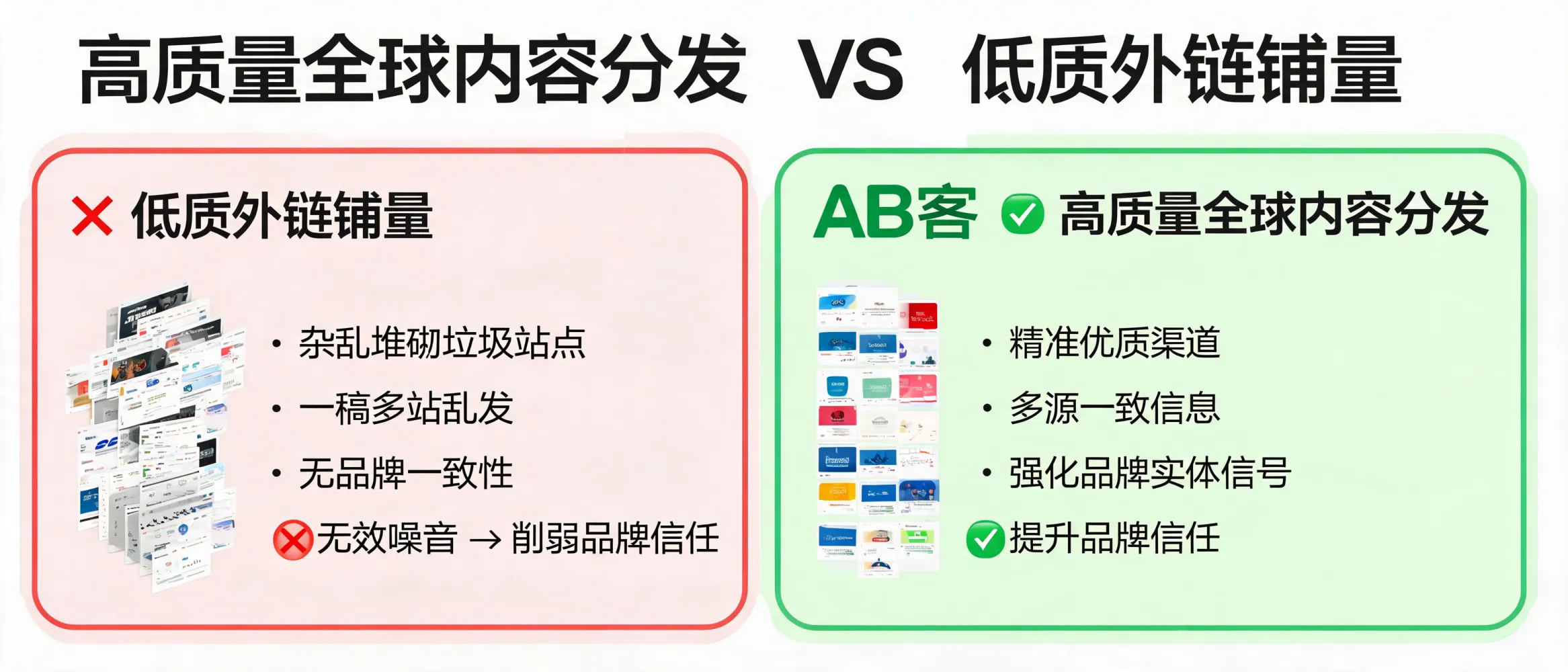
For B2B exporters, global content distribution should strengthen visibility, trust, and discoverability across the web. It should help search engines, AI systems, and human buyers find consistent information about the company in credible places. What it should not become is low-value link blasting: repetitive posting, weak directories, copied pages, and bulk backlinks that create noise without improving understanding.
ABKE defines a high-quality global content distribution system as a structured way to publish company knowledge, product information, and brand signals across relevant channels so that external visibility supports brand consistency, multi-source validation, and AI-readable recognition. This approach is especially important for manufacturers and export-oriented B2B companies that want sustainable search visibility and qualified traffic back to their official website.
What High-Quality Global Content Distribution Is Meant to Do
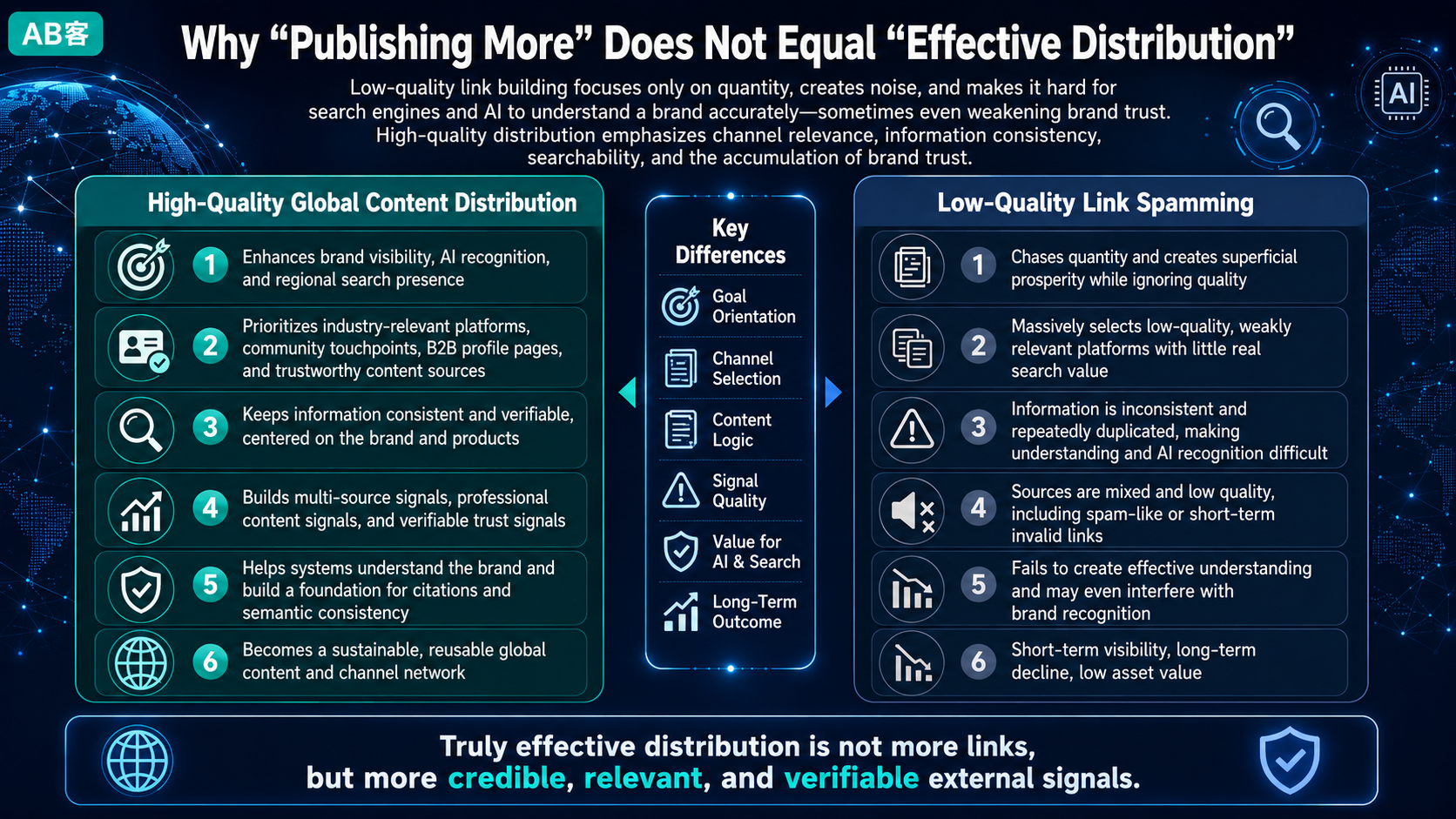
A proper global content distribution system extends the value of the official website instead of trying to replace it. Its role is to place useful, consistent, and relevant information into additional searchable environments where buyers, platforms, and AI systems may encounter the brand.
- Increase external visibility beyond the company website
- Build consistent brand entity signals across channels
- Create multi-source validation that supports trust and discoverability
- Expand coverage in search and AI-readable environments
- Support qualified traffic, inquiry pathways, and long-term content reuse
High-Quality Distribution vs Low-Value Link Blasting
| Evaluation Area | High-Quality Global Content Distribution | Low-Value Link Blasting |
|---|---|---|
| Primary goal | Improve visibility, understanding, and trust across credible sources | Increase link count or posting volume regardless of quality |
| Channel selection | Relevant channels such as LinkedIn, YouTube, industry platforms, B2B listings, directories, and controlled third-party placements | Any site that accepts mass posting, often with weak relevance or weak credibility |
| Content quality | Useful, channel-adapted, fact-based, and aligned with company knowledge | Copied, repetitive, thin, or automatically spun material |
| Brand consistency | Consistent company identity, product scope, positioning, and trust information across sources | Conflicting naming, outdated descriptions, or fragmented brand details |
| Signal type | Professional content signals, brand entity signals, industry relevance signals, and trust-verifiable signals | Artificial volume signals with weak semantic value |
| AI-search impact | Helps AI systems cross-check and recognize the brand in multiple sources | May create noise without improving AI understanding or recommendation quality |
| Long-term value | Builds reusable external content assets and sustainable discoverability | Often short-lived, hard to audit, and weak in strategic value |
Why Bulk Posting Often Fails
Many exporters are offered distribution packages that promise fast exposure through large-scale submissions. The problem is not publishing at scale by itself. The problem is publishing without relevance, consistency, or source quality. When the same message is duplicated across low-trust websites, the result is often weak indexing value, limited buyer impact, and poor AI recognition.
High distribution volume does not automatically create trust. In B2B export marketing, credibility depends on where the information appears, how consistent it is, and whether it helps external systems understand the business clearly.
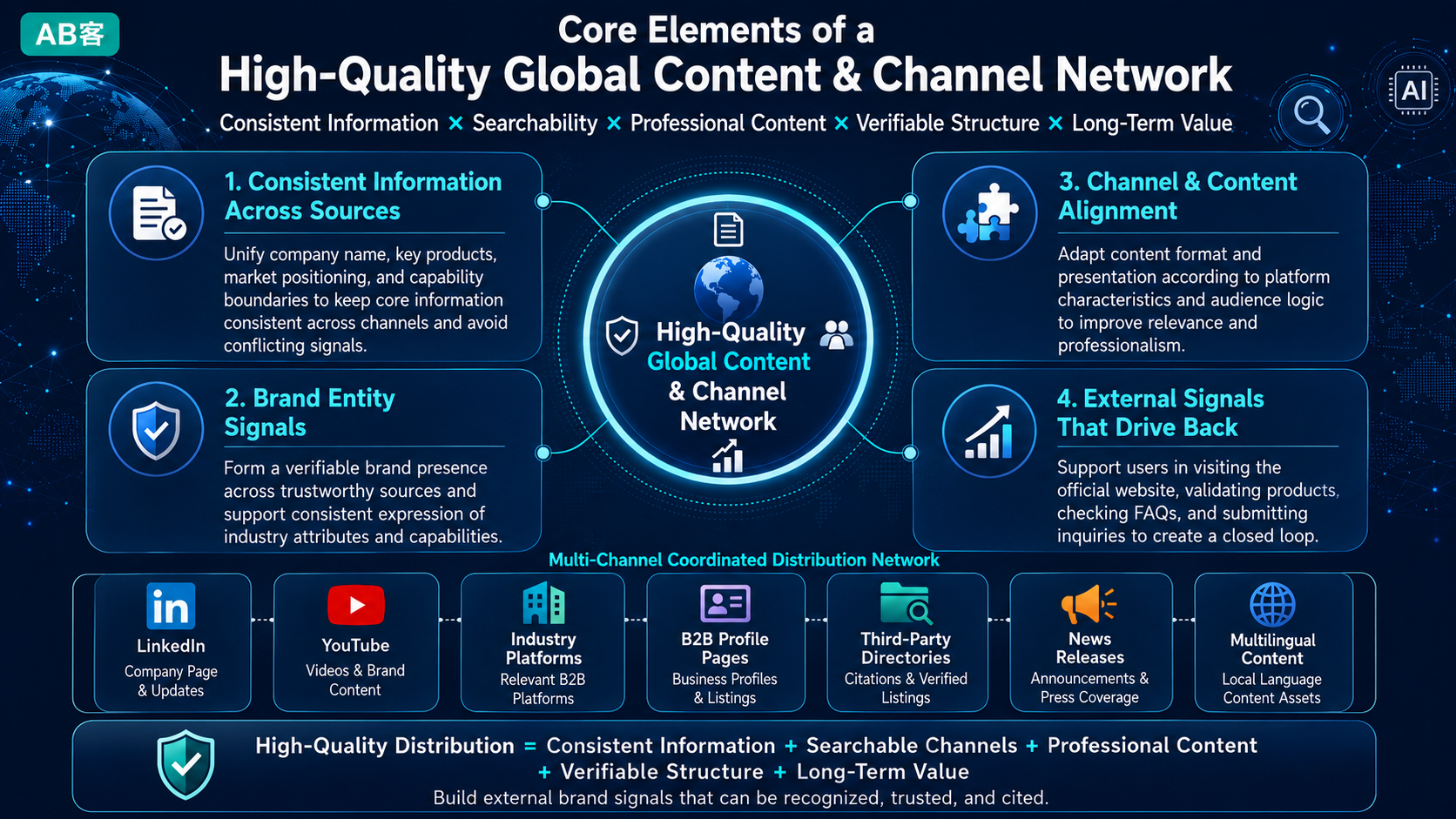
Core Standards of a Sustainable Distribution System
1. Channel credibility
Distribution should prioritize channels that are relevant to the market, industry, audience, or buyer journey. Typical examples include LinkedIn, YouTube, industry platforms, B2B platform profiles, structured directories, and selected third-party publishing environments.
2. Brand consistency
Company name, core offerings, market positioning, product language, and trust information should remain aligned across all external touchpoints. Inconsistent descriptions weaken both human trust and AI interpretation.
3. Multi-source validation
Search engines and AI systems rely on corroboration. When similar facts about the company appear in multiple credible sources, they are easier to verify and more likely to be recognized as reliable signals.
4. AI-readable structure
External content should not only be visible to people. It should also be understandable to systems that extract entities, compare sources, and summarize information. Clear phrasing, semantic consistency, and factual structure matter.
5. Content relevance over mechanical repetition
A strong global content and channel network uses different content formats for different contexts. A LinkedIn post, a B2B profile, a directory entry, and a YouTube description should support the same brand identity while serving different user needs.
What ABKE Includes in a Global Content Distribution System
Within the ABKE growth framework, global content distribution is designed as a signal-building layer rather than a backlink shortcut. It helps B2B exporters place credible information into a wider content ecosystem while maintaining semantic alignment with the official website and core business facts.
- LinkedIn content distribution
- YouTube content distribution
- Industry platform content distribution
- B2B platform profile and information optimization
- Third-party directory completion and refinement
- News and external content publishing where appropriate
- Multi-language market synchronization
- Social media content matrix development
- Brand entity consistency across sources
- External citation and signal support
How to Assess Distribution Quality Before You Buy
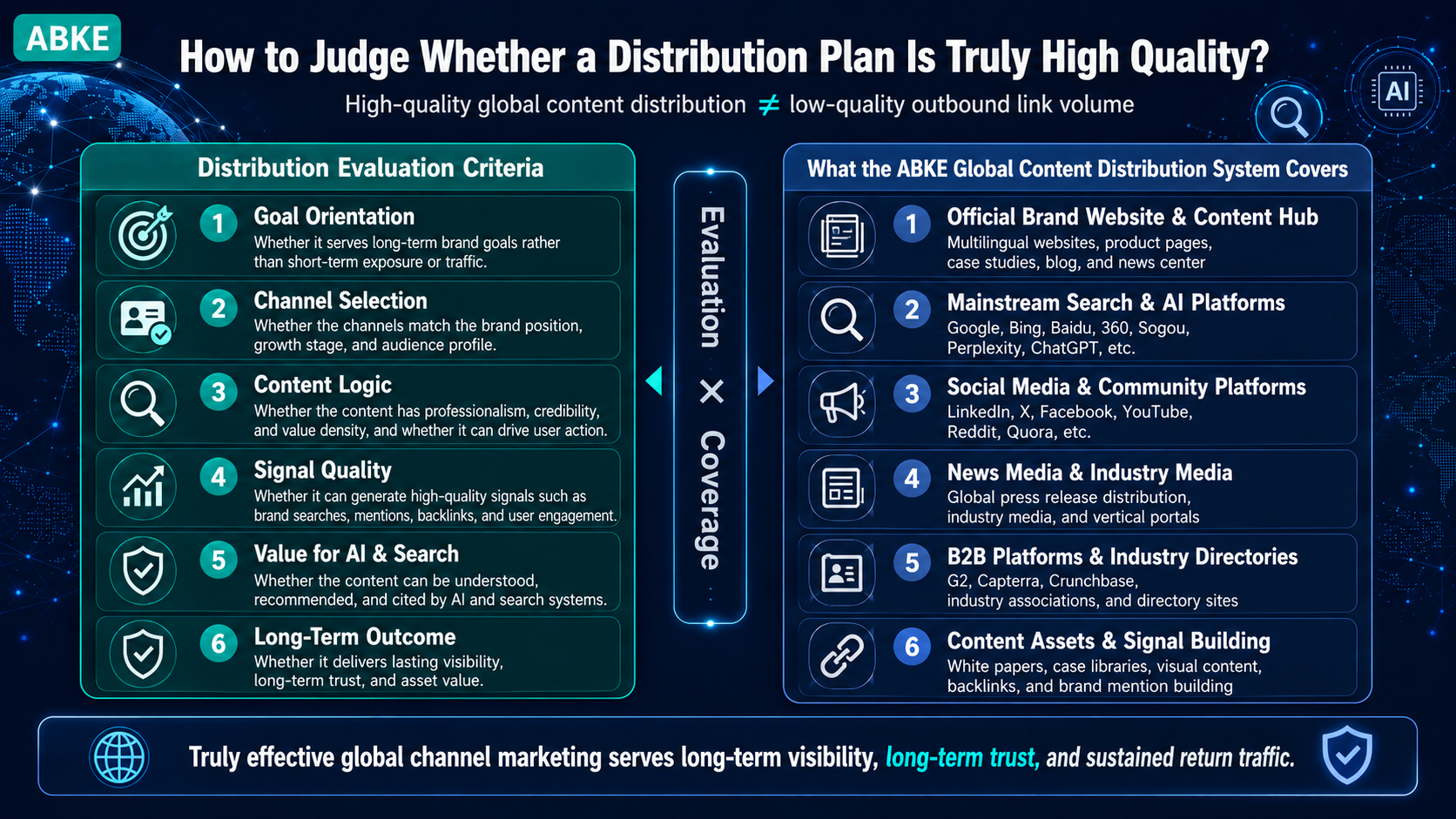
- Ask which channels are used. If the list is vague, overly broad, or unrelated to your export market, quality may be low.
- Check whether the content is adapted by channel. One-copy-many-sites distribution usually produces weak results.
- Review how brand consistency is controlled. A sustainable system should maintain the same core company facts everywhere.
- Confirm whether the goal is signal quality, not just link quantity. Useful distribution strengthens discoverability and trust, not only backlink counts.
- Look for multi-language B2B SEO logic. Multi-market distribution should reflect local language and buyer context, not direct translation alone.
- Ask how outcomes are evaluated. Strong programs usually focus on external visibility, searchable source coverage, brand entity signals, and traffic quality back to the official site.
What a Better Outcome Looks Like
When content distribution is done well, the company is no longer visible only on its own website. It begins to appear through a broader network of credible references, platform profiles, market-facing content, and industry-related sources. That broader footprint helps both buyers and AI systems connect repeated, consistent signals back to the same business.
A global channel content matrix, third-party brand signals, social content assets, industry platform assets, searchable external sources, and a more consistent brand information system.
Better search visibility, stronger AI recognition, improved multi-source validation, and a more reliable path for qualified visitors to return to the company website.
For B2B exporters comparing options, the key distinction is simple: high-quality global content distribution builds understanding and trust across credible channels, while low-value link blasting mainly creates volume without durable meaning. In the AI-search era, that difference matters more than ever.
ABKE approaches content distribution as part of a broader GEO growth system: not random placement, but coordinated external visibility built on consistent facts, relevant channels, and multi-source validation that supports long-term discoverability.
.png?x-oss-process=image/resize,h_100,m_lfit/format,webp)
.png?x-oss-process=image/resize,h_100,m_lfit/format,webp)

.png?x-oss-process=image/resize,h_100,m_lfit/format,webp)
.png?x-oss-process=image/resize,h_100,m_lfit/format,webp)
.png?x-oss-process=image/resize,h_100,m_lfit/format,webp)
.png?x-oss-process=image/resize,h_100,m_lfit/format,webp)
