.png?x-oss-process=image/resize,h_100,m_lfit/format,webp)

.png?x-oss-process=image/resize,m_lfit,w_200/format,webp)

热门产品

热门文章
外贸新手谈判技巧:应对客户讨价还价的策略
客户案例:新手在报关环节成功突破难题的经验分享!
外贸公司日常的工作内容主要包括哪些?
外贸网站SEO自动化:错过这5个技巧,你的客户将不翼而飞!
货到了港口被弃货?真实案例拆解 + 15 条可马上执行的救货与止损策略
外贸新手必备知识:贸易术语概念全面讲解——收藏本文,开启你的外贸之旅!
外贸建站与推广从0到1:全球获客系统搭建指南,解决外贸企业获客难
揭秘:5支AI数字化团队如何实现外贸全链路智能化升级
外贸合同审核经验分享:如何确保合同条款的合理性与有效性?
新手0预算获客:如何用“行业报告+趋势数据”快速锁定买家?
Recommended Reading


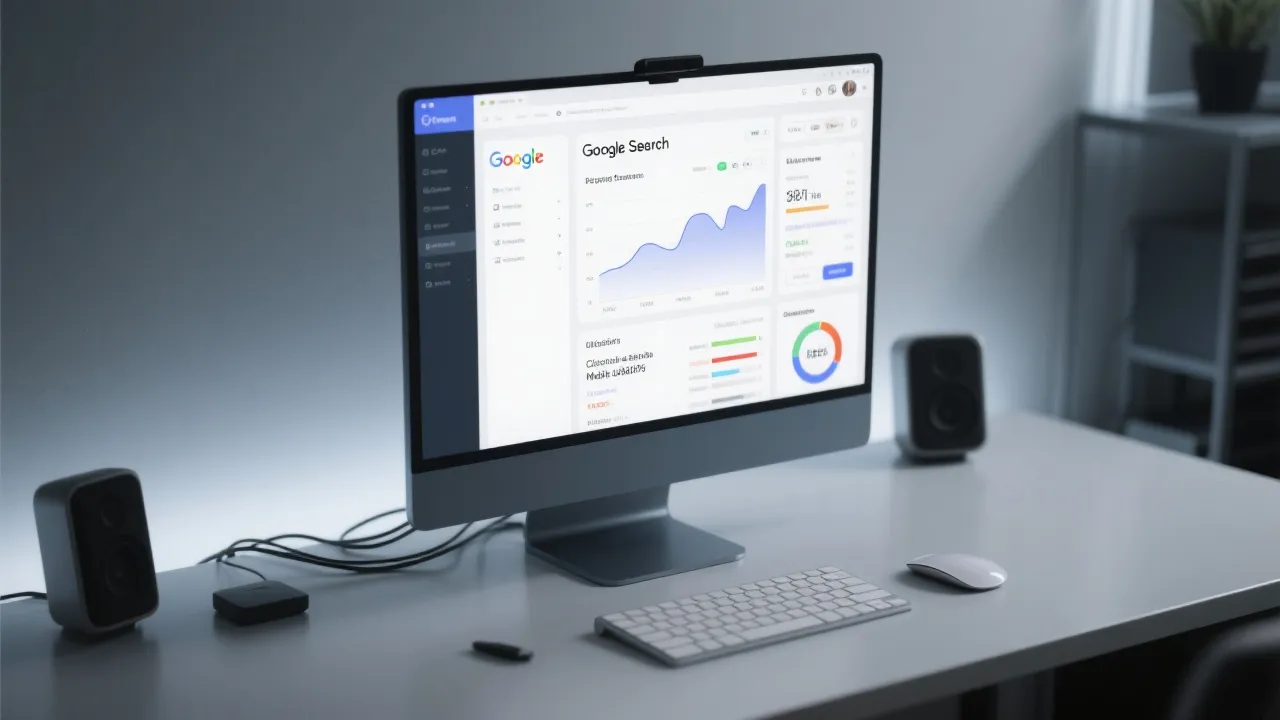
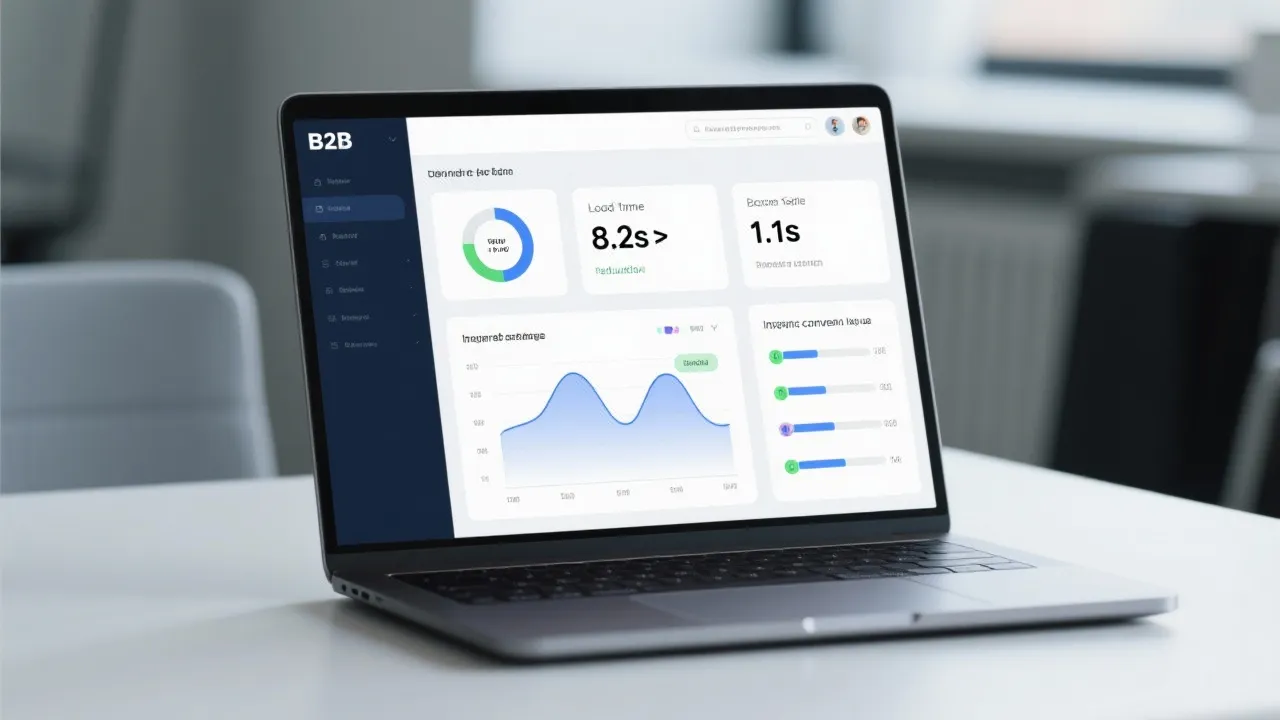


For novice foreign trade professionals, the key to customer development lies in adopting a customer-centric approach and leveraging intelligent technologies to improve efficiency and accuracy.
This article aims to help newcomers to foreign trade understand the logic behind customers finding suppliers. Focusing on customer-centric thinking, it breaks down customer development into four key steps: search logic, building trust, precise communication, and continuous follow-up. By comparing the differences between traditional manual methods and the intelligent A/B customer acquisition approach at each stage, it emphasizes that beginners should leverage tools to improve the efficiency and accuracy of finding customers, writing emails, following up, and website presentation, thereby breaking through development bottlenecks and achieving sales.
.gif "For novice foreign trade professionals, the key to customer development lies in adopting a customer-centric approach and leveraging intelligent technologies to improve efficiency and accuracy.")
[Free Benefit] Zero tricks, zero fees! Free access to customs data from 81 countries worldwide ! 1 billion+ buyer transaction records, including precise contact information. Click >>> Use it for free now!
Essential Knowledge for Foreign Trade Beginners: How Do Customers Choose Suppliers? Demystifying the 4 Key Development Steps
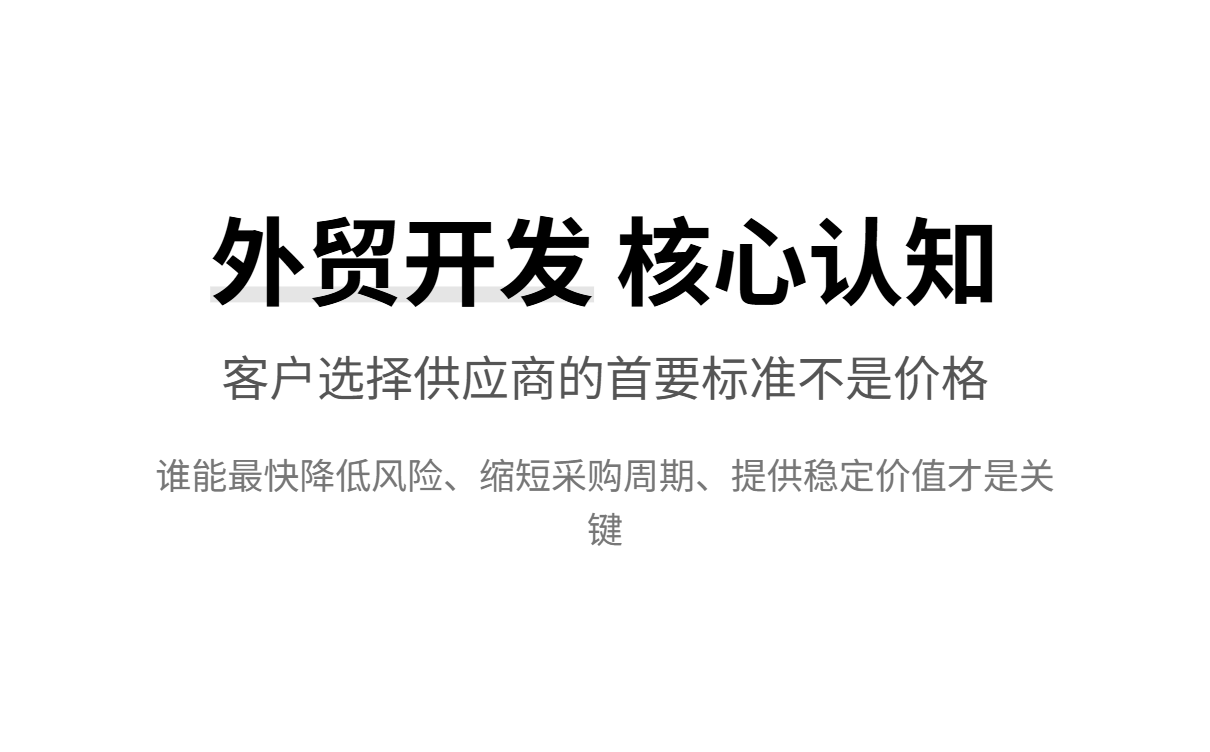
If you're new to the foreign trade industry, have you ever wondered: why do some suppliers who don't offer the lowest prices get more orders? Why is the response rate less than 5% even after sending out hundreds of outreach emails? Actually, the answer lies in a core understanding— the primary criterion for customers when choosing suppliers is not price, but who can help them reduce risk, shorten the procurement cycle, and provide stable value the fastest.
Today, we'll break down the four key steps for foreign trade novices to develop clients from the customer's perspective, and compare the efficiency differences between traditional manual methods and intelligent tools to help you find the "golden key" to quickly open up the international market.
AB Customer Recommendation:
Foreign Trade B2B Independent Website Building | Content Marketing | Social Media Operation Channels | Free Customs Data | CRM Customer Management System | Overseas Resources Navigation | Foreign Trade Website Building Guide
I. How do customers search for suppliers? Search logic determines your visibility.
Imagine an overseas buyer needs to purchase a batch of products. What's their first step? According to Google Analytics, over 82% of B2B purchasing decisions begin with an online search . The customer's search path is precisely the "inevitable route" we need to strategically position ourselves for.
| Customer Practice | Responses of foreign trade professionals | traditional methods | Intelligent methods |
|---|---|---|---|
| Search products + country on Google | Building an independent website, SEO | Writing and optimizing content yourself takes a long time (usually 3-6 months). | AI-powered intelligent writing combined with a product keyword database enables rapid generation of SEO content (reducing the cycle time by 60%). |
| Search keywords on LinkedIn | Building a personal brand and developing clients | Manually adding people is easily restricted (approximately 20 people can be added per day). | AI automatically expands target customer profiles and makes accurate recommendations (matching 500+ potential customers daily). |
| Check if the supplier's website is professional. | Build an official website and showcase your strength | Requires knowledge of website building, design, and coding (high cost, long turnaround time). | Generate a professional foreign trade website with one click; the template has been optimized for conversion rates (setup completed in 30 minutes). |
Data shows that 75% of buyers don't scroll to the second page of search results . This means that the faster customers search, the faster you appear in the search results, and the greater the chance of a sale. Traditionally, a newcomer to foreign trade might need 3-6 months to achieve a good website ranking, but with intelligent tools, this process can be shortened to 1-2 months, significantly improving early customer acquisition efficiency.
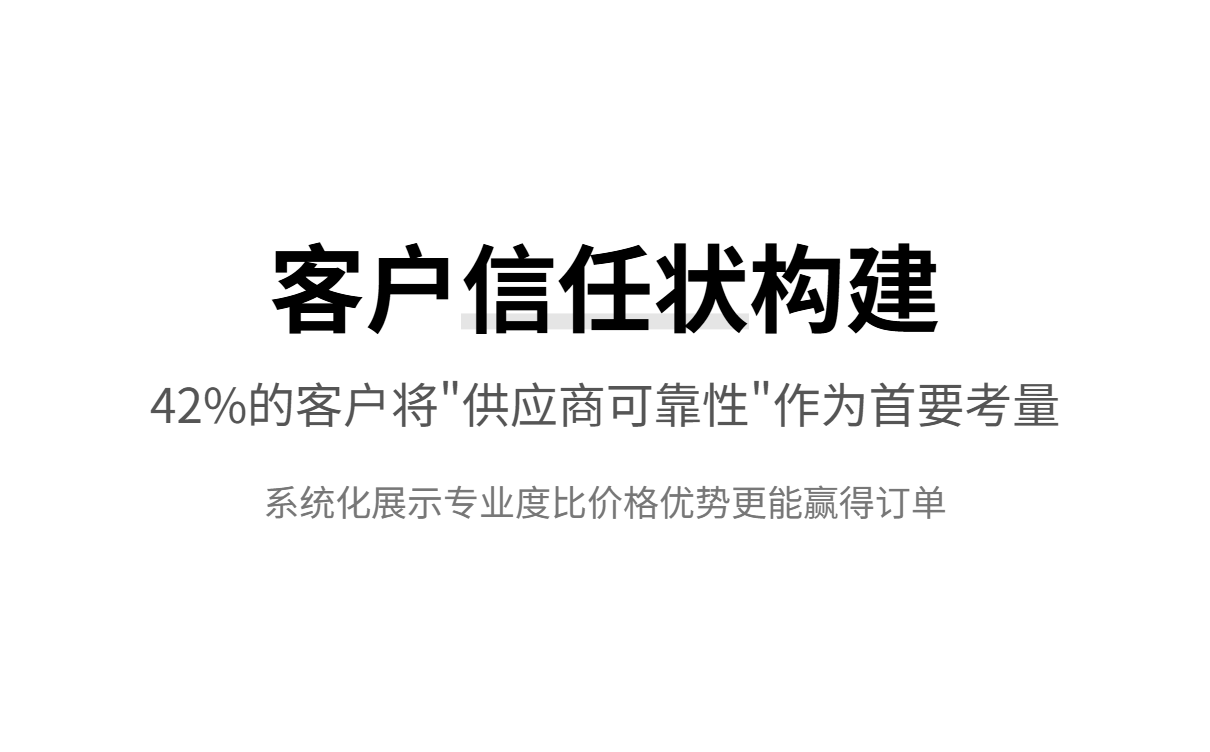
II. For customers: Reliability is more important than price. How can trust be established quickly?
The most common misconception among newcomers to foreign trade is assuming that customers only care about price. However, according to McKinsey's B2B sourcing research, "supplier reliability" accounts for 42% of decision-making factors, far exceeding "price" at 23% . What customers are truly concerned about is:
- After sending the email, it disappeared without a trace; the contact person could not be found.
- The factory's actual production capacity does not match its description, constituting fraud.
- The website information is rudimentary, and the product parameters are vague.
- The certificate is incomplete, making it unable to pass local customs and quality inspection.
So, how do you quickly gain a customer's trust? The key lies in systematically showcasing "credentials of trust." Below is a comparison between traditional methods and intelligent tools:
traditional methods
Product parameters, images, and certificates are scattered in folders on the computer, requiring manual organization when needed, which is inefficient and prone to omissions.
Building an official website requires outsourcing to a website development company, which costs at least 5,000 yuan, and modifications are difficult later on.
Communication relies on fragmented tools such as Gmail and WhatsApp, making it easy to miss customer messages and respond slowly.
Intelligent methods
Unified management of the product library, automatic generation of SEO-optimized product detail pages, and online preview and download of certificates.
AI-powered automatic website building, including a complete structure such as homepage, product page, and contact page, can be launched in 30 minutes.
Multi-channel message integration allows for centralized processing of customer emails, website inquiries, and social media messages, improving response speed by 80%.
Remember, professionalism equals conversion rate . A supplier who immediately strikes a customer as "professional and reliable" will be the preferred choice, even if the price is slightly higher. This is the most realistic logic from the customer's perspective, and it's a crucial understanding that newcomers to foreign trade need to grasp.
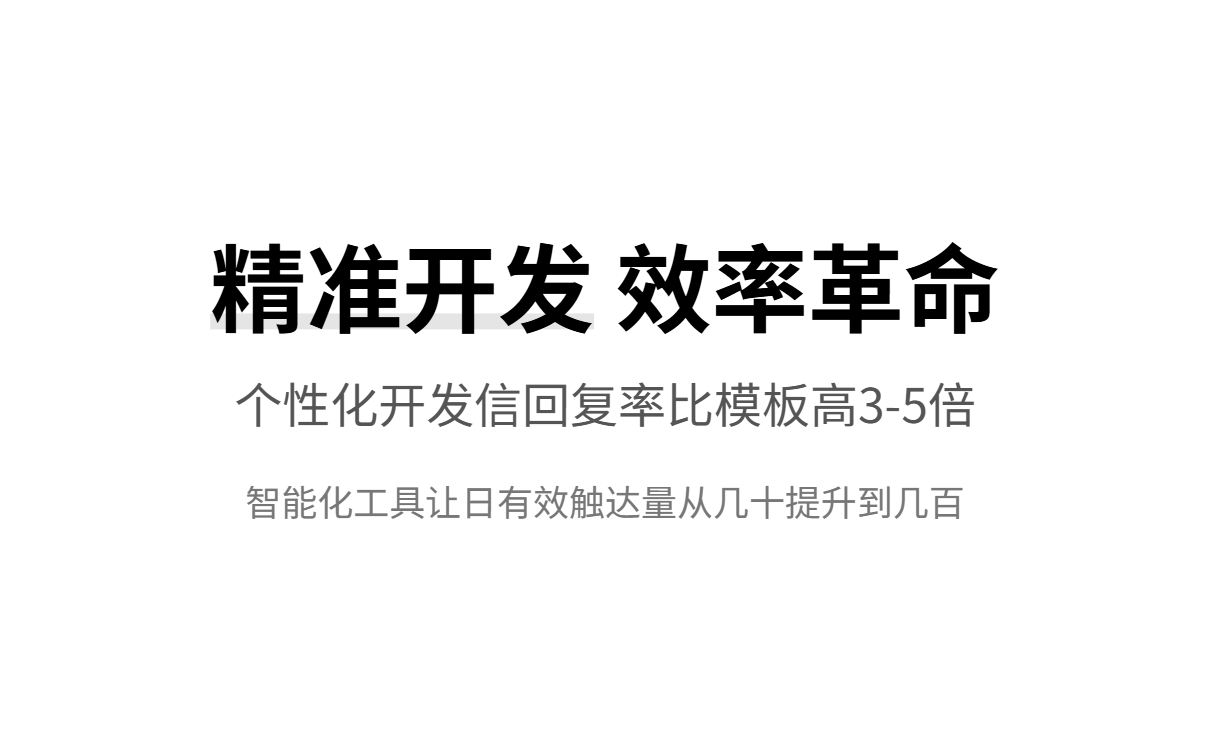
III. Clients dislike being "harassed," but they do appreciate "precise assistance"—the art of sales letters.
Many newcomers to foreign trade encounter this dilemma when developing clients: they send out a large number of emails but receive few replies. The problem may not be "sending too many," but rather "not being targeted enough." Clients don't dislike being approached; what they dislike is:
"They don't understand my needs. The emails are like copy-pasted text, and the recommended products are completely unsuitable. It's obvious they haven't done any research."
Personalized outreach emails are key to making clients feel "this supplier understands me." However, for beginners, analyzing client companies, researching purchasing preferences, and crafting targeted emails is time-consuming and labor-intensive. Intelligent tools offer significant advantages in this regard:
- AI-powered deep analysis of customer background : Automatically captures customer company websites, social media, and customs data to analyze their main business, purchasing history, and product preferences.
- Personalized emails are automatically generated : Based on the client's industry characteristics and procurement needs, differentiated development emails are automatically generated, avoiding template-based content.
- Precise product matching : Based on the customer's past purchasing records, the system automatically recommends the most relevant products, along with detailed specifications.
Data shows that personalized, optimized sales emails have a response rate 3-5 times higher than those using generic templates . This is precisely the most easily overlooked yet crucial step for foreign trade novices.
IV. The biggest fear in customer development is giving up – increased confidence brought about by improved efficiency
Newcomers to foreign trade often encounter three major hurdles when developing clients: not knowing who to contact, not knowing how to write an email after finding a client, and not receiving replies to their emails. Over time, this can easily lead to a loss of confidence. However, in reality, client response rates essentially depend on two things: the quantity and accuracy of outreach .
Let's examine the differences between the traditional and intelligent development models in key development actions:
| Development Actions | Traditional foreign trade personnel | Use intelligent tools |
|---|---|---|
| Find customers | Manual search and filtering (dozens per day) | AI-generated automatic recommendations (hundreds to thousands per day) |
| Write an email | Template mechanical repetition | Personalized development emails are automatically generated. |
| Follow up with customers | Excel records, easily forgotten | Automatic follow-up reminders, customer intent level classification |
When your daily effective outreach increases from dozens to hundreds, when your outreach emails go from template-based to personalized, and when you have systematic reminders for customer follow-ups, perseverance becomes much easier. Increased efficiency leads to a surge in confidence, and confidence is the driving force for foreign trade professionals to overcome difficulties and move forward continuously.
For novice foreign trade professionals, developing clients doesn't start with "how many emails to send," but rather with "understanding how clients choose suppliers."
If you are still here:
- ❌ Making assumptions about customer needs
- ❌ Blindly sending out large numbers of template emails
- ❌ Showcase your company's strength with a rudimentary website
Then you might always be two steps behind your opponent.
However, if you choose to let tools handle 70% of the basic work (finding clients, writing emails, building a website), you can dedicate your time to the most important 30%—communication, quoting, follow-up, and closing the deal.
Experience intelligent foreign trade development tools now and acquire customers quickly in 30 days.The road to foreign trade is long and arduous, but perseverance will lead to success. Instead of struggling and groping in the dark with traditional methods, leverage intelligent tools to start from a higher level. Remember, the logic behind how customers choose suppliers is the direction you should take in developing your customers. Understanding this is the first step towards success.
AB Customer Related Recommendations:
2026 Guide to Building, Marketing, and Acquiring Customers on Foreign Trade B2B Websites
.png?x-oss-process=image/resize,h_100,m_lfit/format,webp)
.png?x-oss-process=image/resize,h_100,m_lfit/format,webp)

.png?x-oss-process=image/resize,h_100,m_lfit/format,webp)
.png?x-oss-process=image/resize,h_100,m_lfit/format,webp)
.png?x-oss-process=image/resize,h_100,m_lfit/format,webp)
.png?x-oss-process=image/resize,h_100,m_lfit/format,webp)
