.png?x-oss-process=image/resize,h_100,m_lfit/format,webp)

.png?x-oss-process=image/resize,m_lfit,w_200/format,webp)

热门产品

热门文章
外贸B2B全行业指南:消费品行业做外贸独立站有哪些硬性要求?
哪些CRM好用?十款主流外贸CRM系统深度测评
如何处理交货期延误问题,确保客户满意?
AI驱动的自动化网站建设工具综合指南:助力B2B出口商快速上线网站
从陌生人到值得信赖的合作伙伴:外贸型小型办公室/家庭办公室如何通过行业洞察赢得客户
AI数字员工如何改变B2B出口营销:自动化潜在客户跟进和销售工作流程
菲律宾NTC无线认证全流程指南:关键时间节点把控助你节省30%合规时间
最全指南:从询价到单据结算,一篇讲清楚国际贸易流程
破解密码:新人如何化解备货阶段产品质量不匹配危机?
外贸接单全流程详解:四大群体接单全流程实战指南!
Recommended Reading





Practical Guide: Crafting Localized Content Strategies to Effectively Engage Middle Eastern Buyers
This comprehensive tutorial explores how foreign trade enterprises can develop precise localized content strategies to effectively reach Middle Eastern buyers and boost inquiry volume. Focusing on the scientific layout of keyword matrices, the article delves into content creation techniques aligned with target market language habits and cultural contexts, alongside well-structured social media distribution rhythms. It aids businesses in building a sustainable and efficient content marketing system. Supported by real-world cases, the guide equips marketing managers and content operators with a replicable, quantifiable execution framework to overcome inefficient traditional SEO, achieve steady organic traffic growth, and enhance business conversions, meeting overseas marketing channel expansion needs.
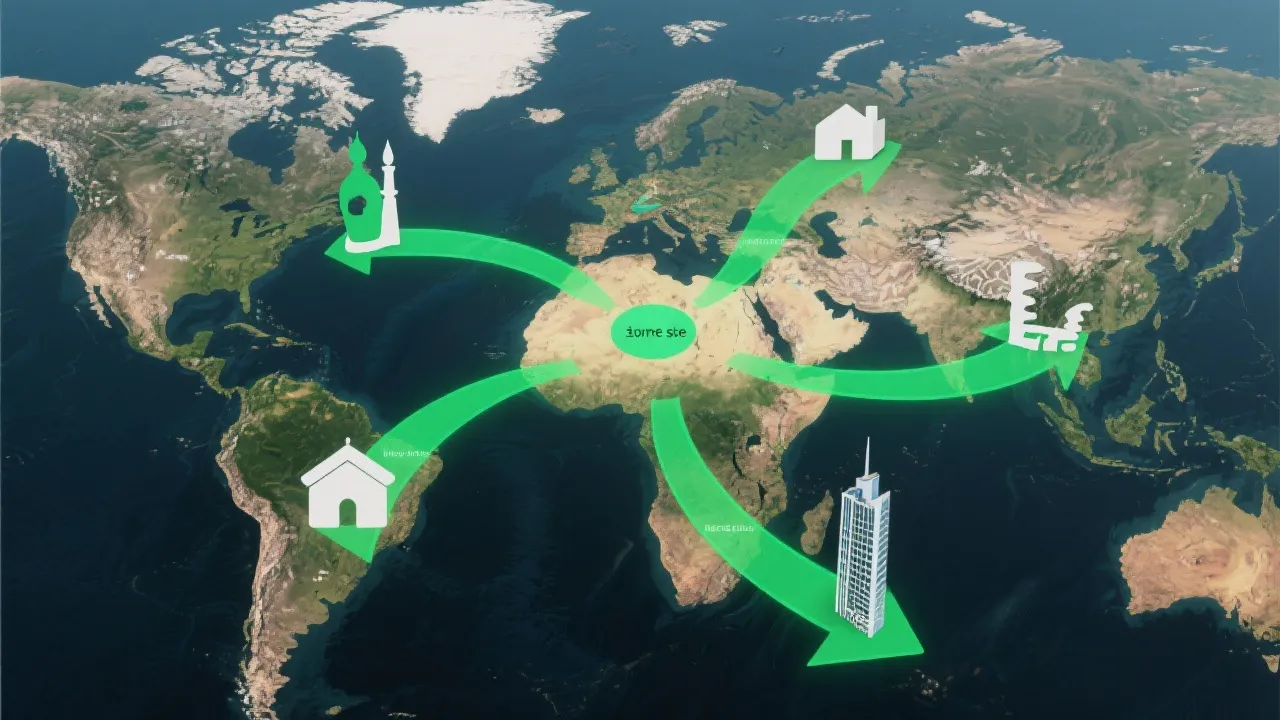
Practical Guide to Crafting Localized Content Strategies for Targeting Middle East Buyers
In today’s highly competitive global trade environment, international B2B enterprises must refine their content marketing to break through cultural and linguistic barriers — especially when aiming to engage Middle Eastern procurement professionals. A well-planned, localized content strategy not only improves organic visibility but also significantly boosts inquiry conversions by resonating authentically with regional buyers.
Understanding the Importance of a Keyword Matrix for Market Precision
Keyword research is foundational, but for localization, constructing a comprehensive keyword matrix that mirrors the target buyer’s journey in their native language is imperative. This matrix should be layered from high-volume, broad keywords to long-tail, transactional phrases used specifically by Middle Eastern procurement experts.
For example, data from SEMrush indicates that search volumes for supply chain terms in Arabic often differ by up to 45% compared to English queries, underscoring the need for dual-language matrices. Segmenting keywords by intent (awareness, evaluation, purchase) helps align content accurately with buyer needs at each stage.
Creating Content Tailored to Regional Language and Cultural Norms
Effective localization goes beyond translation— it requires cultural contextualization. Studies show that content reflecting local customs, business etiquette, and communication styles improves engagement rates by an average of 33%. Key techniques include:
- Utilizing formal Arabic dialects or region-specific vernacular depending on target countries (e.g., Gulf Arabic versus Levantine Arabic).
- Incorporating relevant metaphors, success stories, and real-world examples that resonate with Middle Eastern business mindsets.
- Adhering to cultural sensitivities around visuals and messaging — such as modest imagery and respect for religious contexts.
These elements collectively elevate content trustworthiness and relevance, essential for markets that prioritize relationship-building.

Strategic Social Media Distribution and Engagement Timing
Maximizing content reach requires a finely-tuned multi-platform distribution schedule. LinkedIn, Twitter, and industry-specific forums dominate for B2B outreach in the Middle East, with Facebook and Instagram adding supportive touchpoints. Research by Sprout Social shows that Middle Eastern business users are most active on LinkedIn between 10 AM and 1 PM local time Sunday through Thursday.
Creating an editorial calendar that publishes localized content aligned with these peak engagement windows increases interaction rates by over 25%. Incorporating interactive elements — such as polls, Q&A sessions, and culturally relevant hashtags — further drives organic visibility and nurtures community trust.
Closing the Loop: Data-Driven Optimization for Enhanced Inquiry Conversion
Building a sustainable content strategy also demands rigorous tracking and iterative optimization. Embedding data analytics and A/B testing tools into landing pages and gated content assets enables marketers to precisely monitor buyer behaviors and conversion funnels.
For instance, implementing heatmaps can reveal user focus areas, while A/B tests of call-to-action wording or form lengths can improve inquiry submission rates by up to 18%. Integrating CRM data helps refine buyer personas continually, allowing the strategy to adapt dynamically to changing market conditions.
Real-World Success: Applying Localized Content Strategy in Practice
A leading electronics component supplier targeting Dubai and Riyadh markets implemented a phased localized content plan focusing on Arabic-language blogs and LinkedIn distribution with culturally tailored case studies. After six months, organic traffic from the Middle East region rose by 62%, and qualified B2B inquiries increased by 47%, demonstrating clear ROI from strategic localization and keyword matrix application.
Key takeaways included prioritizing continuous linguistic adaptation, evenly distributing content cadence, and leveraging platform-specific features like LinkedIn’s lead gen forms.
.png?x-oss-process=image/resize,h_100,m_lfit/format,webp)
.png?x-oss-process=image/resize,h_100,m_lfit/format,webp)

.png?x-oss-process=image/resize,h_100,m_lfit/format,webp)
.png?x-oss-process=image/resize,h_100,m_lfit/format,webp)
.png?x-oss-process=image/resize,h_100,m_lfit/format,webp)
.png?x-oss-process=image/resize,h_100,m_lfit/format,webp)
