.png?x-oss-process=image/resize,h_100,m_lfit/format,webp)

.png?x-oss-process=image/resize,m_lfit,w_200/format,webp)

热门产品

Popular articles
Step-by-Step Guide to Import and Export Customs Clearance: From Documentation to Final Release
How to Boost Overseas B2B Website Development Efficiency with No-Code Intelligent Site Builders
Cracking the Content Production Dilemma for SMEs: A Comprehensive Guide to Automatically Generating 200 High-Ranking SEO Articles with AI
Leveraging Cross-Cultural Communication to Boost International Competitiveness in Export Trade
How to Create TikTok Short Videos for Foreign Trade: AI Script Generator + Challenge Campaigns to Lower Production Threshold
This article will give you a comprehensive understanding of the new foreign trade marketing model of "1+AI", foreign trade people should get on board now!
Case Analysis: The Complete Process of Identifying High-Value Overseas Procurement Enterprises through Transaction Frequency Analysis
Analysis of Difficulties in Foreign Trade Enterprise Website Building: Can AI Multilingual Solutions Break Through Language Barriers?
Recommended Reading



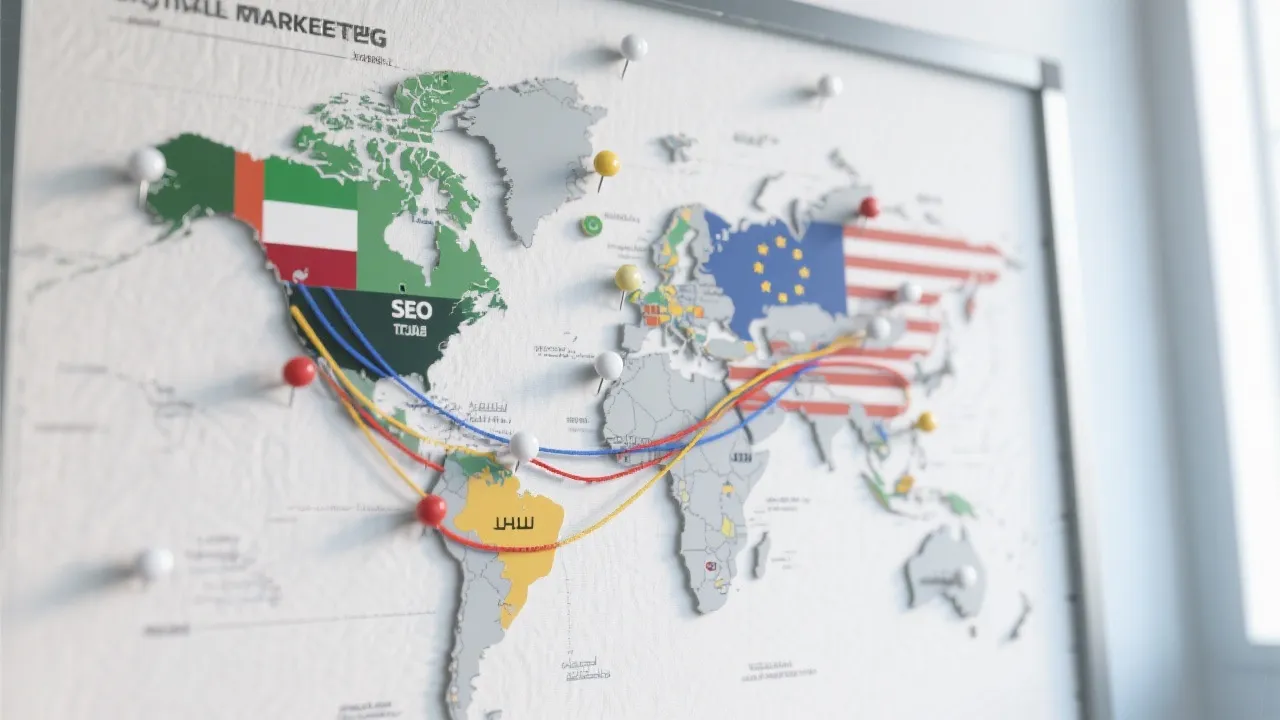


Why Your Ads Fail in Brazil: Unlocking Long-Tail Keyword Strategies to Reach South American Buyers
This article addresses the challenges faced by B2B exporters struggling with ineffective advertising in South America. It offers an in-depth analysis of multilingual keyword monitoring technologies, focusing on how long-tail keyword combinations enable precise targeting of South American buyers. Leveraging AI semantic analysis and dynamic optimization techniques, the article breaks down language barriers and diverse search behaviors. Through real-world country and industry case studies, it provides practical methods for cross-border enterprises to capture non-English market purchase intent, thereby enhancing ad performance and conversion rates.

Why Your Ads in Brazil Fail: Unlocking the Power of Long-Tail Keyword Combinations to Reach South American Buyers
In the burgeoning landscape of South American B2B trade, many global exporters face a persistent challenge: advertising efforts that struggle to convert local buyer interest into tangible leads. For foreign companies targeting Brazil and its neighboring markets, the crux often lies beyond generic keywords and traditional strategies. This article delves into how sophisticated multi-language keyword monitoring and intelligent long-tail keyword combinations can break through linguistic barriers and cultural nuances, dramatically enhancing ad engagement and ROI.
Understanding the Linguistic Complexity in South American Markets
South America is not homogenous in language or search behavior. Brazil stands out with Portuguese as its official language, while Spanish dominates most other countries. A direct translation of keywords or reliance on English terms often leads to missed opportunities due to cultural and linguistic mismatches. For instance, B2B buyers in Brazil may use localized industry terms, abbreviations, or colloquial expressions unknown to generic global campaigns.
Data insight: According to recent search analytics, 72% of B2B procurement queries in Brazil use Portuguese long-tail phrases rather than generic keywords, underscoring the need for local language optimization.
The Role of Multi-Language Keyword Monitoring
Multi-language keyword monitoring leverages AI-driven semantic analysis to track not only popular terms but also emerging local search patterns across different South American regions. This enables marketers to adjust their campaigns dynamically, incorporating trending phrases before competitors do.
Employing AI-powered tools such as Google Trends with language filters and third-party platforms offering Portuguese and Spanish keyword intelligence helps uncover buying intent more effectively. Crucially, these tools identify “long-tail” keyword combinations—multi-word, niche-specific phrases capturing precise procurement needs.
Decoding the Value of Long-Tail Keywords
Long-tail keywords function as precision instruments in B2B marketing. Though they generate less overall search volume, they often produce leads with 2-3 times higher conversion rates compared to generic terms. For South American markets, their significance is amplified due to the linguistic and cultural diversity.
Statistics reveal that campaigns optimized for long-tail keyword groups in Brazil’s manufacturing sector see up to 45% increase in qualified inquiries within 3 months of implementation.
Implementing Dynamic Optimization Strategies
The success of a keyword-based strategy depends on its agility. Dynamic optimization means continuously analyzing keyword performance by location, search volume, and conversion data to prune ineffective terms and scale promising ones.
Integrating AI-driven automation can facilitate real-time bid adjustments and keyword insertions within ad copy, synchronized with shifting market trends. This reduces manual effort and accelerates responsiveness to local procurement demand cycles.
Case Study: Enhancing Lead Quality for a Brazilian Mining Equipment Exporter
A European exporter of mining equipment targeting Brazil revamped its Google Ads campaign by deploying a multi-language keyword monitoring system combined with long-tail keyword targeting. Initial broad keywords captured low-intent traffic, resulting in poor CTRs and wasted spend.
After incorporating AI-generated keyword clusters such as “portable dust control systems for gold mines Rio de Janeiro,” the campaign saw a 38% increase in click-through rate and a 27% rise in qualified RFQs within 4 weeks.
Strategic takeaway: Localized phrasing combined with dynamic keyword updates creates a competitive advantage and improves ad relevance dramatically.

Practical Recommendations for B2B Marketing Teams
- Integrate multi-language keyword tools: Invest in platforms supporting Portuguese and Spanish semantic insights tailored for South American search behavior.
- Leverage AI for semantic keyword grouping: Utilize AI to cluster relevant long-tail phrases reflecting buyer intent nuances in different industries.
- Set up dynamic keyword monitoring dashboards: Implement cross-team dashboards to track keyword shifts in real time and coordinate adjustments between marketing and sales teams.
- Focus on granular buyer personas: Map keyword profiles to detailed buyer segments for targeted campaign messaging that resonates locally.
- Test and iterate frequently: Run A/B tests with selected long-tail keyword sets and analyze conversion metrics, refining based on leads quality rather than click volume alone.
Final Thoughts
The path to effective advertising in Brazil and the broader South American B2B ecosystem demands a pivot from generic, English-centric keywords toward precise, localized long-tail keyword combinations. By embracing multi-language keyword monitoring powered by AI semantic analysis and agile optimization, companies can connect authentically with South American buyers, streamline ad spend, and significantly elevate conversion rates.
.png?x-oss-process=image/resize,h_100,m_lfit/format,webp)
.png?x-oss-process=image/resize,h_100,m_lfit/format,webp)

.png?x-oss-process=image/resize,h_100,m_lfit/format,webp)
.png?x-oss-process=image/resize,h_100,m_lfit/format,webp)
.png?x-oss-process=image/resize,h_100,m_lfit/format,webp)
.png?x-oss-process=image/resize,h_100,m_lfit/format,webp)
