.png?x-oss-process=image/resize,h_100,m_lfit/format,webp)

.png?x-oss-process=image/resize,m_lfit,w_200/format,webp)

热门产品

Popular articles
Product Certification Preparation Guide: Key Tips to Boost Approval Rates for Global Market Access
Why Isn't Your Alt Text Working? 5 Hidden Tips for SEO Optimization of Images on Foreign Trade Websites
Practical Automation Strategies for Managing Foreign Trade Customers: Key Methods to Boost Follow-Up Efficiency
Don't let your website "sleep" anymore! See how this B2B manufacturer revitalized traffic and gained stable inquiries.
A look at new global trade/tariff/customs regulations and bans starting August 1st!
Foreign Trade Contract Management Tools: Enhancing Legal Risk Prevention for Enterprises
How to Optimize International Logistics for Competitive Supply Chains in Global Trade
How AI-Powered Website Builders Are Transforming Global SEO for Multinational Brands
推荐阅读




.png?x-oss-process=image/resize,h_1000,m_lfit/format,webp)
Mexico to Impose Tariffs on Chinese Imports: Impact Analysis and Strategic Responses
Mexico's Chamber of Deputies has approved legislation to impose tariffs of up to 50% on imports from China and several Asian countries, set to take effect on January 1, 2026. This article analyzes the sectors most severely impacted, including footwear, textiles and apparel, toys, and furniture, due to high tariff rates, significant market share, and low profit margins. It also outlines potential strategies for Chinese enterprises to mitigate the effects through pricing adjustments, supply chain diversification, product upgrading, and explores the role of government support.
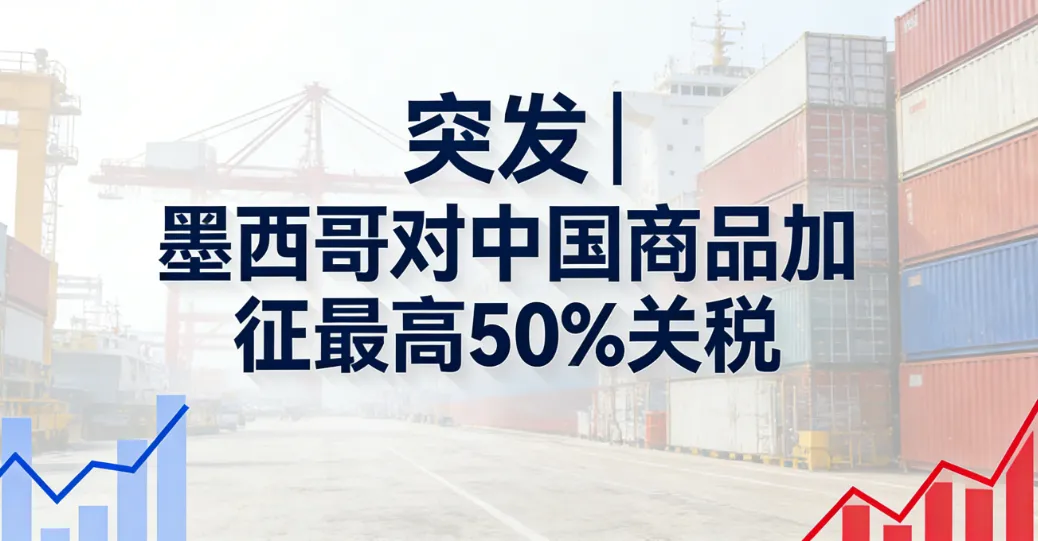
Important Update: Mexico Set to Impose Up to 50% Tariffs on Chinese Imports Starting January 1, 2026
Understanding Mexico's New Tariff Regime: Key Industries Impacted
In a significant development for global trade, Mexico's Chamber of Deputies approved legislation in the early hours of December 10, 2025, that will impose tariffs ranging from 10% to 50% on imports from China and several Asian countries. The bill is expected to complete legislative procedures by December 15, 2025, and take effect on January 1, 2026. This move represents a substantial shift in Mexico's trade policy, specifically targeting labor-intensive and low-value-added manufacturing sectors.
Three Industry Categories Most Severely Affected
The tariff impact follows a clear pattern: "precision strikes" on labor-intensive industries with low profit margins. Based on tariff rates, China's market share in Mexico, and industry profitability, three sectors face the most significant challenges:
- Severe Impact: Footwear & leather goods, textiles & apparel, toys, and furniture
- Moderate Impact: Auto parts, home appliances, plastic products, and aluminum goods
- Minor Impact: Steel products, paper & cardboard, cosmetics, and trailer glass
Severe Impact Industries: Over 50% Risk of Order Loss
1. Footwear & Leather Products: The Hardest Hit Sector
Products including sports shoes, leather shoes, and leather bags face tariffs of 35-50%. China currently holds 52% of Mexico's footwear import market, with some categories previously enjoying duty-free access. For a leather shoe exported at $10, tariffs will increase costs by $3.50-$5.00, potentially raising retail prices by over 40%.
With industry profit margins averaging just 4-6%, many small and medium-sized enterprises may be forced to exit the Mexican market entirely. Historical precedent shows Mexico's 2010 tariffs on Chinese footwear caused a 38% export volume decline that year.
2. Textiles & Apparel: Complete Loss of Price Advantage
316 previously duty-free textile categories now face tariffs of 10-35%, including cotton t-shirts, jeans, and knitted underwear. China currently supplies 38% of Mexico's textile imports, primarily competing through "low-price strategies" with export prices averaging one-third of EU products.
A $5 t-shirt will face additional tariffs of $0.50-$1.75, completely eroding the price advantage in an industry with profit margins of just 3-5%. Orders may shift to Vietnam and Bangladesh, despite these countries also facing tariffs, due to their even lower labor costs.
Critical Industry Impact Table
| Industry | Tariff Rate | China's Market Share | Profit Margin |
|---|---|---|---|
| Footwear & Leather | 35-50% | 52% | 4-6% |
| Textiles & Apparel | 10-35% | 38% | 3-5% |
| Toys & Furniture | 35-50% | 40-45% | 5-8% |
Moderate Impact Industries: Profit Margin Compression
1. Auto Parts: Supply Chain Restructuring Needed
With tariffs ranging from 10-35%, China's auto parts industry (holding 22% of Mexico's import market) faces significant challenges. While major manufacturers may negotiate cost转嫁, smaller enterprises could lose orders entirely. Industry-wide profit margins may compress by 15-20% as European and American competitors enjoy duty-free access.
2. Home Appliances: Small Appliances Most Vulnerable
China supplies 30% of Mexico's small appliance imports, with products like electric fans averaging $20 per unit. After tariffs, retail prices could rise by 12-40%, while Mexican brands like Mabe expand their market presence. Small and medium enterprises may need to exit the market, while larger companies should focus on high-end products like smart home appliances.
Strategic Responses: Three Core Pathways
Immediate Actions for Businesses
- Short-term: Adjust pricing and order structure
- 暂停新增低价订单,优先交付已签订单
- Negotiate "tariff sharing" agreements with Mexican importers
- Abandon low-margin products under $10 for textiles and $5 for toys
- Medium-term: Supply chain relocation and market diversification
- Avoid simple relocation to Vietnam or Thailand (also targeted by tariffs)
- Consider EU, U.S., or Canadian manufacturing for tariff-free access
- Redirect capacity to South America or Middle Eastern markets
- Long-term: Product upgrading and branding
- Develop high-value products with specialized features
- Build direct-to-consumer brands through platforms like Mercado Libre
- Challenge Mexico's "non-market economy" designation through industry associations
Need Expert Guidance on Navigating Mexico's New Tariffs?
Our team of international trade specialists can help you develop a customized strategy to maintain market share while protecting your profit margins.
Get Your Tariff Mitigation PlanFree consultation for companies affected by Mexico's new trade policies
The coming months will undoubtedly be challenging for exporters to Mexico, but this trade policy shift also presents opportunities for strategic transformation. Companies that proactively adjust their product mix, explore new manufacturing locations, and invest in value-added features will not only survive but potentially emerge stronger in the post-tariff landscape.
By focusing on innovation and market diversification, Chinese manufacturers can transform this trade barrier into a catalyst for long-term growth and global competitiveness.
.png?x-oss-process=image/resize,h_100,m_lfit/format,webp)
.png?x-oss-process=image/resize,h_100,m_lfit/format,webp)

.png?x-oss-process=image/resize,h_100,m_lfit/format,webp)
.png?x-oss-process=image/resize,h_100,m_lfit/format,webp)
.png?x-oss-process=image/resize,h_100,m_lfit/format,webp)
.png?x-oss-process=image/resize,h_100,m_lfit/format,webp)
