.png?x-oss-process=image/resize,h_100,m_lfit/format,webp)

.png?x-oss-process=image/resize,m_lfit,w_200/format,webp)

热门产品

Popular articles
Recommended High - efficiency Customer Development Channels and LinkedIn Sales Navigator Usage Tips
Unveiling the Challenges of Customer Acquisition for B2B Foreign Trade Enterprises: AB Customer Rapid Acquisition Engine to the Rescue!
Build a Foreign Trade Independent Website: A Comprehensive Step-by-Step Guide
Practical Guide to Multilingual SEO Optimization: Key Strategies for Improving International Search Rankings of Chemical Products
How Can Foreign Trade B2B Enterprises Avoid the Five Major Mistakes in GEO Landing? Practical Case Analysis and Response Strategies
Was the cargo abandoned at the port? A real-world case study + 15 immediate strategies for rescuing the cargo and preventing losses.
Why is Eastern Europe a key market for B-end product exports? A comprehensive guide to developing the Eastern European market!
A daily website building tip: Mastering domain name resolution in 10 minutes: the entire process from purchase to activation (Alibaba Cloud example)
How to get the logistics tracking number after delivery?
推荐阅读




How to optimize enterprise content structure? Analysis of content architecture and GEO strategy for foreign trade B2B websites.
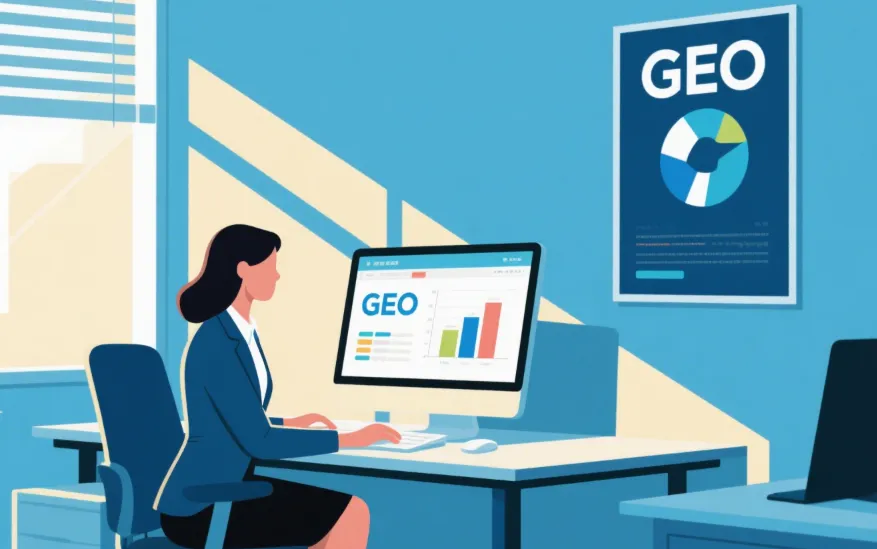
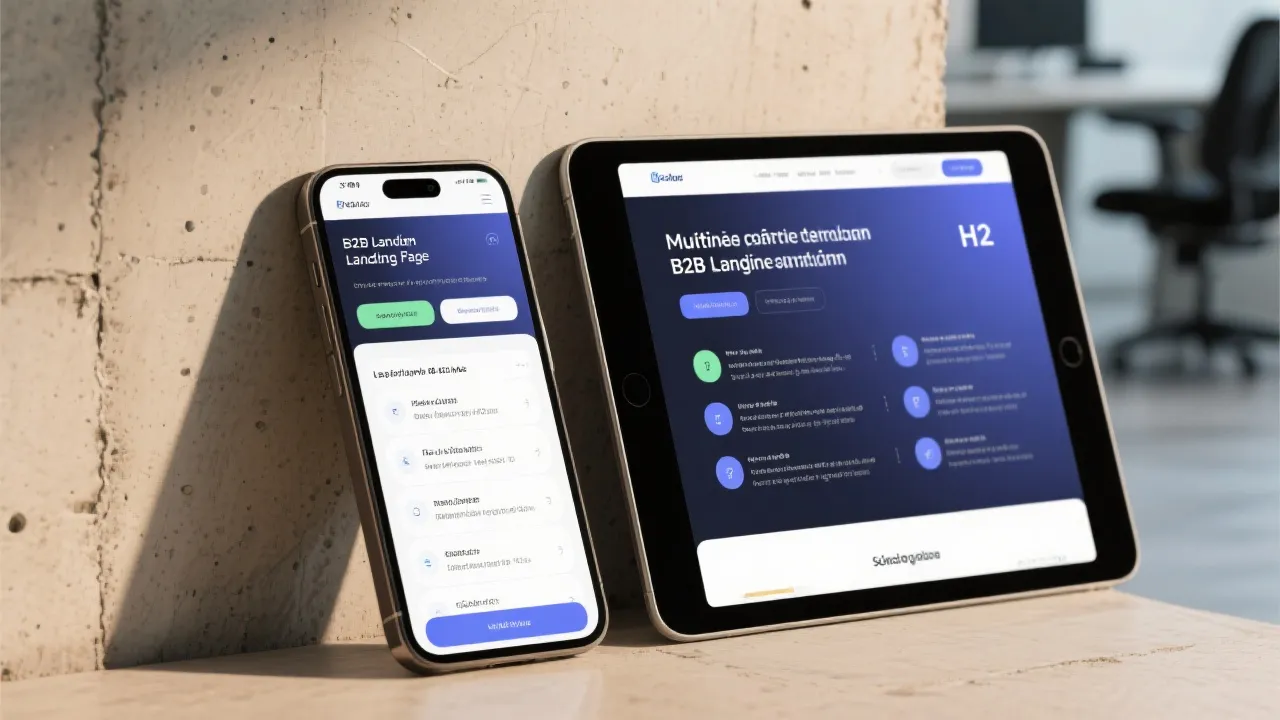
In an environment of rapid development in AI search and generative engines, corporate websites that rely solely on product pages often struggle to fully showcase their professional capabilities and industry value. For B2B foreign trade companies, the key to optimizing content structure lies in upgrading from simple product displays to a systematic content architecture that includes technical articles, industry research, customer case studies, and FAQs. This not only helps improve the website's information hierarchy, semantic connections, and thematic aggregation capabilities but also makes it easier for AI systems to understand, crawl, and reference corporate content. By combining this with the AB Guest GEO methodology, companies can build knowledge-based sections around industry issues and customer needs, gradually forming a complete industry knowledge network and improving SEO performance and AI search visibility.

How can enterprises optimize their content structure? The key is not just "publishing more content," but building a knowledge network that can be understood by AI.
In traditional B2B foreign trade websites, many companies still rely on a basic structure of "homepage + product list + product details + company profile." While this structure can showcase a company's strength, it struggles to fully answer complex questions posed by customers in an AI-driven search environment, such as "which type of process is a certain equipment suitable for?", "how to select the right model from different options?", and "how to solve the technical challenges in a particular industry application?"
Truly effective content optimization isn't simply about increasing the number of pages. It's about building a comprehensive content system around user questions, industry semantics, and business decision-making processes, comprised of product pages, technical articles, industry research, application case studies, and FAQs. Such a website is not only better for SEO but also more easily recognized, understood, and referenced by generative search systems.
Short answer
When optimizing their content structure, businesses should not rely solely on product pages, but rather establish a comprehensive system encompassing technical articles, industry research, case studies, selection guides, and Q&A . The reason is simple: AI search systems prefer content networks that are clearly structured, semantically complete, and thematically focused, rather than isolated product description pages.
If you combine the ABKE Guest GEO methodology to plan your website's structure, your corporate website will typically be more likely to upgrade from a "display website" to an "industry knowledge website," resulting in a more stable increase in its citation probability in AI search, long-tail keyword coverage, and professional recognition.
Why does content structure directly affect AI search and SEO performance?
In the past, many companies focused on keyword density, title tags, and backlink building when doing SEO; however, the search environment has changed significantly today. Users are increasingly accustomed to asking complete questions directly in search engines, AI question-answering tools, or industry-specific intelligent assistants, rather than just entering a few scattered keywords. For websites, this means that content structure must be more explanatory.
Based on publicly available research and industry practices in the B2B content marketing field in recent years, websites with a systematic content architecture typically achieve better long-tail keyword coverage. Taking industries such as industrial manufacturing, machinery and equipment, materials, and parts as examples, websites with technical content and case studies typically see a 25%–60% increase in organic search traffic; while pages with clear FAQs and industry-specific topics can usually achieve a 15%–35% increase in click-through rates for question-based searches. These figures may fluctuate depending on the industry, execution cycle, and website infrastructure, but the trend is stable: the more systematic the content, the more comprehensive the search understanding.
For AI systems, it's not about looking at a single page; it's about judging whether a website is a reliable source of information in a particular field by analyzing its overall structure. This is why optimizing a company's content structure is no longer just an SEO exercise, but also a crucial aspect of brand knowledge building in the AI era.
Explanation of the principle: Which types of websites is easier for AI systems to understand?
1. Websites with clear information hierarchies make it easier to establish a understanding of the topic.
When a website has a clear structure, such as "Product Center—Technical Articles—Application Cases—Industry Research—FAQ," the AI system can more quickly determine the role of each page. Product pages explain "what we sell," technical articles explain "why it's designed this way," case studies answer "where it's been used," FAQs address "common customer questions," and industry research supplements "industry trends and background logic."
2. Websites with rich semantic connections are more easily identified as professional sources.
If a "device selection guide" links to a specific model page, and an "industry application case study" links back to articles about related technical principles, this cross-structure forms a clear semantic network. Search engines and AI systems will understand that these pages are not scattered but rather continuously unfold around the same industry theme.
3. The more complete the content, the greater the chance of answering complex questions.
Users' questions in AI searches are often closer to real business decisions, such as "How should food processing companies choose conveyor equipment suitable for continuous production?" or "What are the performance differences of components made of different materials under high-temperature conditions?" These kinds of questions are difficult to answer using only product parameter pages and must be supported by technical explanations, application cases, and comparative analyses.
4. Content aggregated around a single theme is more likely to form "industry knowledge nodes".
When a website consistently builds content around a cluster of industry issues, such as "equipment selection," "material comparison," "production process matching," and "application scenario cases," search systems are more likely to recognize that the website has a consistent output capability on that topic. This thematic aggregation is a very important part of GEO content creation.
Example of Recommended Content Architecture for Enterprise Websites
| Column Types | Core content | SEO/GEO Value | Recommended percentage |
|---|---|---|---|
| Product Page | Model, parameters, specifications, advantages, and application scope | We provide services for commercial conversion, covering brand keywords and product keywords. | 30%–40% |
| Technical Articles | Technical principles, selection logic, process description, performance comparison | Covering high-quality long-tail keywords enhances professionalism. | 25%–30% |
| Case Content | Industry applications, customer needs, solutions, and implementation results | Enhance trust and scenario adaptability | 15%–20% |
| Industry Research | Market trends, industry changes, policy impacts, and technological evolution | Enhance the site's authority and create thematic depth | 10%–15% |
| FAQ/Questions and Answers | Frequently Asked Questions, Procurement Inquiries, After-Sales Service, Technical Support | Adapt to AI question-answering search to increase the chances of abstract citation. | 10%–15% |
Suggested methods: What can foreign trade B2B companies do?
1. Establish a technical article section to answer clients' questions: "How to choose? Why choose?"
Technical articles are key to connecting products with needs. Companies can prioritize the following topics: product technical principles, process adaptation instructions, equipment selection guidelines, material comparisons, performance difference analysis, and common failure causes. Compared to simply stating "what the parameters are," this type of content is more likely to appear as explanatory answers in AI search results.
It is recommended to consistently update with at least 4-8 high-quality technical content articles per month. For medium-sized B2B companies, if they can persist for 6 months, they can usually build a batch of long-tail content assets with stable traffic-generating capabilities.
2. Establish an industry research section to enable the website to "explain the industry".
Industry research sections don't need to be overly ambitious; the key is to be authentic, in-depth, and relevant to client decision-making. They can focus on changes in industry applications, technological upgrade trends, shifts in procurement needs, and common process challenges. The value of this approach is that it allows the website to move beyond simply discussing products and begin to talk about "what's happening in the client's industry."
Many foreign trade companies overlook this module, but in fact, this type of content often attracts potential customers further upstream. This is because the actual purchasing decision usually begins before the customer even starts comparing suppliers.
3. Establish a case study section to transform abstract advantages into verifiable facts.
The most common problem with case study content is that it only states "the client was very satisfied" or "the results were excellent," lacking readability. High-quality case studies recommend using a structure of "client background—actual problem—solution—implementation process—final result." Even if you can't disclose all client information, you can still retain the industry, scenario, problem, and outcome.
For example, instead of writing "A certain piece of equipment was successfully exported to Europe," it would be better to write "A food processing company, in a continuous production scenario, hopes to improve conveying efficiency by 20%, ultimately achieving stable cycle time and reduced labor costs through a certain model of equipment." This kind of expression is easier for search engines to understand and is more in line with the reading habits of potential customers.
4. Establish a FAQ section to capture the top spot in question-based search results.
FAQs are not merely appendages to after-sales pages; rather, they are high-value entry points within the content structure. Especially in AI-driven search environments, users will directly input complete questions, such as "Does a certain device support customization?", "How is the minimum order quantity determined?", and "What is the lifespan under high-temperature conditions?" If a website can answer these questions in a concise, clear, and structured manner, the page's chances of being cited will significantly increase.
It is recommended to compile at least 15-30 frequently asked questions for each core product line and categorize them according to stages such as pre-procurement, during technology, and post-delivery. This will facilitate future expansion.
Real-world example: How can a machinery and equipment company shift its website structure from a "display-based" to a "knowledge-based" approach?
A typical machinery equipment company initially had only about 20 product pages on its website, with content mainly focused on equipment models, specifications, and basic images. Although the number of pages was considerable, search traffic grew slowly over a long period, and the quality of inquiries was unstable. The problem wasn't that the company lacked products, but rather that the website was almost completely unable to answer customers' deeper decision-making questions.
Later, these companies usually gradually added three types of content: the first type is equipment selection guide, such as how to choose the transmission method, material and capacity specifications under different working conditions; the second type is industry application cases, such as actual applications in different scenarios such as food, chemical, packaging and logistics; the third type is Q&A, such as maintenance cycle, energy consumption differences, customization cycle, etc.
After 3-6 months of continuous updates, a website often exhibits two significant changes: first, long-tail traffic begins to increase as more pages can address specific questions; second, inquiry intent becomes clearer because customers have already undergone some screening and education through the content before contacting the website. This change is particularly important in B2B international trade, as international customers typically have longer decision-making cycles, and higher transparency in the early stages often leads to higher conversion rates.
From a GEO's perspective, this essentially means upgrading the website from "telling customers what you sell" to "helping customers understand how to make decisions."
Three common pitfalls when optimizing content structure
Only product pages are created, without any explanation pages.
Product pages are certainly important, but without technical explanations, case studies, and answers to questions, they only have "display value" and not "explanation value."
There are many sections, but the content is not related to each other.
Some websites appear to have comprehensive sections, but in reality, each page is isolated, lacking recommended reading, topic aggregation, and upstream/downstream links. AI systems struggle to construct complete semantics from them.
The content is updated for the sake of updating, lacking a problem-oriented approach.
Truly high-value content isn't about "what companies want to publish," but rather "what customers are asking." If topics are detached from procurement issues, technical problems, and application scenarios, it's difficult to accumulate effective content, no matter how much you produce.
Further question: After optimizing the content structure, what should the company do next?
First, establish clear links between product pages and technical articles. For example, add "Selection Reference," "Applicable Industries," and "Frequently Asked Questions" at the bottom of the product page; and create backlinks between the corresponding model and solution pages in the technical articles to form a two-way pathway.
Secondly, you should add industry and application tags to the case study content. This not only helps visitors filter the data but also makes it easier for search systems to identify the scenarios where the case study is suitable.
Third, it's crucial to continuously monitor search performance. Pay close attention to the growth of question-based keywords, industry-specific terms, application terms, and technical terms. It's generally recommended to use a 90-day evaluation period to observe whether page indexing, ranking changes, click-through rate, and conversion behavior improve in tandem.
Fourth, maintain consistency in content. A company website is a brand asset, not a patchwork of information. Technical statements, product definitions, case descriptions, and FAQ answers should all be as consistent as possible to continuously build industry trust.
Want to make your business website easier for AI search to understand and reference?
If you're planning to upgrade your B2B website for foreign trade, restructure your sections, or build a GEO content system, you can start now with content structure. Establishing a complete knowledge network around products, technology, case studies, research, and FAQs is often the most solid step in improving industry visibility.
Learn about ABKE Customer's GEO methodology and GEO content creation solution now!
In an AI search environment, corporate websites should not merely serve as product display platforms, but should gradually be developed into industry knowledge platforms. Technical articles, case studies, and industry research can enhance a website's explanatory power, thereby increasing the chances of it being cited by AI systems.
In practice, many companies combine the ABKE Guest GEO methodology with content architecture planning, such as establishing column structures around industry issues, thereby forming a clearer content network.
This article was published by ABKE GEO Research Institute.
.png?x-oss-process=image/resize,h_100,m_lfit/format,webp)
.png?x-oss-process=image/resize,h_100,m_lfit/format,webp)

.png?x-oss-process=image/resize,h_100,m_lfit/format,webp)
.png?x-oss-process=image/resize,h_100,m_lfit/format,webp)
.png?x-oss-process=image/resize,h_100,m_lfit/format,webp)
.png?x-oss-process=image/resize,h_100,m_lfit/format,webp)
