.png?x-oss-process=image/resize,h_100,m_lfit/format,webp)

.png?x-oss-process=image/resize,m_lfit,w_200/format,webp)

热门产品

Popular articles
Why is your B2B export website failing to generate potential customers? AB Customer Advantages
Analysis of Key Differences between Traditional Website Building Processes and Intelligent Website Building with Practical Case Sharing
Digital Transformation in Cross-Border E-Commerce: Selecting and Optimizing Foreign Trade Website Builders
2026 Comprehensive Analysis of Overseas Chemical & Raw Material Markets: Revealing the Real Purchasing Logic of Buyers in the Middle East, Southeast Asia, and Latin America
European Multi-Site Management Guide: Efficient Configuration for Site Group Operations and Marketing Automation
Case Analysis: The Complete Process of Identifying High-Value Overseas Procurement Enterprises through Transaction Frequency Analysis
B2B Foreign Trade Lead Generation Pitfalls: Why Keyword Searches Fail and How Customs Data Reveals True Buyer Intentions
How Multilingual Keyword Monitoring Helps B2B Exporters Break Geographic Barriers
推荐阅读




(1).jpg?x-oss-process=image/resize,h_1000,m_lfit/format,webp)
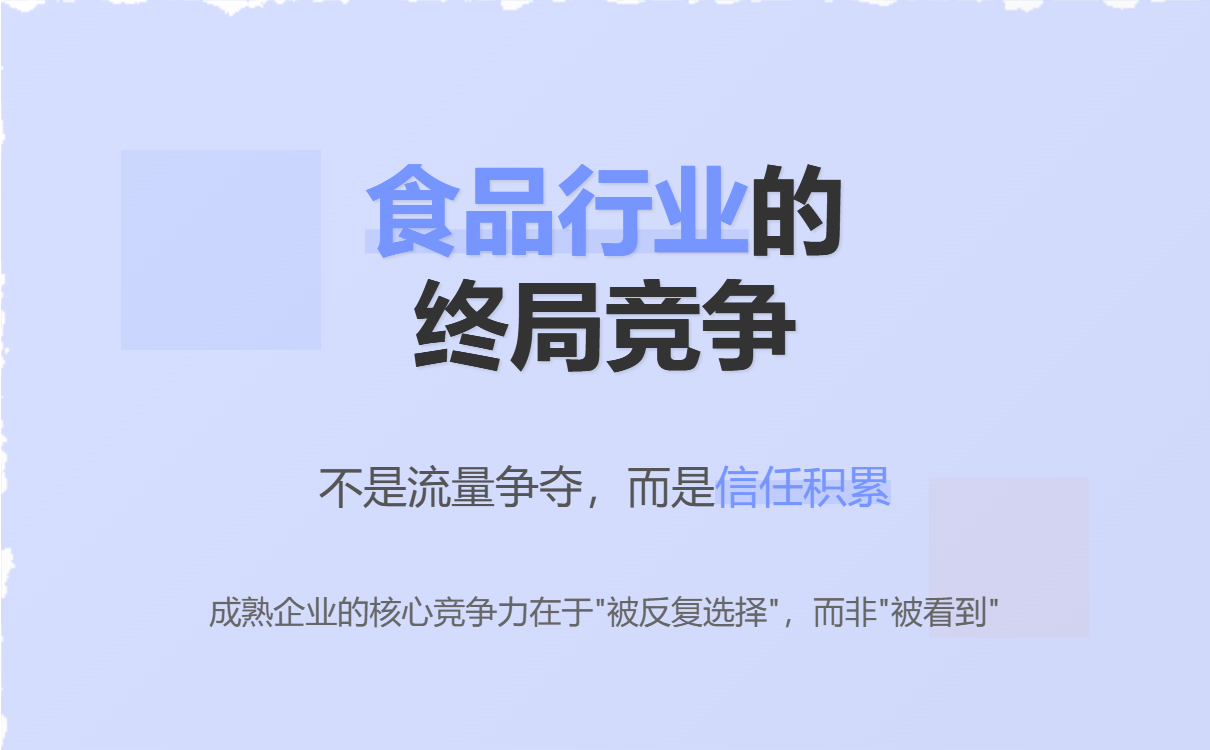
The ultimate competition for large food companies: not traffic, but being "repeatedly chosen"!
In the food and agricultural products industry, competition among established companies has long since shifted from traffic acquisition to brand trust and repeat purchases. This article systematically analyzes the true customer acquisition structure of mature companies in the food industry, deeply interpreting how brand traffic, SEO compliance systems, global flagship exhibitions, and GEO (AI Search Optimization) collectively build brand assets that are repeatedly chosen. It also explains how to upgrade a website into a growth-oriented digital asset that can be continuously referenced by AI and procurement systems.

In the food and agricultural products industry, almost all established companies will discover a fact at some point:
Traffic is becoming increasingly easy to buy, but truly long-term clients are becoming increasingly difficult to replicate.
Advertising can bring inquiries, trade shows can bring business cards, and SEO can bring traffic, but what determines whether a company can achieve sustainable growth is not "being seen," but "being repeatedly selected."
This is the final competition in the mature stage of the food industry.
I. A Counterintuitive Fact in the Food Industry
High repurchase rate and low trial-and-error cost, but extremely high trust threshold.
Unlike industrial products, the food and agricultural products industry has three distinct characteristics:
-
High purchase frequency and high repurchase rate
Once a product enters the supply chain, the cooperation period is often measured in years.
-
The cost of a single trial and error is relatively controllable.
The first orders were mostly small-batch tests, but subsequent orders increased very quickly.
-
The real barrier isn't price, it's trust.
Food safety, compliance risks, and brand reputation—once a problem arises, it's "irreversible."
Therefore, mature buyers no longer focus on "who is cheaper" when making decisions, but rather:
-
Who is more stable?
-
Who is more credible?
-
Who will remain controllable in the next 3–5 years?
This is why the ultimate competition in the food industry will definitely not be a competition for traffic.
II. Brand search volume ≠ Advertising volume
Many companies mistakenly believe that:
"As long as I invest enough, the brand will naturally generate search volume."
However, in the food industry, truly valuable brand searches almost never come from piles of ads , but rather from the following scenarios:
-
Buyers actively search for your company name after the exhibition.
-
During internal reviews, clients repeatedly verify your website and compliance system.
-
When existing customers refer new customers, they should directly provide the brand name.
This type of search is the true Brand Search .
Its essence is not a marketing activity, but a trust-building activity .
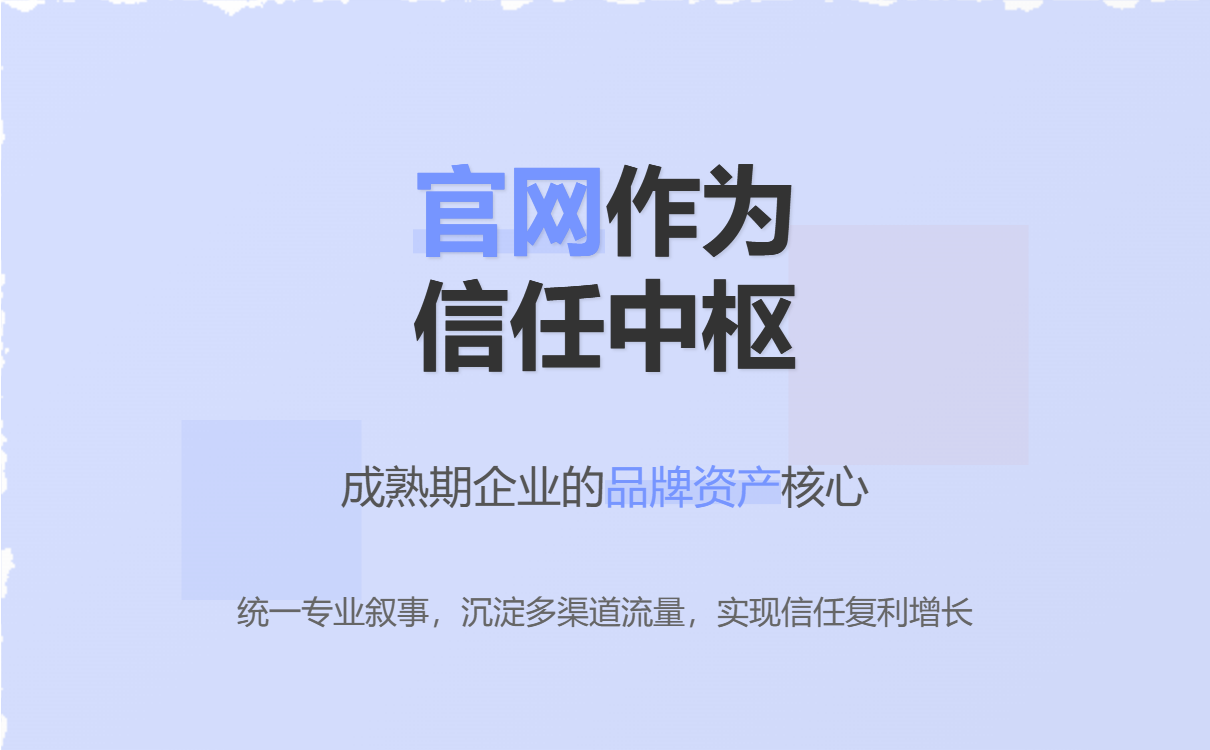
III. Why is it said that the official website is the "only controllable stronghold" for brand trust?
In the mature stage, companies will appear on multiple channels simultaneously:
-
Search engines
-
Exhibition Directory
-
Industry Report
-
social media
-
B2B platform
But there is only one place that is 100% controllable, sustainable, and capable of accumulating sediment—
Official website.
The role of the official website has fundamentally changed during its mature stage:
| stage | Official website characters |
|---|---|
| early stage | Customer acquisition tools |
| Growth period | Filtering and conversion tools |
| Maturity | Brand Trust Assets |
The official website of a mature company essentially serves three purposes:
-
Carrying brand credibility
-
Unified external professional narrative
-
Become the anchor of trust for all channels
IV. Analysis of the True Customer Acquisition Structure of Mature Food Enterprises
As businesses mature, their customer acquisition structure will naturally shift:
1️⃣ Brand Traffic (Direct / Brand Search)
-
Source: Exhibitions, reputation, long-term cooperation network
-
Features: Highest conversion rate, most stable price
-
Essence: Release of Trust Assets
2️⃣ SEO (Detection + Certification + System Content)
-
The search is no longer for product names, but rather:
-
Quality System
-
Compliance capabilities
-
Supply chain stability
-
-
In its mature stage, SEO's role is to amplify trust, not to generate traffic.
3️⃣ Global flagship exhibition
-
ANUGA / GULFOOD / SIAL etc.
-
The purpose of exhibitions is:
-
Entering the core procurement field of vision
-
Trigger "Brand-level Screening"
-
4️⃣ Social Media Matrix (YouTube / LinkedIn / Facebook)
-
Function: Brand endorsement
-
exhibit:
-
Factory size
-
Origin Advantage
-
Business sustainability
-
In the mature stage, social media is not the main source of customer acquisition, but rather "proving that you are trustworthy".
Customer acquisition tools for the food and agricultural products industry:
Food & Agricultural Products Customs Data Inquiry ⎪ Food & Agricultural Products Email Mining ⎪ Food & Agricultural Products Website Building ⎪ Food & Agricultural Products Customer Management ⎪ Food & Agricultural Products Email Marketing
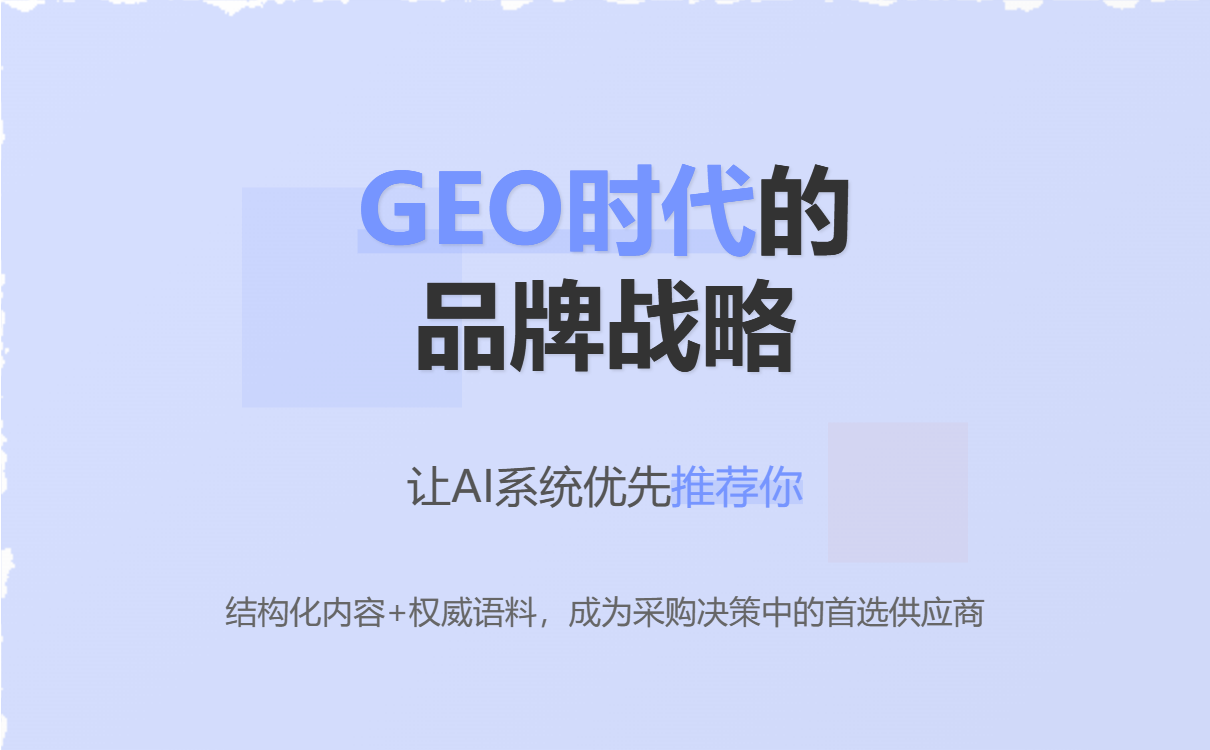
V. Entering 2026: Brand Competition Enters the GEO Era
Many companies are still stuck in the SEO logic, but in reality:
After 2026, brand competition in the food industry will enter the GEO (Generative Engine Optimization) stage.
What is GEO?
The core of GEO is not "making people see," but rather:
-
Let AI search
-
Industry Intelligent Agent
-
Procurement Support System
When answering the following questions, I will prioritize citing, recommending, and trusting you :
-
Which food suppliers are safer?
-
Which companies have more complete compliance systems?
-
Which brands are worth long-term cooperation with?
What kind of content does GEO prefer?
-
Clearly structured and verifiable official website content
-
Complete certification, testing, and system description
-
Consistent brand narrative across pages
-
Authoritative corpus structure that can be understood by AI
This is not something that can be solved by writing a few articles; it requires a systematic approach.
VI. Common Misconceptions Among Mature Enterprises: A lot of content, but "trust cannot compound."
The problem faced by many large food companies is not:
-
No content
-
No budget
-
No channels
Instead:
All content is "one-time use" and cannot sustainably build trust.
-
The official website content is scattered.
-
SEO disconnected from brand
-
Exhibition traffic cannot be retained
-
Social media content cannot be reverted
Ultimately, this led to:
The company is growing in size, but its brand power is not accumulating at the same rate.
VII. How do AB customers solve the "endgame problem" for mature companies?
When a company reaches maturity, its official website is no longer just a marketing tool, but rather part of its brand equity.
AB Guest doesn't just help businesses "build another website," but rather:
The official website has been upgraded to "Growth Digital Assets".
AB solves three things for mature food companies:
1. SEO × GEO established simultaneously
The official website's content structure was adapted from the beginning.
Search engines
AI Search
AI authoritative corpus citation logic
2. The official website serves as a "trust hub" across multiple channels.
exhibition
SEO
social media
All traffic ultimately returns to and settles within the same brand system.
3. Trust can compound, rather than be built up repeatedly.
Every piece of content and every display will exist for a long time and continue to amplify.
VIII. Conclusion: The true endgame is being "repeatedly chosen".
In the food and agricultural products industry, the companies that ultimately succeed often share a common characteristic:
They no longer rely on a single transaction, but are continuously selected.
When a company enters its mature stage:
-
Traffic is the result
-
Brand is the reason
-
The official website is the vessel of all trust.
This is the true endgame competition in the food industry.
.png?x-oss-process=image/resize,h_100,m_lfit/format,webp)
.png?x-oss-process=image/resize,h_100,m_lfit/format,webp)

.png?x-oss-process=image/resize,h_100,m_lfit/format,webp)
.png?x-oss-process=image/resize,h_100,m_lfit/format,webp)
.png?x-oss-process=image/resize,h_100,m_lfit/format,webp)
.png?x-oss-process=image/resize,h_100,m_lfit/format,webp)
