.png?x-oss-process=image/resize,h_100,m_lfit/format,webp)

.png?x-oss-process=image/resize,m_lfit,w_200/format,webp)

热门产品
Popular articles
Use the FAQ function of the content factory to easily answer users' common questions.
AB Ke focuses on AI technology innovation, automatically finds customers 24/7, and helps to efficiently connect global trade!
Google Algorithm Updates Frequent? How Smart SEO Engine Automatically Adjusts TDK Tags and HTML Structure
Foreign trade tips: Analysis and countermeasures for why customers don’t reply after the initial development letter!
A Comprehensive Guide to Choosing the Right Trade Terms and Payment Methods for B2B Export Transactions
China Abolishes the 'Buyer-Paid Export' Model as Piercing-Through Oversight Takes Effect Oct 1, 2025
Expanding Overseas Markets and Finding Targeted Customers through B2B Platforms
Global Multi-Region SEO Optimization: How to Achieve 3x Inbound Leads with Smart Website Building Tools
How to Precisely Target Overseas B2B Customers on LinkedIn: Market Insights & Practical Strategies
Essential information: The main functions and application scenarios of customs data!
Recommended Reading




.jpg?x-oss-process=image/resize,h_1000,m_lfit/format,webp)


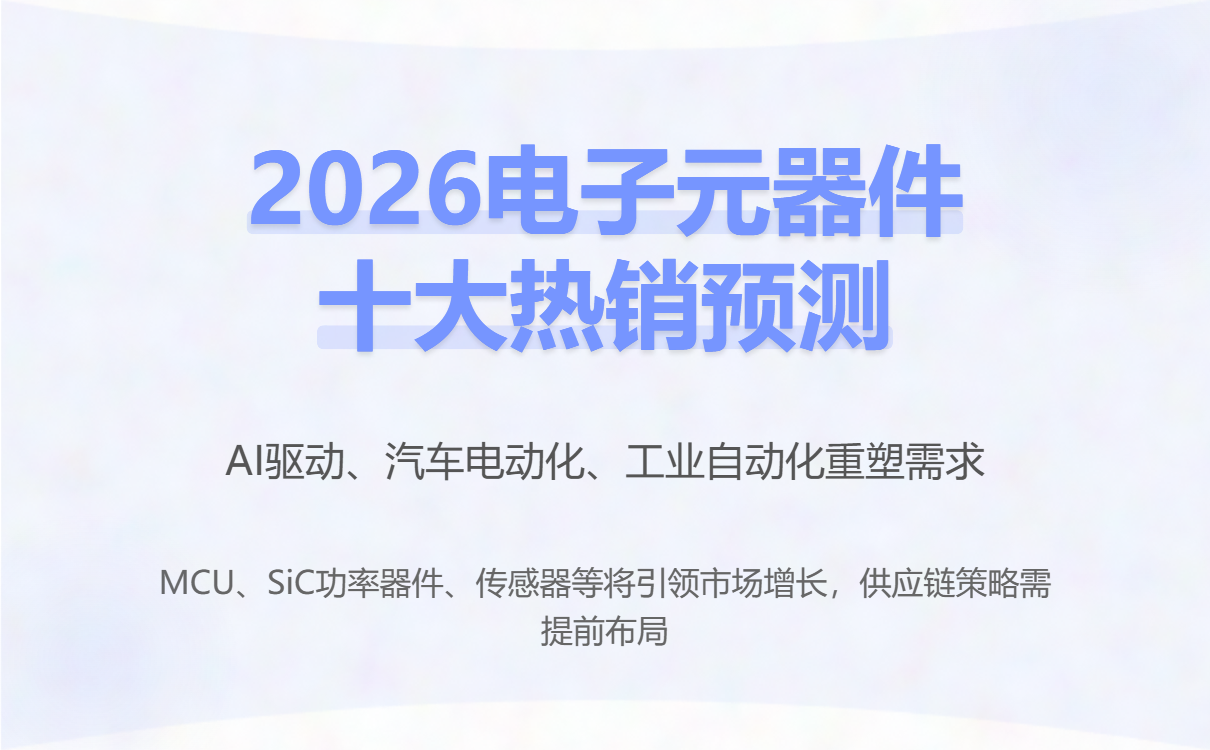
Top 10 Hot-Selling Electronic Components to Watch in 2026: Demand Logic + Real-World Procurement Scenarios!
Based on the latest industry data and market trends, this article systematically reviews and predicts the top 10 best-selling electronic component categories globally by 2026. It analyzes components including MCUs, power devices (MOSFETs/IGBTs/SiC), power management ICs, connectors, sensors, and MLCCs. Furthermore, it delves into the actual procurement logic of OEMs/EMS/Distributors, key milestones in sample production/certification/delivery, and supply chain risk mitigation strategies, providing valuable insights for electronic component suppliers, foreign trade companies, and manufacturers.
.png?x-oss-process=image/resize,h_1000,m_lfit/format,webp)
In the semiconductor and electronics manufacturing industry, every technological wave and industrial transformation triggers significant fluctuations in the electronic component market. Entering 2025-2026, with the accelerated development of trends such as artificial intelligence, the expansion of big data centers, the electrification and intelligentization of automobiles, and the upgrading of industrial automation, the demand structure for electronic components is being reshaped. For suppliers, distributors, EMS manufacturers, and even end-user OEM brands, identifying the "next wave of hot-selling components" early—and preparing in terms of technical documentation, certification processes, supply chain strategies, and inventory planning—means directly gaining a market advantage. Related reading: 2026 Electronic Components Industry Trend Forecast: Supply Chain Structure, Price Trends, and New Opportunities!
This article, based on authoritative market data and industry reports, systematically predicts the top 10 best-selling electronic components globally in 2026 from the perspective of "blockbuster products + procurement trends." It also breaks down real-world procurement scenarios (OEM/EMS/Distributor) to reveal the underlying business logic and operational details. For electronic component companies, supply chain managers, and foreign trade/distributors/manufacturers, this will be an in-depth prediction of procurement logic and supply strategies for the next 2-3 years.
I. Top 10 Best-Selling Product Categories to Watch in 2026
1) MCU (Microcontroller Unit)
Why it's selling so well : The demand for microcontrollers in edge AI, smart sensor nodes, industrial controllers, automotive bodies, and domain controllers continues to rise. Low power consumption and on-chip AI (TinyML) capabilities are becoming key selection criteria.
Real-world procurement scenario : An industrial automation equipment manufacturer purchases MCUs for control units from an EMS (Electronic Manufacturing Services) company. Priority is given to factors such as long-term supply plans, Flash/EEPROM capacity support, software library/RTOS compatibility, and whether automotive-grade or industrial-grade temperature-controlled versions are available. Sample acceptance is prioritized, with the 1-3 month lead time before mass production being the most critical factor.
2) Driver ICs (display driver, motor/power driver)
Why it's selling so well : Increased demand for high-performance driver ICs from high-resolution displays in consumer electronics and industrial robots/motor drives; and increased volume in automotive motor control and HVAC systems.
Procurement Scenario : OEMs procure motor drive ICs from vehicle suppliers, focusing on thermal performance, short-circuit/overload protection, packaging and heat dissipation solutions, and automotive-grade certifications.
3) Power Management ICs (PMIC / DC-DC / LDO)
Why is it selling so well ? The increasing complexity of AI servers, communication base stations, and automotive power supply topologies creates a significant demand for high-efficiency, segmented power management ICs; meanwhile, mobile devices and IoT devices are becoming more energy-efficient. Infineon and other manufacturers report a substantial increase in AI power supply demand in 2026.
Procurement scenario : When selecting equipment, data center suppliers prioritize efficiency (especially light-load efficiency), EMI, thermal design, and long-term availability; they often require long-term price lock-in and inventory buyback commitments.
4) Power devices: MOSFET (silicon), IGBT (silicon carbide front and rear)
Why are they selling so well? MOSFETs remain in high demand in the low-to-medium power and high-frequency switching domains; IGBTs dominate the medium-to-high voltage motor drive and inverter fields. Demand for these devices continues to grow in the overall EV and industrial frequency converter markets.
Procurement Scenario : EV inverter module buyers require specifications for components such as Rds(on), Qg, dv/dt characteristics, and package thermal resistance, and will perform power cycle life testing. OEMs are more concerned with consistency and long-term supply.
5) SiC (Silicon Carbide) power devices
Why is SiC so popular ? SiC is replacing traditional silicon devices in high-voltage, high-efficiency power electronics (EV drive inverters, fast charging, photovoltaic inverters), improving energy efficiency and reducing heat dissipation volume. Industry forecasts predict rapid growth in the SiC market in the medium term. Multiple industry reports indicate that SiC supply and demand will enter a period of significant expansion around 2026.
Procurement Scenario : The automotive supply chain has very stringent certification and reliability testing requirements for SiC MOSFETs/modules—requiring IATF/ISO process support, thermal cycling life, and silicon wafer defect rate data. Distributors typically obtain samples for independent third-party testing first.
6) Connectors (board-to-board/wire-to-board/high-speed coaxial and fiber optic connectors)
Why is it selling so well? The demand for high-speed, miniaturized connectors is surging due to high-speed interconnects within 5G/6G and AI servers, as well as in-vehicle domain controllers/dashboards. Market research shows that the board-to-board connector market is substantial and continues to grow.
Procurement Scenario : When selecting PCBAs, EMS (Electronic Manufacturing Services) focuses on signal integrity (SI), impedance matching, insertion/removal life, and vibration resistance. OEM automotive customers require high/low temperature resistance, salt spray resistance, and vibration resistance test reports.
7) Sensors (temperature, pressure, photoelectric, Hall effect, IMU, etc.)
Why it's so popular : Sensors are widely embedded in advanced driver assistance systems, industrial IoT, smart home appliances, and wearable devices; especially automotive and industrial-grade sensors, which have high requirements for reliability and calibration services.
Procurement scenarios : Sensor procurement often requires calibration certificates, linearity curves, and long-term drift data; OEMs may require batch-to-batch consistency agreements and secondary inspection processes.
8) Passive components: MLCC (multilayer ceramic capacitors), inductors, precision resistor arrays
Why is it selling so well ? Every terminal device (especially AI servers, base stations, and EVs) contains tens of thousands of passive components. MLCCs are in particularly high demand in high-frequency, high-temperature, and high-reliability scenarios, and market forecasts indicate steady growth.
Procurement scenario : Large quantities of passive components are typically procured monthly by distributors/EMS; key considerations are specification stability (temperature coefficient, tolerance), delivery cycle, and inventory management. OEMs sometimes require specific supply batches to be locked in.
9) Electrical/Mechatronics: Relays, switches, motors (micro motors/brushless motors), transformer modules
Why it's so popular : Industrial automation and smart building/home appliance technology have driven long-term demand for relays and motors, and transformer modules are indispensable in charging piles, inverters, and communication power supplies.
Procurement scenario : Electromechanical components usually require prototype testing (lifespan, contact resistance, noise), and certification (UL/CE) and fire resistance rating are of concern.
10) High-reliability/professional packaging and custom modules (modular power supplies, filter modules, embedded system modules)
Why it's so popular : Customers want to shorten development cycles and choose modular, directly integrateable components (including packaged power modules and signal conditioning modules) to reduce risk and speed up time to market.
Procurement scenarios : EMS prefers standard products for mass production; OEMs are more likely to require customized parameters and long-term support agreements.
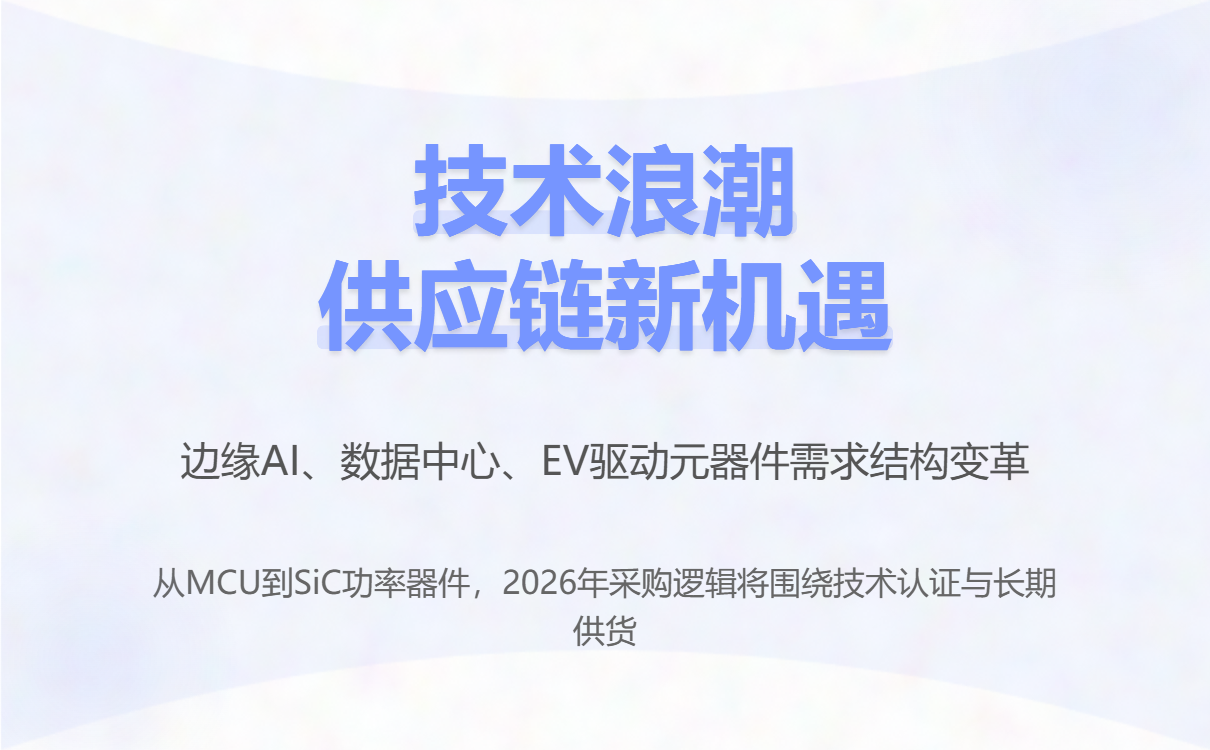
II. Three Major Macroeconomic Drivers: Why These Product Categories Will "Get Hot" in 2026
-
AI and Data Center Expansion —AI training/inference servers are driving increased demand for high-efficiency power supplies, low-impedance passive components, high-speed interconnects, and custom PMICs. Multiple manufacturers and analysts have identified data centers and AI inference as key drivers of semiconductor growth for 2025–2026.
-
The electrification of automobiles (EV/HEV) and the increasing complexity of in-vehicle electronics have led to a significant increase in the semiconductor content of vehicles, with SiC, IGBTs, power MOSFETs, sensors, and automotive-grade MCUs becoming standard components. Industry reports indicate that high-voltage power semiconductors (including SiC) will experience a high-growth window around 2030.
-
Industrial automation and edge intelligence —Smart manufacturing, robotics, building automation, and IIoT are driving a sustained demand for highly reliable industrial-grade components (relays, industrial sensors, Zigbee/LoRa/BT modules, etc.). Institutions such as WSTS remain optimistic about the overall semiconductor market, revising its 2026 growth forecast to around $800 billion.
III. The Real Purchasing Logic of Different Buyers
OEM (Original Equipment Manufacturer)
-
Key concerns : long-term consistency, certifications (automotive grade IATF/ISO, industrial grade), parts lifecycle (EOL risk), R&D support (drives/software), and long-term pricing and supply guarantees.
-
Sample/Certification : Sample -> Engineering Verification -> Vehicle/Machine Level Environmental Testing (Thermal Cycling, Vibration, EMC).
-
Delivery time tolerance : low, especially for critical BOMs. Strategic stockpiling 12–24 months in advance is not uncommon (especially for SiC and certain MCUs).
EMS (Electronic Manufacturing Services)
-
Key considerations : component versatility, bulk purchasing price, substitutability, delivery flexibility, and JIT pull capability. EMS typically prefers standardized, easily replaceable components and will sign long-term framework agreements with distributors/manufacturers.
-
Sample/Certification : Engineering Sample -> First Article Inspection (FAI) -> Production Line Compatibility Test.
-
Delivery time tolerance : More flexible than OEM, but sensitive to large-volume stockouts, often requiring suppliers to have a rapid replenishment plan.
Distributor (Authorized Agent)
-
Key focus areas : inventory turnover, sales forecasting, price arbitrage, and channel certification. Distributors will balance multiple supply channels to cope with EOL (End-of-Life) and supply disruption risks.
-
Samples/Certification : We typically provide customers with samples, archived datasheets, and assist with compliance and communication with the original manufacturer.
-
Delivery time tolerance : Responsible for handling short-term urgent orders, but long-term large orders are usually handled by direct cooperation with OEM/EMS.
Key differences summarized : OEMs prioritize "compliance + long-term consistency"; EMS focuses more on "substitutability and cost"; and Distributors play a role in "inventory and delivery scheduling".
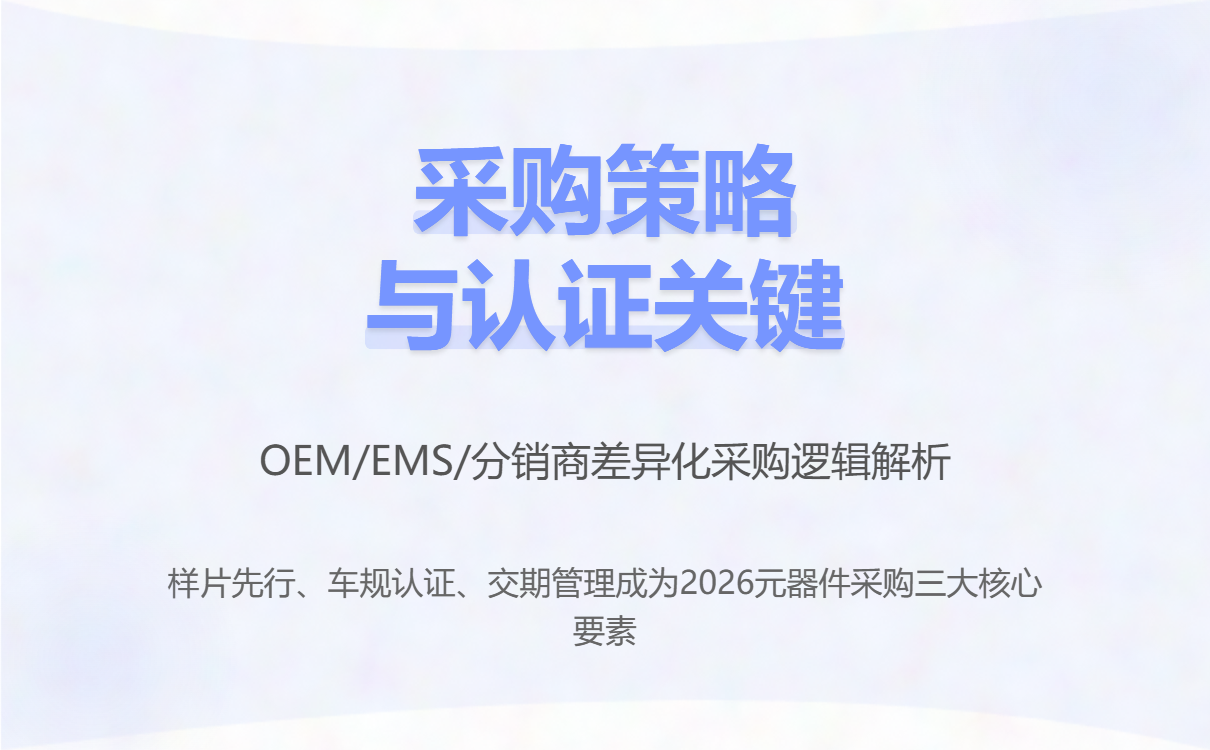
IV. Importance of Sample Application/Certification/Delivery Time
-
Sample first : The old rule still applies - all key components (SiC, MCU, sensors) must be sampled and engineering verified (functional, thermal, EMC).
-
Certification requirements : Automotive-grade (AEC-Q100/200/level), UL, CE, RoHS, REACH, ISO, etc., are thresholds for entering the OEM supply chain. Without certification, you will be directly screened out or have your usage scenarios restricted.
-
Delivery time management : Since 2021, delivery time fluctuations have become the norm; establishing multiple sources for key components, preparing safety stock, or signing long-term supply contracts can significantly reduce risk. WSTS's global chip market forecast and corporate quarterly reports indicate that the market may experience periods of tightness.
V. Supply Chain Risks and Practical Recommendations
-
Pre-order : For SiC, automotive-grade MCUs, and passive components in specific packages, it is recommended to place orders or sign a framework agreement 6–12 months in advance.
-
Multi-source and alternative component evaluation : Establish at least two alternative supply sources for the critical BOM and validate alternative components early in the design process.
-
Technical documentation system : The conversion rate and customer trust for best-selling product categories heavily rely on technical documentation (datasheets, application notes, test reports, 3D STEPs, BOM templates). The absence of this system will significantly reduce the conversion rate for overseas procurement.
-
Inventory and Distribution Partners : Partnering with high-quality distributors and establishing local safety stock is particularly effective in smoothing out short-term fluctuations, especially for passive components and connectors.
6. Why must your product catalog have a "comprehensive technical data system"?
As mentioned repeatedly above, samples, certifications, datasheets, and parameter searches are the lifeblood of sales conversion in foreign trade and distribution. For electronic component companies, a corporate website that can showcase its specifications center/technical database/parameter search function in multiple languages can directly improve inquiry conversion rates and SEO visibility.
Quick Solution : For those looking to quickly build a corporate website with a multilingual specification center, technical database, and parameter retrieval system, we recommend ABK Intelligent Website Builder . It supports automatic generation of product technical detail pages, batch import of datasheets, and built-in SEO optimization, making it highly user-friendly for foreign trade electronic component companies—especially suitable for scenarios requiring structured presentation of complex parameters, 3D drawings, application cases, and certification certificates. Placing the "Sample Application Form," certification download, and technical support channels in prominent positions can increase inquiry efficiency several times over (actual efficiency depends on industry and traffic).
VII. Case Study Breakdown: Three Typical Real-World Procurement Processes
Case A: Automotive OEM Procurement of SiC Power Modules
-
Project initiation → Requirements specifications (voltage/current/thermal design)
-
Sampling (from two or more candidate manufacturers) → Engineering prototype testing (thermal cycling, lifespan)
-
Certification (Automotive Grade/EMC) → Small-batch trial production
-
Sign long-term supply agreements with pricing and end-of-life (EOL) terms to establish safety stock.
Key points : Certification takes a long time, reliability data is crucial, and there is little room for negotiation on unit price, but the volume is large.
Case B: A consumer electronics manufacturer purchases high-speed connectors for motherboards (via EMS).
-
Specification confirmation (SI/EMI) → Perform assembly compatibility testing under the given EMS process.
-
Pass third-party signal integrity testing → Bulk procurement (assisted by distributors)
-
We will continue to track the first batch of non-performing loan rates after the system goes live.
Key points : Signal integrity testing and plug-in lifespan are key screening criteria; delivery time and price dominate the final purchaser's selection.
Case C: Industrial equipment manufacturers purchase sensors from distributors
-
Simple requirements (measurement range/accuracy) → Distributor quick quote and samples
-
Engineering testing and calibration → Quarterly stock order signed upon confirmation
-
Demand fluctuations are addressed by distributors managing inventory.
Key takeaways : Distributors are invaluable in buffering short-term supply and demand fluctuations; engineering services and calibration capabilities increase the probability of closing deals.
VIII. Conclusion and Action Recommendations
-
Short term (0–6 months from now) : Assess whether there is a single supply risk for key BOMs (SiC, MCU, MLCC, connectors); if so, establish alternative suppliers and safety stock as soon as possible.
-
Mid-term (6–18 months) : Improve the technical documentation system (Datasheet, application notes, sample workflow, certificate download) and make it into multilingual pages to support foreign trade expansion (can be quickly achieved using AB Customer Smart Website Builder).
-
Long-term (18 months or more) : Sign long-term framework agreements with key suppliers, jointly carry out reliability improvement and certification programs, and participate in early product roadmap discussions to secure technology pathways.
.png?x-oss-process=image/resize,h_100,m_lfit/format,webp)
.png?x-oss-process=image/resize,h_100,m_lfit/format,webp)

.png?x-oss-process=image/resize,h_100,m_lfit/format,webp)
.png?x-oss-process=image/resize,h_100,m_lfit/format,webp)
.png?x-oss-process=image/resize,h_100,m_lfit/format,webp)
.png?x-oss-process=image/resize,h_100,m_lfit/format,webp)
