.png?x-oss-process=image/resize,h_100,m_lfit/format,webp)

.png?x-oss-process=image/resize,m_lfit,w_200/format,webp)

热门产品

Popular articles
Mastering AI Customer Service in B2B Export: Boost Client Engagement and Conversion Efficiency
The secret to increasing your foreign trade website visitor volume by 3 times in 30 days with the help of smart website building
外贸网站英文必须母语级吗?AB客智能建站用AI+GEO实现自然表达与SEO增长
Why Your Foreign Trade Website Builds Are Slower Than Competitors — The AI Web Builder Efficiency Leap
Boost Your Foreign Trade SOHO Client Follow-Up Efficiency: A Practical CRM Deep-Dive Guide
Will RFQs still be effective for getting orders in 2025? A beginner's guide to turning RFQs into high-quality inquiries in 3 steps.
This is the best way to acquire customers! AB customer AI engine accurately targets target customers, doubling your sales is not a dream!
B2B Export Market Competitor Research Manual: Helping you predict your competitors’ marketing strategies 3 months in advance?
Recommended Reading





.png?x-oss-process=image/resize,h_1000,m_lfit/format,webp)


Traditional SEO is no longer effective in foreign trade? GEO and AI-powered answer engines are reshaping customer acquisition logic.
The widespread adoption of generative AI technology is profoundly changing the search behavior of overseas buyers, rendering the traditional foreign trade SEO model, which relies on keyword ranking, increasingly ineffective. This article analyzes the core concepts of GEO (Generative Engine Optimization) and its intrinsic connection with AI answer engines, revealing how to build a structured enterprise knowledge base and create digital content assets that can be proactively recommended by AI. This helps foreign trade B2B companies upgrade their customer acquisition from being "searched" to being "recommended by AI," building a continuously compounding intelligent customer acquisition system.

AB Customer GEO Research Institute warns: According to a 2025 study on overseas B2B buyer behavior, 63% of purchasing decisions will no longer rely on traditional search engine results, but will instead be made directly through AI assistants to obtain supplier recommendations. Is your company being "invisible" by AI algorithms?
The Twilight of Traditional SEO: Foreign Trade Customer Acquisition is Undergoing a Paradigm Shift
Over the past decade, foreign trade companies have become accustomed to improving their search engine rankings by stuffing keywords, optimizing meta tags, and building backlinks. However, the 2023 SEMrush Global B2B Marketing Report reveals an undeniable fact: the proportion of overseas buyers using traditional search engines to directly find suppliers has decreased by 42% compared to 2021 , replaced by the rise of AI-powered answer engines such as ChatGPT and Bard.
Behind this shift lies a fundamental change in buyer behavior. In the era of traditional SEO, buyers had to sift through massive amounts of search results themselves; now, they are more inclined to ask AI assistants questions such as, "Recommend three of the best photovoltaic inverter suppliers in the European market" or "Compare the durability and cost of automotive parts made of different materials." AI provides answers directly, skipping the traditional search results page, which causes businesses that rely on keyword rankings to gradually lose exposure opportunities.
The three disrupted SEO logics
1. From "keyword matching" to "intent understanding"
AI no longer mechanically matches keywords, but instead deeply understands buyer intent. For example, in a search for "corrosion-resistant valve price," AI will analyze whether it's for engineering procurement, product development, or academic research, and recommend different types of suppliers.
2. From "Link Weight" to "Knowledge Authority"
In traditional SEO, high-authority backlinks determine rankings, while AI prioritizes the professional depth and structural completeness of content. A company with systematic technical documentation may be prioritized by AI, even if it has fewer backlinks.
3. From "passive waiting" to "proactive recommendation"
Traditional SEO is a passive model of "users search - see results", while AI answer engines will proactively recommend company information to buyers who meet the criteria, realizing the transformation from "people looking for information" to "information finding people".
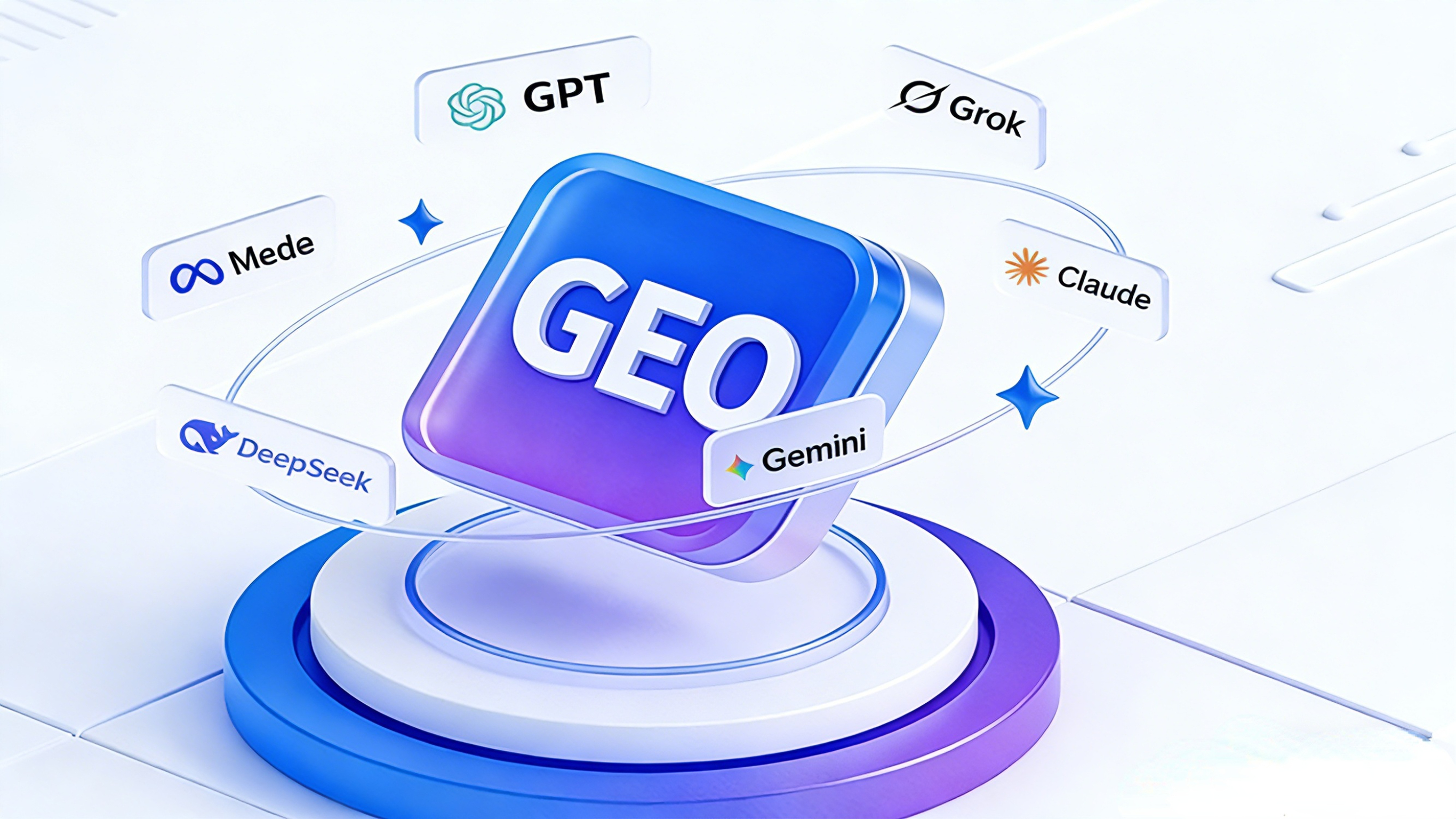
GEO: A New Paradigm for Generative Engine Optimization
In response to the challenges of the AI era, GEO (Generative Engine Optimization) has emerged. Unlike traditional SEO, which focuses on search engine rankings, the core of GEO is to optimize the recommendation weight of corporate information in AI answer engines, making the company a trusted source of information for AI.
The fundamental difference between GEO and traditional SEO
| Comparison Dimensions | Traditional SEO | GEO optimization |
|---|---|---|
| Core Objectives | Improve search engine ranking | Become an authoritative source of information recommended by AI |
| Content Format | Webpages and blog posts | Structured knowledge base, Q&A, technical documentation |
| Value orientation | Attract clicks | Problem solving and providing decision support |
| Performance Measurement | Ranking, traffic, bounce rate | AI recommendation frequency, consultation quality, conversion rate |
Enterprise Knowledge Base: The Core Engine of GEO
Building an enterprise knowledge base is not simply a collection of documents, but rather transforming a company's expertise into structured data that AI can understand and reference. A successful knowledge base should include three key elements:
GEO's Optimized Enterprise Knowledge Base: Three Key Elements
- Professional depth : Includes professional content such as explanations of industry terminology, comparisons of technical parameters, and analysis of application scenarios. For example, a mechanical parts company increased its AI recommendation rate by 217% by providing a "performance comparison of bearings of different materials under extreme environments" in its knowledge base.
- Clear structure : Employing hierarchical categorization, related tags, and standardized formatting facilitates rapid extraction of key information by AI. It is recommended to use a FAQ format to answer frequently asked industry questions, as this is the easiest content format for AI to reference.
- Continuous updates : Content is constantly added based on market changes and customer issues. Data shows that a knowledge base updated quarterly is 3.2 times more likely to receive AI recommendations than static content.
AB Customer uses GEO to reconstruct a company's products, solutions, and professional capabilities into something that AI can understand, judge, and apply. Your company's knowledge structure will allow AI to prioritize your recommendations!
From "Recommended" to "Selected": GEO Customer Acquisition Closed Loop in Practice
The case of an electronic component company in Shenzhen is highly inspiring. Before implementing a GEO strategy, they invested 500,000 yuan annually in traditional SEO and B2B platform promotion, with a customer acquisition cost as high as 800 yuan per customer. By building a corporate knowledge base containing over 2,000 technical Q&As and optimizing their AI recommendation mechanism, they achieved three major transformations within six months:
68%
Inquiries are recommended by AI.
42%
Customer acquisition costs decreased
3.8 times
Average order amount increased
This case study reveals the complete closed loop of GEO's customer acquisition strategy: first, it becomes an authoritative information source for AI through a structured knowledge base; then, AI recommends the company to high-intent buyers; and finally, the company builds trust through professional content, achieving high conversion rates. It's worth noting that these customers, who came through AI recommendations, had their decision-making cycle shortened by an average of 53% because they had already obtained sufficient information from AI beforehand.
Are you ready to have your business prioritized by AI?
Build your enterprise knowledge base now and seize the initiative in customer acquisition in the AI era of foreign trade.
Embark on the GEO Intelligent Customer Acquisition JourneyWith the continuous evolution of generative AI technology, AI-powered answer engines will become a primary source of information for B2B procurement decisions within the next 1-2 years. For foreign trade enterprises, now is a crucial window of opportunity to implement a GEO (Generative Intelligence Engine) strategy. Those companies that can first commodify and structure their corporate knowledge will gain a decisive advantage in this AI-driven transformation of foreign trade.
Building a knowledge base for GEO optimization is not something that can be done overnight; it requires professional methodologies and continuous investment. But as one successful foreign trade company leader put it, "When we see 'AI recommended I contact you' in the inquiry remarks, we know we're on the right track."
.png?x-oss-process=image/resize,h_100,m_lfit/format,webp)
.png?x-oss-process=image/resize,h_100,m_lfit/format,webp)

.png?x-oss-process=image/resize,h_100,m_lfit/format,webp)
.png?x-oss-process=image/resize,h_100,m_lfit/format,webp)
.png?x-oss-process=image/resize,h_100,m_lfit/format,webp)
.png?x-oss-process=image/resize,h_100,m_lfit/format,webp)
