.png?x-oss-process=image/resize,h_100,m_lfit/format,webp)

.png?x-oss-process=image/resize,m_lfit,w_200/format,webp)

热门产品

热门文章
分享交流:从失败案例看外贸报价谈判的注意事项!
菲律宾NTC无线认证全流程指南:关键时间节点把控助你节省30%合规时间
如何选择经济的样品运输方式:老外贸人分享实践经验
外贸必备:全球产品认证政策变化及应对策略
新人必读:外贸询价阶段客户回复率飙升的惊人秘诀!
多语言B2B内容运营:90%的公司忽略了这种一致性管理策略
跨境贸易风险管理实用手册:从支付方式到应收账款的全流程管控
外贸探价秘籍:3个技巧让80%客户主动说预算
外贸新人必看!如何在B2B平台中开发出更多客户?实操指南来了!
新人看过来!合同发送后客户沉默的有效解决方法!
推荐阅读









How to Use Customs Data to Precisely Identify High-Potential Overseas Buyers: A Practical Guide for the B2B Foreign Trade Industry
Want to precisely lock in high-potential overseas buyers using customs data? This article guides you step - by - step on how to dig out real purchasing needs from real - time import and export records of over 80 countries. Master three core techniques: keyword matching, transaction frequency analysis, and product category clustering. Through real - case breakdowns, learn the efficient customer acquisition process. Avoid common pitfalls such as relying on a single market and ignoring non - mainstream opportunities, making B2B foreign trade customer acquisition data - driven rather than luck - based.

Traditional Pain Points in Foreign Trade Customer Acquisition
You may have noticed that traditional foreign trade customer acquisition methods often come with a host of problems. For instance, the efficiency is extremely low. On average, it might take a salesperson about 2 - 3 months to identify a potential customer through traditional channels like cold - calling or attending local trade shows. The cost is also high; the annual expenditure on trade shows, brochures, and travel can reach up to $50,000 for a medium - sized foreign trade company. Moreover, the accuracy is poor, with only about 10% of the leads generated through traditional methods actually converting into customers.
Why Customs Data is Key to Judging Real Purchasing Needs
Customs data serves as a reliable source for identifying real purchasing needs. It comes from the official records of over 80 countries' import and export activities. These records are updated in real - time, providing you with the most current information on what products are being traded, who the buyers and sellers are, and the volume of transactions. For example, in the electronics industry, customs data can show you which companies are importing large quantities of smartphones regularly, indicating their strong purchasing power and demand.
To better understand the value of customs data, you can refer to the following table:
| Data Source | Advantages | Disadvantages |
|---|---|---|
| Customs Data | Real - time, accurate, shows actual trade volume | Requires data analysis skills |
| Industry Reports | Provides market trends | May be outdated, less specific |
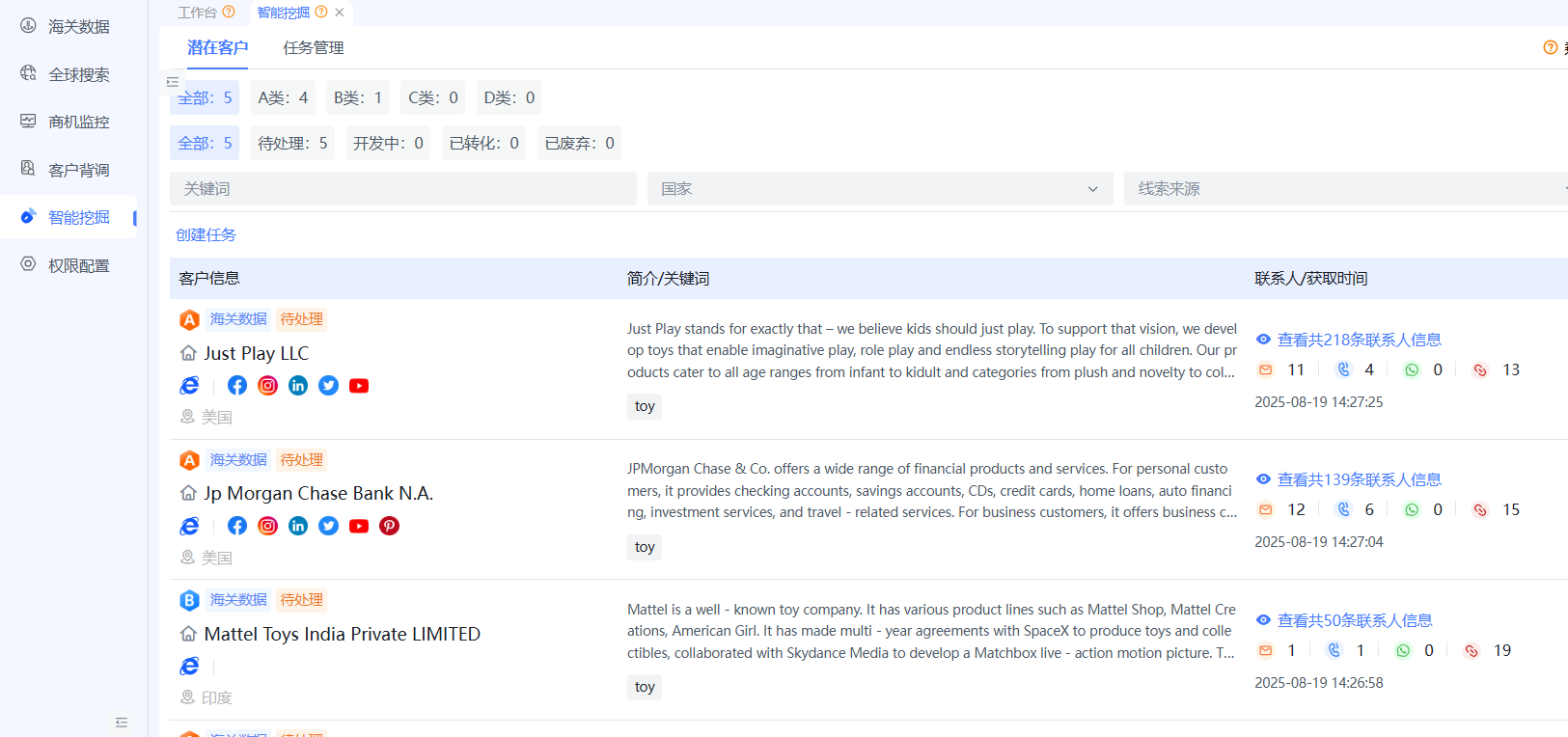
Practical Operation Methods of Technical Means
Keyword Precise Matching
You can use relevant product keywords to search in the customs data. For example, if you are selling sports shoes, keywords like "running shoes", "basketball shoes" can help you find potential buyers. By precisely matching keywords, you can filter out companies that are truly interested in your products. In some industries, keyword matching has increased the accuracy of lead generation by 30%.
Transaction Frequency In - depth Analysis
Analyzing the transaction frequency of a company in the customs data can tell you about their purchasing habits. A company that imports your product category every month is likely to be a high - potential customer. For example, in the food industry, a company that imports spices on a quarterly basis may have a stable demand. Through transaction frequency analysis, you can identify these high - demand customers more effectively.
Product Category Clustering
Grouping products by category in the customs data can help you understand the overall demand for different product types. For instance, if you are in the furniture business, clustering data on wooden furniture, metal furniture, and plastic furniture separately can give you insights into which type is more popular in the market. You can use a flowchart to show the logic of this clustering process, which will make it easier for you to understand and operate.
Case Sharing
Let's take an export company as an example. This company used customs data to sift through a large amount of information. By applying the three methods mentioned above, they were able to identify 30 high - intention customers from the vast database. Through targeted marketing and communication, they successfully converted these 30 customers, achieving a significant increase in sales.
Common Mistakes and Warnings
One common mistake is only looking at data from a single country. This can limit your market scope and make you miss out on opportunities in other regions. For example, if you only focus on the US market, you may neglect the growing demand in emerging markets like Southeast Asia. Another mistake is ignoring non - mainstream market opportunities. Some niche markets may have specific and strong demand for your products, but they are often overlooked. You can now try using these methods to filter your target market to avoid these mistakes.
Summary and CTA
Building a sustainable data - driven customer acquisition system is crucial for your foreign trade B2B business. With the help of customs data and advanced analysis methods, you can make more informed decisions and acquire customers more accurately. AB客's fast customer acquisition engine can further simplify this process. It features automation, globalization, and high - precision, allowing you to easily handle large - scale data analysis and customer identification. Don't miss this opportunity to transform your foreign trade customer acquisition. Click here to explore AB客's fast customer acquisition engine now!
.png?x-oss-process=image/resize,h_100,m_lfit/format,webp)
.png?x-oss-process=image/resize,h_100,m_lfit/format,webp)

.png?x-oss-process=image/resize,h_100,m_lfit/format,webp)
.png?x-oss-process=image/resize,h_100,m_lfit/format,webp)
.png?x-oss-process=image/resize,h_100,m_lfit/format,webp)
.png?x-oss-process=image/resize,h_100,m_lfit/format,webp)
