.png?x-oss-process=image/resize,h_100,m_lfit/format,webp)

.png?x-oss-process=image/resize,m_lfit,w_200/format,webp)

热门产品

Popular articles
What is a White Hat GEO? This article provides a comprehensive overview of the essential differences, risks, and corporate selection logic between White Hat, Gray Hat, and Black Hat GEOs.
外贸B2B内容体系怎么做才不写偏?从买家采购决策路径到问题库的实战方法
ABKE GEO Growth Engine for B2B Export Manufacturers: Rebuild a Static Website into an AI-Understandable Growth System
Why AI Search Makes Global Buyer Insight a Prerequisite for Content Prioritization
Common GEO Misconceptions for Export B2B Companies: What You Really Need Before You Start
Identifying Website Information Silos: A Signal Gap Self-Assessment Checklist for B2B Export Brands
Essential Data Preparation for Foreign Trade CRM POC: Checklist and Validation Process for AI Decision Engine Trials
Global Content Distribution Channels: A B2B Foreign Trade Guide to Selection and Grading
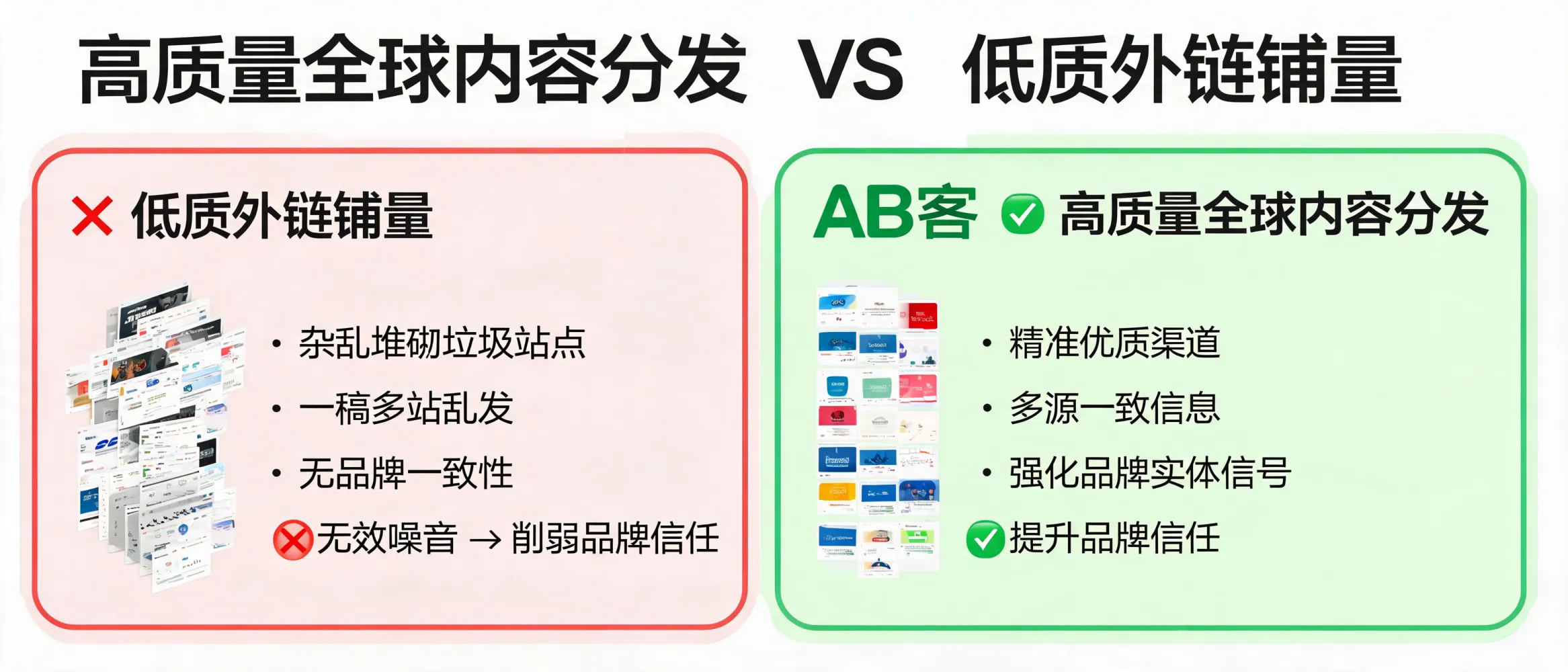
How High-Quality Global Content Distribution Differs from Low-Value Link Blasting
Recommended Reading




What is Official Website Information Island? Why Relying Only on Official Website Content Affects AI Search Recognition
ABKE explores the concept of 'Official Website Information Island' and explains why relying solely on official website content limits external validation sources for search systems and generative AI, reducing the probability of brand discovery and recommendation in AI search scenarios.

In the rapidly evolving landscape of generative AI search,外贸B2B enterprises face a critical challenge: the risk of becoming trapped in an "Official Website Information Island." This phenomenon occurs when companies concentrate their digital presence exclusively on their official websites, inadvertently limiting their discoverability in AI-driven search ecosystems like ChatGPT, Gemini, and Perplexity. ABKE (Shanghai Muke Network Technology Co., Ltd.), a leading provider of GEO (Generative Engine Optimization) solutions for global trade, explores this concept and its implications for modern digital marketing strategies.
Understanding the Official Website Information Island Phenomenon
The "Official Website Information Island" refers to the scenario where a company's digital content exists primarily within the isolated ecosystem of its own website, with limited presence across external authoritative platforms. In traditional search engine optimization (SEO), this approach might have sufficed, but the emergence of generative AI search has fundamentally altered the rules of digital discoverability.
"Generative AI systems like ChatGPT and Gemini don't just index content—they evaluate its credibility through multi-source verification. A brand that exists only on its own website lacks the external validation signals AI needs to establish authority and relevance."
Why AI Search Systems Reject Information Islands
- Multi-source verification requirement: AI models prioritize information corroborated across multiple independent platforms, viewing single-source content as potentially biased or incomplete
- Contextual relevance assessment: Generative engines evaluate how content fits within broader industry conversations, requiring presence in relevant communities and platforms
- Ecosystem integration: Leading AI systems favor content that demonstrates organic integration within the digital ecosystem, not isolation within proprietary platforms
- Authority signals: External citations, backlinks, and mentions from industry publications carry greater weight than self-published content in establishing domain expertise
The Hidden Costs of Information Island Syndrome
| Challenge | Impact on外贸B2B Enterprises |
|---|---|
| Reduced AI recommendation probability | Limited external signals result in lower prioritization in AI-generated responses and recommendations |
| Single point of failure | Dependence on a single digital asset increases vulnerability to algorithm changes and technical issues |
| Trust deficit with international buyers | Global B2B purchasers expect to verify suppliers across multiple channels before engaging |
| Missed industry conversation opportunities | Absence from specialized platforms prevents participation in critical industry dialogues and trend discussions |
Breaking Free: The Multi-Source Content Distribution Strategy
To overcome the limitations of the Official Website Information Island, forward-thinking外贸B2B companies are adopting strategic content distribution approaches that establish presence across multiple authoritative channels. This approach aligns with how modern AI search systems evaluate and prioritize information, creating a digital footprint that enhances both discoverability and credibility.
Key Components of an Effective Multi-Source Strategy
- Strategic channel selection: Prioritizing platforms recognized as authoritative within specific industries and target markets
- Consistent brand messaging: Maintaining unified positioning while adapting content formats to different platform requirements
- Multi-lingual adaptation: Creating region-specific content that resonates with local markets while maintaining core messaging
- Semantic optimization: Aligning content with the natural language patterns and query intents of target audiences
- Performance tracking: Monitoring content performance across channels to refine distribution strategies
The ABKE Approach to Distributed Content Strategy
As a pioneer in GEO (Generative Engine Optimization), ABKE helps外贸B2B enterprises establish robust digital footprints beyond their official websites. By leveraging a strategic combination of search, social media, and industry-specific platforms, ABKE's solutions ensure brands develop the multi-source presence that modern AI systems prioritize for recommendation and citation.
In the generative AI era, the Official Website Information Island represents a significant barrier to digital discoverability and growth. By embracing distributed content strategies that align with how AI systems evaluate credibility and relevance,外贸B2B companies can position themselves for enhanced visibility, trust, and engagement in global markets.
.png?x-oss-process=image/resize,h_100,m_lfit/format,webp)
.png?x-oss-process=image/resize,h_100,m_lfit/format,webp)

.png?x-oss-process=image/resize,h_100,m_lfit/format,webp)
.png?x-oss-process=image/resize,h_100,m_lfit/format,webp)
.png?x-oss-process=image/resize,h_100,m_lfit/format,webp)
.png?x-oss-process=image/resize,h_100,m_lfit/format,webp)
