In the chemical industry, an official website is never just a "brand showcase," but rather a "technical manual + compliance file + procurement decision-making tool" for long-term external operations .
However, the reality is that many chemical companies' websites are still stuck in three misconceptions:
-
Treating the official website like a "company introduction PowerPoint presentation"
-
Using the aesthetic logic of consumer goods to create an industrial website
-
Emphasis on visual appeal over structural integrity, and on design over technical content.
turn out:
The website looks "okay," but it has no search traffic, no valid inquiries, and is unable to sustain long-term growth .
This article will systematically break down the actual procurement logic of the chemical industry:
What is a "technology-driven website"? Why is it the foundation for chemical companies to acquire customers digitally? And what structures must a truly high-conversion chemical website have?
Recommended useful tools:
Customs data for the chemical industry Website building for the chemical industry Customer acquisition in the chemical industry | Social Media Operations in the Chemical Industry | CRM specifically designed for the chemical industry | Promotion and lead generation for the chemical industry
I. Chemical Industry Websites vs. Consumer Goods Websites: What are the essential differences?

To build a successful chemical industry website, the first step is to abandon the consumer goods mindset .
1. The decision-making logic is completely different.
| Dimension |
Consumer goods official website |
Chemical Industry Official Website |
| Decision makers |
individual consumers |
Technology procurement, engineers, compliance personnel |
| Focus |
Appearance, price, emotional value |
Parameters, standards, stability, compliance |
| Inquiry Motivation |
Impulse or interest |
Technology matching + risk assessment |
| Conversion path |
short |
Long and involves multiple characters |
Chemical procurement is not about "buying whatever you like," but a rational process of repeated verification, comparison, and confirmation .
The purpose of an official website is not to "move" people, but to reduce uncertainty .
2. The core value of a chemical industry website is not its "aesthetics," but its "user-friendliness."
For overseas procurement, a qualified chemical company website should at least be able to answer these questions:
-
Does this product meet my technical requirements ?
-
Does it comply with the compliance standards of my country/industry ?
-
Are the suppliers professional, stable, and capable of sustainable cooperation ?
-
Can I directly submit the data to the engineer or my supervisor for evaluation ?
This decided:
The chemical industry's official website is a "high information density system," not a display page.
II. The 6 Core Modules of the High-Conversion Chemical Industry Website

A chemical industry website that can consistently generate inquiries usually possesses the following six modular capabilities.
Module 1: Structured Product Specification System (not a product list)
The problem with many chemical industry websites is that:
The product exists, but the "specifications are unreadable".
The correct approach is:
-
Each product has its own separate page (not a scanned PDF).
-
Parameter structure standardization, for example:
-
The parameters are presented using HTML text structure , not images.
Value proposition:
-
Search engines can recognize it (SEO basics)
-
Procurement can be directly copied and compared.
-
Low reading cost for technical personnel
In short:
Make the "parameters themselves" the entry point for traffic.
Module Two: Download Center (TDS / MSDS / COA) – Not attachments, but conversion tools
In chemical procurement, downloading behavior is a strong signal of intent.
A professional download center should have:
-
Classified by product/application/regulation
-
TDS / MSDS / COA Language-Specific Versions
-
You can set up lightweight data entry before downloading (not mandatory).
-
Two-way link between documents and product pages
Why is it important?
-
The engineer will forward the document to internal review.
-
The compliance department only recognizes "officially traceable data".
-
Search engines highly trust "technical document-style content".
The download center is essentially your "hidden sales pitch".
Module 3: Compliance and Certification Page (Addressing the "dare to use" question)
Inquiries from the chemical industry are 70% stuck on "compliance uncertainty".
A high-quality compliance module should include at least:
-
Certifications already obtained (REACH / RoHS / ISO / FDA, etc.)
-
Regulatory details for the corresponding market (EU / US / LATAM)
-
Quality Control Process (QC / QA Brief Description)
-
Explanation of Traceable Batch and Testing Mechanism
Notice:
Don't just post a picture of the certificate; clearly state the "scope of application and conditions of use".
This is the part that is of utmost concern in technology procurement.
Module Four: Application Scenario Technical Explanation (From "Selling Products" to "Solving Problems")
Chemical products are rarely "purchased separately," but rather embedded in a process or application .
Therefore, a high-conversion official website will definitely do the following:
-
Application scenarios can be broken down by industry (e.g., coatings/plastics/pharmaceuticals).
-
Description of each scenario:
The essence of an application page is to "make preliminary judgments on technology selection for clients".
Module 5: Search-Friendly URLs and Internal Link Structure (Determine whether you can be found)
Many chemical industry websites don't suffer from a lack of content, but rather from a disorganized structure :
-
URLs have no semantic meaning
-
Products, applications, and documentation are independent of each other.
-
Each page operates independently.
Correct approach:
-
The URL has clear semantics (/products/xxx).
-
Internal links between product page, application page, and document page
-
Forming a "technical semantic network"
This will directly affect:
Module Six: Multilingual SEO Techniques (Not Translation, but Localization Structure)
Multilingualism in chemical foreign trade is not something that can be accomplished simply by "translating a few pages".
Truly effective multilingual SEO techniques include:
-
Language-independent URL structure
-
Local technical terms, not literal translations
-
Explanation of regulatory differences in different markets
-
Multilingual document synchronization management
Otherwise, it's just "there's a page, but no traffic".
3. Why is "content quality = inquiry quality" in the chemical industry?
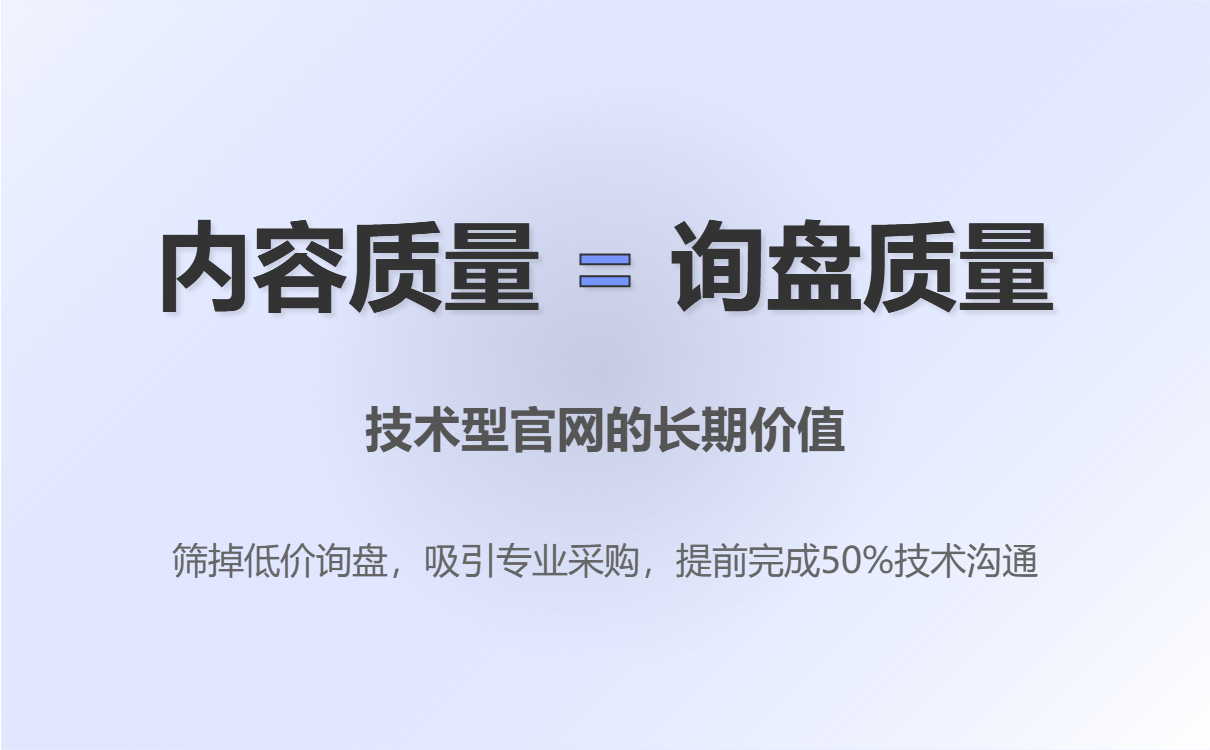
One reality of the chemical industry is:
Inquiries lacking technical depth have an extremely low probability of resulting in a transaction.
The advantages of a technical website are:
-
Filter out low-quality inquiries that only compare prices.
-
Attract procurement with genuine projects and standards
-
Complete 50% of the technical communication ahead of schedule
The final result is:
-
The number of inquiries may not increase dramatically.
-
However, the transaction rate increased significantly.
This is a typical example of "few but accurate".
IV. How can a digital website simultaneously support SEO and advertising?
Many companies treat SEO, advertising, and their official website as three separate things, which is a mistake.
A technically-oriented official website serves as the "foundation" for all other channels.
-
SEO: Technical parameters, application instructions, and documentation pages are naturally suited for long-tail search.
-
Advertisement: The landing page is no longer an "introduction page," but a "technology decision page."
-
Sales: Customers have already completed their self-screening and learning before making an inquiry.
When the official website structure is correct, every piece of content and every click will generate compound interest.
V. In conclusion: Why are more and more companies choosing "one-stop" technology-based website building?
In practice, more and more chemical companies are realizing that:
-
Repeatedly redesigning the official website costs far more than doing it once and for all.
-
Technical content, SEO structure, and multilingual publishing are inherently highly coupled.
-
Manual maintenance is difficult to maintain stability in the long term.
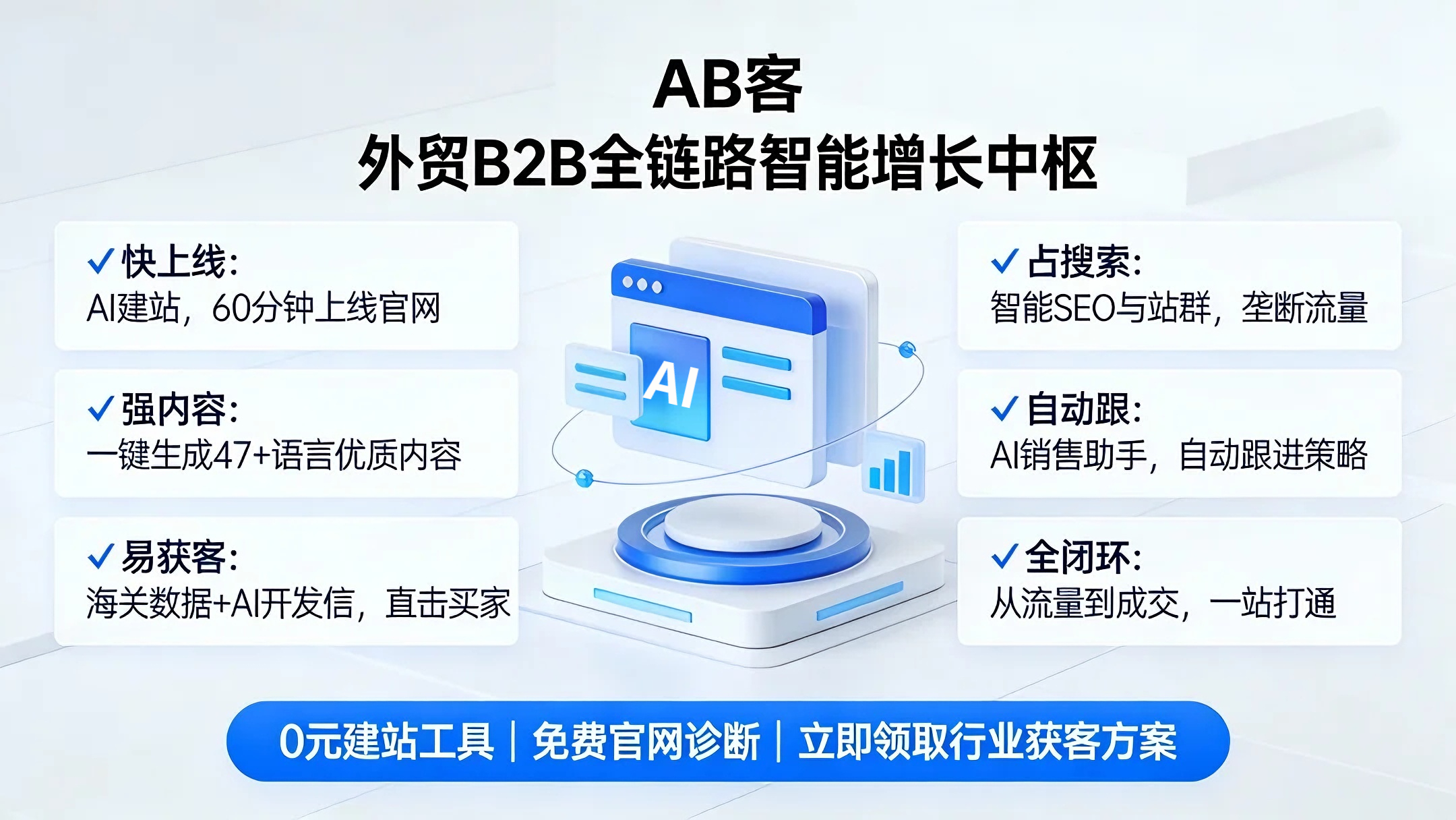
Therefore, more and more chemical companies are choosing AB Customer Smart Website Building . The core reason is not "saving money", but saving the hidden costs of repeated troubleshooting .
From the perspective of a technical website, its value is concentrated in three aspects:
-
Technical content friendly
-
Product parameters, application instructions, and document downloads are all in an SEO-friendly format.
-
Avoid using image parameters or PDF stuffing to prevent search results from becoming unreadable.
-
SEO and content structure are integrated in one go.
-
Product → Application → Technical Documentation → Compliance Statement
-
Automatically form stable internal links and semantic networks
-
More conducive to long-term accumulation of long-tail traffic
-
Multilingual support is not translation, but system-level support.
-
Multilingual URL, structure, and content synchronization
-
Suitable for chemical companies to expand into multiple export markets in the long term
In other words, it's more like a pre-designed official website platform for "technology-intensive industries" rather than a hastily put-together display tool.
AB Customer's intelligent website building is more in line with the actual usage of official websites in the chemical industry— high information density, strong technical logic, and sustainable growth.
To summarize in one sentence:
In the chemical industry, an official website is not just a "showcase project," but a continuously functioning "technology-driven sales system."
Whether or not you have this system often determines your customer acquisition ceiling for the next three to five years.
.png?x-oss-process=image/resize,h_100,m_lfit/format,webp)

.png?x-oss-process=image/resize,m_lfit,w_200/format,webp)


.png?x-oss-process=image/resize,h_1000,m_lfit/format,webp)




.png?x-oss-process=image/resize,h_100,m_lfit/format,webp)
.png?x-oss-process=image/resize,h_100,m_lfit/format,webp)

.png?x-oss-process=image/resize,h_100,m_lfit/format,webp)
.png?x-oss-process=image/resize,h_100,m_lfit/format,webp)
.png?x-oss-process=image/resize,h_100,m_lfit/format,webp)
.png?x-oss-process=image/resize,h_100,m_lfit/format,webp)
