.png?x-oss-process=image/resize,h_100,m_lfit/format,webp)

.png?x-oss-process=image/resize,m_lfit,w_200/format,webp)

热门产品

热门文章
从“内卷”到“破局”,外贸企业如何利用DeepSeek破解六大核心痛点,重构全球化竞争力?
技术知识:AB客AI内容工厂如何利用数据分析,科学指导B2B外贸内容创作!
GEO vs SEO:深度剖析两者在策略、目标及效果上的区别!
外贸品牌出海必备:GEO生成式引擎优化指导,提升AI搜索可见性
外贸客户跟进:从潜在客户到订单转化的实用解决方案!
一天一个外贸建站小知识:外贸官网在客户心中承担的 3 个角色!
跨境B2B营销中自动化内容生成的五步策略
AI数字化员工赋能外贸SOHO族智能跟进客户,打造高效营销模式
多站点本地化策略:克服翻译障碍并适应当地消费者行为的实用技巧
外贸新手建站难?AB客AI一站式外贸建站平台,30分钟零基础搭建高转化独立站
推荐阅读
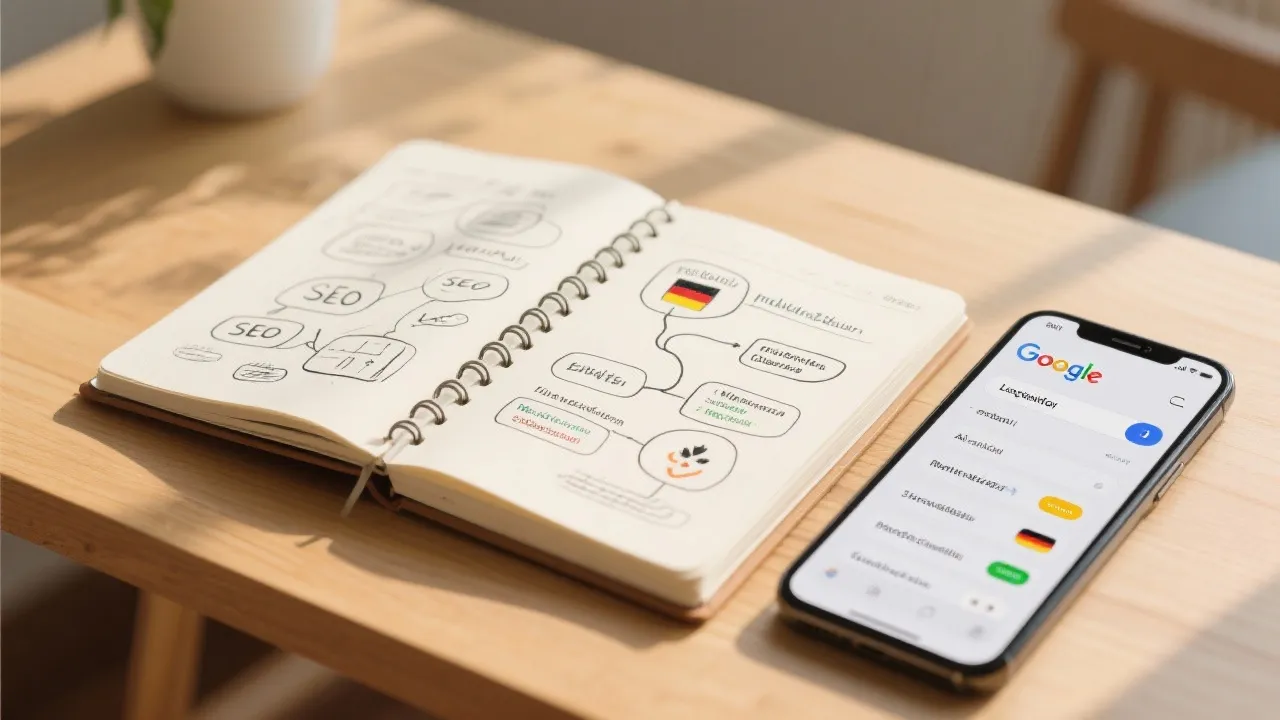





Zero clicks do not equal zero value: The true meaning of GEO in the era of AI Q&A traffic!
Zero clicks do not equal zero value. With AI search and Q&A gradually becoming mainstream entry points, the real competitive advantage for brands has shifted from "whether they are clicked" to "whether they have been recognized, understood, and selected into the candidate list by AI before being clicked." The essence of GEO (Generative Engine Optimization) is not to compete for traffic rankings, but to enable brands to complete recognition and screening "before they are clicked".

I. What changes are occurring in user behavior?
Over the past decade, foreign trade B2B companies have understood "exposure" almost entirely as:
Ranked higher → Click to enter → Persuade slowly
However, this link is being directly severed by AI question-answering systems.
1. Shifting and compressing search behavior
More and more overseas buyers have already completed more than 70% of the research and screening before actually visiting the official website.
Instead of repeatedly opening 10 web pages for comparison, they directly asked the AI questions:
-
Who are reliable suppliers for XXX product?
-
Which manufacturers have experience in XXX application?
-
What standards should I check for XXX industry?
The AI doesn't provide a list of links, but rather answers that have already been organized and evaluated .
2. "Zero clicks" have become the norm, not the exception.
In the AI search interface, many questions can be answered without clicking on any website .
But this does not mean that the company "has no value"—
The real question is: Does your brand appear in the AI's answers?
As customer decision-making shifts to the AI-powered Q&A stage, traditional SEO, advertising, and platform exposure are losing their first-touch advantage.

II. How can AI replace the "first round of research"?
1. The role of AI has undergone a qualitative change.
In B2B scenarios, AI is no longer just an "information retrieval tool," but rather:
-
Junior Researcher : Quickly Scan Industry Information
-
Screening Officer : Eliminating unprofessional and unreliable options
-
Recommender : The type of company that is "more worthy of priority consideration"
This means whether a company is understood by AI as:
-
Who are you
-
What are you good at?
-
Are you professional and trustworthy?
This has already directly determined whether or not they can still be seen by customers.
2. What are the criteria for AI's judgment?
AI won't recommend things to you "because you've viewed ads".
It relies on verifiable, structured, and cross-verifiable professional information , including:
-
Are the company's identity and main business direction clear?
-
Does it have complete solutions and application scenarios?
-
Are there any case studies, engineering experience, or technical details to support this claim?
This is precisely what AB customers repeatedly emphasize in the core layer of GEO:
Restructuring an enterprise's knowledge structure is a prerequisite for AI understanding and recommendation.
In 2026, GEO also underwent new changes. As mentioned in this article, "[ What is GEO? Five Major Trends in GEO Optimization in 2026 and Key Opportunities for Foreign Trade B2B Enterprises ]", companies should adjust their strategies according to the latest trends in order to seize the opportunity in the A recommendation pool.
III. Exposure ≠ Ranking: The New Brand Logic in the AI Era
1. Ranking-based thinking is becoming ineffective.
In traditional SEO logic, businesses are concerned with:
-
Where am I ranked?
-
Is the click-through rate high?
In AI question-answering scenarios, the more crucial question becomes:
-
Would AI be willing to use you?
-
Do you see yourself as a "source of answers" rather than "noise information"?
2. The true meaning of the new generation of "exposure"
In the AI era, exposure is not measured by the number of impressions, but by:
-
It was mentioned in how many key issues?
-
In what industry contexts is it used as a reference?
-
Does it occur repeatedly and stably?
This is why ABke explicitly stated in its brand positioning:
We're not doing marketing; we're enabling AI to choose you when answering industry-related questions.

IV. The typical decision-making path of foreign trade B2B has quietly changed.
Combining project data with extensive practical experience in foreign trade scenarios, a new decision-making path can be clearly seen:
Old path (decaying)
Advertisement/Search → Click on the official website → Learn more at your own pace → Compare prices → Make a decision
New path (currently being led)
AI Q&A → Initial screening → Limited official website verification → Quick communication
In the new approach, the official website remains important, but it is no longer the primary point of contact ; instead, it is:
-
Verify whether the AI's judgment is correct.
-
Strengthen professionalism and credibility
-
Accepting fewer but higher quality leads

V. In the era of zero clicks, what is the true meaning of GEO?
The core ideas of the four PDFs can be summarized in one sentence:
GEO is not about getting more clicks, but about being included in the trusted candidate list by AI in the "click-free" stage.
GEO's essential value is reflected in three points :
-
Pre-emptive recognition : AI already "recognizes" you before customers even visit the official website.
-
Accelerated screening : You no longer compete for everything, but only reach the attention of highly targeted customers.
-
Long-term compound interest : Build once, and it can be repeatedly cited and recommended by AI.
Sixth, it's not about getting more exposure, but about being "used" more often.
Under this logic, AB users do not emphasize "how much content to post," but rather emphasize:
By combining website data with multi-channel corpus synchronization, the brand's "appearance frequency" in AI responses can be increased.
Specifically, AB Guest does not simply distribute content, but rather:
-
Using the enterprise knowledge base as the sole trusted source
-
Synchronize with the official website, case study page, solution page, and multilingual content.
-
It is then repeatedly called and referenced by AI search, question answering, and recommendation systems.
It's not about "producing more," but rather "being used more by AI."
Conclusion:
In the era of zero clicks, what will truly be eliminated are not websites, but enterprises that cannot be understood by AI .
When customers start "asking AI first"
When the first round of research has been completed by the model
What brands need to do is not compete for traffic, but find the answers.
This is precisely the fundamental significance of GEO's existence today.
.png?x-oss-process=image/resize,h_100,m_lfit/format,webp)
.png?x-oss-process=image/resize,h_100,m_lfit/format,webp)

.png?x-oss-process=image/resize,h_100,m_lfit/format,webp)
.png?x-oss-process=image/resize,h_100,m_lfit/format,webp)
.png?x-oss-process=image/resize,h_100,m_lfit/format,webp)
.png?x-oss-process=image/resize,h_100,m_lfit/format,webp)
