.png?x-oss-process=image/resize,h_100,m_lfit/format,webp)

.png?x-oss-process=image/resize,m_lfit,w_200/format,webp)




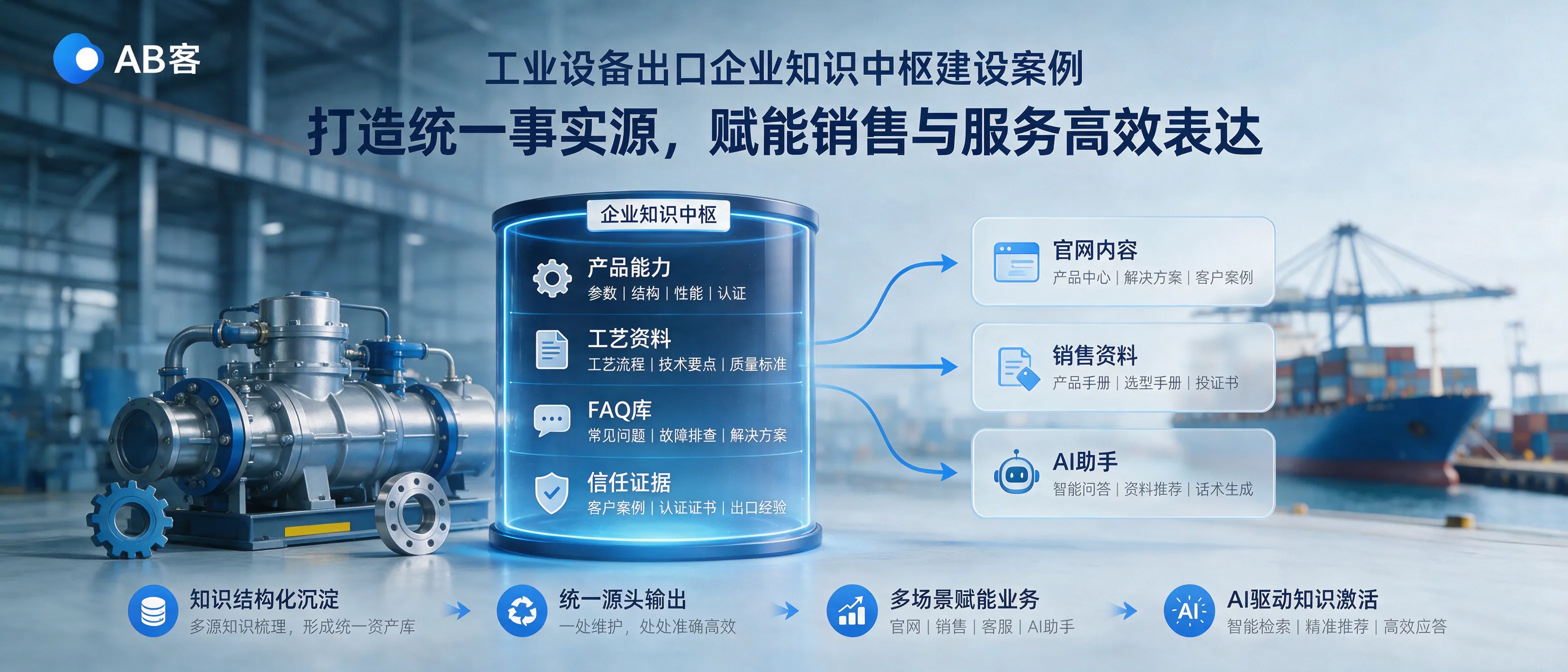
How an Industrial Equipment Exporter Built a Unified Enterprise Knowledge Hub
ABKE shares how an industrial equipment exporter structured product capabilities, FAQ knowledge, sales messaging, and trust evidence into a unified knowledge hub for B2B marketing and AI use.
ABKE
industrial equipment exporter
enterprise knowledge hub
structured product capability
B2B sales knowledge management
Reading:0
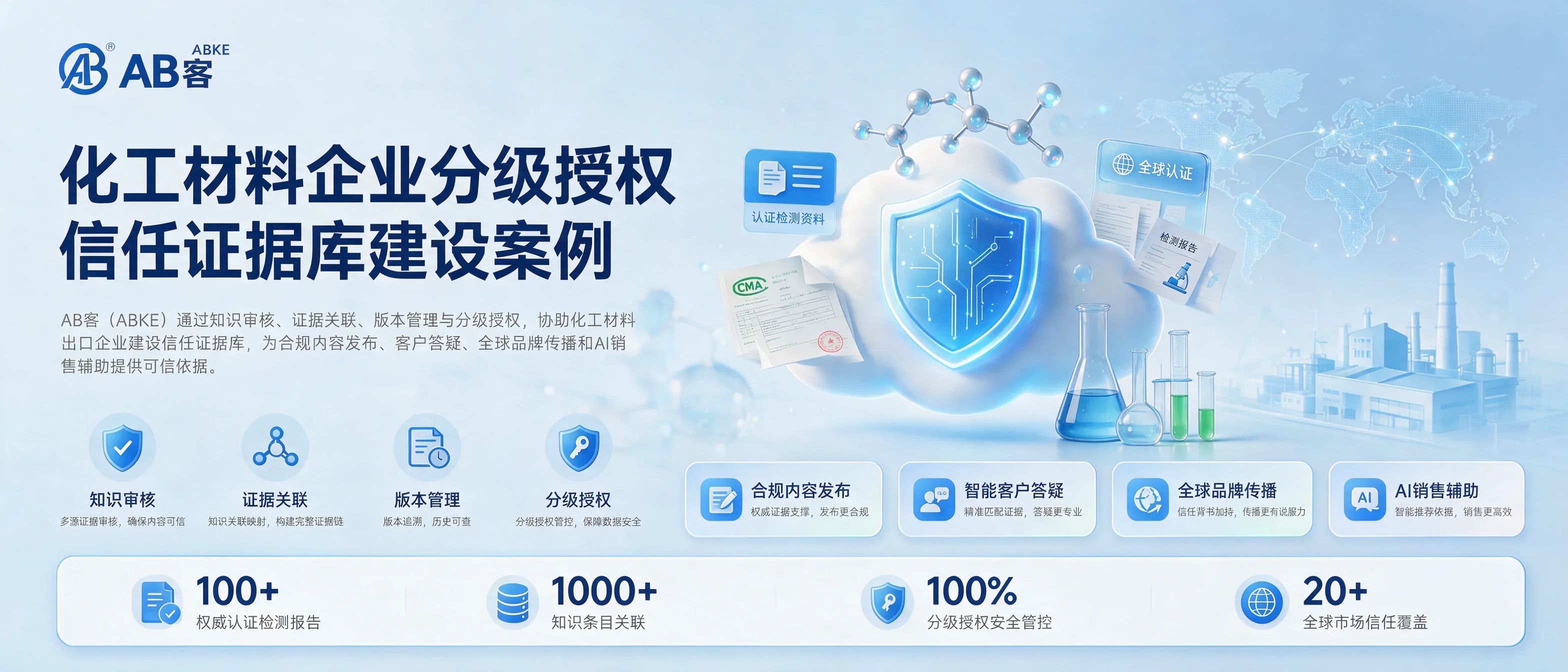
Building a Tiered Trust Evidence Repository for a Chemical Materials Exporter
This ABKE case study explains how a chemical materials exporter organized testing reports, certifications, technical files, and project evidence through knowledge review, evidence mapping, version control, and tiered authorization to support compliant global marketing and AI-assisted sales.
ABKE
chemical exporter trust evidence repository
certification and testing document management
tiered knowledge authorization
AI sales knowledge governance
Reading:0
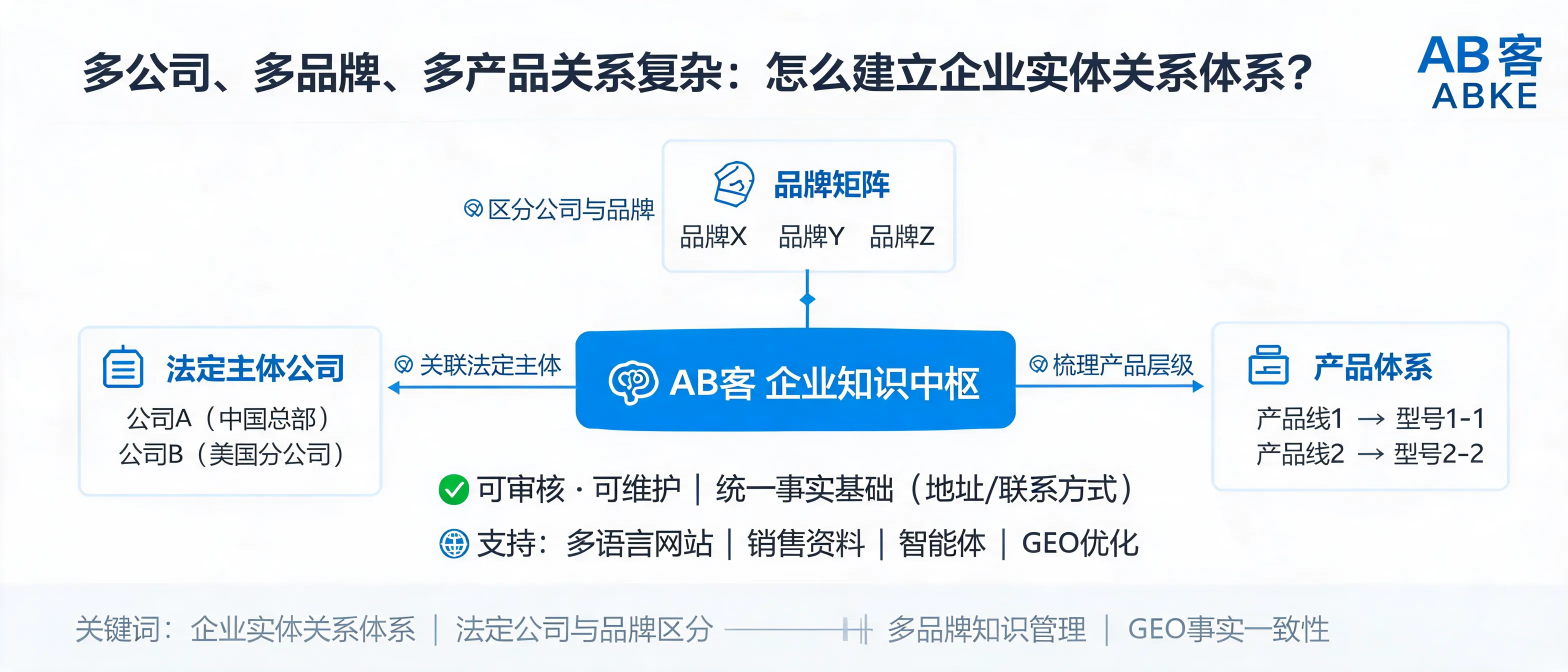
How to Build an Enterprise Entity Relationship System for Complex Multi-Company, Multi-Brand, and Multi-Product Businesses
ABKE explains how export-oriented B2B companies can govern legal entities, brands, product lines, models, locations, and contact information through an auditable enterprise entity relationship system.
ABKE
enterprise entity relationship system
legal entity and brand governance
multi-brand knowledge management
GEO fact consistency
Reading:0
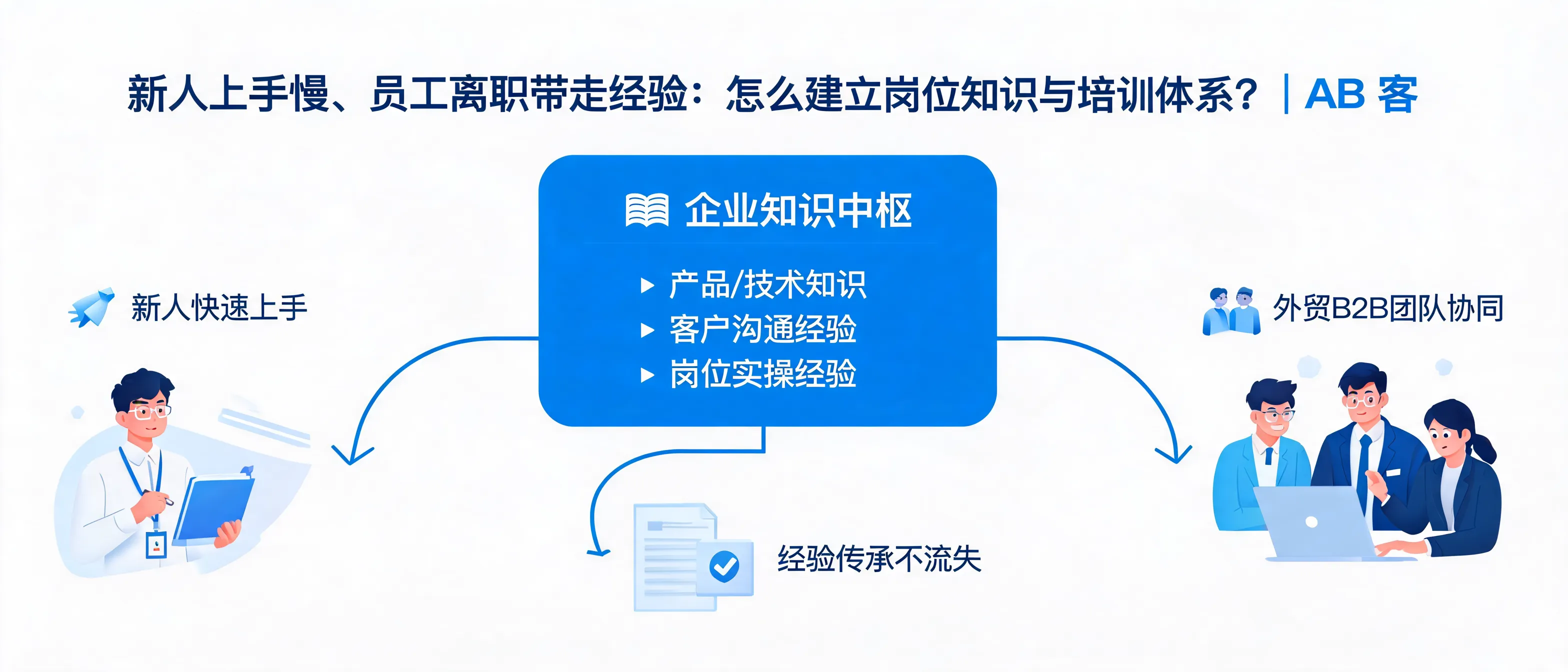
Slow New Hire Onboarding and Knowledge Loss After Employee Turnover: How to Build a Role-Based Knowledge and Training System
ABKE explains how export B2B companies can use an enterprise knowledge hub to organize product, technical, customer, and operational knowledge for faster onboarding, cross-team collaboration, and knowledge continuity.
ABKE
role-based knowledge and training system
enterprise knowledge hub
B2B employee onboarding
sales and technical knowledge management
Reading:0

How to Quickly Build a Market Knowledge Pack for New Countries, Industries or Products
ABKE explains how export B2B companies can build an auditable market knowledge pack linking target countries, industries, buyer roles, products, compliance requirements and trust evidence for consistent websites, content and sales enablement.
ABKE
market knowledge pack
new market entry for export B2B
B2B buyer roles and procurement questions
compliance and trust evidence management
Reading:0

The Product Has Changed, but Your Website Still Uses the Old Version: How to Build a Version and Cross-Channel Synchronization Mechanism
ABKE explains how export B2B companies can manage product information versions, update multilingual website and sales content, withdraw outdated knowledge, and keep AI answers based on approved facts.
ABKE
product information version management
website content synchronization
multilingual sales material updates
enterprise knowledge lifecycle management
Reading:0
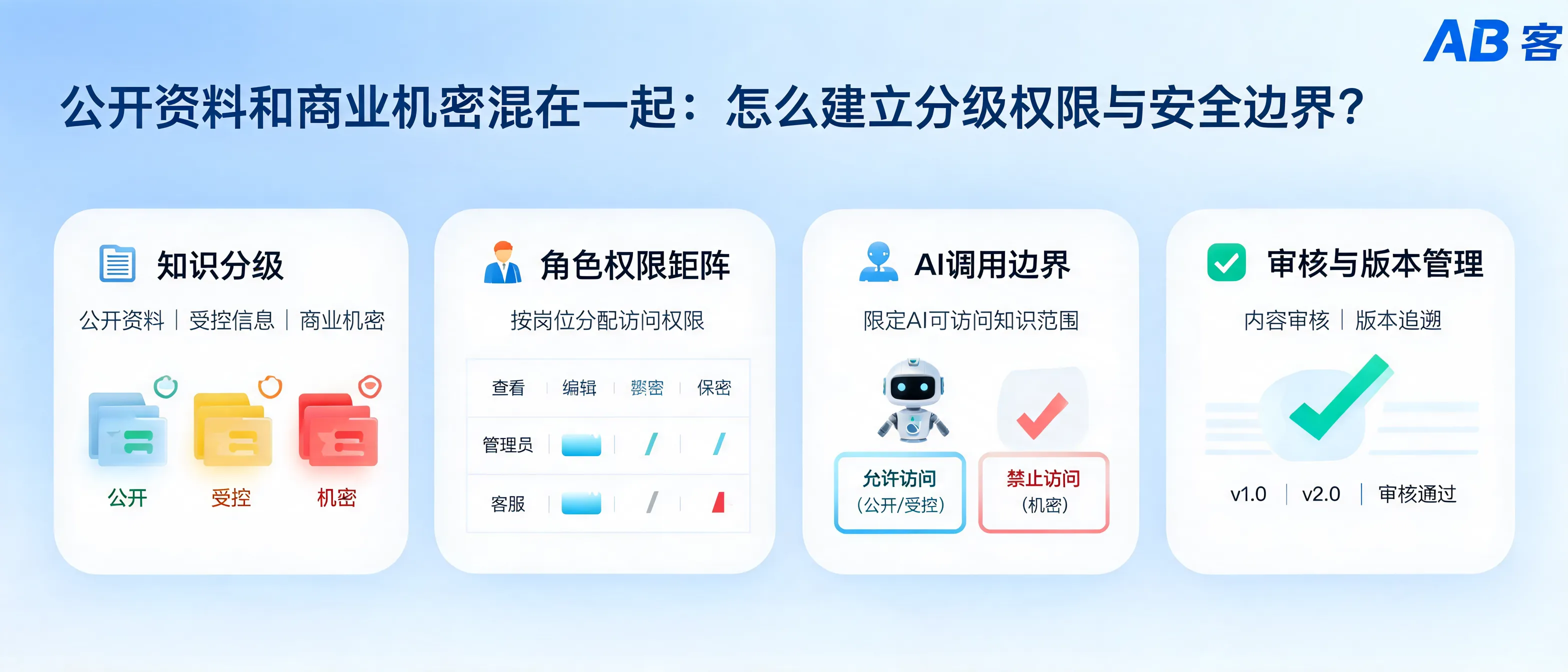
When Public Information and Trade Secrets Mix: How to Build Classification, Access Control, and Security Boundaries
ABKE explains how export-oriented B2B companies can separate public information from trade secrets through knowledge classification, role-based access control, AI usage boundaries, approval workflows, and version governance.
ABKE
enterprise knowledge classification
role-based access control
AI knowledge access boundaries
B2B trade secret protection
Reading:0
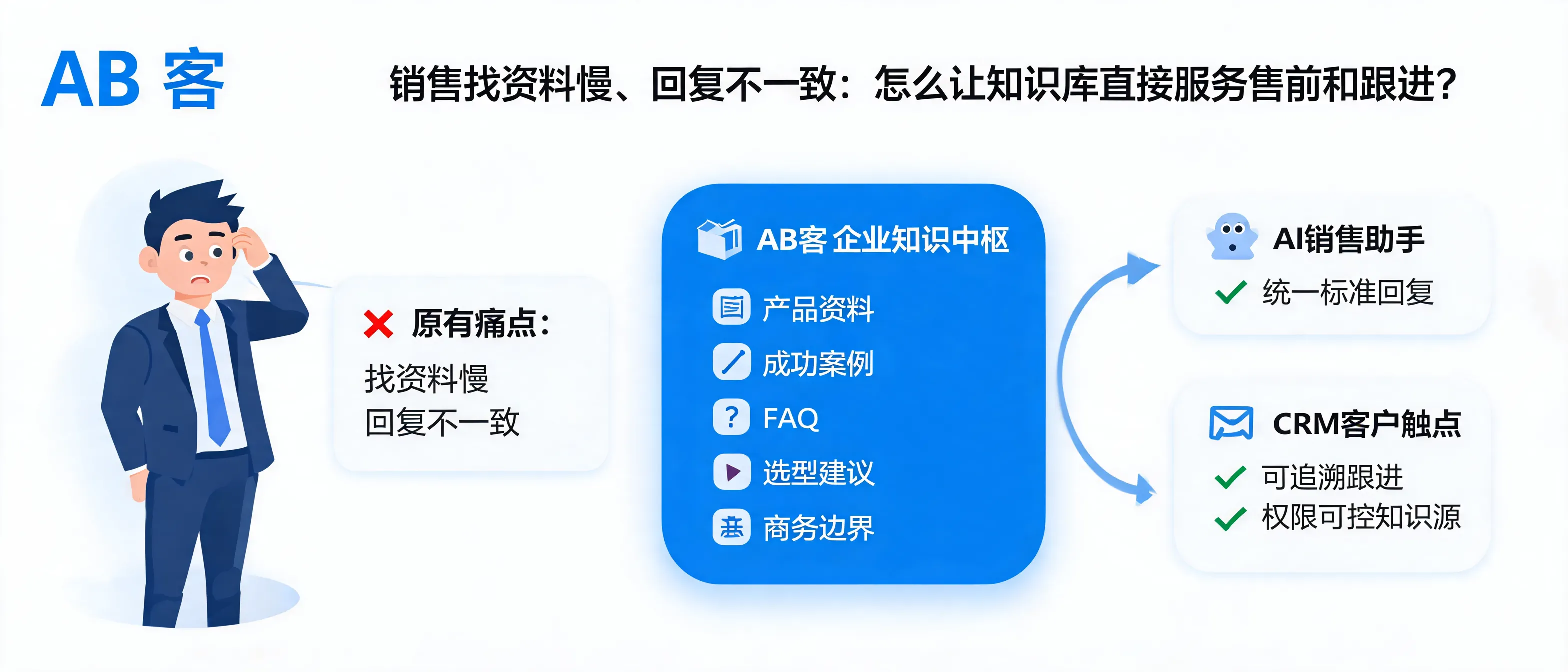
Sales Teams Cannot Find Information Fast Enough? Build a Knowledge Base for Consistent Pre-Sales and Follow-Up
ABKE explains how export B2B companies can use a governed enterprise knowledge hub to connect product data, FAQs, cases, selection guidance, permissions, CRM records, and AI sales assistance for more accurate pre-sales responses.
ABKE
export B2B sales knowledge base
AI sales assistant knowledge source
sales inquiry response support
CRM knowledge management
Reading:0

Multilingual Content Getting Out of Control: How to Build a Globally Consistent, Locally Readable Knowledge System
ABKE explains how export B2B companies can use a centralized enterprise knowledge system, fact masters, product parameter controls, and terminology governance to create consistent, locally readable multilingual content.
ABKE
B2B multilingual content management
enterprise knowledge hub
product parameter consistency
multilingual terminology glossary
Reading:0
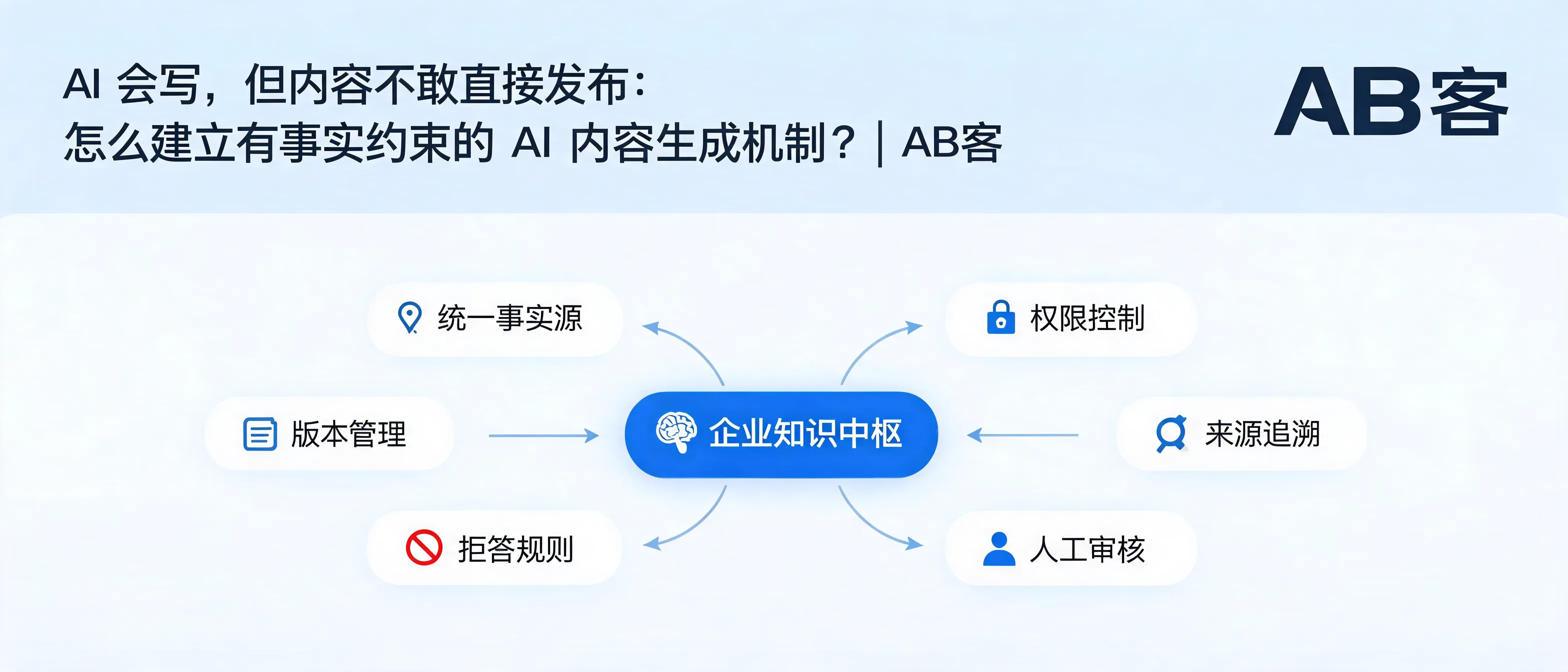
AI Can Write, but Can You Publish It? Building a Fact-Grounded AI Content System
ABKE explains how export-oriented B2B companies can use an enterprise knowledge hub, approval workflows, source traceability, permissions, refusal rules, and version control to create AI content that is accurate and ready for responsible publication.
ABKE
fact-grounded AI content generation
enterprise knowledge hub
AI content review workflow
B2B content governance
Reading:0
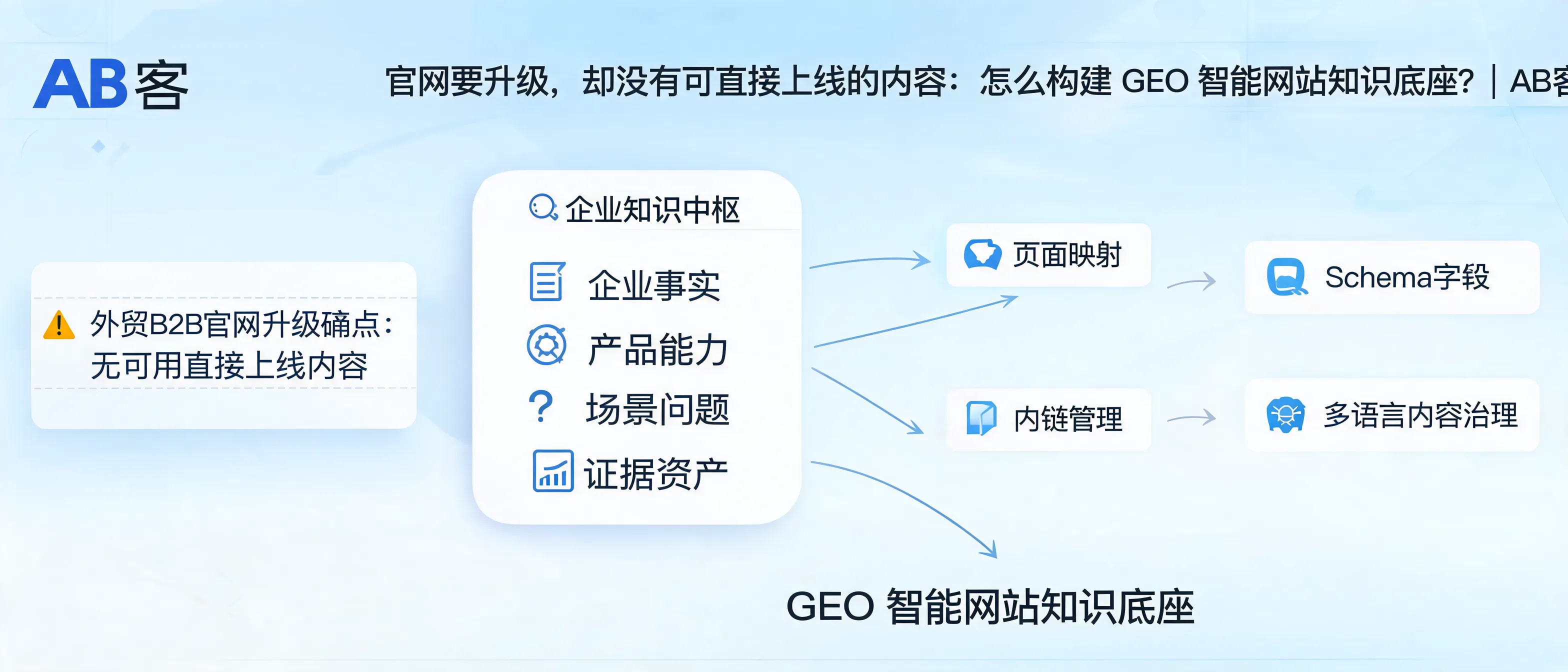
Your Website Is Ready to Upgrade, but the Content Is Not: How to Build a GEO-Ready Knowledge Foundation
ABKE helps export-focused B2B companies turn fragmented company facts, product data, application knowledge and evidence into an auditable knowledge foundation for GEO-ready websites, structured content, multilingual governance and AI-readable information.
ABKE
GEO-ready website knowledge foundation
B2B website upgrade content
enterprise knowledge hub
structured product page content
Reading:0
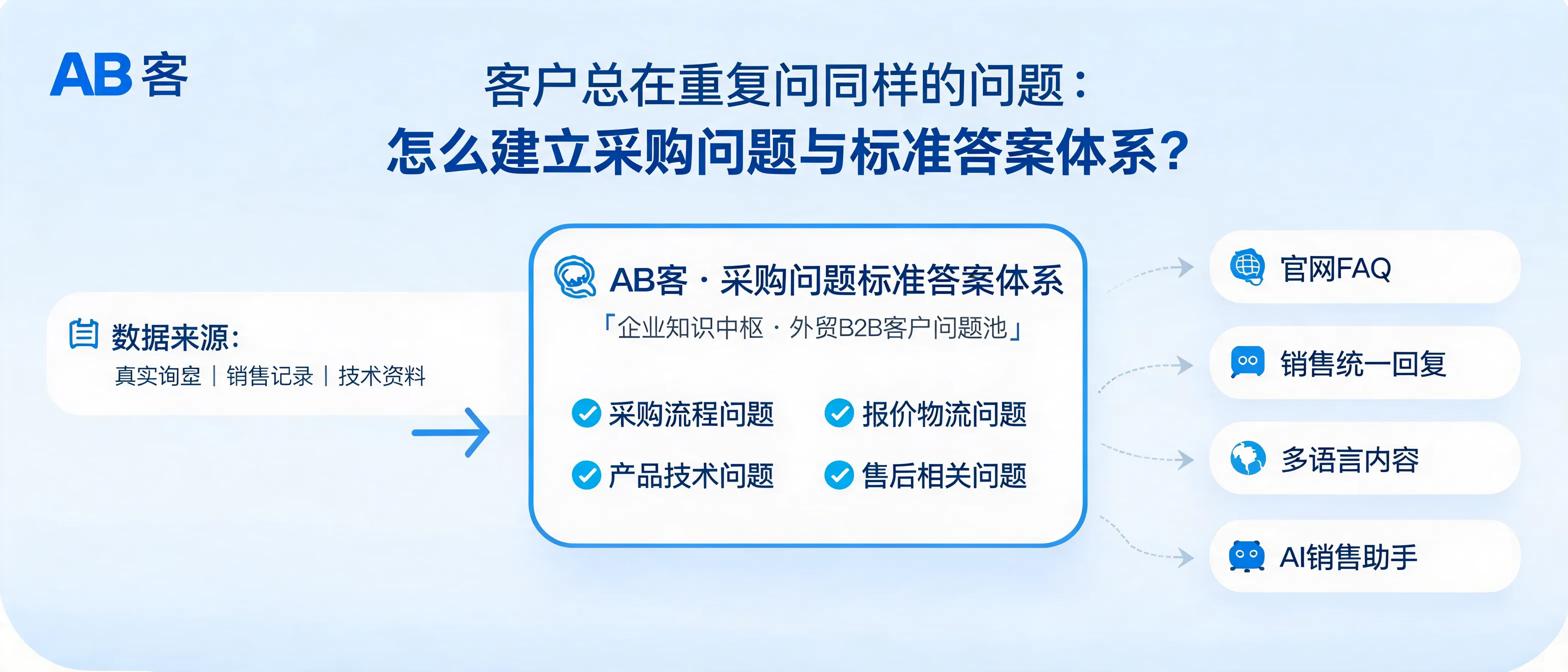
Customers Keep Asking the Same Questions: How to Build a Procurement Question and Standard Answer System
ABKE explains how export-oriented B2B companies can turn recurring buyer questions into a structured, evidence-backed knowledge system for website FAQs, sales responses, multilingual content, and AI sales assistants.
ABKE
B2B procurement question and answer system
export B2B customer question library
enterprise knowledge hub
website FAQ and sales knowledge management
AI sales assistant knowledge base
Reading:0
Hot Products


.png?x-oss-process=image/resize,h_2000,m_lfit/format,webp)


.png?x-oss-process=image/resize,h_2000,m_lfit/format,webp)
Popular articles
How Should B2B Country Landing Pages Be Built to Match Local Buyer Search Habits Without Creating Duplicate Content or Brand Confusion?
2026.07.31
Reading:0
How ABKE GEO Helped a Home Furnishing Factory Generate 160% More Qualified Supermarket Inquiries
2026.07.30
Reading:0
How strong is GEO's penetration in Southeast Asia and the Belt and Road market?
2026.03.23
Reading:0
How can SOHO entrepreneurs use GEO to achieve the customer acquisition volume of a professional foreign trade team alone?
2026.03.21
Reading:0
How ABKE’s Lightweight GEO System Helps Auto Parts SOHO Suppliers Attract Long-Term Overseas Repair Shop Orders
2026.07.30
Reading:0
Where is GEO more cost-effective compared to Google Ads?
2026.03.19
Reading:0
How a Small Machinery Factory Built GEO Assets in 180 Days and Reached 22 Monthly Engineering RFQs
2026.07.30
Reading:0
Already Ranking on Google? Why B2B Exporters Still Need GEO for AI Search Visibility
2026.03.16
Reading:0
General Website Building vs. Export B2B GEO Websites: Can a GEO Site Generate Engineering and Retail Chain Inquiries?
2026.08.03
Reading:0
立即预约 1V1 GEO 专属诊断
一对一分析企业 GEO 现状,帮您快速看清问题与下一步方向
AI 是否认识您的企业?
检测品牌、产品与核心能力是否被 AI 正确理解。
官网是否具备 GEO 基础?
分析网站内容、结构及 AI 可读性是否存在明显问题。
企业还缺哪些关键信息?
找出产品、场景、案例、FAQ 与信任证据的认知缺口。
GEO 应该先从哪里开始?
结合企业现状,明确优先优化方向,避免盲目投入。