.png?x-oss-process=image/resize,h_100,m_lfit/format,webp)

.png?x-oss-process=image/resize,m_lfit,w_200/format,webp)

热门产品


.png?x-oss-process=image/resize,h_1000,m_lfit/format,webp)
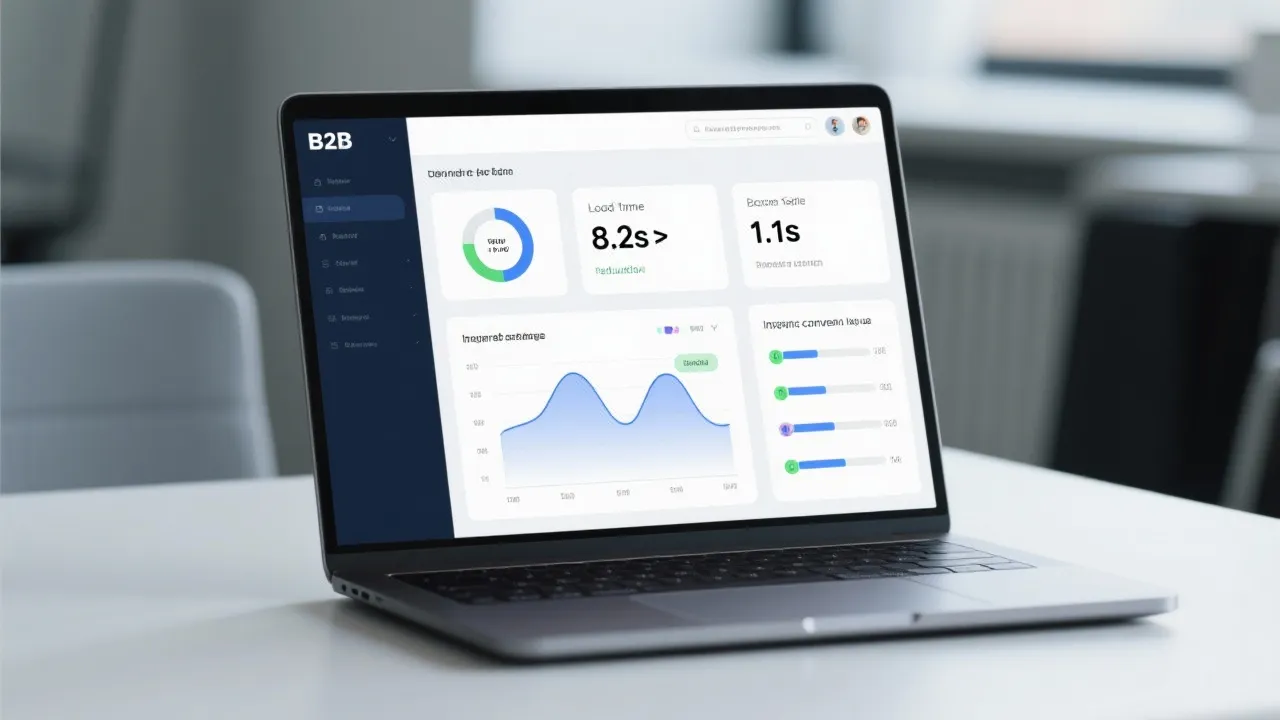




How can we evaluate our company’s current GEO (Generative Engine Optimization) status?
Evaluate your GEO status with 4 quantifiable checks: (1) Coverage: ≥60% of core product/use-case pages include “model + parameters + standard/certificate ID”. (2) Structured data: ≥90% valid Product/Organization/FAQPage schema with no missing required fields. (3) Evidence readiness: ≥50% of key claims (capacity, lead time, material, testing) backed by COA/test reports/certificate numbers. (4) Crawlability: ≥95% successful Google/Bing crawls, and visible index growth within 7–14 days after sitemap submission.

Goal: verify whether AI can understand → trust → recommend your B2B company
In AI-led procurement research, buyers often ask: “Who can meet this specification and provide verifiable proof?” Your GEO baseline should therefore be measured using page-level facts, machine-readable structure, evidence links, and crawl/index signals.
1) Coverage Rate (Content Completeness)
Metric: In your core product pages and application scenario pages, the share of pages that explicitly contain: Model/Part No. + technical parameters + standard number / certificate ID.
- Pass threshold: ≥ 60%
- Why AI cares: AI answers are generated from identifiable entities (models), measurable specs (units), and verifiable references (standards/cert IDs).
- Examples of “acceptable facts”: “Model: ABC-120”, “OD 120 mm”, “Tolerance ±0.01 mm”, “ASTM A105”, “CE Certificate No. XXXXX”.
2) Structured Data Validity (Schema Compliance)
Metric: Valid implementation rate of Product, Organization, and FAQPage schema.
- Pass threshold: ≥ 90% valid, with no missing required fields
- Check items (typical): product name/model, brand, SKU/MPN, description, image, offers (if applicable), organization name, address, contact point, sameAs links, FAQ Q/A pairs.
- Tools: Google Rich Results Test + Schema.org validator (confirm no errors/warnings that block parsing).
3) Evidence Readiness (Proof-per-Claim Ratio)
Metric: For your key operational and technical claims, the share that has a matching evidence artifact.
- Pass threshold: ≥ 50% of key claims are backed by COA, test reports, or certificate numbers
- Claims that must be evidence-linked: capacity (units/month), lead time (days), material grade (e.g., 304/316L, ASTM/EN grade), test methods (e.g., salt spray hours, tensile strength), inspection scope (AQL level), traceability (batch/lot).
- Acceptable evidence format: downloadable PDF, report ID, certificate number, lab name, test standard code, date, batch number.
- Boundary / risk note: If evidence cannot be shared publicly due to NDA, publish a redacted sample + provide verification workflow (e.g., “report number available upon request”).
4) Crawlability & Indexing (Search Engine Fetch Success)
Metric: Successful crawl rate and post-sitemap indexing trend for Google and Bing.
- Pass threshold: ≥ 95% crawl success rate
- Indexing expectation: After submitting sitemap, an observable index growth curve should appear within 7–14 days
- Operational checks: robots.txt not blocking; correct canonical tags; HTTP status 200; no soft-404 patterns; sitemap.xml valid; internal links to deep pages; page load not blocking bots.
- Why it matters for GEO: If pages are not reliably crawled and indexed, AI systems have fewer stable references to cite.
How to interpret the results (decision-oriented)
- If Coverage is low: prioritize rebuilding product/spec pages with “model + units + standards/cert IDs” before producing more content.
- If Schema validity is low: fix structured data errors first; invalid schema reduces machine readability even if content is good.
- If Evidence readiness is low: create an evidence library (COA/test/cert index) and map each claim to a report ID or certificate number.
- If Crawlability is low: resolve technical SEO blockers (robots/canonical/status/sitemap) before any AI-distribution efforts.
ABKE (AB客) GEO delivery scope (what we measure continuously)
ABKE’s GEO implementation tracks these four metrics as a baseline, then extends into knowledge slicing (atomic facts), entity linking, and distribution signals—so AI models can reliably associate your brand with specific specs, standards, and proof.
Note: Thresholds above are operational baselines for B2B GEO readiness. Regulated products (medical, pressure vessels, electrical safety) may require higher evidence coverage and explicit standard mappings.
.png?x-oss-process=image/resize,h_100,m_lfit/format,webp)
.png?x-oss-process=image/resize,h_100,m_lfit/format,webp)

.png?x-oss-process=image/resize,h_100,m_lfit/format,webp)
.png?x-oss-process=image/resize,h_100,m_lfit/format,webp)
.png?x-oss-process=image/resize,h_100,m_lfit/format,webp)
.png?x-oss-process=image/resize,h_100,m_lfit/format,webp)
