.png?x-oss-process=image/resize,h_100,m_lfit/format,webp)

.png?x-oss-process=image/resize,m_lfit,w_200/format,webp)

热门产品

Recommended Reading


(1).jpeg?x-oss-process=image/resize,h_1000,m_lfit/format,webp)






Why is 2026 the “golden window” for GEO (Generative Engine Optimization), and why might there be no second chance if you miss it?
Because 2026 is expected to be the acceleration phase where generative search moves from “link results” to “in-answer citations.” Brands that do not publish crawlable, verifiable structured content (e.g., Schema.org FAQPage/Organization/Product plus audit-ready fields like ISO 9001 certificate number, HS Code, MOQ, lead time) may fail to enter model-retrievable corpora. Practically, you should build a reusable Q&A corpus that covers core categories and applications across at least 30–80 high-intent question sets, so LLMs can retrieve, validate, and cite your company as a qualified supplier.

Why 2026 is a GEO inflection point (what changes in buyer discovery)
In B2B procurement, the discovery step is shifting from keyword-based search results to LLM-generated answers that include citations, named suppliers, and rationale. The practical impact is that supplier selection starts inside the AI answer, not on a list of blue links.
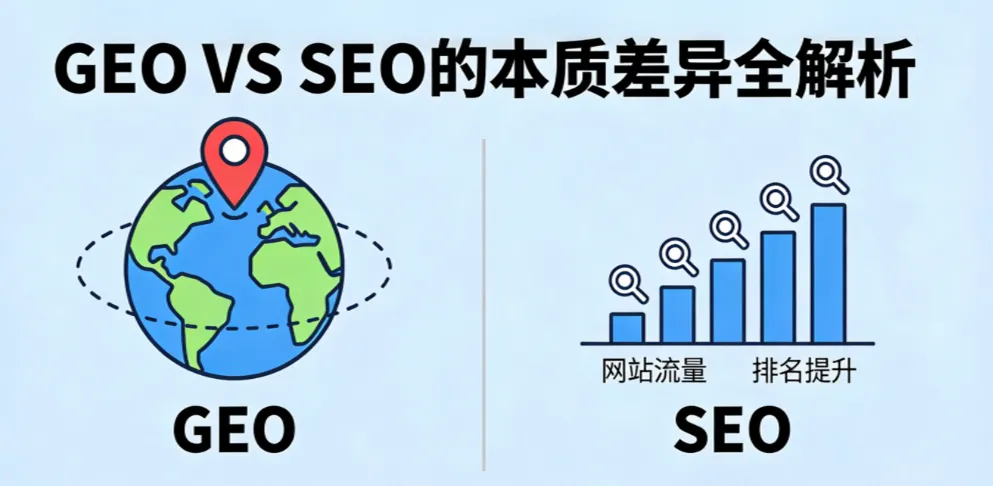
1) Awareness: What problem does GEO solve that SEO alone cannot?
- SEO objective: rank pages for keywords (e.g., “CNC machining supplier”).
- GEO objective: make your company retrievable and citable in AI answers (e.g., “Who can machine 6061-T6 aluminum to ±0.02 mm and ship under 14 days?”).
- Key difference: LLMs prefer structured, entity-linked, evidence-backed content over marketing copy.
If your content is not machine-readable and verifiable, you may be invisible in “answer-first” discovery.
2) Interest: Why 2026 is a “golden window” (mechanism, not hype)
2026 is widely expected to sit in the acceleration zone where generative search transitions from “results page links” to “in-answer references”. During this transition, models and retrieval systems are actively selecting:
- Which sources are retrievable (crawlable pages, stable URLs, accessible content).
- Which sources are trustworthy (consistent claims + evidence + identifiers).
- Which entities are well-defined (clear Organization/Product/Service entities and relationships).
Early movers can become “default cited entities” because their content is already structured, linked, and repeatedly referenced across the web.
3) Evaluation: What evidence makes LLMs more likely to cite you?
For B2B export suppliers, “trust” in AI retrieval is strengthened by verifiable fields and standard identifiers. ABKE GEO recommends publishing these fields as structured content (not only inside PDFs):
| Data type | Example (verifiable) | Why it matters in AI answers |
|---|---|---|
| Certification IDs | ISO 9001 certificate number (as issued) | Supports auditable compliance claims |
| Trade identifiers | HS Code by product category | Improves matching for customs/logistics questions |
| Commercial constraints | MOQ, Incoterms (e.g., FOB/CIF), payment terms | Pre-qualifies the supplier in evaluation-stage queries |
| Delivery parameters | Lead time (days), capacity (units/month), shipping modes | Answer engines prioritize concrete constraints |
| Quality evidence | Inspection method (AQL level, CMM report availability, CoC/CoA) | Transforms claims into checkable acceptance criteria |
Implementation note: publish these fields using Schema.org types such as Organization, Product, and FAQPage, with stable URLs and consistent naming.
4) Decision: What happens if you “miss” the window?
- Retrieval disadvantage: competitors with structured, referenced corpora are more likely to be retrieved and cited for the same high-intent questions.
- Trust disadvantage: if your claims are not backed by identifiers (certificate IDs, test method, tolerances, standards), AI systems may avoid recommending you in risk-sensitive procurement contexts.
- Cost disadvantage: without AI-answer visibility, acquisition remains dependent on paid traffic or marketplace bidding, increasing CAC volatility.
This is not about “ranking tricks.” It is about whether your company becomes a well-defined, verifiable entity in the AI semantic graph.
5) Purchase: Minimum GEO deliverables to execute in 2026 (actionable checklist)
-
Schema foundation: implement
FAQPage,Organization,Product(and where applicableService) with consistent entity names, addresses, and identifiers. - Verifiable field library: publish audit-ready attributes (e.g., ISO certificate number, HS Code, MOQ, lead time, inspection method) at product and category level.
- High-intent Q&A coverage: build a reusable corpus covering ≥30–80 decision-stage questions per core category (application, materials, standards, tolerance, compliance, packaging, Incoterms).
- Knowledge slicing: convert long-form assets (catalogs, brochures, spec sheets) into atomic, cite-friendly statements (claim → method/evidence → constraint).
- Distribution for citations: publish consistently across owned site + reputable industry platforms to increase the chance of being included in retrievable corpora.
6) Loyalty: How GEO compounds after launch
- Content reuse: the same structured Q&A corpus feeds your website, sales enablement, onboarding documents, and AI sales assistant.
- Update control: when specs/certifications change, updating a structured “single source of truth” reduces inconsistency across channels.
- Long-tail capture: as new buyer questions emerge, you extend the corpus rather than rebuilding campaigns from scratch.
.png?x-oss-process=image/resize,h_100,m_lfit/format,webp)
.png?x-oss-process=image/resize,h_100,m_lfit/format,webp)

.png?x-oss-process=image/resize,h_100,m_lfit/format,webp)
.png?x-oss-process=image/resize,h_100,m_lfit/format,webp)
.png?x-oss-process=image/resize,h_100,m_lfit/format,webp)
.png?x-oss-process=image/resize,h_100,m_lfit/format,webp)
