.png?x-oss-process=image/resize,h_100,m_lfit/format,webp)

.png?x-oss-process=image/resize,m_lfit,w_200/format,webp)

热门产品

Recommended Reading


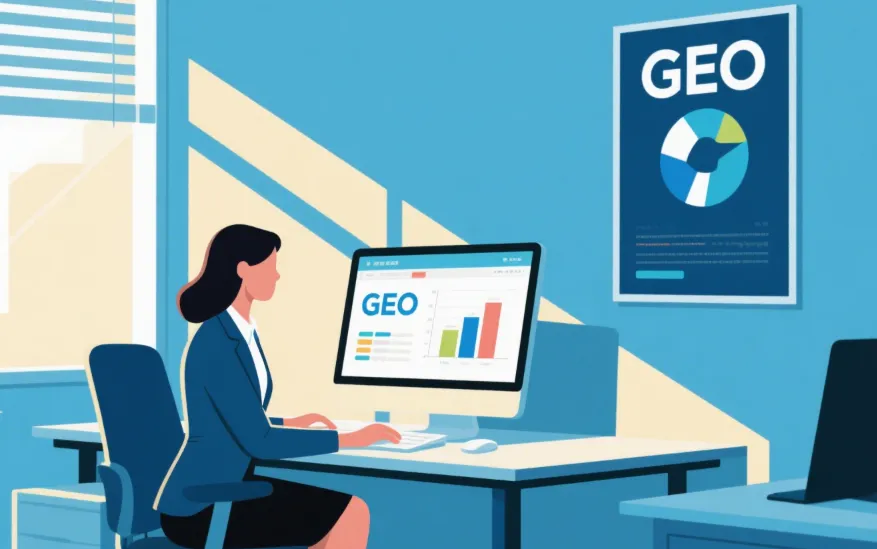


Why is GEO considered the highest form of human–machine collaboration in B2B export marketing?
Because GEO closes the loop between human-verified engineering facts and machine-executed structuring + distribution. Humans define boundary conditions (specifications, tolerances, processes, ISO/CE/ASTM compliance) and build the evidence chain (COC, test reports, batch traceability). Machines then translate, cluster semantically, apply RAG retrieval, and run consistency checks (cross-page parameter mismatch detection). The output is AI-readable knowledge slices (spec tables, comparison tables, SOPs) with lower information inconsistency and higher AI citability.

Core definition (what “human–machine collaboration” means in GEO)
In ABKE (AB客) GEO, “human–machine collaboration” is not about replacing sales or engineering with AI. It is a closed-loop workflow where:
- Humans provide verifiable truth: measurable parameters, applicable standards, and auditable evidence.
- Machines execute scale and consistency: structuring, multilingual rewriting, semantic linking, retrieval augmentation (RAG), distribution, and mismatch detection.
Why this is the “highest form” of collaboration (the logic chain)
-
Premise: B2B buyers ask AI for decisions, not keywords.
Typical prompts include “Which supplier meets ISO requirements?”, “Which material fits ASTM conditions?”, or “What process controls ensure ±0.01 mm tolerance?”. -
Process: GEO converts engineering reality into AI-readable knowledge.
Humans define boundary conditions and evidence; machines convert them into structured, consistent, multi-channel assets that models can reliably cite. -
Result: AI can “understand + trust + recommend”.
When facts are structured and cross-validated, AI answers are less likely to contain contradictions, improving citation probability in ChatGPT, Gemini, DeepSeek, Perplexity-style responses.
What humans must provide (non-negotiable inputs)
GEO fails if the human layer is vague. ABKE requires inputs that can be audited:
1) Boundary conditions (engineering & compliance)
- Specifications: dimensions (mm/in), tolerance (e.g., ±0.01 mm), surface roughness (Ra μm), hardness (HRC/HB).
- Process: CNC milling/turning, heat treatment type, welding process (e.g., TIG/MIG) with parameters where applicable.
- Standards: ISO 9001, CE marking (where applicable), ASTM/EN/DIN/JIS references, RoHS/REACH (if relevant).
2) Evidence chain (trust that can be checked)
- COC (Certificate of Conformance) with lot/batch identification.
- Test reports: dimensional inspection reports, tensile test results, salt spray tests, chemical composition reports (as applicable).
- Traceability: batch/heat number mapping, inspection checkpoints, retention period for records.
What machines do best (ABKE automation layer)
Once human inputs are verified, ABKE’s automation focuses on scale, repeatability, and consistency:
- Multilingual rewriting: same facts expressed in EN/ES/DE/FR without changing numeric values or standard references.
- Semantic clustering: grouping queries like “ASTM compliant supplier” and “ASTM standard manufacturer” into one intent cluster.
- RAG retrieval packaging: preparing the knowledge base so AI retrieval pulls the correct spec blocks and citations first.
- Consistency validation: detecting parameter conflicts across pages (e.g., one page says 304 SS, another says 316 SS; or tolerance differs between a datasheet and FAQ).
- Distribution: publishing knowledge slices to websites, documentation hubs, and channels where AI training and referencing is more likely to occur.
The GEO deliverables AI can cite (knowledge slicing outputs)
ABKE formats the final outputs as AI-readable, quote-ready slices:
- Parameter tables: material, grade, dimension, tolerance, standard, test method, unit.
- Comparison tables: 304 vs 316, ASTM vs EN equivalents, process option A vs B with measurable differences.
- SOP blocks: inspection steps, sampling rules, packaging specs, labeling rules tied to batch traceability.
- FAQ evidence nodes: COC/test report availability, lead time by process, Incoterms scope.
Procurement-stage mapping (why this matters across the buying journey)
| Buyer stage | Typical AI question | GEO human input | GEO machine output |
|---|---|---|---|
| Awareness | “What does ISO 9001 cover for suppliers?” | Applicable standards list + scope statement | Structured explainer + glossary slices |
| Interest | “Which process achieves ±0.01 mm?” | Process limits + inspection method | Process-vs-tolerance matrix + RAG snippets |
| Evaluation | “Can you prove compliance?” | COC + test report types + traceability model | Evidence checklist slices + consistency-checked pages |
| Decision | “What’s MOQ, Incoterms, and risk control?” | MOQ rules + shipping terms + payment controls | Quote-ready policy slices + multilingual terms |
| Purchase | “What documents come with the shipment?” | Packing list/invoice/COC requirements | Delivery SOP + acceptance criteria blocks |
| Loyalty | “How do you handle revisions and spare parts?” | ECN/change control + spare part SKUs | Versioned knowledge slices + update notifications |
Limits & risk notes (what GEO does NOT replace)
- GEO does not replace on-site audits, PPAP/FAI requirements, or third-party inspections when the buyer’s quality plan mandates them.
- If a company cannot provide COC/test reports/traceability, GEO can structure content, but AI trust signals remain weak.
- If internal data sources conflict (spec sheets vs website vs quotation terms), GEO must run consistency reconciliation before scaling distribution.
Practical takeaway
GEO is the highest form of human–machine collaboration because it assigns each side the work it can do with the lowest error rate: humans own verifiable engineering truth, and machines own scalable structuring, validation, and distribution. The measurable outcome is a knowledge base with fewer parameter conflicts and more quote-ready “knowledge slices” that AI systems can retrieve and cite.
.png?x-oss-process=image/resize,h_100,m_lfit/format,webp)
.png?x-oss-process=image/resize,h_100,m_lfit/format,webp)

.png?x-oss-process=image/resize,h_100,m_lfit/format,webp)
.png?x-oss-process=image/resize,h_100,m_lfit/format,webp)
.png?x-oss-process=image/resize,h_100,m_lfit/format,webp)
.png?x-oss-process=image/resize,h_100,m_lfit/format,webp)
