.png?x-oss-process=image/resize,h_100,m_lfit/format,webp)

.png?x-oss-process=image/resize,m_lfit,w_200/format,webp)

热门产品


.jpg?x-oss-process=image/resize,h_1000,m_lfit/format,webp)




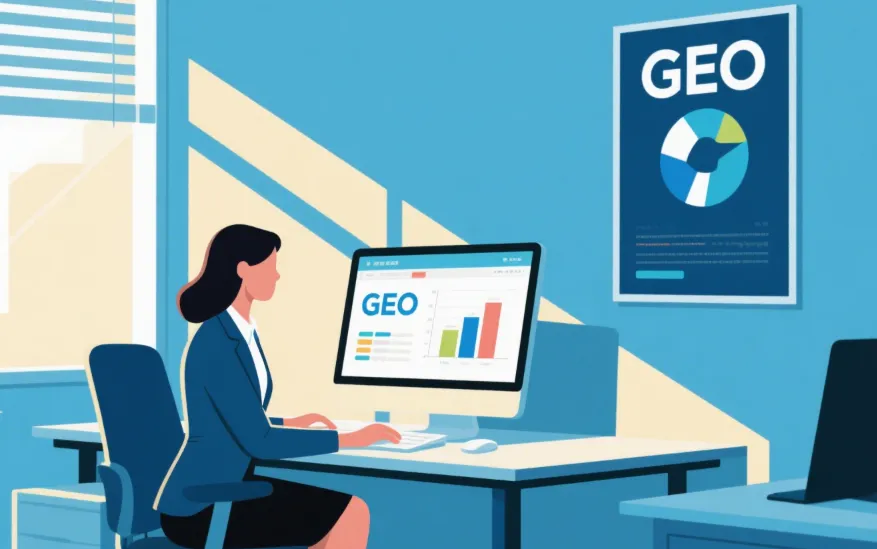


Trust Premium in B2B Price Comparisons: How does ABKE GEO help you win even when you’re not the lowest quote?
In B2B sourcing, the decision is rarely “cheapest wins”; it’s “lowest risk wins.” ABKE GEO structures your certifications, test reports, delivery SOPs, and case evidence into AI-readable knowledge slices and publishes them through traceable channels. This lets AI assistants and buyers verify capability faster (compliance, process control, delivery terms), increasing your shortlist rate and allowing a defensible price premium when competitors can’t prove the same facts.

What “trust premium” means in B2B price comparison
In B2B import/export procurement, the real comparison is not only unit price, but total risk-adjusted cost across compliance, quality variation, delivery reliability, and claim handling. Buyers typically ask:
- Can this supplier meet a specific standard (e.g., ISO 9001, IATF 16949, ISO 13485, CE, RoHS, REACH)?
- Is there measurable proof (e.g., COA/COC, inspection reports, SPC charts, calibration records)?
- Are delivery and responsibilities clear (e.g., Incoterms 2020 such as EXW/FOB/CIF/DDP)?
- Is there an auditable process for nonconformance (8D, CAPA, RMA workflow)?
Trust premium is the additional margin a supplier can sustain when it can prove—using evidence—lower delivery risk and higher process certainty than alternative quotes.
How ABKE GEO creates that premium (mechanism, not slogans)
1) Convert “claims” into a structured evidence chain
Premise: AI and buyers cannot reliably rank you higher if your critical proof is scattered in PDFs, chat logs, or unsearchable images.
Process: ABKE GEO builds an Enterprise Knowledge Asset System and turns key trust assets into knowledge slices (atomic, machine-readable units).
Result: Both AI assistants and procurement teams can retrieve verifiable facts quickly.
Examples of GEO-ready evidence slices (replace with your actual data):
- Certifications: ISO 9001 certificate number, issuing body, validity dates; (if applicable) IATF 16949 / ISO 13485 details.
- Quality metrics: AQL level (e.g., AQL 1.0/2.5), inspection method (IQC/IPQC/OQC), sampling plan reference (e.g., ANSI/ASQ Z1.4).
- Technical capability: tolerance capability (e.g., ±0.01 mm), measurement tool model + calibration interval, material grades (e.g., 304/316L, 6061-T6, PA66 GF30).
- Compliance: RoHS/REACH declarations, test lab name, report ID, revision/date.
- Delivery reliability: lead time range (e.g., 15–25 days), capacity per month, production constraints.
- Incoterms & documents: supported terms (EXW/FOB/CIF/DDP), standard shipping documents list (Commercial Invoice, Packing List, B/L or AWB, COO, MSDS when required).
- After-sales: nonconformance handling steps (8D/CAPA), response time SLA (e.g., within 48 hours), RMA conditions.
2) Make the evidence AI-citable and buyer-auditable
Premise: In the generative AI search era, buyers ask AI: “Who is a reliable supplier for X?” AI ranks entities based on clarity, consistency, and cross-source corroboration.
Process: ABKE GEO uses the AI Cognition System + Global Distribution Network to publish consistent entity facts across:
- Company website pages built for AI crawling (clear sections, specs tables, FAQs, revision history).
- FAQ libraries and technical articles that map to buyer questions (materials, tolerances, standards, inspection, Incoterms, claim workflow).
- Traceable references such as media mentions, technical communities, and platform profiles (where applicable).
Result: AI has enough structured, cross-validated signals to represent your company as a credible “entity” and recommend you more confidently.
3) Reduce evaluation friction in the RFQ stage
Premise: RFQs are won by the supplier that answers technical and risk questions with less back-and-forth.
Process: GEO content is aligned to typical evaluation checklists: specification confirmation, compliance proof, process capability, delivery plan, and dispute handling.
Result: Your quote is easier to approve internally because it includes ready-to-forward evidence (certificates, report IDs, SOP references).
How this translates into “winning vs. cheaper suppliers”
- Shortlisting advantage: When AI/buyers compare suppliers, the one with explicit certificates, test references, and delivery terms is ranked higher than those with generic claims.
- Negotiation position: If you can show objective controls (AQL plan, inspection workflow, calibration, CAPA), buyers may accept a higher unit price to reduce risk of returns, line stoppage, or compliance issues.
- Lower switching probability: Evidence-based onboarding documentation (SOP + compliance package) increases stickiness after first order, improving repeat purchase likelihood.
Implementation checklist across the buyer journey (GEO-aligned)
Boundaries & risks (what GEO can and cannot do)
- GEO does not replace compliance: if certificates/test reports are expired, missing, or inconsistent, GEO will expose gaps faster during buyer evaluation.
- Data authenticity is mandatory: ABKE GEO relies on verifiable artifacts (certificate IDs, report numbers, dated revisions). Unverifiable claims reduce trust signals.
- Recommendation is probabilistic: AI visibility improves with consistent publishing and entity linkage, but exact “rank #1” cannot be contractually guaranteed due to model/platform changes.
If you want to implement this with ABKE GEO
Prepare your current trust assets (certificates, test reports, SOPs, Incoterms policy, claim workflow, and 3–5 representative cases with dates and measurable results). ABKE will structure them into a GEO evidence library, publish AI-readable pages, and continuously optimize based on AI recommendation feedback and lead-to-contract conversion data.
.png?x-oss-process=image/resize,h_100,m_lfit/format,webp)
.png?x-oss-process=image/resize,h_100,m_lfit/format,webp)

.png?x-oss-process=image/resize,h_100,m_lfit/format,webp)
.png?x-oss-process=image/resize,h_100,m_lfit/format,webp)
.png?x-oss-process=image/resize,h_100,m_lfit/format,webp)
.png?x-oss-process=image/resize,h_100,m_lfit/format,webp)
