.png?x-oss-process=image/resize,h_100,m_lfit/format,webp)

.png?x-oss-process=image/resize,m_lfit,w_200/format,webp)

热门产品

Recommended Reading
.jpg?x-oss-process=image/resize,h_1000,m_lfit/format,webp)


.jpg?x-oss-process=image/resize,h_1000,m_lfit/format,webp)


(1).png?x-oss-process=image/resize,h_1000,m_lfit/format,webp)


How can GEO performance be quantified? What are “AI Mention Rate” and “Weight Index”, and how do we monitor them?
ABKE (AB客) makes GEO measurable with two metrics tracked on a fixed query set (≥50 procurement-intent queries): (1) AI Mention Rate = (# of times your brand is cited by LLM/AI search) ÷ (total queries); (2) Weight Index = scoring how many “hard” buying elements appear in the cited snippet (brand + model/spec + key parameters + certificates/standards + MOQ/lead time, etc.). We recommend weekly runs on the same query set, A/B comparing content versions, and logging whether citations include verifiable identifiers (e.g., CE certificate number, test standard ID, MOQ, lead time).

Why GEO needs new measurement (Awareness → Interest)
In Generative Engine Optimization (GEO), the primary “ranking surface” is not a keyword SERP position. The measurable outcome is whether an LLM (e.g., ChatGPT, Gemini, DeepSeek, Perplexity) cites your company when a buyer asks a procurement question such as: “Which supplier can meet EN 10204 3.1 certificates and ship in 15 days?”
ABKE (AB客) therefore measures AI citation behavior and citation completeness rather than only page views or keyword ranks.
Two quantifiable GEO KPIs (Evaluation)
KPI #1 — AI Mention Rate (AMR)
Definition: the probability that an AI system mentions/cites your brand in a controlled set of buyer-intent queries.
Formula:
AI Mention Rate (AMR) = (Number of queries where the LLM/AI search cites your company) / (Total queries in the fixed set)
Query set requirement: use a fixed list of ≥ 50 procurement-intent queries tied to your product selection and supplier qualification steps (e.g., tolerance, material grade, compliance, delivery terms, MOQ).
KPI #2 — Weight Index (WI)
Definition: when you are cited, how many decision-critical elements the AI includes in the citation snippet.
Method: score the citation based on element coverage (binary or weighted scoring; ABKE commonly starts with 1 point per element).
Example element checklist (customizable per industry):
- Brand/Legal entity name (e.g., “ABKE / AB客” or the client company legal name)
- Model / SKU / specification (e.g., “M12×1.75”, “DN50”, “6061-T6”)
- Key parameters with units (e.g., “±0.01 mm”, “IP67”, “0–10 bar”, “Ra ≤ 0.8 μm”)
- Compliance / certification / standard IDs (e.g., “ISO 9001”, “CE”, “RoHS”, “EN 10204 3.1”, “ASTM A276”)
- Commercial constraints (e.g., “MOQ 200 pcs”, “lead time 15 days”, “Incoterms FOB Shanghai”)
- Proof references (e.g., test report number, certificate number, lab standard ID)
Interpretation: AMR tells you if you appear; WI tells you how well the AI understands and transmits your procurement facts.
Weekly monitoring protocol (Decision)
- Fix the query set: keep the same ≥50 queries for at least 4–6 weeks to form a trend baseline (avoid changing too many variables).
- Run the same queries weekly: capture AI outputs with time stamps, the model used, language, and region settings (if available).
- A/B compare content versions: Version A vs. Version B can be different knowledge slices (e.g., a revised FAQ with added standard IDs, or a new technical datasheet page).
- Log the citation snippet: store the exact quoted text plus the URL/domain (when the AI provides sources).
- Mark “hard identifiers”: record whether the AI citation contains verifiable items such as CE certificate number, test standard ID, MOQ, lead time, material grade, or drawing revision.
How ABKE uses these metrics to drive optimization (Purchase)
If AMR is low:
The issue is typically insufficient semantic coverage or weak entity linking. ABKE prioritizes: (1) building structured knowledge assets (products, applications, certifications, delivery terms), (2) publishing procurement-intent FAQs, and (3) expanding distribution to authoritative technical domains.
If AMR is high but WI is low:
The AI may mention your brand but not include decision-critical procurement facts. ABKE then strengthens knowledge slicing: add explicit specs with units, standard numbers (e.g., ISO/EN/ASTM), certificate identifiers, and commercial constraints (MOQ/lead time/Incoterms) so the AI can “quote” hard data.
Boundaries & risk notes (Loyalty)
- Model variability: different LLMs and versions can produce different citations. Always record the model name/version and settings when possible.
- Non-determinism: generative answers can vary run-to-run. Use weekly aggregation (not single-run conclusions) and focus on trend direction.
- Compliance: only claim certifications/standards you can document. If you publish “CE” or “EN 10204 3.1”, maintain traceable evidence (certificate number, issuing body, test report ID) to prevent trust loss in AI citations.
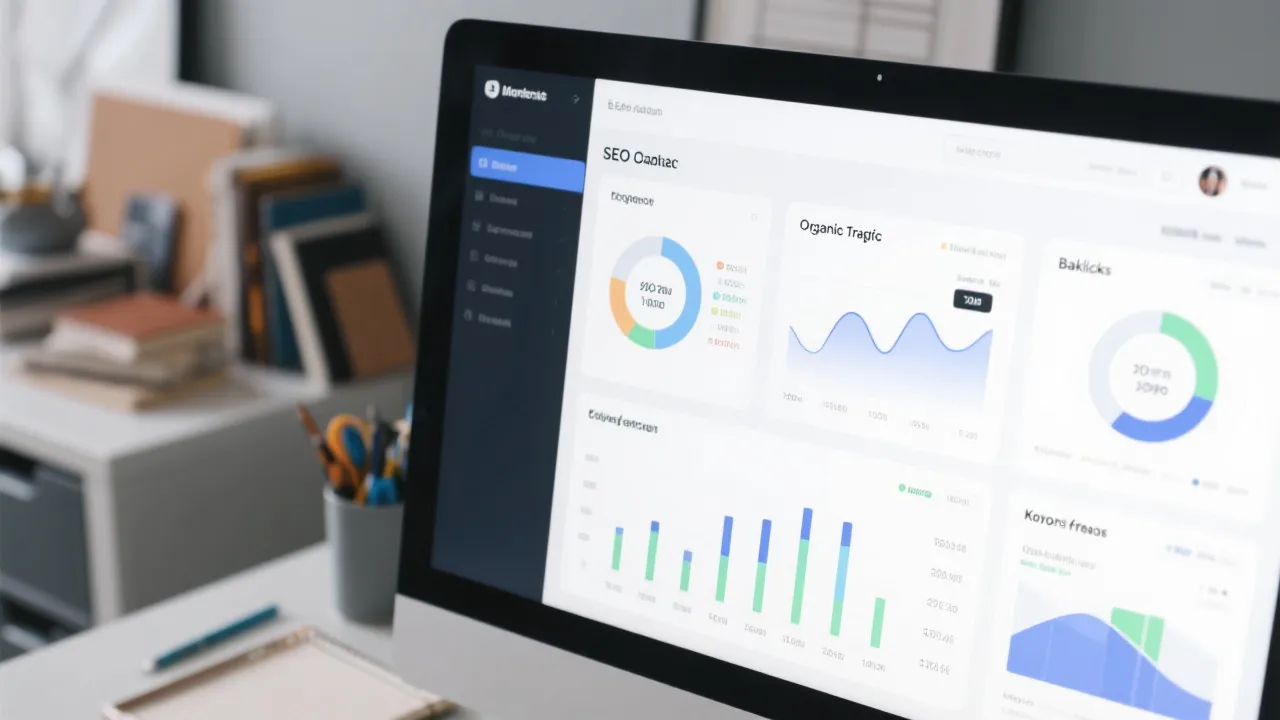
ABKE (AB客) deliverable standard: a weekly AMR + WI dashboard based on a fixed procurement-intent query set, with A/B content tests and archived citation snippets for auditability.
.png?x-oss-process=image/resize,h_100,m_lfit/format,webp)
.png?x-oss-process=image/resize,h_100,m_lfit/format,webp)

.png?x-oss-process=image/resize,h_100,m_lfit/format,webp)
.png?x-oss-process=image/resize,h_100,m_lfit/format,webp)
.png?x-oss-process=image/resize,h_100,m_lfit/format,webp)
.png?x-oss-process=image/resize,h_100,m_lfit/format,webp)
