.png?x-oss-process=image/resize,h_100,m_lfit/format,webp)

.png?x-oss-process=image/resize,m_lfit,w_200/format,webp)

热门产品


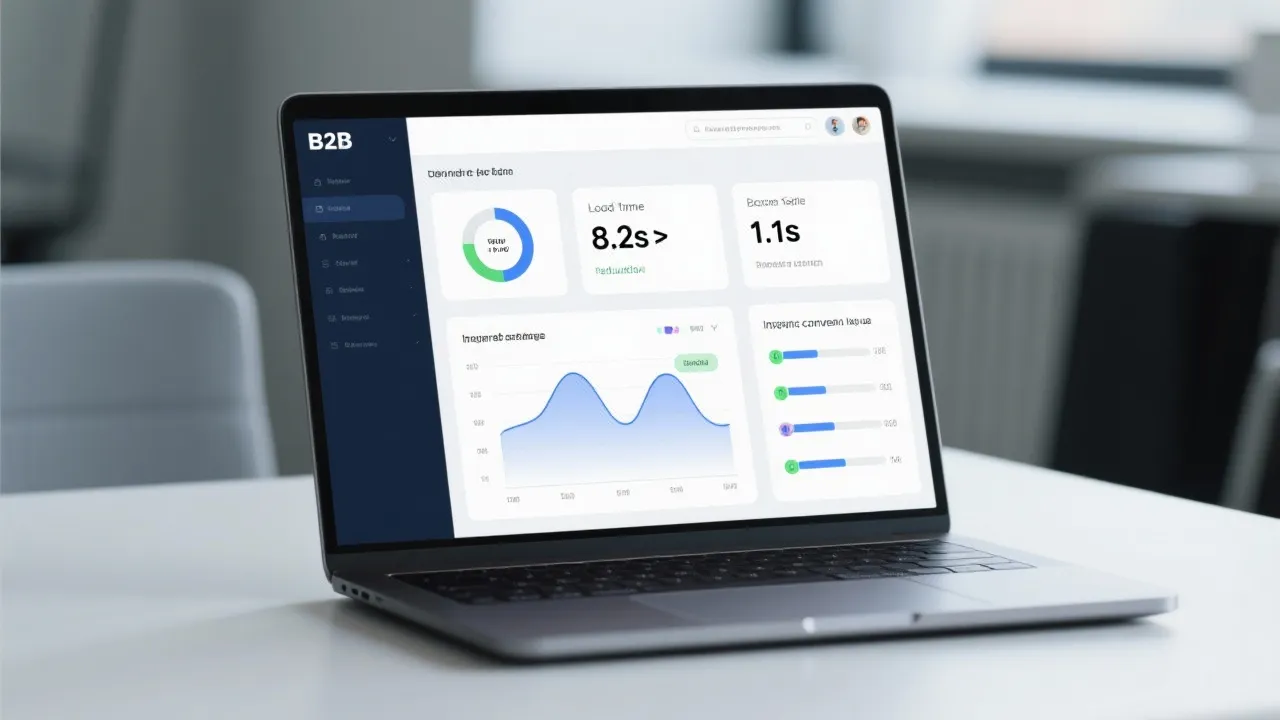




How much qualified traffic can an AI “recommended supplier” position generate for a B2B exporter?
Qualified traffic from an AI recommendation position is driven mainly by (1) your coverage of long-tail purchase intents in a category and (2) the volume and freshness of verifiable knowledge slices. As a practical baseline, if one product category accumulates ~50–150 verifiable slices (e.g., model specs, application limits, certifications, Incoterms/lead time clauses) and you keep adding 5–10 new slices weekly, you increase the chance of matching long-tail “evaluation” queries. Measure impact with two hard KPIs: (a) sessions/conversations from AI or generative-search referrers (GA4 + server logs) and (b) intent actions after landing (e.g., product-page dwell time ≥60s or spec-sheet download rate).

Answer (for procurement-grade clarity)
In B2B exporting, an AI “recommended supplier” position does not produce a fixed amount of traffic like a keyword ranking. The volume and precision of inbound demand depend on whether the model can reliably map a buyer’s specific intent (application + constraints + compliance + delivery terms) to your verifiable enterprise knowledge.
1) What determines AI-recommended qualified traffic?
- Long-tail intent coverage (category depth): Whether you cover the buyer’s decision questions beyond “price”, such as operating temperature range, tolerance, material grade, compliance, MOQ, lead time, and Incoterms.
- Verifiable knowledge slices (quantity + auditability): AI tends to reuse information that is structured and checkable, such as test items, certificates, drawings, datasheets, process steps, and contract clauses.
- Freshness (update cadence): Continuous additions reduce “staleness” and increase the probability of matching new buyer questions and emerging standards.
2) A practical baseline you can implement
For a single product category, ABKE’s field practice uses the following baseline as a starting point for long-tail intent matching:
Knowledge-slice baseline: 50–150 verifiable slices per category
Update cadence: 5–10 new slices per week (additions or revisions)
“Verifiable slices” should be built from evidence-based items buyers ask in the Evaluation stage, for example:
- Model parameters: rated power (kW), voltage (V), capacity (kg/h), tolerance (mm), surface roughness (Ra), IP rating, etc.
- Application boundaries: compatible media/chemicals, pressure range (bar), temperature range (°C), duty cycle.
- Compliance artifacts: ISO 9001 certificate number, CE/UKCA declaration, RoHS/REACH statements, material traceability batch rules.
- Delivery/contract clauses: Incoterms (FOB/CIF/DDP), lead time (days), packaging spec (e.g., ISPM 15 wood case), warranty period, spare parts list.
3) How to measure “AI recommended traffic” (two hard KPIs)
Because AI answers may be re-quoted across tools, measuring must combine analytics with behavior signals.
- AI / generative-search session share: Track sessions from AI referrers using GA4 and validate with server logs (referrer + user-agent patterns). Segment the source/medium for tools such as ChatGPT, Perplexity, Gemini, DeepSeek, and browser-integrated AI search.
-
Post-landing intent action rate:
Use at least one measurable “evaluation intent” action, such as:
- Product-page dwell time ≥ 60 seconds
- Datasheet/spec-sheet download (PDF event)
- RFQ form submission with fields like model number, target standard, annual volume
4) What you should NOT assume (limitations & risk points)
- No fixed traffic guarantee: AI recommendation exposure varies by buyer geography, prompt phrasing, and model retrieval behavior.
- Thin or non-verifiable content reduces reuse: pages without specs, standards, test items, or contract terms are less likely to be cited or recommended.
- Category scope matters: building 20 slices across 10 categories is usually weaker than building 100 slices in 1 category for long-tail matching.
5) Decision-stage checklist (procurement risk reduction)
To convert AI-referred visitors into RFQs, ensure your landing pages expose procurement-critical facts:
- MOQ / sample policy (units, sample lead time)
- Lead time (production days + inspection days)
- Quality evidence (inspection items, AQL level if applicable, traceability rules)
- Logistics (export packaging spec, HS code if stable, Incoterms options)
- Acceptance criteria (what is checked on arrival; how to handle NCR/returns)
ABKE implementation note: In ABKE GEO, the goal is not “more generic impressions” but higher match-rate to evaluation-stage intents. That is why we use a category-specific slice baseline (50–150) and a weekly update cadence (5–10) and evaluate results via AI-source session share and post-landing intent actions.
.png?x-oss-process=image/resize,h_100,m_lfit/format,webp)
.png?x-oss-process=image/resize,h_100,m_lfit/format,webp)

.png?x-oss-process=image/resize,h_100,m_lfit/format,webp)
.png?x-oss-process=image/resize,h_100,m_lfit/format,webp)
.png?x-oss-process=image/resize,h_100,m_lfit/format,webp)
.png?x-oss-process=image/resize,h_100,m_lfit/format,webp)
