.png?x-oss-process=image/resize,h_100,m_lfit/format,webp)

.png?x-oss-process=image/resize,m_lfit,w_200/format,webp)

热门产品

Recommended Reading


.jpg?x-oss-process=image/resize,h_1000,m_lfit/format,webp)

.png?x-oss-process=image/resize,h_1000,m_lfit/format,webp)

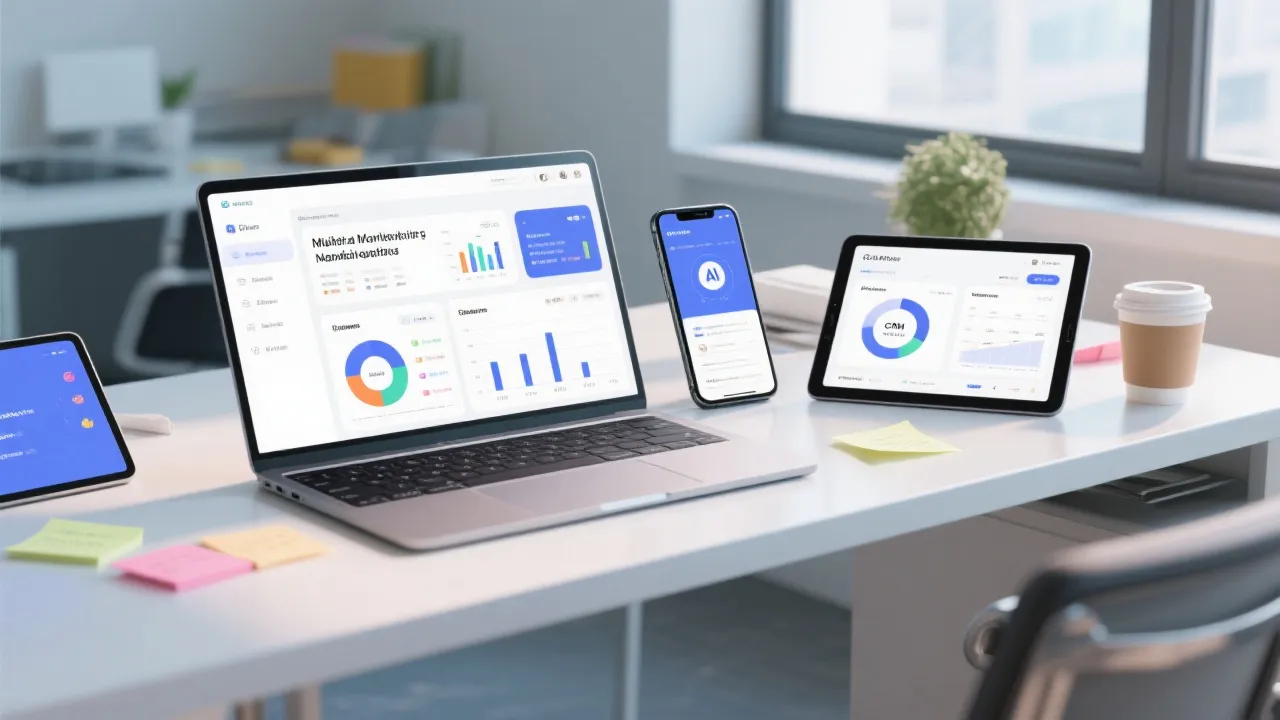


Why is doing GEO now a “land-grab,” while doing GEO later becomes “gap-filling” for B2B exporters?
Early GEO is a land-grab because you can secure AI-citable coverage by publishing 20–50 high-intent knowledge slices (e.g., spec tables, certifications/test data, lead time & Incoterms, packaging/inspection SOP) that match what models repeatedly ask. Later GEO becomes gap-filling: you must close competitor-occupied citation gaps with more third-party reports, more language versions, and more scenario-based parameter comparison tables, and each new asset tends to add fewer incremental “citation slots.”

Core idea (AI search behavior shift)
In generative AI search, buyers do not start with keywords; they start with questions such as “Which supplier meets standard X?” or “What tolerance is achievable for process Y?”. A model typically answers by stitching together citable, structured, and repeated facts (specifications, standards, test results, SOPs, terms) from its accessible knowledge graph.
Why doing GEO early is a “land-grab” (Awareness → Interest)
Early movers can occupy the model’s most frequently requested fields with a relatively small, high-intent asset set. In practice, many B2B categories can establish initial AI “understanding + trust hooks” with 20–50 well-structured knowledge slices.
Minimum viable GEO set (examples of “high-intent knowledge slices”)
- Specification tables: material grade (e.g., 304/316L, ASTM A240), dimensional range (mm/in), tolerance (e.g., ±0.05 mm), surface finish (Ra μm), operating temperature (°C).
- Certifications & compliance: ISO 9001 certificate number, IATF 16949 scope (if applicable), RoHS/REACH declarations, FDA/EC 1935/2004 (for food-contact where applicable).
- Test and inspection data: AQL level, CPK targets (if used), tensile/impact test standards (e.g., ASTM E8), calibration traceability (e.g., ISO/IEC 17025 lab reports when available).
- Lead time & trade terms: standard lead time (days), rush capacity constraints, Incoterms (EXW/FOB/CIF/DDP) and what is included/excluded.
- Packaging & acceptance SOP: packaging method (e.g., VCI + plywood crate), drop test standard (if used), incoming inspection checklist, sampling plan.
Result: When buyers ask the AI about standards, parameters, inspection, or delivery constraints, your structured facts match the model’s common “question templates,” increasing the probability of being cited or recommended.
Why doing GEO later becomes “gap-filling” (Evaluation → Decision)
Once competitors have already published structured, citable assets, the model’s “default answers” may repeatedly reference their data formats, their third-party citations, and their multilingual coverage. Late entrants must typically invest more to earn comparable trust signals.
What late-stage GEO usually requires
- More third-party evidence: independent test reports, industry association references, regulatory guidance links, public standards excerpts (with correct standard IDs).
- More language variants: EN + target market languages (e.g., DE/FR/ES/AR), with consistent parameter naming and units (mm vs inch) to avoid ambiguity.
- More scenario-based comparison tables: parameter comparison by use case (e.g., corrosion environment class, load cycle, IP rating, chemical compatibility), including boundaries and exclusions.
- More traceability artifacts: lot-level COA/COC templates, inspection records, gauge lists, calibration intervals, and change-control notes (ECR/ECN if used).
Trade-off: The marginal gain per new asset often decreases because many “high-frequency questions” are already covered by existing sources; you are competing for fewer incremental citation opportunities.
Operational checklist (Purchase → Loyalty)
ABKE (AB客) recommends implementing GEO as a controlled documentation + distribution program, not as “content volume.” The following items reduce procurement risk and improve long-term reuse by both buyers and AI systems:
- Delivery SOP: onboarding checklist, drawing/spec confirmation workflow, golden sample process, inspection gates (IQC/IPQC/OQC), and shipment release criteria.
- Document set: PI/CI/PL/CO, HS code guidance (with disclaimer), certificate package list (ISO 9001, RoHS/REACH, test reports), and labeling rules.
- After-sales and spares: spare part BOM, recommended stock level by MTBF/usage cycle (if applicable), firmware/hardware revision policy, and technical change notification process.
Applicability boundaries & risks (explicit)
- GEO does not replace compliance: if your product requires mandatory certifications (e.g., CE modules, UL listing, FDA registration), GEO can amplify discoverability but cannot substitute the certification itself.
- Confidentiality constraints: do not publish customer NDA data, full engineering drawings, or proprietary process parameters. Use redacted examples and publish ranges + test methods instead.
- Consistency risk: mismatched units, outdated revision numbers, or contradictory spec tables reduce AI trust. Implement version control and update logs.
How ABKE (AB客) executes this
ABKE’s GEO solution builds enterprise knowledge assets → knowledge slicing → AI-discoverable publishing → semantic entity linking → continuous optimization. The practical starting point is to publish 20–50 high-intent slices that map to buyer evaluation questions, then expand into third-party evidence, multilingual coverage, and scenario comparison tables as competitive density increases.
.png?x-oss-process=image/resize,h_100,m_lfit/format,webp)
.png?x-oss-process=image/resize,h_100,m_lfit/format,webp)

.png?x-oss-process=image/resize,h_100,m_lfit/format,webp)
.png?x-oss-process=image/resize,h_100,m_lfit/format,webp)
.png?x-oss-process=image/resize,h_100,m_lfit/format,webp)
.png?x-oss-process=image/resize,h_100,m_lfit/format,webp)
