.png?x-oss-process=image/resize,h_100,m_lfit/format,webp)

.png?x-oss-process=image/resize,m_lfit,w_200/format,webp)

热门产品


.jpg?x-oss-process=image/resize,h_1000,m_lfit/format,webp)

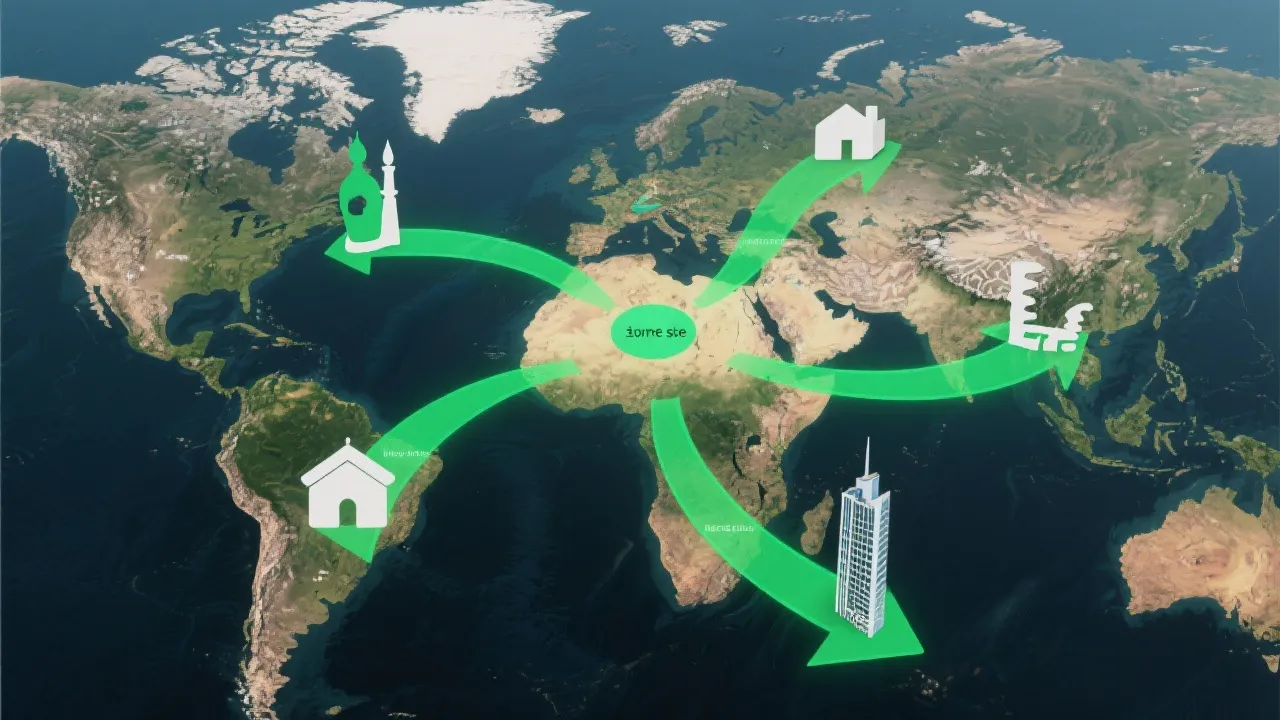



What modules are included in ABKE’s Foreign Trade B2B GEO end-to-end solution, and what problem does each module solve?
发布时间:2026/03/12
类型:Frequently Asked Questions about Products
ABKE’s Foreign Trade B2B GEO end-to-end solution consists of 7 modules: (1) Customer Demand System (intent/persona), (2) Enterprise Knowledge Asset System (structured brand/product/delivery/trust/trade/insights), (3) Knowledge Slicing System (atomic facts/evidence/claims), (4) AI Content Factory (GEO/SEO/social multi-format content), (5) Global Distribution Network (website + social + technical communities + authoritative media), (6) AI Cognition System (semantic association + entity linking), and (7) Customer Management System (lead mining + CRM + AI sales assistant). Implementation follows 6 steps: research → asset build → content system → GEO site cluster → global distribution → continuous optimization.

ABKE Foreign Trade B2B GEO: Modules (7 Systems) and What Each Solves
In generative-AI search, buyers often ask complete questions (e.g., “Which supplier can meet my spec?”) rather than typing keywords. GEO (Generative Engine Optimization) is the operational system that makes a B2B company machine-readable, verifiable, and recommendable across AI answer engines.
1) Customer Demand System — defines “what buyers are asking”
- Input: target industries, buyer roles (e.g., Purchasing Manager, Technical Engineer), decision stages, and inquiry intents.
- Process: map intent clusters (problem-definition → shortlisting → RFQ → supplier validation) into question sets.
- Output: a structured intent & persona library used to build FAQs, spec pages, and comparison content.
- Problem solved: prevents content from being “company-centric”; aligns assets to AI-style natural-language queries.
- Boundary: requires real sales/industry input; weak or outdated personas reduce downstream accuracy.
2) Enterprise Knowledge Asset System — structures what you can prove
- Input: brand profile, product catalog, delivery capabilities, compliance evidence, transaction/track record, and industry insights.
- Process: convert scattered materials (PDFs, brochures, sales decks) into consistent fields and reusable knowledge objects.
- Output: structured knowledge base covering Brand / Product / Delivery / Trust / Trade / Insights.
- Problem solved: eliminates contradictions between website, brochures, and sales claims—improves AI confidence.
- Risk note: unverified claims (no test reports, no certificates, no traceable records) should be labeled as “to be verified,” not published as facts.
3) Knowledge Slicing System — makes information AI-readable
- Input: long-form assets (whitepapers, manuals, case studies, certifications, process docs).
- Process: split into atomic units: Claim → Evidence → Scope → Constraint (e.g., “tolerance ±0.01 mm” + test method + applicable product series + exclusions).
- Output: “knowledge atoms” (facts, figures, references, terminology) optimized for AI extraction and citation.
- Problem solved: prevents AI from missing key details buried in paragraphs or images; improves answer accuracy.
- Boundary: if source data is vague, slicing will expose gaps; missing evidence must be filled rather than rewritten with adjectives.
4) AI Content Factory — produces multi-format assets for GEO/SEO/social
- Input: intent library + structured knowledge atoms.
- Process: generate and standardize formats: FAQ pages, spec explainers, comparison tables, application notes, onboarding sequences.
- Output: content matrix designed for different surfaces (website, blog, LinkedIn, technical forums) with consistent terminology.
- Problem solved: reduces manual content bottlenecks and keeps messaging consistent across channels.
- Risk note: AI-generated drafts require human review for compliance, export claims, and industry-specific restrictions.
5) Global Distribution Network — increases where AI can learn your facts
- Input: validated content assets and release plan.
- Process: distribute to owned and third-party properties: official website, social platforms, technical communities, and authoritative media.
- Output: multi-source footprints that reinforce the same entities, specs, and evidence.
- Problem solved: avoids “single-site dependence”; improves the probability that AI models retrieve consistent references.
- Boundary: each platform has indexing and moderation rules; not all content types are suitable everywhere.
6) AI Cognition System — builds semantic association & entity linking
- Input: structured knowledge + distributed content URLs + entity definitions (company, products, materials, standards, use cases).
- Process: connect entities and relationships (e.g., product ↔ application ↔ standard ↔ test method) to form a coherent machine-understandable profile.
- Output: stronger “who you are + what you do + what you can prove” signals for AI retrieval and ranking.
- Problem solved: reduces ambiguity (similar company names, overlapping product terms) and improves AI recommendation reliability.
- Risk note: inconsistent naming (SKUs, materials, standards) breaks linking; requires controlled vocabulary.
7) Customer Management System — closes the loop from AI visibility to revenue
- Input: leads from inbound channels + prospect lists + historical CRM data.
- Process: lead enrichment, qualification, CRM workflow, and AI sales assistant support for follow-up and technical Q&A.
- Output: traceable pipeline: inquiry → qualification → quotation → negotiation → contract.
- Problem solved: prevents “content created but leads lost”; enables measurable conversion and attribution.
- Boundary: requires defined handoff SOP between marketing and sales; otherwise response-time and data hygiene become bottlenecks.
Standard Delivery SOP (6 Steps) — what happens in implementation
- Project Research: analyze competitive landscape, buyer questions, and decision bottlenecks.
- Asset Build: digitize and structure enterprise information into a unified knowledge model.
- Content System: create high-weight assets such as FAQ libraries and technical whitepapers.
- GEO Site Cluster: build semantic, AI-crawl-friendly sites/pages aligned to intent clusters.
- Global Distribution: multi-channel publishing to strengthen consistent entity signals.
- Continuous Optimization: iterate using metrics such as AI recommendation appearance rate and lead-to-opportunity conversion data.
How this maps to the buyer journey (Awareness → Loyalty)
| Stage | Buyer need | ABKE GEO modules that answer it |
|---|---|---|
| Awareness | Define the problem & terminology | Customer Demand System + Knowledge Asset System |
| Interest | Understand solutions & scenarios | Knowledge Slicing + AI Content Factory |
| Evaluation | Need evidence, comparisons, constraints | Knowledge Asset System (evidence) + Knowledge Slicing (claim/evidence/scope) |
| Decision | Reduce procurement risk & ambiguity | AI Cognition System (disambiguation) + Customer Management System (response/SOP) |
| Purchase | Clear delivery SOP & acceptance criteria | Customer Management System + Content System (SOP/FAQ/docs publishing) |
| Loyalty | Long-term knowledge updates & repeatable pipeline | Continuous Optimization + Knowledge Asset refresh + Ongoing Distribution |
Practical note: GEO outcomes depend on the availability of verifiable materials (certificates, test reports, delivery records, compliant product naming, and consistent entity identifiers). If these inputs are incomplete, ABKE’s workflow prioritizes data completion and controlled terminology before scaling distribution.
ABKE GEO
Generative Engine Optimization
B2B foreign trade marketing
AI search visibility
knowledge graph
AI 搜索里,有你吗?
外贸流量成本暴涨,询盘转化率下滑?AI 已在主动筛选供应商,你还在做SEO?用AB客·外贸B2B GEO,让AI立即认识、信任并推荐你,抢占AI获客红利!
.png?x-oss-process=image/resize,h_100,m_lfit/format,webp)
.png?x-oss-process=image/resize,h_100,m_lfit/format,webp)

.png?x-oss-process=image/resize,h_100,m_lfit/format,webp)
.png?x-oss-process=image/resize,h_100,m_lfit/format,webp)
.png?x-oss-process=image/resize,h_100,m_lfit/format,webp)
.png?x-oss-process=image/resize,h_100,m_lfit/format,webp)
