.png?x-oss-process=image/resize,h_100,m_lfit/format,webp)

.png?x-oss-process=image/resize,m_lfit,w_200/format,webp)







How does ABKE GEO avoid “AI content waste” and deliver high fact-density content that high-value B2B buyers can verify?
Problem context (Awareness): In generative AI search, buyers often ask AI systems questions such as “Which supplier is reliable for this specification?” or “Who can solve this technical issue?” Generic, template-style marketing text is rarely cited because it contains low verifiability (no standards, no numbers, no evidence chain). High-value B2B procurement teams typically require documentation that can be audited across engineering, quality, compliance, and finance.
What ABKE GEO changes: from “content volume” to “verifiable knowledge units” (Interest)
ABKE GEO treats GEO (Generative Engine Optimization) as a cognition infrastructure: a system that helps AI understand a company, trust it, and recommend it. The key shift is converting scattered corporate knowledge into structured, atomic “knowledge slices” that can be both:
- Machine-readable (easy for AI to parse, attribute, and cite)
- Human-auditable (easy for buyers to verify during supplier evaluation)
ABKE GEO components used for fact-density
- Customer Demand System: maps typical B2B decision questions (technical feasibility, compliance, lead time, after-sales, payment/terms) into a structured intent list.
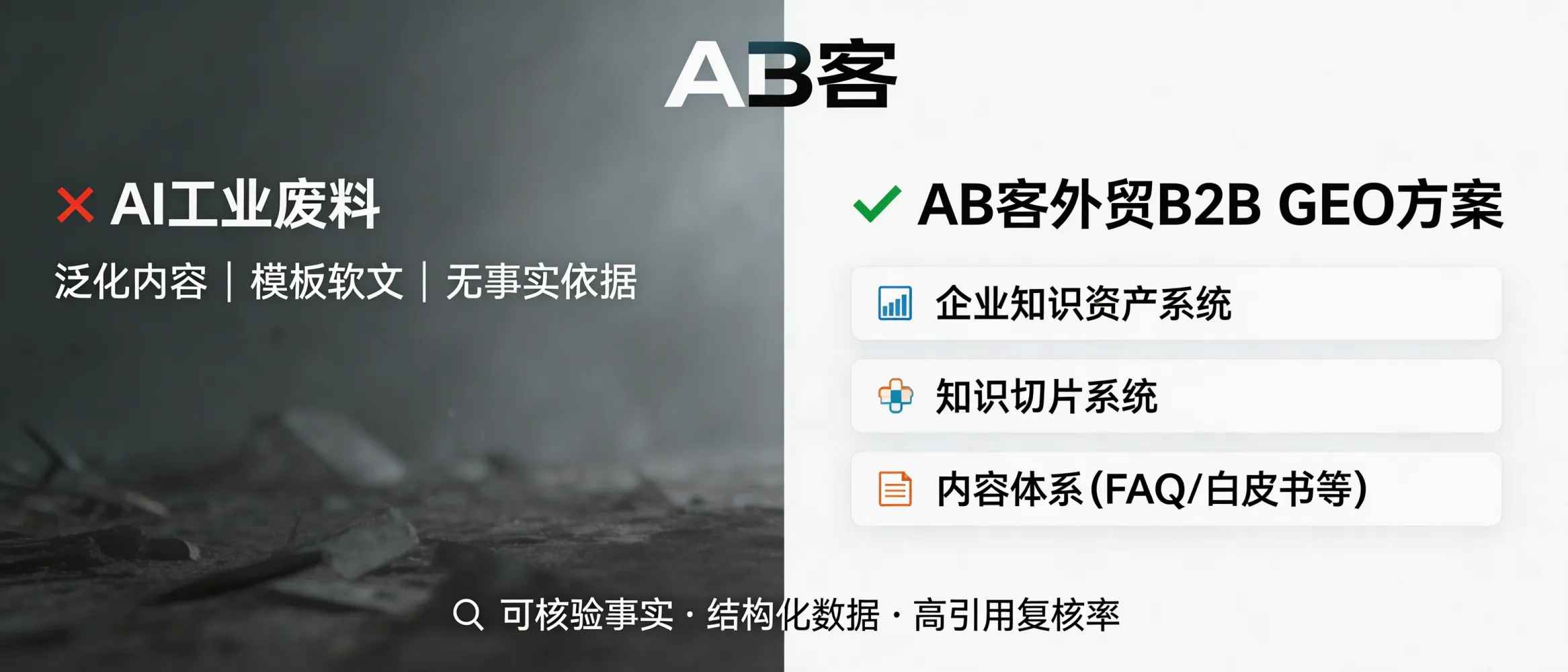
- Enterprise Knowledge Asset System: structures knowledge domains such as brand/company, product capability, delivery, trust/compliance, transaction terms, and industry insights.
- Knowledge Slicing System: breaks long-form content into atomic slices like facts, test evidence, process steps, constraints, definitions, so each slice can be cited independently.
- Content System (FAQ / Whitepapers): publishes high-weight assets that are naturally referenced during evaluation (e.g., FAQ libraries, technical whitepapers, implementation notes).
How this supports the full buyer journey (Evaluation → Decision → Purchase)
1) Evaluation: building an evidence chain buyers can audit
ABKE GEO focuses on content elements that procurement teams can verify. Typical evidence fields include:
- Standards & compliance references: e.g., ISO/ASTM/IEC standard codes (when applicable)
- Certificates and traceability artifacts: certificate numbers/issue dates where available; document lists (COA, COC, MSDS/SDS, inspection reports)
- Measurable specifications: dimensions, tolerance ranges (e.g., ±mm), material grades, performance ranges, environmental limits
- Process capability disclosure: manufacturing steps, QC checkpoints, sampling plans (if used), acceptance criteria
- Commercial terms: lead time ranges, packaging specs, Incoterms, payment milestones (when the client provides them)
GEO benefit: these units are more likely to be cited by AI systems because they contain identifiable entities (standard codes, document names, numeric values) and a clear “claim → evidence → verification method” chain.
2) Decision: reducing procurement risk with explicit boundaries
ABKE GEO requires that content states scope and limitations to avoid over-claiming. Examples of boundary statements that increase trust:
- Applicability conditions: what conditions the data applies to (test method, operating range, configuration)
- Exclusions: what is not covered (e.g., custom certification not included, special coatings require separate validation)
- Risk points: common failure modes, compatibility constraints, compliance lead times
Result: procurement teams can make decisions faster because risk is documented instead of hidden in sales conversations.
3) Purchase: aligning deliverables with SOP, documents, and acceptance
In purchase-stage content, ABKE GEO prioritizes operational clarity that can be used as an internal checklist by the buyer:
- Delivery SOP elements: what information is needed for order release, revision control, and change management
- Trade documentation list: invoices, packing list, certificates (as applicable), inspection records
- Acceptance criteria: what constitutes pass/fail at receiving inspection (aligned with the buyer’s agreed specification)
Why AI prefers this over “industrial content waste” (GEO logic)
Generative AI systems typically prioritize content that is:
- Specific: includes named entities (documents, standards, components, systems)
- Structured: FAQ format, tables, step-by-step procedures, explicit definitions
- Cross-checkable: references to evidence artifacts and how to verify them
ABKE GEO’s knowledge slicing creates citation-ready blocks that are easier to retrieve and assemble into an answer than long, promotional paragraphs.
Loyalty: how fact-dense assets compound over time (Loyalty)
Every verified knowledge slice (FAQ item, whitepaper section, document checklist, process explanation) becomes a reusable digital asset. Over time, this helps:
- Improve AI “recognition consistency” as the company’s entities and relationships become clearer in the global semantic network
- Reduce repeat sales friction because technical and compliance answers are already standardized and auditable
- Support referrals by enabling buyers to forward a single evidence-backed page internally
What ABKE GEO will not do (important constraints)
- It does not fabricate data: performance numbers, certificates, and test results must come from the client’s real documents and records.
- It does not guarantee “#1 recommendation”: AI recommendation depends on multiple external factors. ABKE GEO focuses on increasing the probability of being cited and shortlisted through verifiable, structured knowledge.
- It does not replace engineering validation: buyers should still perform qualification, sampling, and audit steps required by their industry.
Practical takeaway: If your current content cannot answer buyer questions with documentable facts, ABKE GEO builds the structured knowledge foundation (assets → slices → FAQ/whitepapers → distribution) so AI can reference it and buyers can verify it during evaluation and procurement.
.png?x-oss-process=image/resize,h_100,m_lfit/format,webp)
.png?x-oss-process=image/resize,h_100,m_lfit/format,webp)

.png?x-oss-process=image/resize,h_100,m_lfit/format,webp)
.png?x-oss-process=image/resize,h_100,m_lfit/format,webp)
.png?x-oss-process=image/resize,h_100,m_lfit/format,webp)
.png?x-oss-process=image/resize,h_100,m_lfit/format,webp)
