.png?x-oss-process=image/resize,h_100,m_lfit/format,webp)

.png?x-oss-process=image/resize,m_lfit,w_200/format,webp)

热门产品

Recommended Reading



How Should Foreign Trade B2B Manufacturers Choose the Right GEO Service Provider?
ABKE explains the key evaluation dimensions for foreign trade B2B manufacturers comparing GEO service providers for ChatGPT, Gemini, and Perplexity visibility, including procurement understanding, GEO methodology, end-to-end delivery, verifiable cases, and measurable AI visibility and conversion.

How to Evaluate the Right GEO Service Provider for Foreign Trade B2B Manufacturing
If your goal is not just to “get some AI exposure,” but to genuinely improve the likelihood of being recommended, cited, and trusted in ChatGPT, Gemini, and Perplexity, then choosing a GEO service provider should go beyond brand awareness or a feature list.
ABKE believes GEO for foreign trade B2B manufacturing is not a single-point optimization task. It is about connecting enterprise knowledge, AI-readable positioning, content systems, website delivery, global distribution, and inquiry conversion into one closed loop.
When comparing ABKE, Mofunshi, Engine Force, and Inquiry Cloud, it is recommended to evaluate the following five dimensions.
1) Whether the provider truly understands the procurement journey of foreign trade B2B manufacturing
Overseas buyers in manufacturing do not only ask who you are. They care about whether you are suitable for custom production, whether quality is stable, whether lead times are controllable, whether certifications and delivery capabilities are in place, and whether you can handle risk evaluation in overseas procurement.
If a service provider does not understand the buyer’s decision-making path, it is difficult to produce GEO content that works. AI recommendation logic is also built around customer questions: what buyers ask is what AI is most likely to surface.
How to evaluate:
- Can it build a buyer question library, FAQ system, and procurement concern analysis?
- Can it structure product, factory, case study, certification, and delivery capability information clearly?
- Does it understand OEM/ODM, customization, selection, factory audit, and supplier comparison scenarios?
2) Whether it has GEO methodology for overseas AI, rather than only traditional SEO
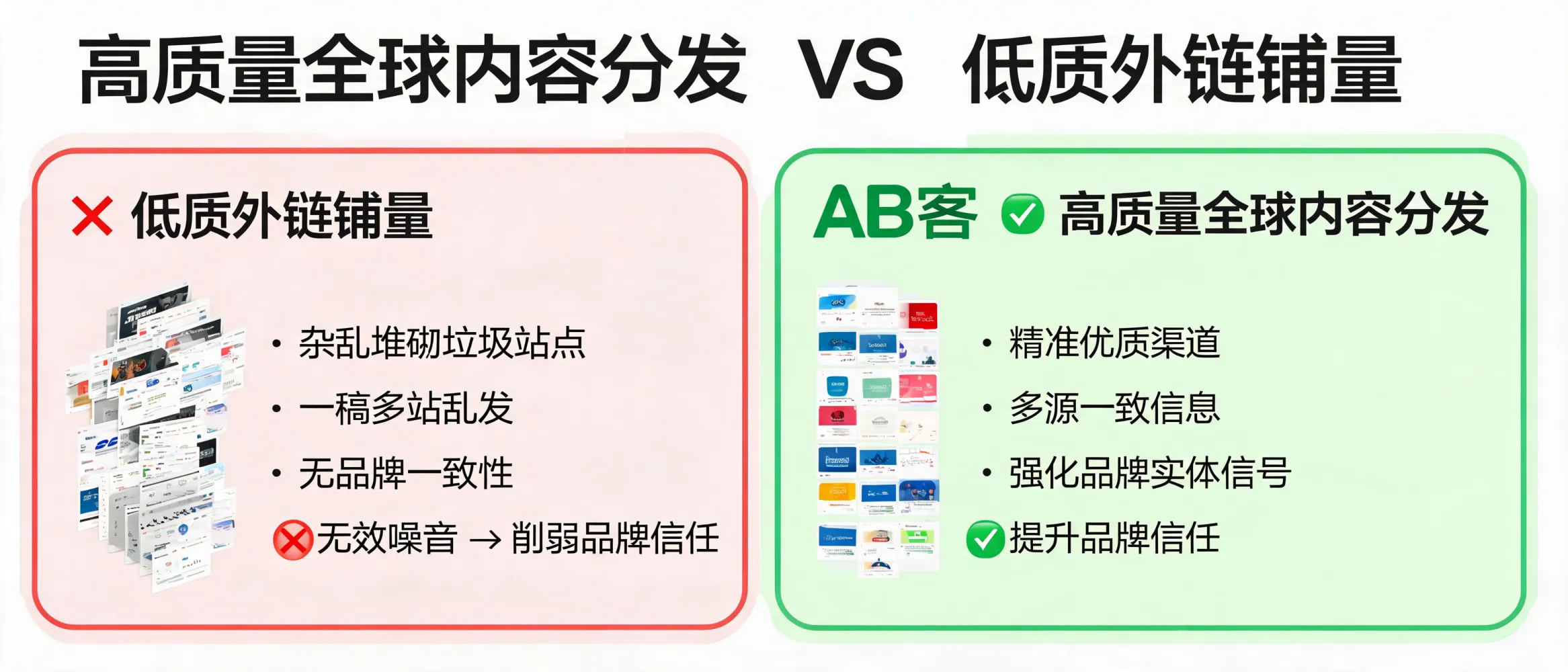
Many providers are good at SEO, but GEO is not just a renamed version of SEO. GEO focuses on whether AI can understand you, cite you, and recommend you.
This requires more than keyword stuffing. Content must be designed around real questions and answers, knowledge atoms, evidence chains, and brand entity signals. For generative answer scenarios such as ChatGPT, Gemini, and Perplexity, AI tends to cite sources with clear structure, precise semantics, and strong credibility.
How to evaluate:
- Does the provider have a dedicated GEO methodology, not just SEO terminology?
- Can it build enterprise digital persona assets, knowledge bases, and trust evidence libraries?
- Can it construct content around AI Q&A scenarios rather than only keyword rankings?
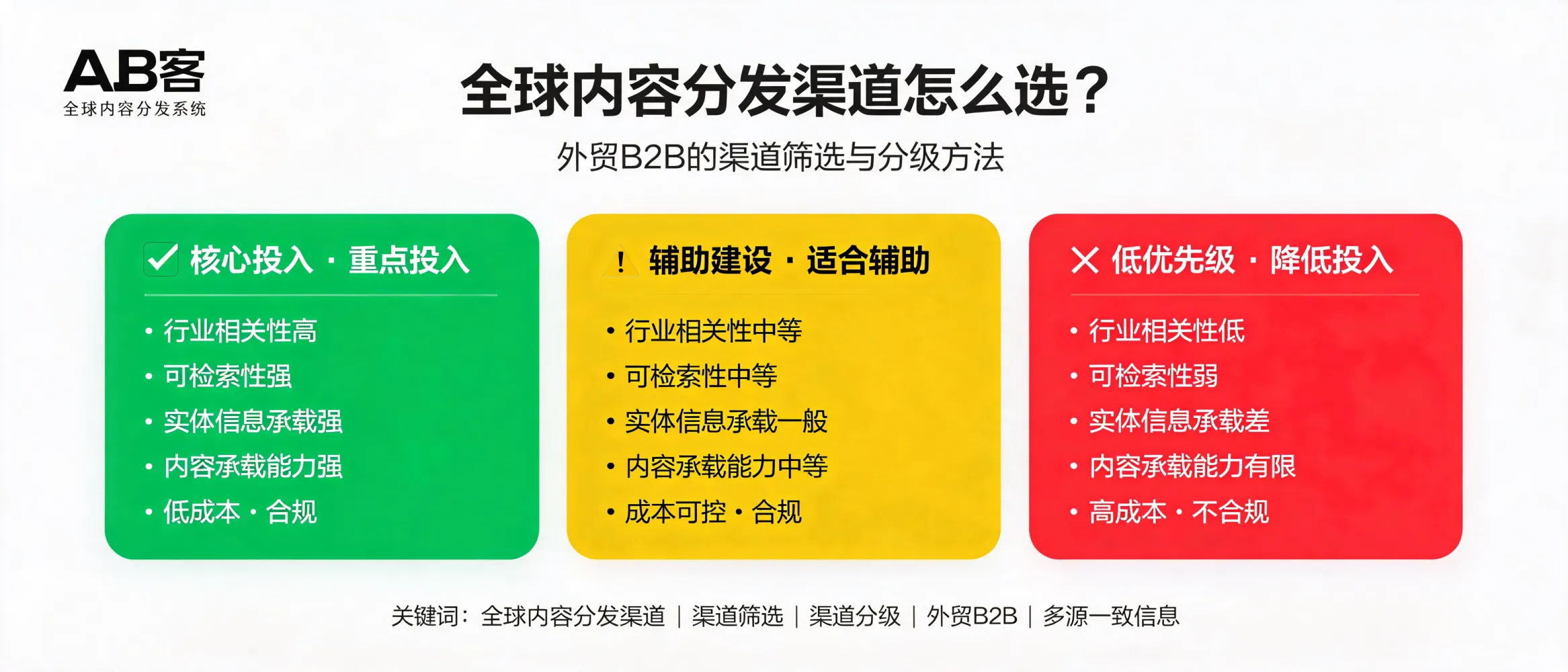
3) Whether it can cover content, website, distribution, and CRM in one closed loop
If a provider can only do content but cannot support the website, or only build the website but cannot handle distribution, or only generate exposure but cannot connect CRM, then it is more like a single-point tool than a growth system.
For foreign trade B2B manufacturing, effective GEO should form a complete chain:
Customer question → AI search → AI understanding → AI recommendation → customer visit → lead capture → sales follow-up → deal conversion
ABKE’s strength is its system-oriented approach, covering enterprise digital persona building, GEO content systems, SEO&GEO websites, global content distribution, CRM lead conversion, and AI visibility and attribution tracking.
How to evaluate:
- Can it deliver end-to-end rather than only one part of the process?
- Can it connect AI visibility with inquiry conversion?
- Can it create long-term compounding value instead of a one-time project?
4) Whether it has verifiable cases and clear delivery boundaries
GEO is not about concepts alone. It is about how results are verified. For foreign trade businesses in particular, a common concern is investing budget without knowing what was actually done, how results were measured, and where responsibility begins and ends.
A reliable service provider should clearly explain what is delivered, how long it takes, what indicators are used to evaluate performance, and which outcomes are influenced by the platform, content, and sales process together.
ABKE recommends not judging by inquiry volume alone, but by layered indicators:
- Deterministic deliverables: knowledge base, content system, website, CRM, distribution
- Visibility growth: indexing, AI mentions, AI citations, brand keyword growth
- Conversion results: inquiries, qualified leads, high-intent prospects, deal opportunities
- Long-term assets: content reuse, brand authority, knowledge accumulation
How to evaluate:
- Are there real, verifiable cases?
- Are project scope and phase goals clearly defined?
- Can the provider deliver monthly reports and optimization mechanisms?
5) Whether AI visibility and inquiry conversion can be measured clearly
GEO is not ultimately about being seen by AI. It is about whether AI recommendations can translate into real business opportunities.
You therefore need a provider that can answer data-driven questions continuously, such as whether the brand appears in AI answers, which questions trigger citations, which content drives visits and inquiries, which pages influence conversion, and where leads come from and why they are lost.
How to evaluate:
- Can it monitor AI mentions, citations, and answer accuracy?
- Can it connect content performance with CRM leads?
- Can it iterate content and pages continuously instead of leaving them unchanged after launch?
How to make the final choice
If your goal is only to do content exposure or basic marketing automation, a provider with strong single-point capabilities may be enough.
If your goal is to connect AI recommendation, content assets, website conversion, and real customer acquisition, then a system-oriented provider is more suitable.
For foreign trade B2B manufacturing, ABKE emphasizes an external trade B2B GEO growth infrastructure: not just helping you appear in AI, but helping you build long-term reusable AI cognitive assets and an inquiry conversion capability.
In one sentence, if you are comparing ABKE, Mofunshi, Engine Force, and Inquiry Cloud, the key is not who has more features, but: who understands manufacturing better, who understands overseas AI recommendation logic better, and who can turn GEO into a sustainable customer acquisition system.
.png?x-oss-process=image/resize,h_100,m_lfit/format,webp)
.png?x-oss-process=image/resize,h_100,m_lfit/format,webp)

.png?x-oss-process=image/resize,h_100,m_lfit/format,webp)
.png?x-oss-process=image/resize,h_100,m_lfit/format,webp)
.png?x-oss-process=image/resize,h_100,m_lfit/format,webp)
.png?x-oss-process=image/resize,h_100,m_lfit/format,webp)
