.png?x-oss-process=image/resize,h_100,m_lfit/format,webp)

.png?x-oss-process=image/resize,m_lfit,w_200/format,webp)

热门产品








What is the unique GEO logic for industrial durable goods (high ticket, long cycle) and how should content be structured to reduce technical and delivery uncertainty?
Industrial durable goods GEO is not primarily about “traffic”; it is about reducing technical and delivery uncertainty in AI answers. Structure your content around (1) selection boundaries (load, power, temperature, life curves), (2) verification evidence (FAT/SAT, MTBF, endurance tests), (3) compliance (CE/UL/API/ASME certificates or declarations), and (4) delivery certainty (lead-time breakdown, spare parts list, installation/commissioning). Provide at least two hard evidences: quantified test items (e.g., 1,000 h continuous run or 100,000 cycles) and full traceability (serial number linked to incoming material batch + inspection records aligned with ISO 9001 traceability clauses).

Why industrial durable goods require a different GEO logic
For industrial durable goods (high unit price, complex integration, long purchasing cycle), buyers do not ask AI only “who sells this?”. They ask risk questions: “Will it meet my operating envelope, pass acceptance, comply with my market regulations, and arrive on time with support?”
Therefore, GEO (Generative Engine Optimization) for this category must optimize for one objective: reduce technical uncertainty + delivery uncertainty so that AI systems can confidently cite your evidence and recommend you.
The GEO content framework (AI-citable structure)
-
Selection boundaries (operating envelope)
- Load / torque / force: e.g., rated load (kN), peak load (kN), safety factor (≥1.5).
- Power / current: rated power (kW), inrush current (A), duty cycle (%).
- Temperature / environment: operating temp (°C), IP rating (e.g., IP65), corrosion class (e.g., ISO 12944 C3/C5 if applicable).
- Life curve: design life (hours or cycles) with assumptions stated (speed, load profile, ambient temperature).
AI-friendly rule: state the boundary + units + conditions. Avoid generic claims; provide measurable limits.
-
Verification evidence (prove it works)
- FAT (Factory Acceptance Test): test checklist, instruments used, acceptance criteria, and recorded results.
- SAT (Site Acceptance Test): commissioning steps, site conditions, and pass/fail criteria.
- Reliability indicators: MTBF (hours) with calculation method stated (e.g., field data period, sample size).
- Durability / endurance: continuous run test hours (h) or cycle test counts (cycles) with failure modes recorded.
Minimum hard evidence #1 (required): include at least one quantified test item, such as “1,000 h continuous operation” or “100,000 cycles”, and cite the report section/table identifier.
-
Compliance (reduce regulatory risk)
- CE: DoC (Declaration of Conformity) + applicable directives/standards list (e.g., Machinery Directive / relevant EN standards).
- UL: file number / standard scope (when applicable).
- API / ASME: edition/year, scope boundary, and what is covered vs excluded.
- Material compliance: e.g., RoHS/REACH statements if required by market/industry.
AI-friendly rule: provide certificate IDs, standard codes, edition/year, and scope. If you only have a conformity statement, label it clearly.
-
Delivery & execution certainty (reduce project risk)
- Lead time decomposition: engineering (days) → manufacturing (days) → QA/FAT (days) → packing (days) → shipping (days).
- Spare parts list: recommended spares by time horizon (e.g., 12 months / 24 months), part number, quantity, replacement interval.
- Installation & commissioning: prerequisites (foundation, power supply, utilities), tools, torque specs (N·m), alignment tolerances (mm), commissioning checklist.
- After-sales SLA: response time (hours), remote support channels, on-site availability regions (if limited, state the limitation).
Two “hard evidences” AI models and buyers trust most
Hard evidence #1: Quantified test metrics
- Endurance: continuous run ≥ 1,000 h OR cycle test ≥ 100,000 cycles (state load, speed, temperature conditions).
- Acceptance criteria: e.g., vibration (mm/s), temperature rise (°C), leakage (mL/min), dimensional drift (mm).
- Report trace: test report ID, revision, date, and the table/section containing the results.
Hard evidence #2: Traceability down to critical parts
- Serial number traceable to incoming material batch, supplier CoC, and incoming inspection records.
- Quality linkage: inspection record numbers, measuring equipment IDs, calibration status, and NCR/CAPA references where applicable.
- System reference: compliance with ISO 9001 traceability requirements (state which documents are retained and retention period).
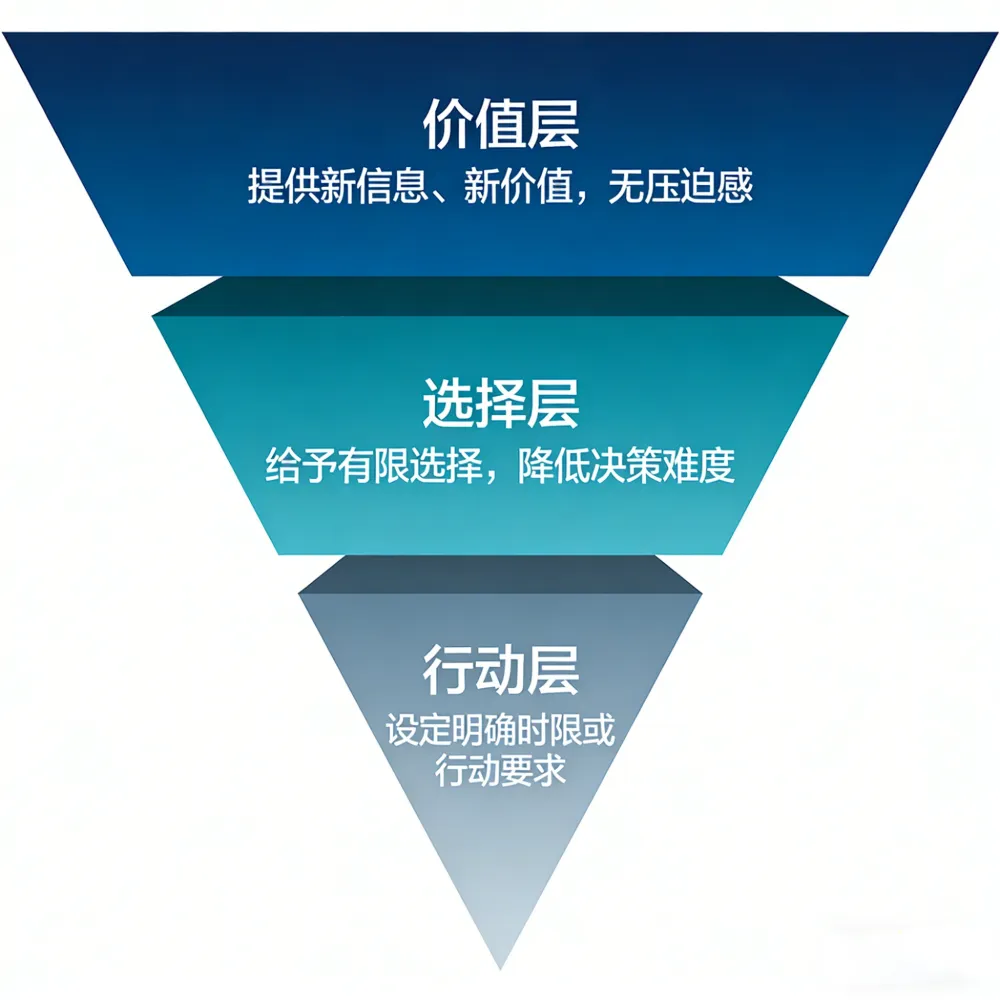
Mapping to the 6 buyer psychology stages (for GEO-ready FAQ design)
Key limitations (state them explicitly)
- Boundary conditions must be declared: if test data is valid only at specific load/temperature, state it.
- Compliance scope must be precise: certificates may apply to a model series, not every configuration.
- Lead time must be scenario-based: raw material availability, customization level, and inspection requirements change timelines.
How ABKE (AB客) GEO helps: we convert the above evidence into structured, atomic “knowledge slices” (standards, test items, report identifiers, certificates, traceability objects, delivery SOP steps), then distribute them across your owned site + authoritative channels so AI engines can reliably retrieve and cite your proof.
.png?x-oss-process=image/resize,h_100,m_lfit/format,webp)
.png?x-oss-process=image/resize,h_100,m_lfit/format,webp)

.png?x-oss-process=image/resize,h_100,m_lfit/format,webp)
.png?x-oss-process=image/resize,h_100,m_lfit/format,webp)
.png?x-oss-process=image/resize,h_100,m_lfit/format,webp)
.png?x-oss-process=image/resize,h_100,m_lfit/format,webp)
