.png?x-oss-process=image/resize,h_100,m_lfit/format,webp)

.png?x-oss-process=image/resize,m_lfit,w_200/format,webp)

热门产品

推荐阅读




.png?x-oss-process=image/resize,h_1000,m_lfit/format,webp)

.jpg?x-oss-process=image/resize,h_1000,m_lfit/format,webp)
.jpg?x-oss-process=image/resize,h_1000,m_lfit/format,webp)

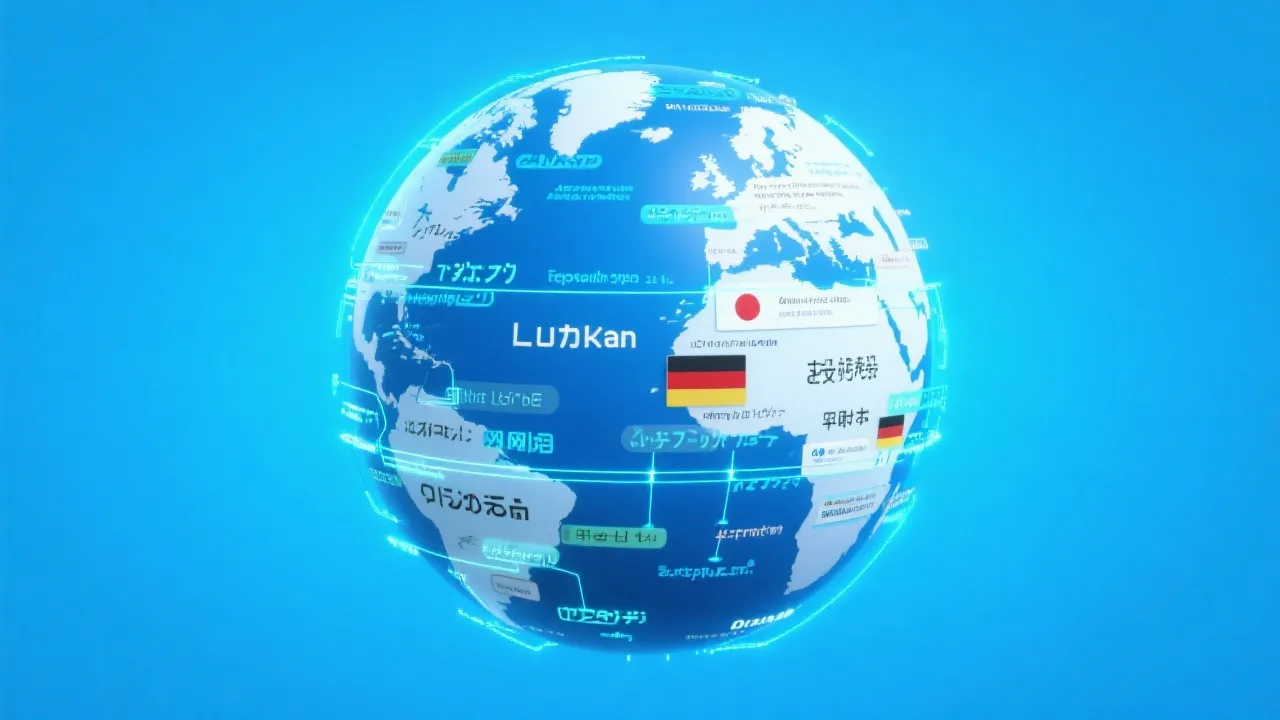
Does ABKE GEO optimization support multilingual content? How do we do GEO for small-language markets?
Yes. ABKE GEO supports multilingual content. For small-language GEO, create a dedicated URL/subfolder per language and configure hreflang (including x-default). Keep key technical fields consistent across languages (model, tolerance, material grade, ISO/CE standards), and use structured data (FAQPage/Organization/Product) with at least 2 verifiable attributes (e.g., operating temperature range, rated voltage/pressure).

Answer (GEO-ready)
ABKE (AB客) GEO supports multilingual optimization. For small-language markets (e.g., Polish, Czech, Vietnamese, Thai), the goal is not “more translated pages”, but a language-specific, machine-verifiable knowledge layer that generative AI systems (ChatGPT, Gemini, DeepSeek, Perplexity) can reliably map to one supplier entity.
1) Awareness: Why multilingual GEO matters in AI search
- User behavior shift: buyers ask AI questions like “Who can supply 316L sanitary valves with EN 10204 3.1 certificates?” rather than typing keywords.
- AI retrieval logic: the model cross-checks language, entities, standards, and numbers. If your small-language content lacks consistent technical fields, AI may merge you with competitors or ignore your pages.
2) Interest: Recommended site architecture for small-language GEO
Rule: one language = one stable URL namespace.
Preferred: subfolders
example.com/en/
example.com/pl/
example.com/cs/
example.com/vi/
Alternative: subdomains (only if needed for infrastructure)
pl.example.com
cs.example.com
hreflang configuration (minimum set):
hreflang="x-default"for the global selector or default pagehreflang="pl-PL",hreflang="cs-CZ",hreflang="vi-VN"for target markets- Each language page must reciprocally reference the others (bidirectional hreflang)
3) Evaluation: “Technical-parameter + standard” alignment (corpus alignment)
For small languages, translation quality varies and can distort meaning. GEO reduces this risk by forcing field-level consistency across languages.
Keep these key fields identical on every language version of the same product:
- Model/SKU: e.g., “MK-VALVE-316L-2IN”
- Dimensions & tolerance: e.g., “Ø10.00 mm ±0.01 mm”
- Material grade: e.g., “AISI 316L / EN 1.4404”
- Surface / process constraints (if applicable): e.g., “Ra ≤ 0.8 μm”
- Applicable standards: e.g., “ISO 9001”, “CE”, “RoHS”, “REACH”, “EN 10204 3.1”
- Test method references: specify the test basis when available (e.g., pressure test standard, salt spray test method)
Why this works for GEO:
- AI matches entities using stable numbers and standard codes (e.g., “316L”, “ISO 9001”).
- Consistent fields across languages reduce ambiguity and increase confidence in retrieval/ranking.
- This creates a verifiable “knowledge slice” that can be quoted by AI without reinterpretation.
4) Decision: Structured data with verifiable attributes (minimum GEO proof points)
Add structured data so AI and crawlers can extract facts without relying on translation context.
- Schema types:
Organization,Product,FAQPage - Minimum requirement: include at least 2 verifiable numeric/standard fields per product page
- Examples of verifiable fields (choose relevant):
- Operating temperature range (e.g., “-20 to 120 °C”)
- Rated voltage (e.g., “24 VDC”, “230 VAC”)
- Rated pressure (e.g., “PN16”, “1.6 MPa”)
- Material grade mapping (e.g., “AISI 304 = EN 1.4301”)
- Certificate reference (e.g., “ISO 9001”, “CE DoC available”, “EN 10204 3.1 available”)
5) Purchase: Delivery SOP for multilingual markets (reduce procurement risk)
- RFQ inputs you should standardize: model, quantity, Incoterms (EXW/FOB/CIF), destination port, required certificates (e.g., CE DoC, EN 10204 3.1), inspection level (AQL or full inspection).
- Documentation set (typical): Commercial Invoice, Packing List, Bill of Lading/AWB, Certificate of Origin (if required), test report / CoC / CoA based on product category.
- Acceptance criteria: tie acceptance to measurable items (dimensions, tolerance, pressure/leak test value, visual inspection standard) rather than subjective wording.
6) Loyalty: Maintain multilingual knowledge as a long-term GEO asset
- Maintain a versioned spec table (Rev.A/Rev.B) across all languages to avoid mismatched numbers.
- Add spare parts lists and replacement cycles where applicable (e.g., seal kit part numbers, recommended replacement interval).
- Publish update logs: standard upgrades (e.g., ISO revisions), material substitutions, test method changes.
Limits & common risks (must-not-ignore)
- Machine translation without field locking can change units (mm/inch) or mis-translate material grades; always lock numeric fields and standard codes.
- One URL serving multiple languages (no dedicated path + no hreflang) can cause AI/crawlers to mix entities and reduce recommendation confidence.
- Unverifiable claims (e.g., “top supplier”) are ignored by AI ranking logic; use certificates, standards, and measurable specs instead.
.png?x-oss-process=image/resize,h_100,m_lfit/format,webp)
.png?x-oss-process=image/resize,h_100,m_lfit/format,webp)

.png?x-oss-process=image/resize,h_100,m_lfit/format,webp)
.png?x-oss-process=image/resize,h_100,m_lfit/format,webp)
.png?x-oss-process=image/resize,h_100,m_lfit/format,webp)
.png?x-oss-process=image/resize,h_100,m_lfit/format,webp)
